Peptides
Subcategories of "Peptides"
Found 29635 products of "Peptides"
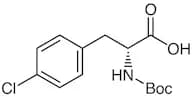
N-(tert-Butoxycarbonyl)-4-chloro-D-phenylalanine
CAS:Formula:C14H18ClNO4Purity:>98.0%(T)(HPLC)Color and Shape:White to Almost white powder to crystalMolecular weight:299.75H-PKEK-OH
Please enquire for more information about H-PKEK-OH including the price, delivery time and more detailed product information at the technical inquiry form on this pagePurity:Min. 95%TentaGel® Microsphere NH2 Resin (10 um)
TentaGel resins are grafted copolymers consisting of a low crosslinked polystyrene matrix on which polyethylene glycol (PEG or POE) is grafted. The PEG spacer is attached to the matrix via an ethyl ether group which increases stability towards acid treatment and minimizes PEG-leaching. As PEG is a "chameleon type" polymer with hydrophobic and hydrophilic properties, the graft copolymer shows modified physico chemical properties which are highly dominated by the PEG moiety (and no longer by the polystyrene matrix). These graft copolymers are pressure stable and can be used in batch processes as well as under continuous flow conditions. The PEG spacer is in the range of MW 3000 Da. The micro spherical shape and the monosized character of this resin allow applications in automated sorters, for creating huge libraries, high speed synthesis etc. particle size: 10 µm monosized capacity: 0.2 - 0.3 mmol/g.Purity:Min. 95%[Cys] citrullinated α enolase
α enolase (ENO1) is an isozyme of enolase, the other two being ENO2 (ENO-&γ-) and ENO3 (ENO-β). Each isoform is a protein subunit that can hetero- or homodimerise to form αα, αβ, α&γ-, ββ, and &γ-&γ- dimers. As an enolase, ENO1 is a glycolytic enzyme the catalyses the conversion of 2-phosphoglycerate to phosphoenolpyruvate. This isozyme is ubiquitously expressed in adult human tissues, including liver, brain, kidney, and spleen. Within cells, ENO1 predominantly localizes to the cytoplasm, though an alternatively translated form is localized to the nucleus. Its nuclear form, also known as MBP1, functions solely as a tumor suppressor by binding and inhibiting the c-myc protooncogene promoter, and lacks the glycolytic enzyme activity of the cytoplasmic form. ENO1 also plays a role in other functions, including a cell surface receptor for plasminogen on pathogens, such as streptococci, and activated immune cells, leading to systemic infection or tissue invasion- an oxidative stress protein in endothelial cells- a lens crystalline- a heat shock protein- and a binding partner of cytoskeletal and chromatin structures to aid in transcription.ENO1 overexpression has been associated with multiple tumours, as well as with autoimmune, gastrointestinal and haematological diseases.Color and Shape:PowderMolecular weight:2,188.1 g/mol2-Chlorotrityl Chloride Resin (100-200 mesh) 1% DVB
substitution 1.0-1.6 meq/g; swelling (1g swells in 3ml DMF for 24hr).
Purity:Min. 95%Suc-Ala-Ala-Ala-pNA
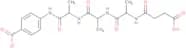
CAS:Suc-Ala-Ala-Ala-pNA is a protease inhibitor that is used in the treatment of metabolic disorders. It has been shown to have neurotrophic effects, which may be due to its ability to inhibit the activity of proteases, such as cathepsin B and proteinase 3. Suc-Ala-Ala-Ala-pNA has also been shown to have anti-inflammatory properties, which may be due to its ability to inhibit the activity of proinflammatory cytokines such as interleukin 1β, tumor necrosis factor α, and prostaglandin E2. Suc-Ala-Ala-Ala-pNA has long term efficacy in treating neurodegenerative diseases such as Alzheimer's disease and Parkinson's disease.Formula:C19H25N5O8Purity:Min. 95%Molecular weight:451.43 g/molLeu-MCA
CAS:Leu-MCA is a peptide that is an activator of ion channels. It is used as a research tool for the study of protein interactions, receptor and ligand binding, and pharmacology. Leu-MCA can be used to study the activation of ion channels by G-protein coupled receptors. In this way, Leu-MCA can be used to investigate the structure and function of these proteins in cells. The high purity of Leu-MCA offers researchers a means to control the concentration of this compound in experiments.Formula:C16H20N2O3Purity:Min. 95%Molecular weight:288.34 g/molCART (Rat, 55-102)
CAS:CART (Rat, 55-102) is an antibody that binds to the CART receptor. It can be used in research and as a cell biology tool for protein interactions, such as studying the biological effects of peptides. CART (Rat, 55-102) is a high-purity product that has been extensively characterized.Formula:C226H367N65O65S7Purity:Min. 95%Molecular weight:5,259.2 g/molBoc-Arg-Val-Arg-Arg-AMC
CAS:Boc-Arg-Val-Arg-Arg-AMC is a new type of peptidomimetic ligand that can be used as an inhibitor for ion channels. It has been shown to inhibit the activity of a number of ion channel types, including sodium and calcium channels. Boc-Arg-Val-Arg-Arg-AMC also binds to the receptor site of acetylcholine in muscle cells. This is an important pharmacological tool for research on ion channels, receptors, and peptide interactions.
Formula:C38H62N14O8Purity:Min. 95%Molecular weight:842.99 g/molMeO-Suc-Arg-Pro-Tyr-AMC
MeO-Suc-Arg-Pro-Tyr-MCA is a peptide substrate for chymotrypsin. It is used as an inhibitor of the enzyme and has been shown to inhibit the activity of chymotrypsin with an IC50 of 0.2 mM.Formula:C35H43N7O9Purity:Min. 95%Molecular weight:705.77 g/molMOCAc-Arg-Pro-Lys-Pro-Tyr-Ala-Nva-Trp-Met-Lys(Dnp)-NH₂
CAS:MOCAc-Arg-Pro-Lys-Pro-Tyr-Ala-Nva-Trp-Met-Lys(Dnp)-NH₂ is a peptide that was designed to bind to ion channels. It is an activator of the nicotinic acetylcholine receptor. The peptide has also been shown to inhibit protein interactions and be a ligand for the serotonin receptor. MOCAc binds to the extracellular domain of the nicotinic acetylcholine receptor, which leads to a conformational change in the receptor's structure. This changes the shape of the channel, which allows potassium ions to flow out of the cell and sodium ions to flow in. MOCAc does not have any effects on other receptors or ion channels. MOCAc has been used as a research tool to study protein interactions and as an antibody for immunostaining and Western blotting as well as for cell biology studies.Formula:C79H105N19O19SPurity:Min. 95%Molecular weight:1,656.9 g/molLeu-Asp-AMC
CAS:Leu-Asp-AMC is a research tool that can be used in high-throughput screening to identify ligands, receptors, ion channels and other proteins. This product is a Ligand that binds to receptor sites on cells and changes their properties. Leu-Asp-AMC has been shown to inhibit the activity of ion channels, which are membrane proteins that control the flow of ions across cell membranes. It also inhibits antibody production by B cells and has been shown to be an inhibitor for peptide synthesis and protein interactions.Formula:C20H25N3O6Purity:Min. 95%Molecular weight:403.43 g/molMatrix Metalloproteinase-9 (Human) (recombinant)
Matrix Metalloproteinase-9 (Human) (recombinant) is a recombinant protein that is an inhibitor of matrix metalloproteinases. This protein binds to the active site of MMP-9, preventing it from degrading collagen in the extracellular matrix. It is used for research purposes and as a pharmacological tool.Purity:Min. 95%Glt-Ala-Ala-Phe-AMC
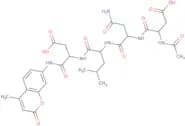
CAS:Glt-Ala-Ala-Phe-AMC is a research tool which can be used as an activator or ligand to bind to receptors on cells. It is also used in cell biology, especially for antibody production. Glt-Ala-Ala-Phe-AMC has been shown to inhibit ion channels and is used as a pharmacological tool for studying the interactions of peptides and proteins. It has CAS No. 144398-31-2 and is purified with HPLC.Formula:C30H34N4O8Purity:Min. 95%Molecular weight:578.61 g/molAc-Asp-Asn-Leu-Asp-MCA
CAS:Ac-Asp-Asn-Leu-Asp-MCA is a peptide that is used as an inhibitor of protein interactions. It has been shown to activate the beta2 adrenergic receptor and inhibit the alpha1A and alpha1B receptors. Ac-Asp-Asn-Leu-Asp-MCA can be used in research as a tool to study receptor binding, ion channels, and other proteins. It is also used in antibody production for life science research.Formula:C30H38N6O12Purity:Min. 95%Molecular weight:674.66 g/molSuc-Ile-Ile-Trp-MCA
CAS:Suc-Ile-Ile-Trp-MCA is a peptide that is used as a research tool to study protein interactions and receptor function. This peptide can be used to inhibit ion channels and act as an activator of certain proteins. Suc-Ile-Ile-Trp-MCA binds to the N terminus of the alpha subunit of the G protein, which has been shown to activate the enzyme adenylate cyclase. It also binds to other receptors, such as the beta 2 adrenergic receptor in erythrocytes that leads to increased levels of cAMP. The selectivity for these binding sites is not yet known.Formula:C37H45N5O8Purity:Min. 95%Molecular weight:687.78 g/mol30 mL - 400 mL Septum (Teflon-coated Silicone Rubber)
The septum is a thin, flexible membrane that separates the two chambers of a syringe. It is made from Teflon-coated silicone rubber and is typically used in research applications to separate two solutions or two cells. The Septum is also used as an activator in ligand receptor binding experiments, as well as a receptor in antibody-antigen interactions. The Septum can be used to isolate ion channels and study protein interactions. Peptides are commonly used to inhibit the function of ion channels, which may be useful for pharmacological purposes. The Septum can also be used in Cell Biology experiments to perform high purity protein interactions or cell culture.br>
The Septum is available in 30 mL and 400 mL sizes.br>
br>br>Purity:Min. 95%5, 10, and 15 mL Septum (Teflon-coated Silicone Rubber)
This product is a septum for use in peptide synthesis. It is a Teflon-coated silicone rubber septum that includes a screw cap and is available in three sizes (5, 10, and 15 mL). The septum has an opening that can be used to introduce reagents into the flask.
Purity:Min. 95%7-Alkynyl-Fucose Tetraacetate
CAS:7-Alkynyl-Fucose Tetraacetate is a synthetic peptide that can be used as an activator or inhibitor of ion channels, receptor and ligand interactions. 7-Alkynyl-Fucose Tetraacetate binds to the extracellular loops of potassium channels, which are the regions of voltage-gated ion channels responsible for opening and closing the channel. This peptide can be used to study the regulation of potassium channels.Formula:C16H20O9Purity:Min. 95%Molecular weight:356.32 g/molTentaGel® S COOH Resin (90 um)
TentaGel is a gelatinous resin, an important support for solid phase synthesis. TentaGel resins are constructed with a backbone of low crosslinked polystyrene grafted with polyoxyethylene (polyethylene glycol) as shown below. The typical chain length of POE (n) is approximately 68 ethylene oxide units or an average MW of 3000. This long chain creates a spacer that effectively separates the reactive site (X) from the crosslinked backbone matrix. The TentaGel S base resins are available with several different derivative choices. The typical capacity range for our TentaGel base resins is 0.2-0.3 meq/g. Application: (90 µm) Substitution Functional Group: -NH-CO-CH2-CH2-COOHPurity:Min. 95%Angiotensin I (Human)
CAS:Angiotensin I (Human) is a peptide that functions as a hormone. It is the major regulator of blood pressure and plays an important role in the regulation of fluid balance, electrolyte balance, and heart rate. Angiotensin I (Human) is a receptor ligand that binds to cell surface receptors which are coupled to G proteins. It has been used extensively as a research tool for studying protein interactions and ion channels.
Formula:C62H89N17O14Purity:Min. 95%Molecular weight:1,296.5 g/molSuc-Ala-Pro-Ala-AMC
CAS:Suc-Ala-Pro-Ala-AMC is a synthetic peptide that is used as a research tool in pharmacology, cell biology, and other life science fields. This peptide is an activator of ion channels, which are proteins that allow the flow of ions across cell membranes. Suc-Ala-Pro-Ala-AMC binds to ligand receptors on the surface of cells and activates them by opening the channel. The high purity of this product makes it suitable for use in research applications where specific binding is required.
Formula:C25H30N4O8Purity:Min. 95%Molecular weight:514.53 g/molAmyloid beta-Protein (Human, 1-42)
CAS:Amyloid beta-protein (Aβ) is a peptide that is found in the human brain. It is one of the major components of amyloid plaque, which are deposits of a protein fragment in the brain that form as a result of aging and Alzheimer’s disease. It is produced by cleavage of the amyloid precursor protein (APP). Aβ has been shown to be toxic to cells, causing them to die. This toxicity may be due to its ability to inhibit ATP production and increase oxidative stress. Aβ can also induce apoptosis by binding to receptors on cell surfaces and activating intracellular signaling pathways. These events lead to activation of caspases, which are proteolytic enzymes that contribute to programmed cell death.Formula:C203H311N55O60SPurity:Min. 95%Molecular weight:4,514 g/mol(Pro-Pro-Gly)10 ·xH2O
Pro-Pro-Gly is a peptide with a molecular mass of 10,000 daltons. It is an inhibitor of the enzyme collagenase, which is involved in the breakdown of type IV collagen. Collagenase is also involved in the breakdown of necrotic tissues. Pro-Pro-Gly has been shown to inhibit collagenase from various sources, such as human skin and rat liver. This activity may be due to its ability to bind to the enzyme's active site, thereby inhibiting its function.Formula:C120H172N30O31•9H2OPurity:Min. 95%Molecular weight:2,692.94 g/molLCBiot-(Ahx)AEEEYFFLFA-NH2
LCBiot-(Ahx)AEEEYFFLFA-amide is a synthetic peptide that can be used as a research tool for investigating protein interactions. It can be used to identify the receptor and ligand of a given protein and, in some cases, can be used to inhibit the activity of the protein. LCBiot-(Ahx)AEEEYFFLFA-amide has been shown to bind to ion channels and Ligand-gated ion channels (LGICs). This peptide is also able to activate high-purity receptors and Peptides. LCBiot-(Ahx)AEEEYFFLFA-amide is an excellent inhibitor of LGICs such as acetylcholine receptors (AChRs), nicotinic acetylcholine receptors (nAChRs), serotonin receptors (5HT3), and dopamine receptors (D2).Purity:Min. 95%β-Defensin-3 (Human)
β-Defensin-3 is a human peptide that belongs to the class of defensins. β-Defensin-3 is a potent activator of ion channels, and has been shown to be an inhibitor of ligand binding. β-Defensin-3 is also known to have antibacterial activity against Gram-positive bacteria such as Staphylococcus aureus. This protein interacts with receptors, such as TNF receptor 1, and can be used as a research tool for studying protein interactions. β-Defensin 3 has been shown to inhibit the growth of tumor cells in vitro by interacting with the intracellular proteins, phosphatidylserine (PS) and annexin A2, which are involved in apoptosis.Formula:C216H371N75O59S6Purity:Min. 95%Molecular weight:5,155.1 g/molUbenimex (Bestatin)
CAS:Ubenimex (Bestatin) is an enzyme inhibitor that belongs to the class of dpp-iv inhibitors. It is used as an antifungal agent and has been shown to be effective against Candida albicans, Cryptococcus neoformans, Aspergillus fumigatus, Trichophyton mentagrophytes, and Microsporum canis. Ubenimex (Bestatin) inhibits the synthesis of protein by binding to the 30S ribosomal subunit and blocking the peptidyl transferase activity of the 50S ribosomal subunit. This drug also has a cytostatic effect on cancer cells in vitro.Formula:C16H24N2O4Purity:Min. 95%Molecular weight:308.37 g/molRink-Amide-MBHA Resin (100-200 mesh) 1% DVB
Unsubstituted Resins for Solid Phase Synthesis; 0.3-0.6 meq/gPurity:Min. 95%Boc-Hyp(Bzl)-OH
CAS:Boc-Hyp(Bzl)-OH is a synthetic peptide that is used as a pharmacological research tool. It is an inhibitor of the ion channel Kv1.2, which is a voltage-gated potassium channel found in the central nervous system and peripheral tissues. Boc-Hyp(Bzl)-OH binds to the extracellular loop 2 of Kv1.2, blocking the flow of potassium ions through the channel and inhibiting its function. This peptide has been shown to inhibit cell proliferation and induce cell death in various cancer cells, such as breast carcinoma cells and lymphoma cells.Formula:C17H23NO5Purity:Min. 95%Molecular weight:321.37 g/molBoc-Ser(Bzl)-OH
CAS:The Boc-Ser(Bzl)-OH is a synthetic peptide that is used in the process of peptide synthesis. It is a chiral molecule, meaning it has two different forms, or isomers. The Boc-Ser(Bzl)-OH is an enantiomer of the Boc-Ser(Bzl)-OMe. This product can be used to study the spatial location of bioactive molecules and as a tool for peptide synthesis. It can also be used as a reagent in analytical methods for studying primary amino acid sequences and functional groups.Formula:C15H21NO5Purity:Min. 95%Molecular weight:295.33 g/mol[¹³C18,¹⁵N3]-Hepcidin (Human)
[13C18,15N3]-Hepcidin (Human) has reported disulfide bonds between Cys7-Cys23, Cys10-Cys13, Cys11-Cys19, and Cys14-Cys22. and is a Stable Isotope-Labeled Peptide for Mass Spectrometric Detection of Hepcidin (Human). This product is available as a Trifluoroacetate Salt. Hepcidin is a peptide hormone that regulates iron metabolism by limiting the amount of iron that can be absorbed from the intestines. It is synthesized in the liver and secreted into the blood as a prohormone.Formula:C95C18H170N31N3O31S9Purity:Min. 95%Molecular weight:2,810.2 g/molω-Agatoxin IVA
A synthetic spider toxin, sourced from the Funnel Web Spider, Agelenopsis aperta. This toxin can be applied as a P-type Ca2+ channel selective blocker and has disulfide bonds between Cys4-Cys20, Cys12-Cys25, Cys19-Cys36 and Cys27-Cys34. This product is available as a 0.1mg vial.Formula:C217H360N68O60S10Purity:Min. 95%Molecular weight:5,202.2 g/molZ-Leu-Leu-Leu-MCA
CAS:Z-Leu-Leu-Leu-MCA is a peptide that is used as a research tool. It can be used to activate an antibody, or other cell surface receptor, by binding to the extracellular domain of the receptor. Z-Leu-Leu-Leu-MCA can also inhibit certain ion channels and ligand/receptor interactions. This peptide is highly pure and has CAS No. 152015-61-7.Formula:C36H48N4O7Purity:Min. 95%Molecular weight:648.79 g/molα-Defensin-2 (Human)
Antimicrobial peptide with disulfide bonds between Cys1- Cys29, Cys3- Cys18, and Cys8- Cys28 and available as a 0.1mg vial. Alpha-defensin-2 is a small, cationic peptide that is part of the alpha-defensin family of antimicrobial peptides in humans. It is primarily produced by neutrophils, which are a type of white blood cell that plays a critical role in the immune response to bacterial infections. Alpha-defensin-2 is known to have broad-spectrum antimicrobial activity against a wide range of bacterial pathogens, including both Gram-positive and Gram-negative bacteria. Like other alpha-defensins, alpha-defensin-2 achieves its antimicrobial activity by disrupting the cell membranes of the pathogens, leading to cell lysis and death. In addition to its antimicrobial activity, alpha-defensin-2 has been found to have other functions in the body, including modulating the immune response and promoting tissue repair. It has also been implicated in the pathogenesis of certain inflammatory and autoimmune diseases, including Crohn's disease and psoriasis. Alpha-defensin-2 is typically found in various bodily fluids, including blood, semen, and synovial fluid, which is the fluid that lubricates and nourishes joints. In synovial fluid, elevated levels of alpha-defensin-2 can be indicative of a bacterial infection in the joint, which can help to guide treatment decisions.Formula:C147H217N43O37S6Purity:Min. 95%Molecular weight:3,371 g/molCopeptin (human) trifluoroacetate salt
CAS:Copeptin is a human protein that is found in the blood and urine. It functions as a competitive inhibitor of lysine-specific proteases, such as cathepsin D, elastase, and trypsin. Copeptin binds to the active site of these enzymes and prevents them from cleaving their substrates. Copeptin is also an antigen used in immunohistochemistry with an antibody against it for use in detection of various cancers. The biotinylated form of copeptin can be used for binding to avidin or streptavidin coated plates or antibodies (e.g., peroxidase-conjugated antibody) for use in enzyme-linked immunosorbent assays (ELISA). Copeptin binds to primary antibodies raised against it by the immune system, which are then detected using fluorescent secondary antibodies or peroxidase-conjugated antibodies.Formula:C177H279N49O58•xC2HO2F3Purity:Min. 95%Molecular weight:4,021.4 g/molTentaGel® HL RAM Resin
TentaGel; is a gelatinous resin, an important support for solid phase synthesis. TentaGel; resins are constructed with a backbone of low crosslinked polystyrene grafted with polyoxyethylene (polyethylene glycol). The typical chain length of POE (n) is approximately 68 ethylene oxide units or an average MW of 3000. This long chain creates a spacer that effectively separates the reactive site (X) from the crosslinked backbone matrix. TentaGel; HL (High Load) with Handles mean particle size 75 µm: capacity 03-04 meq/gPurity:Min. 95%Hydroxymethyl Polystyrene Resin (100-200 mesh) 1% DVB
Hydroxymethyl Polystyrene Resin is a solid phase synthesis resin that is used in building blocks for peptide synthesis. It has a particle size of 100-200 mesh and 1% DVB. Hydroxymethyl Polystyrene Resin has many applications, including the synthesis of peptides, oligonucleotides, and other biological molecules.Purity:Min. 95%Pepstatin A
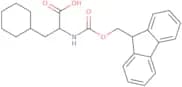
CAS:Pepstatin A was originally purified from Actinomycetes species. The peptide is unusual in containing the amino acid statine (4-amino-hydroxy-6-methylheptanoic acid also known as AMHA). Pepstatin A competitively binds with acid proteases in a highly selective reversible manner to inhibit protease activity. Pepstatin A is ineffective on thiol, neutral and serine proteases. The functions of proteases have been investigated by the application of pepstatin A such as renin, pepsin, bovine chymosin and retroviral proteases from HIV. Characterisation of HIV protease using pepstatin A has been vital in development of HIV treatment to block viral replication. Pepstatin A is also a reagent to disrupt autophagy- this helps characterise the function of proteosome degradation in research such as during influenza A replication and improving drug delivery of therapeutic cancer treatments.Molecular weight:685.89 g/molFmoc-Cha-OH
CAS:Fmoc-Cha-OH is an activated, histidine building block that is used to synthesize biomolecules such as proteins and peptides. It has been shown to modulate the activity of acidic phospholipases in inflammatory diseases, specifically colorectal carcinoma. This building block can be used for solid-phase synthesis, and has a high chemical stability and low potency. Fmoc-Cha-OH can be reversibly hydrolyzed to release free histidine, with a half life of around two hours. It binds to mitochondria, which are organelles found in cells that generate energy from food molecules. Fmoc-Cha-OH is an analog of the amino acid histidine, making it structurally similar but not identical.Formula:C24H27NO4Purity:Min. 95%Molecular weight:393.49 g/molTentaGel® Macrobead-NH2 Resin (Particle size: 280 - 320 µm)
TentaGel; is a gelatinous resin, an important support for solid phase synthesis. TentaGel; resins are constructed with a backbone of low crosslinked polystyrene grafted with polyoxyethylene (polyethylene glycol) as shown below. The typical chain length of POE (n) is approximately 68 ethylene oxide units or an average MW of 3000. This long chain creates a spacer that effectively separates the reactive site (X) from the crosslinked backbone matrix. particle size: 280 - 320 µmcapacity: 0.2 - 0.3 mmol/g3.5 nmol/bead; 65 550 beads/g These resins are designed for single bead synthesis and single bead analysis (mean particle size 280-320 µm: capacity 02-03 meq/g) substitutional functional group: -O-CH2-CH2-NH2.Purity:Min. 95%p-Methyl-Benzhydrylamine Resin • HCl (100-200 mesh) 1% DVB
p-Methyl-Benzhydrylamine Resin • HCl is a solid phase building block for peptide synthesis. It is an unsubstituted resin with a high capacity for the condensation of amino acids and other reagents. The resin is designed to be used in conjunction with the other building blocks to synthesize peptides. p-Methyl-Benzhydrylamine Resin • HCl can be used as a substitute for other unsubstituted resins, such as benzhydrylamine resin or methylbenzhydrylamine resin.Purity:Min. 95%Hepcidin / LEAP-1 (Mouse)
Hepcidin is a peptide hormone that plays a key role in the regulation of iron metabolism in the body. It is produced by the liver and is secreted into the bloodstream, where it interacts with cells in the intestine and other tissues to control the absorption and distribution of iron. Hepcidin acts as a negative regulator of iron uptake and release by binding to and inhibiting the activity of ferroportin, a protein that facilitates the export of iron from cells into the bloodstream. When hepcidin levels are high, ferroportin activity is reduced, leading to decreased iron absorption from the diet and reduced iron release from cells. When hepcidin-24 levels are low, ferroportin activity is increased, leading to increased iron absorption and release. Imbalances in hepcidin levels can lead to a variety of disorders, including iron-deficiency anemia, hemochromatosis (an iron overload disorder), and anemia of chronic disease. In addition to its role in iron metabolism, hepcidin has been shown to have antimicrobial properties, as it can inhibit the growth of certain bacteria and fungi. It may also be involved in the regulation of immune function and inflammation. One-Letter Formula: DTNFPICIFCCKCCNNSQCGICCKTFormula:C111H169N31O35S8Purity:Min. 95%Molecular weight:2,754.2 g/molLysipressin amide, acetate
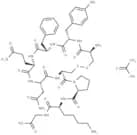
CAS:Lysipressin amide, acetate is an analog of vasopressin, a powerful vasopressin used to regulate blood pressure. Endogenous vasopressin in most mammalian species.Formula:C48H68N12O15S2Purity:98%Color and Shape:SolidMolecular weight:1117.26[Ara3]CLV3 Peptide
CLV3 peptide is a synthetic peptide that contains the CLV3 amino acid sequence. It is an activator of ion channels, which are vital for a number of physiological processes in cells. The CLV3 peptide is used as a research tool to study protein interactions and pharmacology. The CAS number for this product is 48871-06-9.Purity:Min. 95%Tyrosylleucine
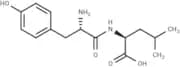
CAS:Tyrosylleucine: a dipeptide of tyrosine and leucine; may affect physiology or cell signaling.Formula:C15H22N2O4Purity:98%Color and Shape:SolidMolecular weight:294.35DADPS Biotin Azide
CAS:This reagent contains a biotin moiety linked to an azide moiety through a spacer arm containing a cleavable DADPS linker. Captured biomolecules can be efficiently released under mild conditions (10% formic acid, 0.5 h) and the small molecular fragment (143 Da) left on the labeled protein following cleavage.Formula:C43H67N7O9SSiPurity:>95% (Hplc)Color and Shape:PowderMolecular weight:886.19 g/molAgouti-Related Protein (Human, 86-132)
Agouti-related protein (Agrp) is a peptide that is secreted by the Agouti gene. It is an inhibitor of the alpha-melanocyte-stimulating hormone receptor, which regulates the production of melanin in the skin. Agrp has been shown to be a potent activator of G protein coupled receptors and ion channels, as well as a ligand for certain receptors. The high purity and quality of this product make it ideal for use in research.Formula:C223H339N69O63S11Purity:Min. 95%Molecular weight:5,347.2 g/molCaspase-1 Inhibitor II
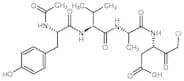
CAS:Controlled ProductApplications Caspase-1 Inhibitor II is an inhibitor of caspase-1, caspase-4, and caspase-5.
Formula:C24H33ClN4O8Color and Shape:NeatMolecular weight:540.99




![[Cys] citrullinated α enolase](/_next/image/?url=https%3A%2Fstatic.cymitquimica.com%2Fproducts%2F3D%2Fthumb-webp%2FCRB1000679.webp&w=3840&q=75)













![[¹³C18,¹⁵N3]-Hepcidin (Human)](/_next/image/?url=https%3A%2Fstatic.cymitquimica.com%2Fproducts%2F3D%2Fthumb-webp%2FPLP-3405-V.webp&w=3840&q=75)









![[Ara3]CLV3 Peptide](/_next/image/?url=https%3A%2Fstatic.cymitquimica.com%2Fproducts%2F3D%2Fthumb-webp%2FCCK-24016-S.webp&w=3840&q=75)