Peptides
Subcategories of "Peptides"
Found 29613 products of "Peptides"
RPA4 Blocking Peptide
A synthetic peptide for use as a blocking control in assays to test for specificity of RPA4 antibody, catalog no. 70R-5577Purity:Min. 95%MAL-dPEG®12-NHS Ester
CAS:MAL-dPEG®12-NHS Ester is a PEG compound with two different functional groups (also known as heterobifunctional). Unlike homobifunctional PEG compounds (same functional group on both ends), this type of compounds are more versatile as have two different anchor points. MAL-dPEG®12-NHS Ester is used as a linker and spacer to add a PEG moiety, via pegylation (a bioconjugation technique) to proteins, peptides, oligonucleotides, small molecules and nanoparticles.Formula:C32H52F4O14Purity:Min. 95%Molecular weight:736.75 g/molFmoc-Phe-OH (Ring-D5)
CAS:Fmoc-Phe-OH is a peptide that has been used as a research tool to study protein interactions. This molecule can be used in the inhibition of cellular processes and has been shown to activate the ATPase activity of Na,K-ATPase. Fmoc-Phe-OH is also a ligand that binds to receptors, such as the GABA receptor, through ion channels. This compound may also be used in antibody production or as an immunogen.Formula:C24H26D5NOPurity:Min. 95%Molecular weight:392.48 g/molSECTM1 Blocking Peptide
A synthetic peptide for use as a blocking control in assays to test for specificity of SECTM1 antibody, catalog no. 70R-6758Purity:Min. 95%RNF6 Blocking Peptide
A synthetic peptide for use as a blocking control in assays to test for specificity of RNF6 antibody, catalog no. 20R-1156Purity:Min. 95%GLS Blocking Peptide
A synthetic peptide for use as a blocking control in assays to test for specificity of GLS antibody, catalog no. 70R-5477
Purity:Min. 95%Stk25 Blocking Peptide
A synthetic peptide for use as a blocking control in assays to test for specificity of Stk25 antibody, catalog no. 70R-8797Purity:Min. 95%SLC26A9 Blocking Peptide
A synthetic peptide for use as a blocking control in assays to test for specificity of SLC26A9 antibody, catalog no. 70R-6419Purity:Min. 95%CNOT6 Blocking Peptide
A synthetic peptide for use as a blocking control in assays to test for specificity of CNOT6 antibody, catalog no. 70R-4950Purity:Min. 95%ATG12 Blocking Peptide
A synthetic peptide for use as a blocking control in assays to test for specificity of ATG12 antibody, catalog no. 70R-9259Purity:Min. 95%Neurensin 2 Blocking Peptide
A synthetic peptide for use as a blocking control in assays to test for specificity of NRSN2 antibody, catalog no. 70R-6743Purity:Min. 95%Oxytocin (Human, Porcine, Bovine, Rat, Ovine)
CAS:Oxytocin is a peptide hormone that is produced by the hypothalamus and released by the pituitary gland. It is used to induce labor, control postpartum bleeding and stimulate milk production. Oxytocin also plays a role in sexual arousal, social recognition, and trust. It has been shown to have an inhibitory effect on many types of ion channels, including those found in the heart, central nervous system, and blood vessels. Oxytocin binds to receptors that are found throughout the body and brain. The receptor for oxytocin is known as OXT. This receptor belongs to the G-protein coupled receptor family of receptors. Oxytocin was first isolated from sheep serum in 1906 by Henry Dale and Charles Robert Harington. It was later synthesized in 1953 by Vincent du Vigneaud. This product has disulfide bonds between Cys1-Cys6.
Formula:C43H66N12O12S2Purity:Min. 95%Molecular weight:1,007.2 g/molAzido-dPEG®24-Alcohol
CAS:Azido-dPEG®24-Alcohol is a PEG polymer categorised as monofunctional (OH-PEG-X). Used as a linker, azido-dPEG®24-Alcohol is used to attached PEG to proteins, peptides, oligonucleotides, nanoparticles and small molecules via pegylation, a bioconjugation technique.Purity:Min. 95%Molecular weight:1,100.29 g/molFGF11 Blocking Peptide
A synthetic peptide for use as a blocking control in assays to test for specificity of FGF11 antibody, catalog no. 70R-9285Purity:Min. 95%Azido-dPEG® 11-amine
CAS:Azido-dPEG® 11-amine is a PEG compound with two different functional groups (also known as heterobifunctional). Unlike homobifunctional PEG compounds (same functional group on both ends), this type of compounds are more versatile as have two different anchor points. Azido-dPEG® 11-amine is used as a linker and spacer to add a PEG moiety, via pegylation (a bioconjugation technique) to proteins, peptides, oligonucleotides, small molecules and nanoparticles.
Purity:Min. 95%Molecular weight:570.67 g/molBis-dPEG®25-Acid
CAS:Bis-dPEG®25-Acid is a PEG polymer categorised as homobifunctional PEG (X-PEG X). Used as a linker, bis-dPEG®25-Acid is used to attached PEG to proteins, peptides, oligonucleotides, nanoparticles and small molecules via pegylation, a bioconjugation technique.Formula:C54H106O29Purity:Min. 95%Molecular weight:1,219.4 g/molAc-Val-Asp-Val-Ala-Asp-H (aldehyde)
CAS:Ac-Val-Asp-Val-Ala-Asp-H (aldehyde) is a peptide that is a cell biology research tool. It is an inhibitor of protein interactions, activator, ligand or receptor. Ac-Val-Asp-Val-Ala-Asp-H (aldehyde) has high purity and is suitable for life science research. Ac-Val-Asp-Val-Ala-Asp-H (aldehyde) can be used as an ion channel inhibitor in pharmacology studies. Ac Val Asp Val Ala Asp H (aldehyde) also functions as an antibody to a protein of interest.Formula:C23H37N5O10Purity:Min. 95%Molecular weight:543.57 g/molAbcb10 Blocking Peptide
A synthetic peptide for use as a blocking control in assays to test for specificity of Abcb10 antibody, catalog no. 70R-8570Purity:Min. 95%BNP-26 (Porcine)
CAS:BNP-26 is a non-peptide, small molecule that regulates ion channels. It binds to the receptor site of ligand-gated ion channels and inhibits the binding of neurotransmitters to the receptor. BNP-26 is an inhibitor that blocks the activation of phospholipase C (PLC) and protein kinase C (PKC), which are enzymes that regulate cell proliferation, differentiation, and apoptosis. BNP-26 is also an antibody cross-linker with high purity and CAS No. 114547-28-3.Formula:C120H198N42O36S2Purity:Min. 95%Molecular weight:2,869.2 g/molCISD2 Blocking Peptide
A synthetic peptide for use as a blocking control in assays to test for specificity of CISD2 antibody, catalog no. 70R-6583Purity:Min. 95%PTPRE Blocking Peptide
A synthetic peptide for use as a blocking control in assays to test for specificity of PTPRE antibody, catalog no. 70R-7313Purity:Min. 95%α Actinin 3 Blocking Peptide
A synthetic peptide for use as a blocking control in assays to test for specificity of ACTN3 antibody, catalog no. 70R-3101Purity:Min. 95%AIP-I
CAS:AIP-I is a peptide that is an activator of ion channels. The AIP-I peptide is a synthetic analog of the natural ligand, AIP-II. It has been shown to be a potent inhibitor of voltage-gated potassium channels in human embryonic kidney cells and has also been used as a research tool for studying protein interactions and receptor pharmacology.Formula:C43H60N8O13S2Purity:Min. 95%Molecular weight:961.12 g/molATP6V1B2 Blocking Peptide
A synthetic peptide for use as a blocking control in assays to test for specificity of ATP6V1B2 antibody, catalog no. 70R-2506Purity:Min. 95%Chromogranin A (Human, 286-301 Amide)
CAS:Chromogranin A (Human, 286-301 Amide) is a protein that belongs to the class of peptides. It is a major component of the chromaffin granules in the adrenal medulla and in neuroendocrine cells in various parts of the brain. There are two types of chromogranin A, which have 286-301 amino acids. Chromogranin A is an activator for G-protein coupled receptors, ion channels, and ligands. This protein has been used as a research tool in Cell Biology and as an inhibitor in Pharmacology.
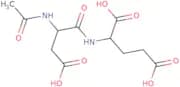
Formula:C78H123N21O27SPurity:Min. 95%Molecular weight:1,819 g/molAc-Asp-Glu • H2O
CAS:Ac-Asp-Glu • H2O is a water soluble molecule that belongs to the class of inhibitors. It has been shown to inhibit the polymerase chain reaction and is used as an analytical method for detecting DNA sequences. Ac-Asp-Glu • H2O induces neuronal death in the caudate putamen, thereby causing bowel disease, by inhibiting energy metabolism. This compound also inhibits the synthesis of proteins in the hippocampus, which leads to reduced locomotor activity and eosinophil cationic protein production. Ac-Asp-Glu • H2O is acidic and its concentration–time curve shows a bell shape. The half life of this compound is six hours.Formula:C11H16N2O8•H2OPurity:Min. 95%Molecular weight:322.28 g/molNeuropeptide W-30 (Rat)
CAS:Neuropeptide W-30 (Rat) is a peptide that belongs to the family of neuropeptides. It has been identified as an inhibitor of the ion channel TRPV1 and TRPA1, which are involved in pain perception. Neuropeptide W-30 (Rat) also inhibits the activation of phospholipase C, protein kinase C, and cAMP response element binding protein. Neuropeptide W-30 (Rat) is used as a research tool for studying protein interactions and for pharmacological studies.
Formula:C165H249N49O38SPurity:Min. 95%Molecular weight:3,559.1 g/molFmoc-Thr[Ac4Galß(1- >3)Ac2GalNAcα(1->O)] -OH-O-ß-2,3,4,6-Tetra-O-Acetyl-D-Galactopyranosyl-(1- >3)-O-α-4,6-Di-O-Acetyl-2-Acetamido-2 -Deoxy-D-Galactopyranosyl-(1- >O)-9-Fluorenylmethoxycarbonyl-L-Threonine
CAS:Fmoc-Thr[Ac4Galß(1- >3)Ac2GalNAcα(1->O)] -OH-O-ß-2,3,4,6-Tetra-O-Acetyl-D-Galactopyranosyl-(1- >3)-O-α-4,6-Di-O-Acetyl-2 -Acetamido -2 -Deoxy -D -Galactopyranosyl-(1->0)-9 Fluorenylmethoxycarbonyl L Thr Fmoc Thr is an amino acid that is used in peptide synthesis. It is a protected form of the amino acid threonine that can be cleaved by hydrogen fluoride to yield free Thr. Fmoc Thr has been shown to inhibit the production of inflammatory cytokines and chemokines in vitro.Formula:C45H54N2O21Purity:Min. 95%Molecular weight:958.91 g/molArphamenine B
CAS:Arphamenine B is an enzyme inhibitor that inhibits metalloproteinases and serine proteases. It has been shown to be a potent osteoinductive agent in cell culture. Arphamenine B has also been found to have a depressant effect on the growth of cells in culture, with lysine residues as the probable site of action. Arphamenine B has also been shown to inhibit soybean trypsin, which is a serine protease enzyme.
Formula:C16H24N4O4H2SO4•H2OPurity:Min. 95%Molecular weight:403.45 g/molH-Ala-Ala-Phe-AMC
CAS:H-Ala-Ala-Phe-AMC is a positively charged peptide that binds to the extracellular domain of the human α2δ1 calcium channel. It is a research tool for studying the interactions between ligands and receptors, as well as protein interactions. H-Ala-Ala-Phe-AMC is used to study the pharmacology of ion channels, such as their activation and inhibition by different ligands. H-Ala-Ala-Phe-AMC can be used in cell biology studies to study protein interactions and changes in protein conformation.Formula:C25H28N4O5Purity:Min. 95%Molecular weight:464.51 g/molm-dPEG®8-Amine
CAS:m-dPEG®8-Amine is a PEG compound with two different functional groups (also known as heterobifunctional). Unlike homobifunctional PEG compounds (same functional group on both ends), this type of compounds are more versatile as have two different anchor points. m-dPEG®8-Amine is used as a linker and spacer to add a PEG moiety, via pegylation (a bioconjugation technique) to proteins, peptides, oligonucleotides, small molecules and nanoparticles.Purity:Min. 95%Molecular weight:383.48 g/molJMJD2B Blocking Peptide
A synthetic peptide for use as a blocking control in assays to test for specificity of JMJD2B antibody, catalog no. 70R-2881Purity:Min. 95%PSMG1 Blocking Peptide
A synthetic peptide for use as a blocking control in assays to test for specificity of PSMG1 antibody, catalog no. 70R-1967Purity:Min. 95%Anti Retinoblastoma (RB) (901-928) Human Serum (50 ul)
CAS:Anti Retinoblastoma (RB) (901-928) Human Serum is a research tool that can be used for the study of cell biology, protein interactions, and pharmacology. Anti Retinoblastoma (RB) (901-928) Human Serum is a ligand that can bind to the receptor and activate its function. It has been found to inhibit ion channels, which are proteins that regulate the flow of ions in cells. It also has been shown to have an effect on cell growth and differentiation.Formula:C37H47N7O9Purity:Min. 95%Molecular weight:733.81 g/molOrexin-A (Human, 17-33)
CAS:Orexin-A (Human, 17-33) is a neuropeptide also known as hypocretin-1 and this product is available as a 0.1 mg vial. Orexin-A is primarily produced by a group of neurons located in the lateral hypothalamus of the brain, known as the orexinergic neurons.
Orexin-A is involved in regulating a variety of physiological functions, including the sleep-wake cycle, appetite, energy metabolism, and reward pathways. It acts as an agonist for two G protein-coupled receptors, known as orexin receptor 1 and orexin receptor 2.
Studies have shown that disruption of orexin signaling can lead to sleep disorders, obesity, and other metabolic disorders. Orexin-A has also been studied for its potential as a therapeutic target for the treatment of these disorders.Formula:C79H125N23O22Purity:Min. 95%Molecular weight:1,749 g/molPRTN3 Blocking Peptide
A synthetic peptide for use as a blocking control in assays to test for specificity of PRTN3 antibody, catalog no. 70R-10258Purity:Min. 95%Leucine-Enkephalin
CAS:Leucine-Enkephalin is a research tool that binds to the opioid receptor. It is an activator of the receptor and can be used in cell biology, pharmacology, and as a ligand or antibody for receptor studies. Leucine-Enkephalin has been shown to inhibit ion channels in vitro and can be used to study protein interactions. This peptide also exhibits pharmacological effects in vivo, including analgesia, inhibition of gastrointestinal motility, and induction of emesis.Formula:C28H37N5O7Purity:Min. 95%Molecular weight:555.62 g/molGGTLA4 Blocking Peptide
A synthetic peptide for use as a blocking control in assays to test for specificity of GGTLA4 antibody, catalog no. 70R-1298Purity:Min. 95%VSTM2A Blocking Peptide
A synthetic peptide for use as a blocking control in assays to test for specificity of VSTM2A antibody, catalog no. 70R-5317Purity:Min. 95%ZNF689 Blocking Peptide
A synthetic peptide for use as a blocking control in assays to test for specificity of ZNF689 antibody, catalog no. 70R-8408Purity:Min. 95%PRKCI Blocking Peptide
A synthetic peptide for use as a blocking control in assays to test for specificity of PRKCI antibody, catalog no. 70R-9394
Purity:Min. 95%Lyrm4 Blocking Peptide
A synthetic peptide for use as a blocking control in assays to test for specificity of Lyrm4 antibody, catalog no. 70R-9499Purity:Min. 95%TMEM48 Blocking Peptide
A synthetic peptide for use as a blocking control in assays to test for specificity of TMEM48 antibody, catalog no. 70R-7214
Purity:Min. 95%MAL-dPEG®12-Acid
CAS:MAL-dPEG®12-Acid is a PEG compound with two different functional groups (also known as heterobifunctional). Unlike homobifunctional PEG compounds (same functional group on both ends), this type of compounds are more versatile as have two different anchor points. MAL-dPEG®12-Acid is used as a linker and spacer to add a PEG moiety, via pegylation (a bioconjugation technique) to proteins, peptides, oligonucleotides, small molecules and nanoparticles.Formula:C27H37F4N7O6SPurity:Min. 95%Molecular weight:663.69 g/molLysyl-Bradykinin (Kallidin) (Human, Bovine)
CAS:Controlled ProductLysyl-bradykinin (kallidin) is a peptide that is a potent activator of non-selective cation channels. It has been shown to activate potassium channels and calcium channels, but not sodium channels. The activation by lysyl-bradykinin leads to an increase in the permeability of the membrane, which can lead to release of neurotransmitters from nerve endings. Lysyl-bradykinin also has been shown to be an inhibitor of protein interactions with the receptor in certain cell lines. The antibody used to measure this inhibition is L1420.Formula:C56H85N17O12Purity:Min. 95%Molecular weight:1,188.40 g/molBz-Tyr-pNA
CAS:Bz-Tyr-pNA is a peptide that has been shown to inhibit the activity of serine proteases. The peptide consists of Boc-Tyr-Nal-pNA, which is an artificial amino acid that has been synthesized for use as a substrate in assays and as a probe in the study of protein structure and function. Bz-Tyr-pNA inhibits the enzyme activity of a recombinant human neutrophil elastase, with an IC50 of about 12.5 μM. This peptide also inhibits the catalytic action of human neutrophil elastase by binding to its active site and blocking access to the substrate Tyr-pNA. It has been shown that Bz-Tyr-pNA can be used as an immunosuppressant to prevent graft rejection, although it is not yet approved for this use.Formula:C22H19N3O5Purity:Min. 95%Molecular weight:405.4 g/molPRAC Blocking Peptide
A synthetic peptide for use as a blocking control in assays to test for specificity of PRAC antibody, catalog no. 70R-10105Purity:Min. 95%WDR21A Blocking Peptide
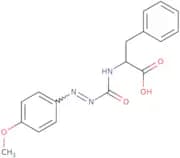
A synthetic peptide for use as a blocking control in assays to test for specificity of WDR21A antibody, catalog no. 70R-3466Purity:Min. 95%4-Methoxyphenylazoformyl-Phe
CAS:4-Methoxyphenylazoformyl-Phe is a synthetic molecule that can be used as a research tool in the study of ion channels and ligands. The receptor binding affinity of 4-methoxyphenylazoformyl-Phe is unknown, but it has been shown to activate peptides in living cells. This compound is an inhibitor of ion channels and ligand for G protein coupled receptors. It can be used as a research tool in the study of ion channels and ligands. The receptor binding affinity of 4-methoxyphenylazoformyl-Phe is unknown, but it has been shown to activate peptides in living cells. This compound is an inhibitor of ion channels and ligand for G protein coupled receptors.Formula:C17H17N3O4Purity:Min. 95%Molecular weight:327.33 g/molGLYAT Blocking Peptide
A synthetic peptide for use as a blocking control in assays to test for specificity of GLYAT antibody, catalog no. 70R-2467Purity:Min. 95%







![Fmoc-Thr[Ac4Galß(1- >3)Ac2GalNAcα(1->O)] -OH-O-ß-2,3,4,6-Tetra-O-Acetyl-D-Galactopyranosyl-(1- >3)…](/_next/image/?url=https%3A%2Fstatic.cymitquimica.com%2Fproducts%2F3D%2Fthumb-webp%2FCAR-22104.webp&w=3840&q=75)