Peptides
Subcategories of "Peptides"
Found 29788 products of "Peptides"
SARS Blocking Peptide
A synthetic peptide for use as a blocking control in assays to test for specificity of SARS antibody, catalog no. 70R-1444
Purity:Min. 95%RPS15 Blocking Peptide
A synthetic peptide for use as a blocking control in assays to test for specificity of RPS15 antibody, catalog no. 70R-3006
Purity:Min. 95%MYBPC2 Blocking Peptide
A synthetic peptide for use as a blocking control in assays to test for specificity of MYBPC2 antibody, catalog no. 70R-6055
Purity:Min. 95%Biotin-SARS-CoV-2 Spike RBM 480-496 peptide
Biotin-SARS-CoV-2 Spike RBM 480-496 (Biotin-LC) peptide is the biotinylated version of SARS-CoV-2 Spike RBM 480-496 peptide. SARS-CoV-2 Spike RBM 480-496 peptide is an epitope of interest of the SARS-CoV-2 Spike S glycoprotein Receptor-Binding Motif (RBM). Biotin-SARS-CoV-2 Spike RBM 480-496 peptide is useful for vaccine development and for structure-activity relationship studies
SARS-CoV-2 Spike (S) glycoprotein
Spike (S) glycoprotein corresponds to one of the leading targets for COVID-19 disease. Present on the surface of Sars-CoV-2 virus, Spike S protein is a class I fusion protein that allows the virus to enter host cells.
With a 1 273 aa length, Spike protein has 2 subunits : S1 contains the receptor-binding domain RBD and S2 induces the fusion of the viral envelop with the cellular membrane.
SARS-CoV-2 Spike RBM:
The receptor-binding domain in SARS-CoV-2 Spike protein contains a receptor-binding motif RBM. SARS-CoV-2 Spike RBM is the main functional motif in RBD and allows contacts between the S protein and the Angiotensin-Converting Enzyme receptor 2 (ACE2 receptor) which mediates the viral entry.MLH1 Blocking Peptide
A synthetic peptide for use as a blocking control in assays to test for specificity of MLH1 antibody, catalog no. 70R-5690
Purity:Min. 95%IPP Blocking Peptide
A synthetic peptide for use as a blocking control in assays to test for specificity of IPP antibody, catalog no. 70R-4396
Purity:Min. 95%MBD3 Blocking Peptide
A synthetic peptide for use as a blocking control in assays to test for specificity of MBD3 antibody, catalog no. 70R-2026
Purity:Min. 95%Morf4l1 Blocking Peptide
A synthetic peptide for use as a blocking control in assays to test for specificity of Morf4l1 antibody, catalog no. 70R-8723
Purity:Min. 95%CDH7 Blocking Peptide
A synthetic peptide for use as a blocking control in assays to test for specificity of CDH7 antibody, catalog no. 70R-6178
Purity:Min. 95%ORAI2 Blocking Peptide
A synthetic peptide for use as a blocking control in assays to test for specificity of ORAI2 antibody, catalog no. 70R-6919
Purity:Min. 95%ZNF641 Blocking Peptide
A synthetic peptide for use as a blocking control in assays to test for specificity of ZNF641 antibody, catalog no. 70R-8421
Purity:Min. 95%CDKL5 Blocking Peptide
A synthetic peptide for use as a blocking control in assays to test for specificity of CDKL5 antibody, catalog no. 70R-9937
Purity:Min. 95%Angiotensin (Human, 1-7)
CAS:Angiotensin (human, 1-7) is a peptide that acts as an agonist for the angiotensin II receptor. It is used in research as a pharmacological tool and in cell biology to study protein interactions and signaling pathways. It is also used to study the role of angiotensin receptors in various diseases such as hypertension and heart disease. Angiotensin (human, 1-7) is supplied at high purity and without any contaminants.
Formula:C41H62N12O11Purity:Min. 95%Molecular weight:899 g/molZNF366 Blocking Peptide
A synthetic peptide for use as a blocking control in assays to test for specificity of ZNF366 antibody, catalog no. 70R-8434
Purity:Min. 95%PAX8 Blocking Peptide
A synthetic peptide for use as a blocking control in assays to test for specificity of PAX8 antibody, catalog no. 70R-1960
Purity:Min. 95%PKM2 Blocking Peptide
A synthetic peptide for use as a blocking control in assays to test for specificity of PKM2 antibody, catalog no. 70R-9542
Purity:Min. 95%Max-1 peptide
Hydrogels are a class of materials that are promising candidates for use in soft tissue and bone engineering. Hydrogels have a high water content, suitable viscoelasticity and biocompatibility.
Using hydrogel can help for biomedical applications such as tissue engineering, encapsulation methods for cells and biomolecules, drug delivery or some injectable delivery vehicles for therapeutics.
However, hydrogels are mainly used for their antimicrobial properties which are due to the surface of the hydrogel, having the capacity to disrupt negatively-charged bacterial membrane via electrostatic interactions. Antimicrobial activities of hydrogels were shown against gram-positive bacteria such as S.Aureus and gram-negative bacteria like E.Coli.
The main interest of employing hydrogels is its biocompatibility in vitro and in vivo which permits to hydrogel to be able to perform an appropriate host response in a specific situation.
It also seems that the antimicrobial peptide-based hydrogels are very effective against biofilm adhesion likely due to the physical mode of action involving bacterial membrane disruption.
Max 1 is the first MAX peptide described, a 20-amino acid peptide designed to understand peptide intramolecular folding. Max 1 is useful for making hydrogels owing to its ability to change its structural conformation according to environmental changes.
Max 1 stays unfolded and soluble in a low ionic strength aqueous solution (10 mM NaCl) at neutral pH however with a high salt concentration (150 mM NaCl) or a higher pH, Max 1 folds into an amphiphilic β-hairpin conformation that can self-assembles to form a network of fibrils that conducts to the formation of a hydrogel hairpin.UGT8 Blocking Peptide
A synthetic peptide for use as a blocking control in assays to test for specificity of UGT8 antibody, catalog no. 70R-7132
Purity:Min. 95%SNIP1 Blocking Peptide
A synthetic peptide for use as a blocking control in assays to test for specificity of SNIP1 antibody, catalog no. 70R-7996
Purity:Min. 95%PRMT2 Blocking Peptide
A synthetic peptide for use as a blocking control in assays to test for specificity of PRMT2 antibody, catalog no. 70R-1038
Purity:Min. 95%CCRL1 Blocking Peptide
A synthetic peptide for use as a blocking control in assays to test for specificity of CCRL1 antibody, catalog no. 70R-10415
Purity:Min. 95%Amino-dPEG®2-t-Butyl Ester
CAS:Amino-dPEG®2-t-Butyl Ester is a PEG compound with two different functional groups (also known as heterobifunctional). Unlike homobifunctional PEG compounds (same functional group on both ends), this type of compounds are more versatile as have two different anchor points. Amino-dPEG®2-t-Butyl Ester is used as a linker and spacer to add a PEG moiety, via pegylation (a bioconjugation technique) to proteins, peptides, oligonucleotides, small molecules and nanoparticles.
Purity:Min. 95%Molecular weight:233.3 g/molCHAC2 Blocking Peptide
A synthetic peptide for use as a blocking control in assays to test for specificity of CHAC2 antibody, catalog no. 70R-4300
Purity:Min. 95%PSMC4 Blocking Peptide
A synthetic peptide for use as a blocking control in assays to test for specificity of PSMC4 antibody, catalog no. 70R-4334
Purity:Min. 95%CoV-2-Spike (1-1211)
A human infecting coronavirus (viral pneumonia) called 2019 novel coronavirus, 2019-nCoV, was found in the fish market at the city of Wuhan, Hubei province of China on December 2019. The 2019-nCoV shares an 87% identity to the 2 bat-derived severe acute respiratory syndrome 2018 SARS-CoV-2 located in Zhoushan of eastern China. 2019-nCoV has an analogous receptor-BD-structure to that of 2018 SARS-CoV, even though there is a.a. diversity so thus the 2019-nCoV might bind to ACE2 receptor protein (angiotensin-converting enzyme 2) in humans. While bats are possibly the host of 2019-nCoV, researchers suspect that animal from the ocean sold at the seafood market was an intermediate host. RSCU analysis proposes that the 2019-nCoV is a recombinant within the viral spike glycoprotein between the bat coronavirus and an unknown coronavirus. The CHO derived recombinant protein contains the Coronavirus 2019-Spike Full-Length protein, Wuhan-Hu-1 strain, amino acids 1-1211 having a Mw of 134 kDa fused to His tag at C-terminal. The furin cleavage site (682- 685 a.a.) has been mutated from RRAR to SRAS and the transmembrane domain & intravirion part was replaced with a glycine-serine linker + His-tag. It has been purified by Metal affinity chromatographic technique and the final formulation is avaiable as the CoV-2 spike full length protein solution is supplied in DPBS.
Purity:Min. 95%Myosin Ic Blocking Peptide
A synthetic peptide for use as a blocking control in assays to test for specificity of MYO1C antibody, catalog no. 70R-2182Purity:Min. 95%C11ORF54 Blocking Peptide
A synthetic peptide for use as a blocking control in assays to test for specificity of C11orf54 antibody, catalog no. 70R-4398
Purity:Min. 95%YARS Blocking Peptide
A synthetic peptide for use as a blocking control in assays to test for specificity of YARS antibody, catalog no. 70R-1482
Purity:Min. 95%MTCH1 Blocking Peptide
A synthetic peptide for use as a blocking control in assays to test for specificity of MTCH1 antibody, catalog no. 70R-7138
Purity:Min. 95%METTL6 Blocking Peptide
A synthetic peptide for use as a blocking control in assays to test for specificity of METTL6 antibody, catalog no. 70R-2973
Purity:Min. 95%LRRC8A Blocking Peptide
A synthetic peptide for use as a blocking control in assays to test for specificity of LRRC8A antibody, catalog no. 70R-6449
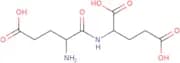
Purity:Min. 95%Glu-Glu
CAS:Glu-Glu is a mouse monoclonal antibody (IgG2a) that inhibits the activity of human leukocyte elastase. Glu-Glu has been shown to inhibit the production of inflammatory cytokines, such as IL-8 and TNF-α, in human serum obtained from patients with chronic cough. It also blocks the formation of disulfide bonds in peptides and proteins, which are important for their function. Glu-Glu has been used to study pathogenic mechanisms of chronic obstructive pulmonary disease and metabolic disorders, as well as its effects on polymerase chain reactions and enzyme activities in vitro.
Formula:C9H14N4O3Purity:Min. 95%Molecular weight:226.23 g/molAnti Bombesin Serum
Anti Bombesin Serum is a research tool that can be used to study the interactions of proteins with receptors and ion channels. Anti Bombesin Serum may also be used to study the inhibition of peptide receptor activity, for example, by bombesin or other ligands. This product is made from high-quality antibodies that have been selected for their ability to bind bombesin.
Purity:Min. 95%SF3B4 Blocking Peptide
A synthetic peptide for use as a blocking control in assays to test for specificity of SF3B4 antibody, catalog no. 70R-1408
Purity:Min. 95%PPIL2 Blocking Peptide
A synthetic peptide for use as a blocking control in assays to test for specificity of PPIL2 antibody, catalog no. 70R-2369
Purity:Min. 95%C10ORF56 Blocking Peptide
A synthetic peptide for use as a blocking control in assays to test for specificity of C10orf56 antibody, catalog no. 70R-3372
Purity:Min. 95%Arginase 1 Blocking Peptide
A synthetic peptide for use as a blocking control in assays to test for specificity of ARG1 antibody, catalog no. 70R-1084
Purity:Min. 95%Carbonic Anhydrase I Blocking Peptide
A synthetic peptide for use as a blocking control in assays to test for specificity of CA1 antibody, catalog no. 70R-2203
Purity:Min. 95%DPH1 Blocking Peptide
A synthetic peptide for use as a blocking control in assays to test for specificity of DPH1 antibody, catalog no. 70R-3975
Purity:Min. 95%ZNF276 Blocking Peptide
A synthetic peptide for use as a blocking control in assays to test for specificity of ZNF276 antibody, catalog no. 20R-1110
Purity:Min. 95%LRRC28 Blocking Peptide
A synthetic peptide for use as a blocking control in assays to test for specificity of LRRC28 antibody, catalog no. 70R-4151
Purity:Min. 95%C6ORF21 Blocking Peptide
A synthetic peptide for use as a blocking control in assays to test for specificity of C6orf21 antibody, catalog no. 70R-6411
Purity:Min. 95%NSUN6 Blocking Peptide
A synthetic peptide for use as a blocking control in assays to test for specificity of NSUN6 antibody, catalog no. 70R-4984
Purity:Min. 95%RNASE9 Blocking Peptide
A synthetic peptide for use as a blocking control in assays to test for specificity of RNASE9 antibody, catalog no. 70R-3186
Purity:Min. 95%SP6 Blocking Peptide
A synthetic peptide for use as a blocking control in assays to test for specificity of SP6 antibody, catalog no. 70R-9024
Purity:Min. 95%ROM1 Blocking Peptide
A synthetic peptide for use as a blocking control in assays to test for specificity of ROM1 antibody, catalog no. 70R-6107
Purity:Min. 95%WNT6 Blocking Peptide
A synthetic peptide for use as a blocking control in assays to test for specificity of WNT6 antibody, catalog no. 70R-7182
Purity:Min. 95%TADA2L Blocking Peptide
A synthetic peptide for use as a blocking control in assays to test for specificity of TADA2L antibody, catalog no. 70R-7986
Purity:Min. 95%SRRM4 Blocking Peptide
A synthetic peptide for use as a blocking control in assays to test for specificity of SRRM4 antibody, catalog no. 70R-10054
Purity:Min. 95%CAMKV Blocking Peptide
A synthetic peptide for use as a blocking control in assays to test for specificity of CAMKV antibody, catalog no. 70R-3638
Purity:Min. 95%