


Peptides
Peptides are short chains of amino acids linked by peptide bonds, serving as important biological molecules that play key roles in cellular processes. They function as hormones, neurotransmitters, and signaling molecules, and are widely used in therapeutic and diagnostic applications. Peptides are also crucial in research for studying protein interactions, enzyme activities, and cell signaling pathways. At CymitQuimica, we provide a diverse selection of high-quality peptides to support your research and development needs in biotechnology and pharmaceuticals.
Subcategories of "Peptides"
Found 30439 products of "Peptides"
Sort by
Purity (%)
0
100
|
0
|
50
|
90
|
95
|
100
H-EANQSTLENFLER-OH
<p>Peptide H-EANQSTLENFLER-OH is a Research Peptide with significant interest within the field academic and medical research. This peptide is available for purchase at Cymit Quimica in multiple sizes and with a specification of your choice.</p>H-NYRWRCKNQN-OH
<p>Peptide H-NYRWRCKNQN-OH is a Research Peptide with significant interest within the field academic and medical research. This peptide is available for purchase at Cymit Quimica in multiple sizes and with a specification of your choice.</p>CSF1 Blocking Peptide
<p>A synthetic peptide for use as a blocking control in assays to test for specificity of CSF1 antibody, catalog no. 70R-6326</p>Purity:Min. 95%P2RX2 Blocking Peptide
<p>A synthetic peptide for use as a blocking control in assays to test for specificity of P2RX2 antibody, catalog no. 70R-5171</p>Purity:Min. 95%Vamp1 Blocking Peptide
<p>A synthetic peptide for use as a blocking control in assays to test for specificity of Vamp1 antibody, catalog no. 70R-9794</p>Purity:Min. 95%STAT5B Blocking Peptide
<p>A synthetic peptide for use as a blocking control in assays to test for specificity of STAT5B antibody, catalog no. 20R-1134</p>ANXA1 Blocking Peptide
<p>A synthetic peptide for use as a blocking control in assays to test for specificity of ANXA1 antibody, catalog no. 70R-8182</p>Purity:Min. 95%Peptide YY(3-36), PYY, human
<p>Custom research peptide; min purity 95%.</p>Formula:C180H279N53O54Purity:Min. 95%Molecular weight:4,049.55 g/molPRPF6 Blocking Peptide
<p>A synthetic peptide for use as a blocking control in assays to test for specificity of PRPF6 antibody, catalog no. 70R-1449</p>Purity:Min. 95%PTPN12 Blocking Peptide
<p>A synthetic peptide for use as a blocking control in assays to test for specificity of PTPN12 antibody, catalog no. 70R-2706</p>Purity:Min. 95%ApoBEC3D Blocking Peptide
<p>A synthetic peptide for use as a blocking control in assays to test for specificity of APOBEC3D antibody, catalog no. 70R-4868</p>Purity:Min. 95%Prolactin Releasing Peptide (1-31), bovine
<p>Catalogue peptide; min. 95% purity</p>Formula:C157H244N54O41SMolecular weight:3,576.01 g/molMyelin Oligodendrocyte Glycoprotein (35-55) (mouse, rat) trifluoroacetate
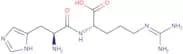
CAS:<p>Myelin oligodendrocyte glycoprotein (MOG) is a myelin protein found in the central nervous system. MOG is a ligand for CD200, which is an inhibitory receptor expressed by astrocytes. It has been shown that MOG can induce the proliferation and differentiation of primary cultures of rat astrocytes in vitro. MOG induces the production of reactive oxygen species in mitochondria and increases the expression of acid-binding protein, which are both important factors in the demyelination process. MOG has also been implicated as a potential factor in the development of multiple sclerosis. Further research into this protein may lead to new treatments or cures for disorders such as encephalomyelitis, nervous system diseases, or even cancer.</p>Formula:C118H177N35O29S•C2HO2F3Purity:Min. 95%Color and Shape:PowderMolecular weight:2,695.98 g/molH-His-Arg-OH
CAS:<p>H-His-Arg-OH is a synthetic peptide that has been shown to have cytotoxic effects on mammalian cells. The H-His-Arg-OH peptide can be used for the treatment of heart disease and autoimmune diseases, such as rheumatoid arthritis. This peptide has been found to be resistant to congestive heart failure, which is caused by a number of factors, including hypertension and valvular stenosis. It has also been shown to have an immunoglobulin G1 (IgG1) genotype.</p>Formula:C12H21N7O3Purity:Min. 95%Molecular weight:311.34 g/molRef: 3D-FH108062
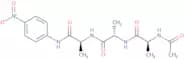
Discontinued productAc-Ala-Ala-Ala-pNA
CAS:<p>Ac-Ala-Ala-Ala-pNA is a synthetic peptide that is derived from the natural amino acid sequence of cholecystokinin. It has been shown to have high affinity for phospholipid bilayers, which are lipid membranes that form the boundaries of cells and organelles. Ac-Ala-Ala-Ala-pNA can be used as a substrate molecule to study membrane permeability and selectivity in bioreactors. Ac-Ala-Ala-Ala-pNA also acts as a modulator of liposomal membranes, increasing the permeability of these membranes in order to allow more substrate molecules to pass through them.</p>Formula:C17H23N5O6Purity:Min. 95%Color and Shape:PowderMolecular weight:393.39 g/mol[Ala81]-MBP (74-85)
<p>Catalogue peptide; min. 95% purity</p>Formula:C55H94N20O21Molecular weight:1,371.48 g/molHead activator
<p>Catalogue peptide; min. 95% purity</p>Formula:C54H84N12O14Molecular weight:1,125.36 g/molPAR-1-selective peptide
<p>Catalogue peptide; min. 95% purity</p>Formula:C35H58N10O9Molecular weight:762.91 g/molCJC-1295
CAS:<p>CJC-1295 is a synthetic peptide, which is an analogue of growth hormone-releasing hormone (GHRH). It is synthesized through recombinant DNA technology, which allows for precise control over its sequence and length. This particular peptide is designed to bind to GHRH receptors in the pituitary gland. By activating these receptors, CJC-1295 stimulates the release of growth hormone (GH) into the bloodstream.The primary function of CJC-1295 is to influence the endocrine system, particularly enhancing the release of endogenous growth hormone. It achieves this by increasing the amplitude and frequency of GH pulses without affecting the natural negative feedback mechanisms that regulate GH production. This mode of action distinguishes CJC-1295 from other growth hormone therapies, as it promotes a more physiological pattern of hormone secretion.CJC-1295 is used in various scientific contexts, primarily in research focusing on growth hormone deficiencies, muscle wasting conditions, and certain metabolic disorders. Its ability to increase GH release also makes it a subject of interest in studies related to aging, tissue repair, and regeneration. The longer half-life of CJC-1295 compared to natural GHRH peptides further enhances its applications in research, allowing for more sustained and controlled experimentation.</p>Purity:Min. 95%Ref: 3D-FC138107
Discontinued product











![[Ala81]-MBP (74-85)](/_next/image/?url=https%3A%2Fstatic.cymitquimica.com%2Fproducts%2F3D%2Fthumb-webp%2FVAC-00644.webp&w=3840&q=75)


