Enzyme Substrates
Subcategories of "Enzyme Substrates"
Found 1528 products of "Enzyme Substrates"
Resorufin methyl ether
CAS:Fluorogenic substrate used to differentiate cytochrome P450 monooxygenases
Formula:C13H9NO3Purity:Min. 95%Color and Shape:PowderMolecular weight:227.22 g/molRef: 3D-ER11277
Discontinued product4-Nitrophenyl 4,6-O-isopropylidene-a-D-galactopyranoside
CAS:4-Nitrophenyl 4,6-O-isopropylidene-a-D-galactopyranoside is a fluorogenic substrate that can be used to measure the activity of beta-galactosidase. This product is high purity, high quality and has a CAS number of 29781-31-5. It is an enzyme substrate with chromogenic and diagnostic properties that are used for conjugation to other molecules, as well as for culture media, chemiluminescence and food testing. 4NP4IPG is also used in bioluminescence assays to detect the presence of beta-galactosidase.
Purity:Min. 95%Molecular weight:341.31 g/molLuciferin-beta-D-glucoside, potassium salt
Luciferin-beta-D-glucoside, potassium salt is a fluorogenic substrate that can be used as a ligand in enzyme assays. It is also used in the manufacture of diagnostic reagents, such as conjugates and culture media. It is often used to test for the presence of bacteria or fungi.
Purity:Min. 95%Phenylethyl 2-acetamido-2-deoxy-b-D-glucopyranoside
CAS:Phenylethyl 2-acetamido-2-deoxy-b-D-glucopyranoside can be used to inhibit the growth of bacteria, yeast, and fungi. It is a yellow powder that has been shown to cause regression in tumor xenografts in mice. Phenylethyl 2-acetamido-2-deoxy-b-D-glucopyranoside inhibits cellular proliferation by blocking the synthesis of proteins and nucleic acids. This compound also has been shown to have an effect on the environment because it inhibits the growth of phytoplankton. Phenylethyl 2-acetamido-2-deoxy-b-D-glucopyranoside was found to disrupt bacterial gene expression profiles, which may be due to its ability to inhibit protein synthesis at the ribosome level.Purity:Min. 95%Molecular weight:325.36 g/molLuciferin-choline phosphate, sodium salt
Luciferin-choline phosphate, sodium salt is a chemical compound used for the detection of phosphatases and esterases. This compound is also used for the detection of bacteria and fungi in food testing and environmental testing. Luciferin-choline phosphate, sodium salt is a chromogenic substrate that can be detected using bioluminescence or fluorogenic substrates. It has an absorbance maximum at around 420 nm.
Formula:C16H17N3NaO6PS2Purity:Min. 95 Area-%Molecular weight:465.41 g/mol5-Bromo-4-chloro-3-indolyl b-D-galactopyranoside-6-sulphate
CAS:5-Bromo-4-chloro-3-indolyl b-D-galactopyranoside 6-sulphate (BCIGS) is a chemiluminescent substrate that reacts with an enzyme to produce light. It has been used for the detection of various substances, including 5'-nucleotidase, 5'-adenosine monophosphate phosphohydrolases, and alkaline phosphatase. BCIGS can be used as a chromogenic substrate in the fluorometric assay of glucose oxidase and galactose oxidase. BCIGS is also used as a ligand in immunological reactions such as immunodiffusion, immunoelectrophoresis, and radioimmunoassay.Formula:C14H15BrClNO9SPurity:Min. 95%Molecular weight:488.69 g/molRef: 3D-EB03191
Discontinued product4-Methylumbelliferyl 2-acetamido-3-O-(2,3,4-tri-O-acetyl-a-L-fucopyranosyl)-4-O-(2,3,4,6-tetra-O-acetyl-b-D-galactopyranosyl)-6-O-ac etyl-2-deoxy-b-D-glucopyranoside
4-Methylumbelliferyl 2-acetamido-3-O-(2,3,4-tri-O-acetyl-a-L-fucopyranosyl)-4-O-(2,3,4,6 -tetra-O-acetylbDgalactopyranosyl)-6-O-acetyldEoxybDglucopyranoside is a chemiluminescent substrate that has been used in the detection of beta galactosidase activity. It is a ligand for beta galactosidases and can be used for the study of enzyme kinetics. This compound also exhibits high purity and is available in CAS number: 916071. 4MUFAGAALF is suitable for use in culture media and environmental testing as well as diagnostics (e.g., bioluminescence), staining (fluorogenic substrate), and chromogenic substrates
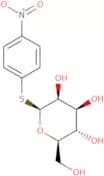
Purity:Min. 95%Molecular weight:1,023.94 g/mol4-Nitrophenyl b-D-thiomannopyranoside
CAS:4-Nitrophenyl b-D-thiomannopyranoside acts as a substrate for β-mannosidase and thioglycoligase. Upon enzymatic cleavage, these substrates release 4-nitrophenol, a yellow chromophore that can be detected spectrophotometrically at 405 nm, facilitating quantitative measurements of enzymatic activity. Consequently, these substrates are widely used in biochemical research, clinical diagnostics, and drug discovery for evaluating the function of specific enzymes in various biological processes.
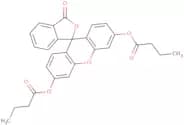
Purity:Min. 95%Molecular weight:317.32 g/molFluorescein dibutyrate
CAS:Fluorogenic substrate targeting esterase and lipase
Purity:Min. 95%Molecular weight:472.49 g/mol4-Nitrophenyl 2-acetamido-4-O-(2-acetamido-3,4,6-tri-O-acetyl-2-deoxy-b-D-glucopyranosyl)-3,6-di-O-acetyl-2-deoxy-b-D-glucopyranosid e
CAS:4-Nitrophenyl 2-acetamido-4-O-(2-acetamido-3,4,6-tri-O-acetyl-2-deoxy-b-D-glucopyranosyl)-3,6-di-O -acetyl2 deoxy b D glucopyranosid e is a chemiluminescence substrate that reacts with hydrogen peroxide to produce light. It is used in diagnostics for the detection of bacterial and fungal cultures. The reaction between 4NPAA and hydrogen peroxide generates light at 540 nm. This product has been tested for purity and quality using various methods including culture media, environmental testing, bioluminescence, staining, fluorogenic substrate, enzyme substrate, food testing and conjugate.Purity:Min. 95%Molecular weight:755.68 g/mol4-Nitrophenyl 2-acetamido-3,6-di-O-acetyl-4-O-(2,3,4,6-tetra-O-acetyl-b-D-galactopyranosyl)-2-deoxy-b-D-glucopyranoside
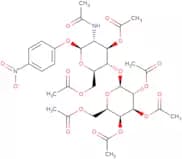
CAS:4-Nitrophenyl 2-acetamido-3,6-di-O-acetyl-4-O-(2,3,4,6-tetra-O-acetyl-b-D-galactopyranosyl)-2-deoxy-b-D-glucopyranoside is modified acetylated chromogenic substrate designed for the detection and quantification of enzyme activity. This highly specific substrate is cleaved by enzymes, releasing a yellow 4-nitrophenol product that can be easily measured spectrophotometrically. This allows for accurate and sensitive analysis of enzyme kinetics, inhibition studies, and substrate specificity determination.
Purity:Min. 95%Molecular weight:756.66 g/molRef: 3D-EN06441
Discontinued product6-Amino-D-luciferin
CAS:Substrate for synthesis of proluminescent bioconjugates
Formula:C11H9N3O2S2Purity:Min. 95%Color and Shape:Clear LiquidMolecular weight:279.34 g/molRef: 3D-FA141819
Discontinued product4-Nitrophenyl 4,6-benzylidene-3-O-(2,3,4,6-tetra-O-[4-methoxybenzyl]-a-D-glucopyranosyl)-a-D-glucopyranoside
4-Nitrophenyl 4,6-benzylidene-3-O-(2,3,4,6-tetra-O-[4-methoxybenzyl]-a-D-glucopyranosyl)-a-D-glucopyranoside is a chemiluminescent substrate used for the detection of various enzymes. This substrate is commonly used in enzyme assays to measure the activity of β-galactosidase, α-amylase, and β-lactamase. The product can be used in diagnostic applications such as food testing and bacterial identification.Purity:Min. 95%Molecular weight:1,088.02 g/molRef: 3D-EN04840
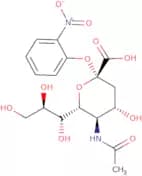
Discontinued product2-O-(2-Nitrophenyl)-a-D-N-acetylneuraminic acid
CAS:2-O-(2-Nitrophenyl)-a-D-N-acetylneuraminic acid is a chromogenic substrate specifically designed for the detection and quantification of sialidase (neuraminidase) enzyme activity. Neuraminidases are enzymes that cleave sialic acid residues from glycoconjugates, and are produced by many microorganisms, including influenza viruses. Upon cleavage by sialidase, this substrate releases a yellow-colored 2-nitrophenol product, which can be easily monitored spectrophotometrically. This substrate is widely used in various applications, including enzyme kinetics studies, inhibitor screening, and the detection of bacterial and viral neuraminidases in clinical and environmental samples.Purity:Min. 95%Color and Shape:SolidMolecular weight:430.36 g/mol3-Indolyl b-D-glucuronide sodium salt
CAS:3-Indolyl b-D-glucuronide sodium salt is a specialized enzyme substrate that features an indole moiety linked to a glucuronide group. This compound is commonly used in various biochemical assays to study the activity of glucuronidase enzymes, which play a crucial role in the metabolism and detoxification of xenobiotics and endogenous compounds. The sodium salt form of this substrate ensures enhanced solubility and stability in aqueous solutions, making it a valuable tool for researchers investigating the function and regulation of glucuronidase enzymes in biological systems. 3-Indolyl b-D-glucuronide sodium salt is also used for the detection of E. coli.Purity:Min. 95%Color and Shape:Off-White SolidMolecular weight:331.25 g/molRef: 3D-EI03299
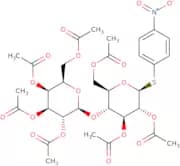
Discontinued product4-Nitrophenyl 4-O-(2,3,4,6-tetra-O-acetyl-b-D-galactopyranosyl)-2,3,6-tri-O-acetyl-b-D-thioglucopyranoside
CAS:4-Nitrophenyl 4-O-(2,3,4,6-tetra-O-acetyl-b-D-galactopyranosyl)-2,3,6-tri-O-acetyl-b-D-thioglucopyranoside is a superior chromogenic substrate for the detection of enzymes. Specifically designed for optimal performance, it provides exquisite sensitivity and definitive results in enzyme assays. Its exceptional properties make it a top choice among researchers and professionals in biochemistry, enabling accurate analysis and quantification of enzymatic activities.Purity:Min. 95%Molecular weight:773.71 g/molRef: 3D-EN04992
Discontinued product4-Nitrophenyl a-D-maltotetraoside
CAS:4-Nitrophenyl alpha-D-maltotetraoside is a chromogenic substrate used for the detection of alpha-glucosidase and alpha-amylase activity. The four glucose units in the molecule are hydrolyzed by the enzyme, releasing 4-nitrophenol and allowing for easy colorimetric measurement of enzymatic activity
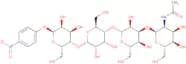
Purity:Min. 95%Molecular weight:787.67 g/mol4-Nitrophenyl b-globo-N-tetraoside
CAS:4-Nitrophenyl beta-galactoside (pNP-Gal) is a chromogenic substrate commonly used in enzymatic assays to detect and quantify the presence of beta-galactosidase. It is hydrolyzed by the enzyme to release 4-nitrophenol, which produces a yellow color that can be measured spectrophotometrically. Similarly, 4-Nitrophenyl beta-glucoside (pNP-Glc) can be used to assay beta-glucosidase activity. 4-Nitrophenyl beta-globotrioside (pNP-Glo) is a similar compound that has been designed as a substrate for glycosidases that cleave terminal beta-galactosyl-(1->3)-N-acetylgalactosamine residues. In these assays, the release of 4-nitrophenol can be measured to determine the activity of the enzyme under study. The use of chromogenic substrates like pNP-Glo allows for the rapid and reliable detection of glycosidase activity in a variety of biological samples.
Purity:Min. 95%Color and Shape:PowderMolecular weight:828.72 g/molRef: 3D-EN44929
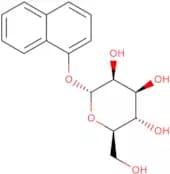
Discontinued product1-Naphthyl-α-D-mannopyranoside
CAS:1-Naphthyl-alpha-D-mannopyranoside is a chromogenic substrate. It is used in diagnostics and as a reagent for enzymatic analysis of alpha-mannosidase activity in culture media, food testing, and environmental testing.
Formula:C16H18O6Purity:Min. 95%Color and Shape:PowderMolecular weight:306.31 g/molRef: 3D-EN66033
Discontinued productNaphthol AS-CL phosphate
CAS:Modified naphtol AS substrate used in histochemical and cytochemical staining
Purity:Min. 95%Molecular weight:407.74 g/molD-Luciferin Firefly, sodium salt monohydrate - Endotoxin-free
CAS:Water soluble substrate for firefly luciferase, with low endotoxin.
Formula:C11H9N2NaO4S2Purity:Min. 95%Molecular weight:320.3 g/molRef: 3D-EL175436
Discontinued productD-Luciferin Firefly, potassium salt - white
CAS:Water soluble substrate for firefly luciferase. Used for imaging the expression of the LUC marker gene and luciferase-fusion conjugates in living cells, tissues and organisms. Extensively utilized in reporter gene assays, immunoassays and hygiene monitoring. Endotoxin free product.
Formula:C11H7KN2O3S2Purity:Min. 95%Color and Shape:PowderMolecular weight:318.42 g/molRef: 3D-EL175434
Discontinued productLuciferin-β-D-glucuronide, dipotassium salt
Luciferin-beta-D-glucuronide, dipotassium salt, is a bioluminescent substrate for beta-glucuronidase (GUS). It is used in various fields, including biomedical research, diagnostics, and imaging.
Formula:C17H14K2N2O9S2Purity:Min. 95%Color and Shape:PowderMolecular weight:531.941494-Nitrophenyl valerate
CAS:Please enquire for more information about 4-Nitrophenyl valerate including the price, delivery time and more detailed product information at the technical inquiry form on this page
Formula:C11H13NO4Molecular weight:223.23 g/molRef: 3D-J-012670
Discontinued product4-Nitrophenyl-myo-inositol-1-yl phosphate
CAS:4-Nitrophenyl-myo-inositol-1-yl phosphate is a highly specific chromogenic substrate used for the detection, quantification, and characterization of phosphoinositide phosphatases. When cleaved by the target enzyme, it generates a highly absorbing 4-nitrophenyl moiety, producing a yellow color that can be measured spectrophotometrically. This versatile substrate is valuable in examining phosphoinositide phosphatase activity, enzyme kinetics, substrate specificity, and inhibition studies in various cellular processes, including signal transduction, lipid metabolism, and membrane trafficking.
Purity:Min. 95%Molecular weight:381.23 g/molLuciferin-beta-D-glucuronide, dipotassium salt
Luciferin-beta-D-glucuronide, dipotassium salt is a fluorescent compound that is used as a diagnostic tool. It can be used to detect the presence of enzymes, such as beta-galactosidase and beta-glucuronidase, in culture media or biological fluids. Luciferin-beta-D-glucuronide, dipotassium salt is also used for food testing and environmental testing.
Formula:C17H14K2N2O9S2Purity:Min. 94.0 Area-%Molecular weight:532.63 g/molRef: 3D-L-8122
Discontinued product6-Hexanoylamino-4-methylumbelliferyl b-D-galactopyranoside
6-Hexanoylamino-4-methylumbelliferyl b-D-galactopyranoside is a chromogenic substrate for beta-galactosidase.Purity:Min. 95%2-O-(4-Nitrophenyl)-a-D-N-glycolylneuraminic acid
CAS:2-O-(4-Nitrophenyl)-a-D-N-glycolylneuraminic acid is commonly used to measure the activity of sialidase enzymes, specifically those that cleave glycoconjugates containing 2-O-(4-nitrophenyl)-alpha-D-N-glycolylneuraminic acid. The resulting product can be detected by measuring the absorbance at a specific wavelength using a spectrophotometer. This substrate offers a high degree of specificity for glycolylneuraminic acid-containing substrates and is useful for both research and diagnostic purposes.Purity:Min. 95%Color and Shape:PowderMolecular weight:446.36 g/mol






![4-Nitrophenyl 4,6-benzylidene-3-O-(2,3,4,6-tetra-O-[4-methoxybenzyl]-a-D-glucopyranosyl)-a-D-gluco…](/_next/image/?url=https%3A%2Fstatic.cymitquimica.com%2Fproducts%2F3D%2Fthumb-webp%2FEN04840.webp&w=3840&q=75)