Enzyme Substrates
Enzyme substrates are molecules upon which enzymes act to catalyze chemical reactions. The substrate binds to the active site of the enzyme, where it undergoes a specific transformation to form the product of the reaction. Enzyme substrates are essential tools in research for studying enzyme kinetics, specificity, and mechanism of action. They are also used in diagnostic assays and biochemical studies. At CymitQuimica, we provide a diverse selection of high-quality enzyme substrates to support your research in enzymology and biochemistry.
Subcategories of "Enzyme Substrates"
Found 1527 products of "Enzyme Substrates"
Sort by
Purity (%)
0
100
|
0
|
50
|
90
|
95
|
100
L-Glutamic acid γ-(4-nitroanilide) monohydrochloride
CAS:L-Glutamic acid gamma-(4-nitroanilide) monohydrochloride is a fluorescent substrate for various enzymes. It is used in the detection of aminopeptidase and dipeptidase activity, as well as in the determination of ATPase activity. L-Glutamic acid gamma-(4-nitroanilide) monohydrochloride is also used in fluorogenic assays for the detection of phosphate, pyruvate, pyrophosphate and sulfite. This product has been tested by both enzyme and cell culture methods to ensure high purity and quality. L-Glutamic acid gamma-(4-nitroanilide) monohydrochloride is not intended for use in diagnostics, food testing or bioluminescence reactions.Formula:C11H14ClN3O5Purity:Min. 98 Area-%Molecular weight:303.70 g/molL-Glutamic acid γ-(7-amido-4-methylcoumarin)
CAS:Substrate for aminopeptidase a or the assay of γ-glutamyl transferase yielding a blue fluorescent solution upon cleavage.Formula:C15H16N2O5Purity:Min. 99 Area-%Molecular weight:304.31 g/molRef: 3D-G-3850
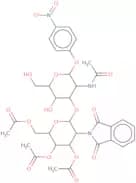
-Unit-ggTo inquire1gTo inquire50mgTo inquire250mgTo inquire500mgTo inquire2500mgTo inquire4-Nitrophenyl 2-acetamido-3-O-(3,4,6-tri-O-acetyl-2-deoxy-2-phthalimido-b-D-glucopyranosyl)-2-deoxy-a-D-galactopyranoside
4-Nitrophenyl 2-acetamido-3-O-(3,4,6-tri-O-acetyl-2-deoxy-2-phthalimido-b-D-glucopyranosyl)-2-deoxy -a -D -galactopyranoside is a Fluorogenic substrate that is used in the detection of beta glucuronidase activity. It can be used for food testing, staining, environmental testing and chromogenic substrate for diagnostic purposes. It has a CAS number of 184840–55–9 and is available in high purity and quality. 4NPPAG is an enzyme substrate that is used to measure the amount of beta glucuronidase activity in culture media by chemiluminescence or bioluminescence.Purity:Min. 95%Molecular weight:759.67 g/molLuciferin-myo-inositol-1-phosphate, sodium salt
Luciferin-myo-inositol-1-phosphate, sodium salt is a conjugate of luciferin and myo-inositol. It is used as a substrate for certain enzymes, such as the enzyme that catalyzes the oxidation of luciferin to oxyluciferin. This product can be used in environmental testing, food testing, and diagnostics. Luciferin-myo-inositol-1-phosphate, sodium salt is available in high purity and high quality.Formula:C17H18N2NaO11PS2Purity:Min. 94 Area-%Molecular weight:544.42 g/molHordenine
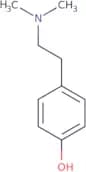
CAS:Produces a fluorogenic signal in the presence of peroxidaseFormula:C10H15NOPurity:Min. 95%Color and Shape:Brown PowderMolecular weight:165.23 g/molIsoluminol
CAS:Isoluminol is a chromogenic molecule with a hydrophilic nature due to the location of the amino group in the phthalate ring, making it impermeable to cell membranes. It is used as a chemiluminescent probe to specifically detect extracellular reactive oxygen species (ROS) metabolites, which are known to be toxic for intra-erythrocytic parasites. Isoluminol-enhanced chemiluminescence has been employed as a sensitive method to study the release of superoxide anion from human neutrophils. Additionally, isoluminol has been utilized to measure extracellular ROS, distinguishing it from luminol, which is used to measure total ROS. Furthermore, isoluminol is suggested to detect mainly extracellular production of ROS, providing a lower chemiluminescence signal compared to luminol. Isoluminol is used as a chemiluminescence amplifier with pronounced affinity to oxidants outside polymorphonuclear leukocytes (PMNLs). It has been reported that isoluminol is less able to traverse biological membranes, making it suitable for detecting the release of NADPH oxidase-derived superoxide ions. Moreover, isoluminol is more hydrophilic and polar than luminol, as indicated by its lower capacity to form intramolecular hydrogen bridges. The molecule's impermeability ensures that only extracellularly excreted ROS are detected in the assay. In analytical chemistry, isoluminol is used as a chemiluminescence probe for labeling proteins and biomolecules, and its chemiluminescent oxidation is enhanced in the presence of certain catalysts. Isoluminol is also employed in open-tubular capillary chromatography systems for the elution of labeled biomolecules. Additionally, isoluminol has been used in microchip chromatography for the analysis of biomolecules.Formula:C8H7N3O2Purity:Min. 95%Molecular weight:177.053833-(2'-Spiroadamantane)-4-methoxy-4-(3''-phosphoryloxy)phenyl-1,2-dioxetane
CAS:As an alternative to commonly used colorimetric and fluorescent substrates, 3-(2'-Spiroadamantane)-4-methoxy-4-(3''-phosphoryloxy)phenyl-1,2-dioxetane, abbreviated AMPPD, is a chemiluminescent substrate for alkaline phosphatase (ALP). It allows detection of alkaline phosphatase at a high sensitivity. Literature reports that the co-presence of 0.1% bovine serum albumin (BSA) leads to a signal increase of 10-folds under selected conditions.Formula:C18H23O7PPurity:Min. 97.0 Area-%Molecular weight:382.34 g/molRef: 3D-S-7601
-Unit-ggTo inquire1gTo inquire5gTo inquire250mgTo inquire500mgTo inquire2500mgTo inquire4-Nitrophenyl 3-O-(2,3,4,6-tetra-O-acetyl-b-D-glucopyranosyl)-b-D-glucopyranoside
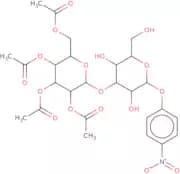
4-Nitrophenyl 3-O-(2,3,4,6-tetra-O-acetyl-b-D-glucopyranosyl)-b-D-glucopyranoside is a chromogenic substrate that is used to test for the presence of an enzyme. It reacts with the enzyme to produce a light signal that can be detected by a spectrophotometer. The CAS number for this compound is 832476-41-8. This compound has been tested and found to be of high quality and purity. 4NP3OBG is also suitable for use in culture media, food testing, and as a fluorogenic substrate.Purity:Min. 95%Molecular weight:631.54 g/mol4-Nitrophenyl 4,6-cyclohexylidene-b-D-mannopyranoside
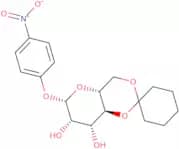
CAS:4-Nitrophenyl 4,6-cyclohexylidene-b-D-mannopyranoside is a fluorogenic substrate that can be used for the detection of β-glucosidase activity. It is a high purity product with a ligand that binds specifically to β-glucosidase. 4NPPM is an enzyme substrate that can be used in diagnostics for the detection of β-glucosidase activity and conjugate for chemiluminescence and bioluminescence. This product has been shown to react with glucose in the presence of hydrogen peroxide and luminol, emitting light when excited by ultraviolet light at 365 nm. 4NPPM also reacts with glucose oxidase to produce hydrogen peroxide, which then reacts with luminol, producing light. The CAS number for this compound is 102717-16-8.Purity:Min. 95%Molecular weight:381.38 g/mol6-Chloro-4-(trifluoromethyl)umbelliferyl b-D-galactopyranoside
6-Chloro-4-(trifluoromethyl)umbelliferyl b-D-galactopyranoside is a chromogenic substrate for the enzyme β-galactosidase, which hydrolyzes the substrate to produce a fluorescent product. This fluorogenic substrate can be used in chemiluminescent detection of β-galactosidase activity as well as in immunochemical and immunohistochemical analysis of glycoproteins. 6-Chloro-4-(trifluoromethyl)umbelliferyl b-D-galactopyranoside is also used for staining of glycoprotein substrates with periodic acid Schiff reagent or Alcian blue, and it can be used in the diagnosis of glycogen storage diseases.Purity:Min. 95%Molecular weight:426.73 g/mol4-Nitrophenyl 2-acetamido-3-O-(2-acetamido-3,4,6-tri-O-acetyl-b-D-glucopyranosyl)-4,6-di-O-acetyl-2-deoxy-a-D-galactopyranoside
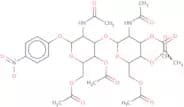
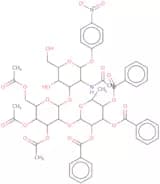
4-Nitrophenyl 2-acetamido-3-O-(2-acetamido-3,4,6-tri-O-acetyl-b-D-glucopyranosyl)-4,6-di-O-acetyl-2deoxy--aDgalactopyranoside is a substrate for enzymes such as beta galactosidase and alpha amylase. It can be used for the detection of these enzymes in biological samples, including culture media and body fluids. 4NPAG has also been used as a chromogenic substrate to measure the activity of NADH oxidase in neutrophils. 4NPAG is fluorescent in aqueous solution and can be used to detect bioluminescence reactions.Purity:Min. 95%Molecular weight:755.68 g/mol4-Nitrophenyl 2-acetamido-3-O-[2-O-(2,3,4-tri-O-benzoyl-a-L-fucopyranosyl)-3,4,6-tri-O-acetyl-2-deoxy-D-galactopyranosyl]-b-D-glucop yranoside
4-Nitrophenyl 2-acetamido-3-O-[2-O-(2,3,4-tri-O-benzoyl-a-L-fucopyranosyl)-3,4,6-tri-O-acetyl-2 deoxy -D-galactopyranosyl]-b D glucopyranoside is a fluorescent substrate for the enzyme β galactosidase. It can be used to test for β galactosidase activity in food products, environmental samples and diagnostics. 4NPFAPG is a conjugate of 4 nitrophenol and 2 acetamido 3 O-[2 O-(2,3,4 tri O benzoyl a L fucopyranosyl) 3,4 6 tri O acetyl 2 deoxy D galactopyranosyl] b D glucopyranose. 4NPFAPG is water soluble and hasPurity:Min. 95%Molecular weight:1,089.01 g/mol4-Nitrophenyl 2-acetamido-2-deoxy-4-O-(a-L-fucopyranosyl)-b-D-glucopyranoside
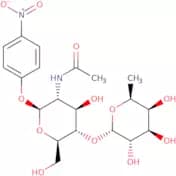
CAS:4-Nitrophenyl 2-acetamido-2-deoxy-4-O-(a-L-fucopyranosyl)-b-D-glucopyranoside is a fluorescent substrate for beta-galactosidase that is used in diagnostics and research. The product has been shown to be an excellent substrate for beta-galactosidase and beta-glucuronidase, as well as other glycosidases. It can be used to detect the presence of these enzymes in any sample containing glycosides. This product is also used in food testing, environmental testing, and bioluminescence experiments. 4NPAFG is available in high purity with a conjugate group at the C4 position.Purity:Min. 95%Molecular weight:488.44 g/mol4-Nitrophenyl 2,3,4-tri-O-acetyl-a-D-glucopyranoside
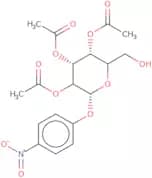
4-Nitrophenyl 2,3,4-tri-O-acetyl-a-D-glucopyranoside is a high quality chemical used in the development of various diagnostic and research applications. It is also used in the production of enzymatic substrates for enzyme activity assays. 4NPTAG is a chromogenic substrate that produces chemiluminescence when it reacts with an oxidizing agent and has been shown to be very effective as a fluorogenic substrate for protein kinases. This compound has been shown to bind to ligands and can be used as a bioluminescent reporter for molecular biology applications. The CAS number for this product is 54973-14-0.Purity:Min. 95%Molecular weight:427.36 g/mol4-Nitrophenyl 2-acetamido-6-O-(2-acetamido-3,4,6-tri-O-acetyl-2-deoxy-b-D-glucopyranosyl)-3-O-(2,3,4,6-tetra-O-acetyl-b-D-galactopyr anosyl)-2-deoxy-a-D-galactopyranoside
4-Nitrophenyl 2-acetamido-6-O-(2-acetamido-3,4,6-tri-O-acetyl-2-deoxy-b-D-glucopyranosyl)-3-O-(2,3,4,6-tetra -O acetyl -b D galactopyranosyl)-2 deoxy a D galactopyranoside is a high purity fluorogenic substrate for the enzyme β galactosidase. It can be used for the detection of β galactosidase in biological samples. 4NPAG can also be used as a ligand for various types of chromogenic substrates. This product is also commonly used in diagnostics and conjugates to detect β galactosidase activity or as a culture media supplement.Purity:Min. 95%Molecular weight:1,001.89 g/molBenzyl [13C6] 2-acetamido-3,4,6-tri-O-acetyl-2-deoxy-a-D-galactopyranoside
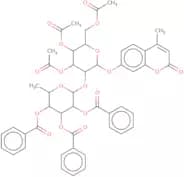
Benzyl [13C6] 2-acetamido-3,4,6-tri-O-acetyl-2-deoxy-a-D-galactopyranoside is a synthetic monosaccharide with a galactose backbone. The glycosylation of this molecule is the result of enzymatic modification by a glycosylase enzyme that specifically recognizes and removes the terminal glucose residue. This glycosylation process is called click chemistry because it occurs in one step, forming a covalent bond between the sugar and an acetamido group on the benzyl moiety.Purity:Min. 95%Color and Shape:White To Off-White SolidMolecular weight:443.4 g/mol4-Methylumbelliferyl 3,4,6-tri-O-acetyl-2-O-(2,3,4-tri-O-benzoyl-a-L-fucopyranosyl)-b-D-galactopyranoside
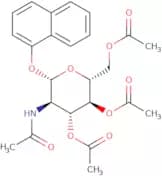
4-Methylumbelliferyl 3,4,6-tri-O-acetyl-2-O-(2,3,4-tri-O-benzoyl-a-L-fucopyranosyl)-b-D-galactopyranoside is a fluorogenic substrate that is used for the detection of β D -galactosidase. β D -Galactosidase is an enzyme that breaks down lactose in milk and is used as a diagnostic tool for identifying lactose intolerance. This substrate can be used as a conjugate in immunoassays to detect antibodies against the enzyme or it can be used to measure the activity of the enzyme in food samples. It also can be used to measure α1,3 galactosyltransferase activity in colorectal cancer cells or bacteria.Purity:Min. 95%Molecular weight:922.9 g/mol1-Naphthyl 2-acetamido-3,4,6-tri-O-acetyl-2-deoxy-b-D-glucopyranoside
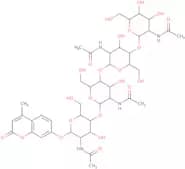
CAS:1-Naphthyl 2-acetamido-3,4,6-tri-O-acetyl-2-deoxy-b-D-glucopyranoside is a fluorogenic substrate for bacterial beta D glucosidase. It is used for measuring the enzyme activity in different types of culture media and in the detection of bacterial contamination in food and environmental samples. This product can be used to detect the presence of beta D glucosidase by measuring luminescence with a luminometer. 1NAAG can also be used as a chromogenic substrate or to conjugate with antibodies for use in immunoassays.br>Purity:Min. 95%Molecular weight:473.47 g/mol4-Methylumbelliferyl N,N',N'',N'''-tetraacetyl-b-D-chitotetraoside
CAS:4-Methylumbelliferyl N,N',N'',N'''-tetraacetyl-beta-D-chitotetraoside is a fluorogenic substrate for chitinase. After enzymatic cleaveage, free 4-methylumbelliferone (also known as hymecromone) is released, exhibiting blue fluorescence upon excitation with UV light. The strongest fluorescence of 4-methylumbelliferone requires deprotonation of the hydroxyl group (thus requires alkaline pH), with a maximal fluorescence intensity obtained with excitation at 350 to 370 nm and emission at 440 to 470 nm. The use of 4-methylumbelliferyl N,N',N'',N'''-tetraacetyl-beta-D-chitotetraosideas a substrate for measuring the chitinase activity is used for fungal infection detection and Gaucher disease screening.Formula:C42H60N4O23Purity:Min. 95%Color and Shape:PowderMolecular weight:988.94 g/mol6,8-Difluoro-4-methylumbelliferyl 2-acetamido-3-O-(b-D-galactopyranosyl)-a-D-galactopyranoside
6,8-Difluoro-4-methylumbelliferyl 2-acetamido-3-O-(b-D-galactopyranosyl)-a-D-galactopyranoside is a chemiluminescent substrate that reacts with oxygen in the presence of luciferase to produce light. This product is an excellent replacement for luminol, especially in applications where aqueous solvents are not suitable. 6,8-Difluoro-4-methylumbelliferyl 2-acetamido-3-O-(b-D-galactopyranosyl)-a-D-galactopyranoside has been extensively tested and shown to be nonhazardous in a variety of different culture media. It is also nonhazardous to the environment, as it can be easily degraded by microorganisms.
Purity:Min. 95%







![Benzyl [13C6] 2-acetamido-3,4,6-tri-O-acetyl-2-deoxy-a-D-galactopyranoside](/_next/image/?url=https%3A%2Fstatic.cymitquimica.com%2Fproducts%2F3D%2Fthumb-webp%2FEB64839.webp&w=3840&q=75)