Enzyme Substrates
Subcategories of "Enzyme Substrates"
Found 1527 products of "Enzyme Substrates"
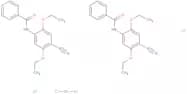
Fast blue BB salt
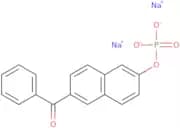
CAS:Fast Blue BB is commonly used for assaying beta-glycosidase activity and the chromogenic reaction between Fast Blue BB and beta-naphthol results in a reddish colored product and is at the basis of its application to different enzymatic activity assays. Produces a fluorescent, blue-green chromophore.Formula:C34H36Cl4N6O6ZnPurity:Min. 95%Molecular weight:831.9 g/mol6-Benzoyl-2-naphthylphosphate disodium salt
CAS:6-Benzoyl-2-naphthylphosphate disodium salt is a chromogenic substrate used to detect and quantify alkaline phosphatase activity. After enzymatic hydrolysis, 6-benzoyl-2-naphthol is released, which can be detect or even further react with other reagents (e.g. Fast Red) to increase the intensity of the colorimetric signal. It is used in common applications such as ELISA, immunohistochemistry and Western Blotting.
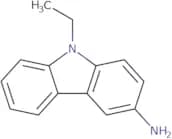
Purity:Min. 95%Molecular weight:374.24 g/mol3-Amino-9-ethylcarbazole
CAS:3-Amino-9-ethylcarbazole is a peroxidase substrate suitable for use in immunoblotting and immunohistochemical staining procedures. This substrate produces an insoluble end product that is red in color and can be observed visually.
Formula:C14H14N2Purity:Min. 95%Color and Shape:Beige PowderMolecular weight:210.27 g/mol4-Aminoantipyrine
CAS:4-Aminoantipyrine has been used as an analgesic and anti-inflammatory agent. It can also target peroxidase enzymes to produce a red colorFormula:C11H13N3OColor and Shape:Off-White To Yellow SolidMolecular weight:203.24 g/molAquaSpark® 510 Nitroreductase/NADH Probe, lyophilized, Ramot at Tel-Aviv University Ltd. Patent family WO 2017/130191
CAS:The AquaSpark® 510 Nitroreductase/NADH Probe (CL-NTR) is a water-soluble probe for the selective chemiluminescent detection of nitroreductase (NTR) activity. It is a versatile tool for monitoring a number of biological processes.Formula:C28H28ClNO8Color and Shape:PowderMolecular weight:541.15 g/molRemazol brilliant blue R D-xylan
Remazol Brilliant Blue R D-xylan is a chromogenic substrate used for the detection and quantification of xylanase enzyme activity. This substrate consists of a xylan polymer backbone covalently linked to the Remazol Brilliant Blue R dye. Upon cleavage by xylanase enzymes, the dye is released, producing a vibrant blue color that can be easily measured spectrophotometrically. This substrate is widely used in various applications, including the study of xylanase-producing microorganisms, optimization of enzyme production, and evaluation of enzyme kinetics.
Purity:Min. 95%Color and Shape:Powder2-Methyl-6-(4-methoxyphenyl)-3,7-dihydroimidazo(1,2-a)pyrazin-3-one hydrochloride
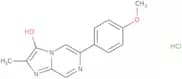
CAS:2-Methyl-6-(4-methoxyphenyl)-3,7-dihydroimidazo(1,2-a)pyrazin-3-one hydrochloride (ABI) is a potent and selective inhibitor of the enzyme toll-like receptor. The drug has been shown to decrease the metabolic rate in experimental models. ABI has also been used as an analog for other compounds to study their effects on redox potentials and reactive species. It is unclear how ABI inhibits protein synthesis by polymerase chain reaction (PCR). One possible mechanism is that it may inhibit the binding of primers to DNA. ABI also inhibits the production of chemokines which are small proteins that stimulate inflammatory responses. This drug can be used in autoimmune diseases such as rheumatoid arthritis and multiple sclerosis.Purity:Min. 95%Molecular weight:290.72 g/molNaphthol AS sulphate potassium
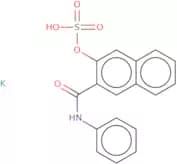
CAS:Modified naphtol AS substrate used in histochemical and cytochemical stainingFormula:C17H13NO5S•KPurity:Min. 95%Color and Shape:PowderMolecular weight:382.45 g/mol4-Nitrophenyl b-D-cellopentaoside
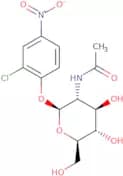
CAS:Substrates for endoglucanase and beta-cellobiohydrolase activity in the study of digestive system in Zygentoma as an insect model for high cellulase activityFormula:C36H55NO28Purity:Min. 95%Color and Shape:PowderMolecular weight:949.81 g/mol2-Chloro-4-nitrophenyl 2-acetamido-2-deoxy-β-D-glucopyranoside
CAS:2-Chloro-4-nitrophenyl 2-acetamido-2-deoxy-β-D-glucopyranoside is a chromogenic substrate used for beta-N-acetylglucosaminidase assays. Upon enzymatic hydrolysis, 2-chloro-4-nitrophenol is released, which has a yellowish color. It is used in diagnostic applications such as lysosomal storage disorder diagnosis (for example, Tay-Sachs disease) and glycosidase inhibition studies.Formula:C14H17ClN2O8Purity:Min. 98 Area-%Color and Shape:White PowderMolecular weight:376.75 g/molChlorophenol red b-D-galactopyranoside
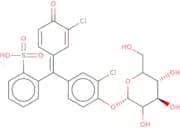
CAS:Used in biological studies as a chromogenic substrate for β-galactosidase; red color.Chlorophenol red indicates changes of pH in the range of 4.8 to 6.7 by turning the solution from yellow (at pH 4.8) to violet (at pH 6.7). Converted as signalogenic moiety of an enzyme substrate, chlorophenol red beta-D-galactopyranoside has a good proven sensitivity in the detection of beta-galactosidase activity in transfected mammalian cells, when compared to ONPG (o-nitrophenyl-beta-D-galactopyranoside) (Eustice, 1991)
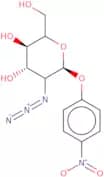
Formula:C25H22Cl2O10SPurity:Min. 95%Color and Shape:Orange Red PowderMolecular weight:585.41 g/mol4-Nitrophenyl 2-azido-2-deoxy-b-D-galactopyranoside
4-Nitrophenyl 2-azido-2-deoxy-beta-D-galactopyranoside is a chromogenic substrate for beta-galactosidase. Upon hydrolysis, para-nitrophenol is released yielding a yellowish colour. 4-Nitrophenyl 2-azido-2-deoxy-beta-D-galactopyranoside is used in different applications such as the Bacterial enzyme assays (e.g., E. coli detection)Purity:Min. 95%Color and Shape:White To Off-White SolidMolecular weight:326.26 g/molAmine transaminases kit
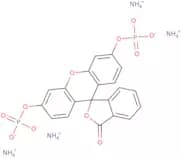
Used for synthesis of chiral amines from ketones and ketoacidsPurity:Min. 95%Fluorescein diphosphate tetraammonium salt
CAS:Fluorogenic substrate targeting phosphataseFormula:C20H14O11P2•(NH3)4Purity:Min. 90 Area-%Color and Shape:Yellow PowderMolecular weight:560.39 g/mol1,2,4-trihydroxynaphthalene-2-O-b-D-glucopyranoside
CAS:Please enquire for more information about 1,2,4-trihydroxynaphthalene-2-O-b-D-glucopyranoside including the price, delivery time and more detailed product information at the technical inquiry form on this page
Formula:C16H18O8Molecular weight:338.31 g/mol1,2,4-trihydroxynaphthalene-4-O-b-D-glucopyranoside
CAS:Please enquire for more information about 1,2,4-trihydroxynaphthalene-4-O-b-D-glucopyranoside including the price, delivery time and more detailed product information at the technical inquiry form on this page
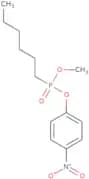
Formula:C16H18O8Molecular weight:338.31 g/molMethyl 4-nitrophenyl hexylphosphonate
CAS:Methyl 4-nitrophenyl hexylphosphonate is a phosphonate inhibitor of the enzyme serine esterase. It has been shown to be more potent than other irreversible inhibitors such as ethyl 4-nitrophenyl hexylphosphonate and methyl 4-nitrophenoxybutyl phosphate. This compound is an immobilized form of the methyl 4-nitrophenyl hexylphosphonate that is immobilized on an inert surface, such as silica gel, via a covalent bonding process. The immobilization of the molecule ensures that it will not leach from the surface and is stable over time. The molecular weight of this substance is 411.5 Daltons and its molecular formula is C8H15NO4P. This substance has a diameter of 0.8 nm and can be found in crystalline form with a melting point of 143 degrees Celsius at atmospheric pressure. Methyl 4-nitrophenyl
Formula:C13H20NO5PPurity:Min. 95%Molecular weight:301.27 g/mol