Enzyme Substrates
Enzyme substrates are molecules upon which enzymes act to catalyze chemical reactions. The substrate binds to the active site of the enzyme, where it undergoes a specific transformation to form the product of the reaction. Enzyme substrates are essential tools in research for studying enzyme kinetics, specificity, and mechanism of action. They are also used in diagnostic assays and biochemical studies. At CymitQuimica, we provide a diverse selection of high-quality enzyme substrates to support your research in enzymology and biochemistry.
Subcategories of "Enzyme Substrates"
Found 1527 products of "Enzyme Substrates"
Sort by
Purity (%)
0
100
|
0
|
50
|
90
|
95
|
100
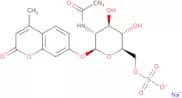
4-Methylumbelliferyl 2-acetamido-2-deoxy-b-D-glucopyranoside-6-sulfate sodium salt
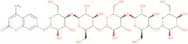
CAS:<p>4-Methylumbelliferyl 2-acetamido-2-deoxy-beta-D-glucopyranoside-6-sulfate sodium salt is a high-quality fluorogenic substrate specifically designed for the detection and quantification of various enzymes, including beta-glucosidases and sulfatases. Upon hydrolysis by the target enzyme, this substrate releases the highly fluorescent 4-methylumbelliferone, allowing for real-time monitoring and accurate measurement of enzyme activities in biochemical assays, diagnostic tests, and research applications. 4-Methylumbelliferyl 2-acetamido-2-deoxy-beta-D-glucopyranoside-6-sulfate sodium salt has excellent solubility in water, ensuring a consistent and reliable performance in different experimental conditions. This versatile substrate is an essential tool for researchers and industry professionals who require a sensitive and reproducible detection method for enzymes of interest.</p>Formula:C18H20NO11SNaPurity:Min. 98 Area-%Color and Shape:White PowderMolecular weight:481.41 g/mol4-Methylumbelliferyl b-D-cellopentoside
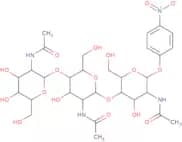
CAS:<p>A fluorogenic MOSCERDAM® substrate targeting cellulases</p>Formula:C40H58O28Purity:Min. 95%Color and Shape:White To Off-White SolidMolecular weight:986.89 g/mol4-Nitrophenyl N,N',N''-triacetyl-b-D-chitotriose
CAS:<p>Substrate for determining hydrolytic activity of chitinase</p>Purity:Min. 95%Color and Shape:White PowderMolecular weight:748.69 g/mol4-Methylumbelliferyl-2-O-(a-L-fucopyranosyl)-a-L-fucopyranoside
<p>4-Methylumbelliferyl-2-O-(alpha-L-fucopyranosyl)-alpha-L-fucopyranoside is a fluorogenic substrate for alpha-L-fucosidase. After enzymatic cleaveage, free 4-methylumbelliferone (also known as hymecromone) is released, exhibiting blue fluorescence upon excitation with UV light. The strongest fluorescence of 4-methylumbelliferone requires deprotonation of the hydroxyl group (thus requires alkaline pH), with a maximal fluorescence intensity obtained with excitation at 350 to 370 nm and emission at 440 to 470 nm. The use of 4-methylumbelliferyl-2-O-(alpha-L-fucopyranosyl)-alpha-L-fucopyranosideas a substrate for measuring the alpha-L-fucosidase activity is used for fucosidosis diagnosis.</p>Purity:Min. 95%Color and Shape:White PowderMolecular weight:468.45 g/mol4-Methylumbelliferyl myo-inositol-1-phosphate N-methyl-morpholine salt
CAS:<p>Please enquire for more information about 4-Methylumbelliferyl myo-inositol-1-phosphate N-methyl-morpholine salt including the price, delivery time and more detailed product information at the technical inquiry form on this page</p>Formula:C16H19O11P·C5H11NOColor and Shape:PowderMolecular weight:519.44 g/molLipase substrate
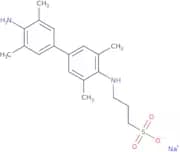
CAS:<p>Synthetic chromogenic substrate for detection of lipase enzyme activity that produces a red coloured product, Suitable for use in serum of plasma matrices. This lipase substrate is commonly used in veterinary diagnostics for monitoring and detecting canine pancreatitis,</p>Formula:C45H69NO8Molecular weight:752.03 g/molN-(3-Sulfopropyl)-3,3',5,5'-tetramethylbenzidine sodium salt
CAS:<p>N-(3-Sulfopropyl)-3,3',5,5'-tetramethylbenzidine (TMB) sodium salt is a highly sensitive chromogenic substrate used for the detection and quantification of peroxidase enzyme activity. This water-soluble substrate undergoes a color change from colorless to blue upon oxidation by peroxidase enzymes in the presence of hydrogen peroxide. The reaction can be stopped by adding an acid, resulting in a yellow color that can be measured spectrophotometrically. TMB sodium salt is widely used in various applications, including enzyme-linked immunosorbent assays (ELISA), immunohistochemistry, and other diagnostic tests, due to its high sensitivity, low background signal, and excellent stability.</p>Purity:Min. 95%Color and Shape:PowderMolecular weight:384.47 g/mol4-Nitrophenyl-β-D-lactopyranoside
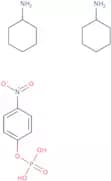
CAS:<p>Chromogenic substrate for cellobiohydrolase and endoglucanase.</p>Formula:C18H25NO13Purity:Min. 99.0 Area-%Molecular weight:463.40 g/mol4-Nitrophenyl phosphate, bis(cyclohexylammonium) salt
CAS:<p>Chromogenic substrate yielding a soluble yellow chromophor for the colorimetric assay of phosphatases.</p>Formula:C18H32N3O6PPurity:97.0 To 103.0%Molecular weight:417.45 g/molMethionine Assay Kit (Fluorometric)
<p>The Methionine Assay Kit (Fluorometric) is a kit containing the fluorogenic substrate needed for the determination of total methionine content. The kit is used to detect and quantify methionine in various food products, as well as in environmental samples. This assay can be used to measure free or protein-bound methionine. The fluorometric kit contains a conjugate that binds to the methionine molecule and provides a fluorescent signal proportional to the amount of bound methionine. The fluorescence intensity is measured on a fluorometer and converted into concentrations of methionine per gram of sample.</p>Purity:Min. 95%4-Nitrophenyl a-D-thiomannopyranoside
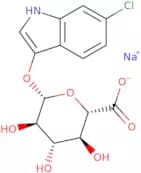
CAS:4-Nitrophenyl a-D-thiomannopyranoside is a chemiluminescence substrate that can be used to measure the activity of β-galactosidase, an enzyme involved in the hydrolysis of lactose. This product is available as a white to yellowish powder and has been shown to have high purity and quality. It also displays strong fluorescence when reacted with hydrogen peroxide and has been used for diagnostics tests such as staining, food testing, and enzyme substrate reactions.Purity:Min. 95%Molecular weight:317.32 g/mol6-Chloro-3-indolyl b-D-glucuronide sodium salt
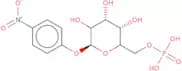
CAS:<p>6-Chloro-3-indolyl b-D-glucuronide sodium salt is a chromogenic substrate for beta-glucuronidase, a reporter gene used to monitor gene expression by detecting the enzyme's activity. It yields a salmon colored precipitate upon cleavage.</p>Purity:Min. 95%Color and Shape:PowderMolecular weight:365.7 g/mol4-Nitrophenyl b-D-glucopyranoside-6-phosphate
CAS:<p>4-Nitrophenyl beta-D-glucopyranoside-6-phosphate is a chromogenic substrate for glucose-6-phosphatase. Upon hydrolysis, para-nitrophenol is released yielding a yellowish colour. 4-Nitrophenyl beta-D-glucopyranoside-6-phosphate is used in different applications such as the Glycogen storage disease diagnosis (e.g., von Gierke disease)</p>Formula:C12H16NO11PPurity:Min. 98 Area-%Color and Shape:PowderMolecular weight:381.23 g/mol4-Nitrophenyl a-D-xylopyranoside
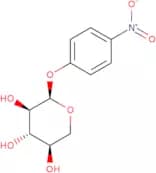
CAS:<p>The 4-Nitrophenyl a-D-xylopyranoside is a highly sensitive and reliable chromogenic substrate tailored for the detection and analysis of alpha-D-xylosidase enzyme activity. Upon enzymatic hydrolysis, it forms 4-nitrophenol, a yellow compound with remarkable fluorescence that enables a straightforward, quantitative assay in areas including environmental science, metabolism studies, and enzyme modifier exploration.</p>Formula:C11H13NO7Purity:Min. 95%Color and Shape:White PowderMolecular weight:271.22 g/mol4-Nitrophenyl decanoate
CAS:<p>4-Nitrophenyl decanoate is a chromogenic substrate for lipase. Upon hydrolysis, para-nitrophenol is released yielding a yellowish colour. 4-Nitrophenyl decanoate is used in different applications such as the Pancreatic insufficiency diagnosis, lipid metabolism studies</p>Formula:C16H23NO4Purity:Min. 97 Area-%Color and Shape:PowderMolecular weight:293.36 g/mol4-Nitrophenyl-α-L-fucopyranoside
CAS:<p>Chromogenic substrate yielding a soluble yellow chromophor for the colorimetric assay of α-L-fucosidase, especially in human serum.</p>Formula:C12H15NO7Purity:Min. 98 Area-%Molecular weight:285.26 g/mol4-Methylumbelliferyl nonanoate
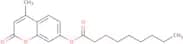
CAS:<p>4-Methylumbelliferyl nonanoate is a synthetic fluorogenic substrate for lipase. It is used to measure the activity of lipases in vitro. 4-Methylumbelliferyl nonanoate reacts with a lipid substrate, such as sodium taurocholate, to produce 4-methylumbelliferone and dodecanol. The fluorescent product can be detected by fluorimetric or spectrophotometric methods. This compound is activated by an enzyme preparation, such as proteolytic enzymes, and can be used to measure the activity of these enzymes in vitro.</p>Formula:C19H24O4Purity:Min. 99 Area-%Molecular weight:316.40 g/mol4-Methylumbelliferyl butyrate
CAS:<p>Methylumbelliferyl butyrate is structurally based on 4-methylumbelliferone and is a MOSCERDAM® substrate. It targets the esterase enzyme.</p>Formula:C14H14O4Purity:Min. 95%Color and Shape:White PowderMolecular weight:246.26 g/mol5-Bromo-4-chloro-3-indoxyl-α-D-N-acetylneuraminic acid, cyclohexylammonium salt
<p>5-Bromo-4-chloro-3-indoxyl-alpha-D-N-acetylneuraminic acid, cyclohexylammonium salt is a chemiluminescent substrate that provides a significant increase in light emission. It has a CAS number of 59820-92-0 and is supplied in high purity and high quality. This product is used for the detection of various biological reactions, including diagnostics, enzyme substrates, food testing, and more.</p>Purity:Min. 95%Resorufin β-D-cellobioside
CAS:<p>Resorufin beta-D-cellobioside is a fluorogenic substrate for the enzyme beta-glucosidase. It is soluble in water and can be used as a chromogenic substrate for beta-galactosidase. Resorufin beta-D-cellobioside is also used as a ligand to study protein interactions, such as those between lectins and glycoproteins. This product is of high purity and quality, with CAS No. 1000404-48-7.</p>Formula:C24H27NO13Purity:Min. 95 Area-%Molecular weight:537.47 g/molRef: 3D-R-2056
10mgTo inquire25mgTo inquire50mgTo inquire100mgTo inquire250mgTo inquire-Unit-ggTo inquire4-Methylumbelliferyl lignocerate
CAS:<p>This botanical is a download for the Floral Database.</p>Formula:C34H54O4Purity:Min. 95 Area-%Molecular weight:526.81 g/molRef: 3D-M-5720
1gTo inquire5gTo inquire250mgTo inquire500mgTo inquire2500mgTo inquire-Unit-ggTo inquire4-Nitrophenyl 2-O-trans-feruloyl-a-L-arabinofuranoside
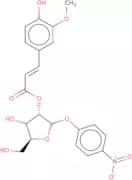
CAS:<p>4-Nitrophenyl 2-O-trans-feruloyl-alpha-L-arabinofuranoside is a chromogenic substrate for alpha-L-arabinofuranosidase. Upon hydrolysis, para-nitrophenol is released yielding a yellowish colour. 4-Nitrophenyl 2-O-trans-feruloyl-alpha-L-arabinofuranoside is used in different applications such as the Plant biomass analysis, bacterial arabinan degradation assays</p>Formula:C21H21NO10Purity:Min. 95%Color and Shape:PowderMolecular weight:447.39 g/molN-Acetyl-glycine p-nitroanilide
CAS:<p>Substrate for hydrolases</p>Formula:C10H10N2O5Purity:Min. 95%Color and Shape:Yellow powder.Molecular weight:238.2 g/mol2-O-(4-Nitrophenyl)-a-D-N-glycolylneuraminic acid
CAS:<p>2-O-(4-Nitrophenyl)-a-D-N-glycolylneuraminic acid is commonly used to measure the activity of sialidase enzymes, specifically those that cleave glycoconjugates containing 2-O-(4-nitrophenyl)-alpha-D-N-glycolylneuraminic acid. The resulting product can be detected by measuring the absorbance at a specific wavelength using a spectrophotometer. This substrate offers a high degree of specificity for glycolylneuraminic acid-containing substrates and is useful for both research and diagnostic purposes.</p>Purity:Min. 95%Color and Shape:PowderMolecular weight:446.36 g/mol5-Bromo-4-chloro-3-indolyl a-L-arabinofuranoside
<p>5-Bromo-4-chloro-3-indolyl a-L-arabinofuranoside is a chromogenic substrate used to detect the specific enzymatic activity of alpha-L-arabinofuranosidase. After cleavage, 5-bromo-4-chloro-indoxyl is released, resulting in a blue to blue-green color change in bacterial colonies or media. 5-Bromo-4-chloro-3-indolyl a-L-arabinofuranoside is used in bacterial arabinan degradation assays (e.g. Bacillus spp.).</p>Formula:C13H13BrClNO5Purity:Min. 98.0 Area-%Color and Shape:PowderMolecular weight:378.6 g/mol6-Chloro-3-indolyl 2-acetamido-2-deoxy-b-D-galactopyranoside
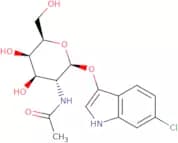
CAS:<p>6-Chloro-3-indolyl 2-acetamido-2-deoxy-b-D-galactopyranoside is a chromogenic substrate for N-acetyl-beta-galactosaminidase. It produces a salmon-pink color after enzymatic cleavage.</p>Purity:Min. 95%Color and Shape:White PowderMolecular weight:370.78 g/molAldol® 455 alpha-D-glucopyranoside - Biosynth Patent: EP 2427431 and US 8940909
<p>Aldol® 455 alpha-D-glucopyranoside is a high quality, environmentally tested, staining, and ligand for bioluminescent assays. It has been shown to be a chromogenic substrate for diagnostics and a fluorogenic substrate for enzymes such as alpha-glucosidase, producing a yellow/green-orange color. Aldol® 455 alpha-D-glucopyranoside is also used in culture media and food testing.</p>Formula:C27H24ClNO7Purity:Min. 95 Area-%Color and Shape:PowderMolecular weight:509.93 g/mol2-Chloro-4-nitrophenyl b-D-maltoside
<p>2-Chloro-4-nitrophenyl b-D-maltoside is a fluorescent substrate used in diagnostic kits. It is used to detect the presence of beta-glucuronidase enzymes, which are found in many bacteria and fungi. 2-Chloro-4-nitrophenyl b-D-maltoside has been shown to be a superior substrate for beta-glucuronidase as it can be used at lower concentrations and is more stable than other substrates. The enzyme hydrolyzes the 2,4 nitrophenyl ester bond and releases the fluorogenic product 4-(2'-hydroxyethyl)benzene diazonium chloride (HED). This product emits light under ultraviolet light, making it ideal for use in Bioluminescence Assays.</p>Purity:Min. 95%2-Fluoro-4-nitrophenyl b-D-galactopyranoside
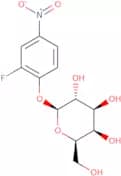
CAS:<p>2-Fluoro-4-nitrophenyl b-D-galactopyranoside is a chromogenic substrate in enzymatic assays with β-galactosidase. Commonly abbreviated as PFONPG, it is a hydrophilic compound that can be dissolved in saline and blood samples, which makes it a suitable candidate for diagnostic applications as a gene reporter probe by simple analytic methodologies. 2-Fluoro-4-nitrophenyl b-D-galactopyranoside have been used to detect and monitor the growth of prostate tumor cells.</p>Purity:Min. 95%Color and Shape:PowderMolecular weight:319.24 g/molEthyl umbelliferone-3-carboxylate-α-D-glucopyranoside
<p>Ethyl umbelliferone-3-carboxylate-a-D-glucopyranoside is a fluorogenic substrate used for detecting alpha-glucosidase activity in enzymatic assays. When alpha-glucosidase cleaves , the glycosidic bond, umbelliferone-3-carboxylate is released, which exhibits strong fluorescence. This substrate is commonly utilized in glycobiology research, diagnostic tests, and high-throughput screening of enzyme inhibitors.</p>Formula:C18H20O10Purity:Min. 95%Color and Shape:Off-white to yellow solid.Molecular weight:396.35 g/mol6'-(Diethylamino)spiro[isobenzofuran-1(3H),9'-[9H]xanthen]-3'-yl b-D-glucopyranoside
<p>6'-(Diethylamino)spiro[isobenzofuran-1(3H),9'-[9H]xanthen]-3'-yl b-D-glucopyranoside is a fluorogenic substrate that is used in diagnostic applications. It has been shown to be a useful ligand for the determination of enzyme activity, and it can also be used to detect bacterial culture media contaminants. 6'-(Diethylamino)spiro[isobenzofuran-1(3H),9'-[9H]xanthen]-3'-yl b-D-glucopyranoside is used as an enzyme substrate in chemiluminescent assays, and with other reagents, it can be used for the detection of environmental contaminants. This product has a CAS number of 55426-02-8 and can be found on the website www.sigmaaldrich.com/catalog/product</p>Purity:Min. 95%Molecular weight:494.49 g/mol4-Methylumbelliferyl-β-D-galactopyranoside
CAS:<p>Fluorogenic substrate for β-D-galactosidase yielding a blue fluorescent solution upon cleavage.</p>Formula:C16H18O8Purity:Min. 98.0 Area-%Molecular weight:338.32 g/mol4-Methylumbelliferone
CAS:<p>4-Methylumbelliferone is a coumarin derivative that inhibits the activity of enzymes such as p-nitrophenyl phosphate oxidase and aminopeptidase. It is used in vitro to study oxidative injury, which plays a role in the pathogenesis of inflammatory diseases, including primary sclerosing cholangitis and bone marrow transplantation. 4-Methylumbelliferone has been shown to induce apoptosis by increasing reactive oxygen species levels and activating toll-like receptor 4 (TLR4). It also has inhibitory effects on osteosarcoma cell proliferation in vitro.</p>Formula:C10H8O3Molecular weight:176.17 g/mol4-Methylumbelliferyl 6-deoxy-2,3,4,6-tetra-O-acetyl-6-thio-β-D-glucopyranoside
<p>4-Methylumbelliferyl 6-deoxy-2,3,4,6-tetra-O-acetyl-6-thio-beta-D-glucopyranoside is a fluorogenic substrate for beta-glucosidase. After enzymatic cleaveage, free 4-methylumbelliferone (also known as hymecromone) is released, exhibiting blue fluorescence upon excitation with UV light. The strongest fluorescence of 4-methylumbelliferone requires deprotonation of the hydroxyl group (thus requires alkaline pH), with a maximal fluorescence intensity obtained with excitation at 350 to 370 nm and emission at 440 to 470 nm. The use of 4-methylumbelliferyl 6-deoxy-2,3,4,6-tetra-O-acetyl-6-thio-beta-D-glucopyranosideas a substrate for measuring the beta-glucosidase activity is used for Gaucher disease diagnosis.</p>Formula:C24H26O11SPurity:Min. 95%Color and Shape:White to off-white solid.Molecular weight:522.52 g/molLuc-Enterobacteria Na
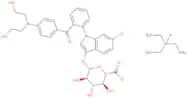
<p>Luc-Enterobacteria Na is a bioluminescent substrate for bacterial luciferase used to detect Enterobacteriaceae. The enzyme luciferase oxidizes luciferin with FMNH₂ and O₂ via luxAB genes, emitting blue light.</p>Formula:C17H17NaN2O8S2Purity:Min. 94 Area-%Molecular weight:464.44 g/molAldol® 584 β-D-glucuronic acid, triethylammonium salt, Biosynth Patent: EP 2427431 and US 8940909
CAS:<p>Aldol 584 is a chromogenic substrate that is used in enzymatic assays to detect the presence of an enzyme. It is a triethylammonium salt with beta-D-glucuronic acid. Aldol 584 is used in diagnostic procedures and can be used as a substrate for fluorogenic substrates and chemiluminescent substrates. This product has been shown to be effective in detecting the presence of bile in feces, erythrocyte hemolysis, and the presence of proteinases in human urine. It can also be used as a food testing agent or to measure bacterial activity in culture media.</p>Formula:C37H46ClN3O10Purity:Min. 95%Color and Shape:PowderMolecular weight:728.2 g/mol7-((4'-L-Alaninamido)-rac-3'-hydroxybutyloxy) coumarin hydrochloride
<p>This Clips-O substrate 7-((4'-L-Alaninamido)-rac-3'-hydroxybutyloxy) coumarin allows the detection of single and dual enzymatic activity (L-alanine aminopetidase and oxidation of 4-amino-3-hydroxybutyloxy spacer either enzymatically or by exposure to sodium periodate) with a single substrate resulting in a fluorescent signal. The main virtues of Clips-O substrates are an increased stability towards non-enzymatic hydrolysis that results in a reduced background and high sensitivity.</p>Formula:C16H21ClN2O5Purity:Min. 95%Color and Shape:PowderMolecular weight:356.8 g/mol6-Nitro-3-indoxyl-β-D-galactopyranoside
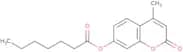
<p>For the detection of beta-galactosidase activity</p>Formula:C14H16N2O8Molecular weight:340.29 g/mol4-Methylumbelliferyl heptanoate
CAS:<p>Lipase targeting MOSCERDAM® substrate</p>Formula:C17H20O4Purity:Min. 95%Color and Shape:White PowderMolecular weight:288.34 g/mol5-Nitro-3-indoxyl-β-D-galactopyranoside
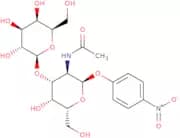
<p>For the detection of beta-galactosidase activity</p>Formula:C14H16N2O8Molecular weight:340.29 g/mol4-Nitrophenyl 2-acetamido-2-deoxy-3-O-(b-D-galactopyranosyl)-a-D-galactopyranoside
CAS:<p>4-Nitrophenyl 2-acetamido-2-deoxy-3-O-(b-D-galactopyranosyl)-a-D-galactopyranoside is a superior chromogenic pNP enzyme substrate designed to deliver enhanced enzyme detection and outstanding assay performance. This cutting-edge substrate boasts excellent specificity, sensitivity, and stability, making it a powerful tool in the measurement of enzyme activity, substrate profiles, and inhibitor characterization. This premium substrate is perfect for researchers and professionals seeking reliable and efficient results for their enzyme-based investigations.</p>Formula:C20H28N2O13Purity:Min. 98 Area-%Color and Shape:White PowderMolecular weight:504.44 g/molAquaSpark® 510 Calibration Probe, Ramot at Tel-Aviv University Ltd. Patent family WO 2017/130191
CAS:<p>AquaSpark® Calibration Probe is a water-soluble dioxetane-based chemiluminescent probe. Deprotonation of the free phenol group of the calibration probe under mild basic conditions results in an emissive decomposition process. No addition of enhancer or sensitizing agent is required to produce the bright green light emission in aqueous solutions.<br>AquaSpark® Calibration Probe is used for:<br><br>Demonstration experiment susing only the probe and an aqueous solution or water;<br>Evaluation of the AquaSpark® maximum light emission;<br>Functional tests of luminometers, plate readers and cameras;<br>Comparison with other probes bearing an enzyme labile group in order to build concentration/response curves;<br>Validation and comparison between different AquaSpark® probes.</p>Formula:C21H23ClO6Purity:Min. 95%Color and Shape:PowderMolecular weight:406.12 g/molChitin azure
CAS:<p>Chitin azure is a chromogenic substrate for chitinases. It is one of the few specific substrates for this enzyme that produces chito-oligosaccharides from chitin.</p>Color and Shape:PowderGlycyl-glycine 7-amido-4-methylcoumarin hydrochloride
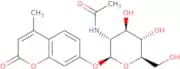
CAS:<p>Glycyl-glycine 7-amido-4-methylcoumarin hydrochloride (Gly-Gly-AMC) is a fluorescent compound that can be used as a probe for the transfer of glycine in the brain. Gly-Gly-AMC binds to Langerhans cells and is transferred by an anterograde axonal transport mechanism from the peripheral nervous system to the central nervous system. The binding of Gly-Gly-AMC to Langerhans cells has been shown to activate them, which induces the release of inflammatory mediators into the surrounding tissue. This activity may be due to increased levels of calcium ions, which are known to induce exocytosis in these cells. Glycine is also involved in depression and other mental disorders, as well as muscle and brain activity.</p>Formula:C14H16ClN3O4Molecular weight:325.75 g/mol4-Methylumbelliferyl 2-acetamido-2-deoxy-b-D-glucopyranoside
CAS:<p>Fluorogenic substrate for chitinase</p>Formula:C18H21NO8Purity:Min. 99 Area-%Color and Shape:White Off-White PowderMolecular weight:379.36 g/molIsopropyl-β-D-thiogalactopyranoside - non-animal origin
CAS:<p>A non-metabolizable allolactose analogue, widely used in molecular biology for overexpression of recombinant proteins from inducible systems under the control of lac promoter. IPTG binds to the LacI repressor and causes its release from the lac operator, allowing gene expression to take place. Present in vectors of pGEX, pGEM-T, pET, pRSET, pMAL class and others.</p>Formula:C9H18O5SPurity:Min. 99.0 Area-%Molecular weight:238.3 g/mol3-Nitrophenyl b-D-galactopyranoside
CAS:<p>Chromogenic substrate targeting beta-galactosidase</p>Formula:C12H15NO8Color and Shape:PowderMolecular weight:301.25 g/mol4-Methylumbelliferyl-N,N-diacetyl-β-D-chitobioside
CAS:<p>4-Methylumbelliferyl-N,N-diacetyl-beta-D-chitobioside is a molecule that has been expressed in the yeast Pichia pastoris. It can be used as a fluorescent probe for chitinase activity and has been shown to be sensitive to tryptophan residues and aromatic residues in proteins. 4-Methylumbelliferyl-N,N-diacetyl-beta-D-chitobioside has also been used as a fluorescent probe for isozymes of glucose phosphate isomerase. The nature of the trisaccharide is unknown, but it appears to be hydrophobic.</p>Formula:C26H34N2O13Purity:Min. 99.0 Area-%Molecular weight:582.57 g/molLuc-coliforms Na
CAS:<p>Luc-coliforms Na is a high quality, chromogenic substrate for the detection of coliforms. It is used widely in the food industry to detect whether coliforms are present in milk, cheese, and other dairy products. Luc-coliforms Na provides a color change from yellow to blue when it reacts with coliforms and has a high pH range of 4.0-8.0. Luc-coliforms Na has a CAS number of 93824-43-4.</p>Purity:Min. 95%5-Bromo-6-chloro-3-indolyl α-D-glucopyranoside
CAS:<p>5-Bromo-6-chloro-3-indolyl α-D-glucopyranoside is a chromogenic substrate that yields a magenta-colored product after cleavage. The chromophore 5-bromo-6-chloro-indoxyl is released, generating the observable color. It is used in Pompe disease diagnostics, a glycogen storage disorder, that measures the deffiency of alpha-glucosidase (GAA) that could lead to the accumulation of glycogen in lysosomes.</p>Formula:C14H15BrClNO6Purity:Min. 95%Color and Shape:PowderMolecular weight:408.63 g/mol














![6'-(Diethylamino)spiro[isobenzofuran-1(3H),9'-[9H]xanthen]-3'-yl b-D-glucopyranoside](/_next/image/?url=https%3A%2Fstatic.cymitquimica.com%2Fproducts%2F3D%2Fthumb-webp%2FED139090.webp&w=3840&q=75)