Enzyme Substrates
Enzyme substrates are molecules upon which enzymes act to catalyze chemical reactions. The substrate binds to the active site of the enzyme, where it undergoes a specific transformation to form the product of the reaction. Enzyme substrates are essential tools in research for studying enzyme kinetics, specificity, and mechanism of action. They are also used in diagnostic assays and biochemical studies. At CymitQuimica, we provide a diverse selection of high-quality enzyme substrates to support your research in enzymology and biochemistry.
Subcategories of "Enzyme Substrates"
Found 1527 products of "Enzyme Substrates"
Sort by
Purity (%)
0
100
|
0
|
50
|
90
|
95
|
100
4-Methylumbelliferyl phosphate, free acid
CAS:<p>A sensitive fluorogenic substrate for fluorometric and UV-spectrophotometric assays of phosphatases. It is used for the detection of C. perfringens because acid phosphatase is a highly specific indicator for C. perfringens.</p>Formula:C10H9O6PMolecular weight:256.15 g/mol1-Naphthyl β-D-mannopyranoside
CAS:<p>1-Naphthyl β-D-mannopyranoside is a chromogenic (also fluorogenic) substrate. After cleavage, 1-naphthol is released and is used to quantify beta-mannosidase activity.</p>Formula:C16H18O6Purity:Min. 95%Color and Shape:PowderMolecular weight:306.31 g/molAldol® 455 alpha-D-glucopyranoside - Biosynth Patent: EP 2427431 and US 8940909
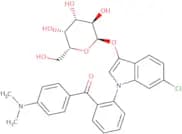
<p>Aldol® 455 alpha-D-glucopyranoside is a high quality, environmentally tested, staining, and ligand for bioluminescent assays. It has been shown to be a chromogenic substrate for diagnostics and a fluorogenic substrate for enzymes such as alpha-glucosidase, producing a yellow/green-orange color. Aldol® 455 alpha-D-glucopyranoside is also used in culture media and food testing.</p>Formula:C27H24ClNO7Purity:Min. 95 Area-%Color and Shape:PowderMolecular weight:509.93 g/mol2-Fluoro-4-nitrophenyl b-D-galactopyranoside
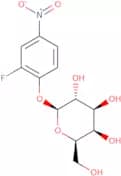
CAS:<p>2-Fluoro-4-nitrophenyl b-D-galactopyranoside is a chromogenic substrate in enzymatic assays with β-galactosidase. Commonly abbreviated as PFONPG, it is a hydrophilic compound that can be dissolved in saline and blood samples, which makes it a suitable candidate for diagnostic applications as a gene reporter probe by simple analytic methodologies. 2-Fluoro-4-nitrophenyl b-D-galactopyranoside have been used to detect and monitor the growth of prostate tumor cells.</p>Purity:Min. 95%Color and Shape:PowderMolecular weight:319.24 g/molEthyl umbelliferone-3-carboxylate-α-D-glucopyranoside
<p>Ethyl umbelliferone-3-carboxylate-a-D-glucopyranoside is a fluorogenic substrate used for detecting alpha-glucosidase activity in enzymatic assays. When alpha-glucosidase cleaves , the glycosidic bond, umbelliferone-3-carboxylate is released, which exhibits strong fluorescence. This substrate is commonly utilized in glycobiology research, diagnostic tests, and high-throughput screening of enzyme inhibitors.</p>Formula:C18H20O10Purity:Min. 95%Color and Shape:Off-white to yellow solid.Molecular weight:396.35 g/mol2-Nitrophenyl b-D-arabinopyranoside
<p>2-Nitrophenyl b-D-arabinopyranoside is a chemical compound that is used in the detection of ATP by chemiluminescence. It acts as a substrate for enzymes such as luciferase and catalase, which catalyze the oxidation of 2-nitrophenyl b-D-arabinopyranoside to phenol and carbon dioxide with the release of light. This reaction can be used in diagnostic applications such as detecting bacteria in culture media or diagnosing food spoilage. 2-Nitrophenyl b-D-arabinopyranoside can also be used as a conjugate to detect proteins or nucleic acids by fluorescence spectroscopy. The CAS number for this compound is 107772-06-1.</p>Purity:Min. 95%Molecular weight:271.22 g/mol6-Chloro-3-indolyl 2-acetamido-2-deoxy-β-D-glucopyranoside
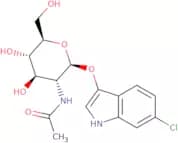
CAS:<p>6-Chloro-3-indolyl 2-acetamido-2-deoxy-b-D-glucopyranoside is a pink enzyme substrate commonly used in biochemical research and diagnostic applications. This compound is a derivative of indolyl glucopyranoside, which is known for its ability to produce a colored product upon enzymatic hydrolysis. 6-Chloro-3-indolyl 2-acetamido-2-deoxy-b-D-glucopyranoside is particularly useful for studying glycosidases, enzymes that cleave glycosidic bonds in complex carbohydrates. Its pink coloration makes it an ideal choice for colorimetric assays, enabling researchers to monitor enzyme activity in real-time and facilitating the development of new diagnostic tools and therapeutic strategies.</p>Formula:C16H19ClN2O6Purity:Min. 95%Color and Shape:White to off-white solid.Molecular weight:370.78 g/mol4-Methylumbelliferyl 2-acetamido-2-deoxy-a-D-glucopyranoside-6-sulfate sodium salt - Moscerdam™ biochemical purity
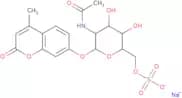
CAS:<p>A substrate used for the diagnosis of Sanfilippo disease type D (MPS IIID).</p>Formula:C18H20NNaO11SPurity:Min. 95%Color and Shape:White PowderMolecular weight:481.41 g/mol2-Naphthyl-β-D-galactopyranoside
CAS:<p>2-Naphthyl-β-D-galactopyranoside is a substrate for β-galactosidase. 2-Naphthol is released upon hydrolyzation. By simultaneous coupling with a suitable staining reagent, such as hexazonium p-rosaniline, the corresponding reddish-brown azo-dye is formed. Naphthols can also be detected by fluorescence analysis.</p>Formula:C16H18O6Purity:Min. 99 Area-%Molecular weight:306.32 g/mol4-Nitrophenyl 2-acetamido-2-deoxy-3-O-(b-D-galactopyranosyl)-a-D-galactopyranoside
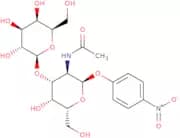
CAS:<p>4-Nitrophenyl 2-acetamido-2-deoxy-3-O-(b-D-galactopyranosyl)-a-D-galactopyranoside is a superior chromogenic pNP enzyme substrate designed to deliver enhanced enzyme detection and outstanding assay performance. This cutting-edge substrate boasts excellent specificity, sensitivity, and stability, making it a powerful tool in the measurement of enzyme activity, substrate profiles, and inhibitor characterization. This premium substrate is perfect for researchers and professionals seeking reliable and efficient results for their enzyme-based investigations.</p>Formula:C20H28N2O13Purity:Min. 98 Area-%Color and Shape:White PowderMolecular weight:504.44 g/mol4-Methylumbelliferone
CAS:<p>4-Methylumbelliferone is a coumarin derivative that inhibits the activity of enzymes such as p-nitrophenyl phosphate oxidase and aminopeptidase. It is used in vitro to study oxidative injury, which plays a role in the pathogenesis of inflammatory diseases, including primary sclerosing cholangitis and bone marrow transplantation. 4-Methylumbelliferone has been shown to induce apoptosis by increasing reactive oxygen species levels and activating toll-like receptor 4 (TLR4). It also has inhibitory effects on osteosarcoma cell proliferation in vitro.</p>Formula:C10H8O3Molecular weight:176.17 g/mol2-Nitrophenyl α-D-glucopyranoside
CAS:<p>2-Nitrophenyl a-D-glucopyranoside is a chromogenic substrate commonly used to assay the activity of glucosidases. Upon cleavage of the glycosidic bond by glucosidases, the released 2-nitrophenyl group yields a yellow color detectable by spectrophotometry. This substrate has high sensitivity and is widely used in a variety of applications, including drug discovery and enzyme kinetics studies.</p>Formula:C12H15NO8Purity:Min. 95%Color and Shape:White to off-white solid.Molecular weight:301.25 g/mol4-Methylumbelliferyl phosphate, free acid
CAS:<p>A sensitive fluorogenic substrate for fluorometric and UV-spectrophotometric assays of phosphatases. It is used for the detection of C. perfringens because acid phosphatase is a highly specific indicator for C. perfringens.</p>Formula:C10H9O6PMolecular weight:256.15 g/mol4-Methylumbelliferyl 6-deoxy-2,3,4,6-tetra-O-acetyl-6-thio-β-D-glucopyranoside
<p>4-Methylumbelliferyl 6-deoxy-2,3,4,6-tetra-O-acetyl-6-thio-beta-D-glucopyranoside is a fluorogenic substrate for beta-glucosidase. After enzymatic cleaveage, free 4-methylumbelliferone (also known as hymecromone) is released, exhibiting blue fluorescence upon excitation with UV light. The strongest fluorescence of 4-methylumbelliferone requires deprotonation of the hydroxyl group (thus requires alkaline pH), with a maximal fluorescence intensity obtained with excitation at 350 to 370 nm and emission at 440 to 470 nm. The use of 4-methylumbelliferyl 6-deoxy-2,3,4,6-tetra-O-acetyl-6-thio-beta-D-glucopyranosideas a substrate for measuring the beta-glucosidase activity is used for Gaucher disease diagnosis.</p>Formula:C24H26O11SPurity:Min. 95%Color and Shape:White to off-white solid.Molecular weight:522.52 g/mol4-Methylumbelliferyl N,N',N''-triacetyl-b-D-chitotrioside
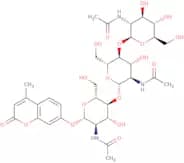
CAS:<p>4-Methylumbelliferyl N,N',N''-triacetyl-beta-D-chitotrioside is a fluorogenic substrate for chitinase. After enzymatic cleaveage, free 4-methylumbelliferone (also known as hymecromone) is released, exhibiting blue fluorescence upon excitation with UV light. The strongest fluorescence of 4-methylumbelliferone requires deprotonation of the hydroxyl group (thus requires alkaline pH), with a maximal fluorescence intensity obtained with excitation at 350 to 370 nm and emission at 440 to 470 nm. The use of 4-methylumbelliferyl N,N',N''-triacetyl-beta-D-chitotriosideas a substrate for measuring the chitinase activity is used for fungal infection assays.</p>Formula:C34H47N3O18Purity:Min. 95.0 Area-%Color and Shape:White Off-White PowderMolecular weight:785.75 g/mol4-Methylumbelliferyl-β-L-fucopyranoside
CAS:<p>4-Methylumbelliferyl-beta-L-fucopyranoside is a fluorogenic substrate that is used in food testing. It also has uses as a chromogenic substrate and a ligand for biological studies. 4-Methylumbelliferyl-beta-L-fucopyranoside is a conjugate of 4-methylumbelliferone and beta-D-fucopyranosyl ester, which is an enzyme substrate for the detection of phosphatases. This product can be used to detect the activity of phosphatase enzymes in various media, including culture media, environmental testing, and staining. 4MUFBPY also has chemiluminescent properties that can be used for bioluminescence assays.</p>Formula:C16H18O7Molecular weight:322.31 g/molRef: 3D-M-5541
1gTo inquire5gTo inquire250mgTo inquire500mgTo inquire2500mgTo inquire-Unit-ggTo inquire4-Methylumbelliferyl-β-D-glucopyranoside
CAS:<p>Fluorogenic substrate for beta-glucosidase yielding a blue fluorescent solution. Used for the detection of beta-glucosidase as an indicator of Enterococci.</p>Formula:C16H18O8Purity:Min. 99 Area-%Molecular weight:338.32 g/mol4-Nitrophenyl-N-acetyl-α-D-glucosaminide
CAS:<p>4-Nitrophenyl-N-acetyl-α-D-glucosaminide is a chromogenic substrate for N-acetyl-β-D-glucosaminidase yielding a yellow solution upon cleavage.</p>Formula:C14H18N2O8Molecular weight:342.31 g/molRef: 3D-N-4030
1gTo inquire100mgTo inquire250mgTo inquire500mgTo inquire2500mgTo inquire-Unit-ggTo inquire4-Methylumbelliferyl 2-acetamido-2-deoxy-α-D-glucopyranoside-6-sulfate potassium
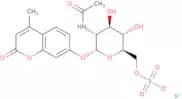
CAS:<p>4-Methylumbelliferyl 2-acetamido-2-deoxy-alpha-D-glucopyranoside-6-sulfate potassium is a fluorogenic substrate for N-acetylglucosamine-6-sulfatase. After enzymatic cleaveage, free 4-methylumbelliferone (also known as hymecromone) is released, exhibiting blue fluorescence upon excitation with UV light. The strongest fluorescence of 4-methylumbelliferone requires deprotonation of the hydroxyl group (thus requires alkaline pH), with a maximal fluorescence intensity obtained with excitation at 350 to 370 nm and emission at 440 to 470 nm. The use of 4-methylumbelliferyl 2-acetamido-2-deoxy-alpha-D-glucopyranoside-6-sulfate potassiumas a substrate for measuring the N-acetylglucosamine-6-sulfatase activity is used for screening of Mucopolysaccharidosis IIID (MPS IIID) (a rare lysosomal storage disorder) and Sanfilippo D syndrome diagnosis.</p>Formula:C18H20KNO11SPurity:Min. 95%Color and Shape:White PowderMolecular weight:497.52 g/mol4-Methylumbelliferyl 3-deoxy-D-glycero-a-D-galacto-2-nonulosonic acid sodium salt
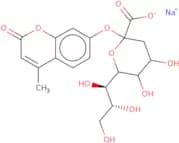
CAS:<p>4-Methylumbelliferyl 3-deoxy-D-glycero-a-D-galacto-2-nonulosonic acid sodium salt is a fluorogenic substrate that can be used to detect enzyme activity. It reacts with the enzyme β-galactosidase, which hydrolyzes lactose in the presence of oxygen and hydrogen peroxide. The product is 4methylumbelliferone, which emits light in the presence of luciferin and an oxidizing agent. This product is used for diagnostics, food testing, and environmental testing. CAS No. 123269-95-4</p>Purity:Min. 95%Molecular weight:489.41 g/molIsopropyl-β-D-thiogalactopyranoside - non-animal origin
CAS:<p>A non-metabolizable allolactose analogue, widely used in molecular biology for overexpression of recombinant proteins from inducible systems under the control of lac promoter. IPTG binds to the LacI repressor and causes its release from the lac operator, allowing gene expression to take place. Present in vectors of pGEX, pGEM-T, pET, pRSET, pMAL class and others.</p>Formula:C9H18O5SPurity:Min. 99.0 Area-%Molecular weight:238.3 g/mol5-Bromo-4-chloro-3-indoxyl-N-acetyl-β-D-galactosaminide
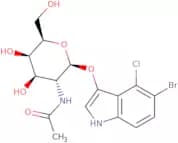
CAS:<p>5-Bromo-4-Chloro-3-Indoxyl-N-Acetyl-Beta-D-Galactosaminide is a chromogenic substrate for detecting beta-galactosidase and GalNAc-transferase enzymes. Upon hydrolysis by the enzyme, it produces a blue-green colored compound that can be detected visually or measured spectrophotometrically. This substrate is useful in characterizing the activity of Beta-Galactosidase and GalNAc-transferase enzymes involved in glycobiology research and diagnostic applications.</p>Formula:C16H18BrClN2O6Purity:Min. 98 Area-%Color and Shape:Crystalline PowderMolecular weight:449.68 g/mol3-Nitrophenyl b-D-galactopyranoside
CAS:<p>Chromogenic substrate targeting beta-galactosidase</p>Formula:C12H15NO8Color and Shape:PowderMolecular weight:301.25 g/mol5-Bromo-4-chloro-3-indolyl a-L-rhamnoside
<p>5-Bromo-4-chloro-3-indolyl a-L-rhamnoside is a chromogenic substrate used to detect the specific enzymatic activity of alpha-L-rhamnosidase. After cleavage, 5-bromo-4-chloro-indoxyl is released, resulting in a blue to blue-green color change in bacterial colonies or media. 5-Bromo-4-chloro-3-indolyl a-L-rhamnoside is used in bacterial rhamnose metabolism studies (e.g. E. coli).</p>Formula:C14H15BrClNO5Purity:Min. 95%Color and Shape:SolidMolecular weight:392.63 g/mol2-Chloro-4-nitrophenyl-β-D-cellotetraoside
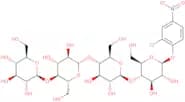
CAS:<p>2-chloro-4-nitrophenyl-beta-D-cellotetraoside is a chromogenic substrate for measuring cellulase activity and other glycosyl hydrolases. The release of 2-chloro-4-nitrophenol can be detected at 405 nm.</p>Formula:C30H44ClNO23Purity:Min. 95%Color and Shape:PowderMolecular weight:822.12 g/mol4-Methylumbelliferyl-β-D-glucuronic acid dihydrate
CAS:<p>4-Methylumbelliferyl beta-D-glucuronide (MUG) is commonly used as a substrate for detecting beta-glucuronidase. MUG is used for identifying E. coli contamination in food, drinking water, clinical samples and for rapid bacterial identification in blood cultures. It is recommended in international normatives (ISO, DIN) as a fluorogenic substrate for detection of E. coli. MUG is also a tool assaying the glucuronidase gene in plants.</p>Formula:C16H20O11Purity:Min. 99 Area-%Molecular weight:388.33 g/mol5-Bromo-4-chloro-3-indolyl b-D-galactofuranoside
<p>5-Bromo-4-chloro-3-indolyl b-D-galactofuranoside is a chromogenic substrate used to detect the specific enzymatic activity of beta-D-galactofuranosidase. After cleavage, 5-bromo-4-chloro-indoxyl is released, resulting in a blue to blue-green color change in bacterial colonies or media. 5-Bromo-4-chloro-3-indolyl b-D-galactofuranoside is used in assays for detecting bacterial pathogens (e.g., Mycobacterium tuberculosis).</p>Formula:C14H15BrClNO6Purity:Min. 95%Color and Shape:PowderMolecular weight:408.63 g/molL-Lysyl-L-alanine 7-amido-4-methylcoumarin dihydrochloride
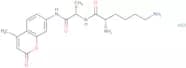
CAS:<p>L-Lysyl-L-alanine 7-amido-4-methylcoumarin dihydrochloride is a fluorogenic peptide substrate for aminopeptidase. This AMC peptide substrate is normally used to rapidly profile the N-terminal specificity of proteases.</p>Purity:Min. 98.0 Area-%Color and Shape:PowderHippurate hydrolase from Campylobacter jejuni, aqueous solution with glycerol
<p>Hippurate hydrolase is an enzyme that catalyzes the hydrolysis of hippurate to glycine and taurine. It is a fluorogenic substrate with high purity, ligand, and high quality. Hippurate hydrolase is used as a diagnostic enzyme for detecting the presence of hippuric acid in urine. This enzyme can be conjugated to a variety of molecules, including fluorophores, biotin or haptens, for use in immunoassay or other applications.</p>Formula:C1944H3000N516O573S18Purity:Min. 95%Molecular weight:24,542 g/mol4-Nitrophenyl myristate
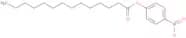
CAS:<p>4-Nitrophenyl myristate (NphOMy) is a chromogenic enzyme substrate used as a diagnosis tool for detection of β-lactamase hydrolysis activities. In the presence of certain drugs, 4-nitrophenyl myristate HSA-Tyr411-catalyzed hydrolysis seems to be inhibited.</p>Formula:C20H31NO4Purity:Min. 95 Area-%Color and Shape:White PowderMolecular weight:349.46 g/molLuciferin-α-D-glucoside, potassium salt
<p>Luciferin-alpha-D-glucoside, potassium salt is a fluorogenic substrate that is used in diagnostics as a ligand. It can be conjugated to various substances, including proteins and antibodies. It is also used as an enzyme substrate in the detection of glucose oxidase in bacterial culture media and chemiluminescence in food testing, environmental testing, and staining.</p>Purity:Min. 95%N-(6-Hydroxyhexyl)trifluoroacetamide
CAS:<p>Please enquire for more information about N-(6-Hydroxyhexyl)trifluoroacetamide including the price, delivery time and more detailed product information at the technical inquiry form on this page</p>Formula:C8H14F3NO2Molecular weight:213.2 g/mol4-Methylumbelliferyl cholin phosphate
CAS:<p>4-Methylumbelliferyl phosphocholine, commonly known as 4-MUPC, is a synthetic phosphodiester used as an enzyme substrate for phospholipase enzymes. 4-MUPC is used as a fluorogenic substrate to measure the activity of phopholipases, which are important mediators of cell signalling.</p>Formula:C15H20NO6PPurity:Min. 99.0 Area-%Molecular weight:341.30 g/molN-Acetyl-3,7-dihydroxyphenoxazine
CAS:<p>Fluorogenic substrate for peroxidase</p>Formula:C14H11NO4Purity:(1H-Nmr) Min. 95%Color and Shape:Slightly Brown PowderMolecular weight:257.24 g/mol4-Methylumbelliferyl 2-acetamido-2-deoxy-4-O-b-D-galactopyranosyl-b-D-glucopyranoside
CAS:<p>4-Methylumbelliferyl 2-acetamido-2-deoxy-4-O-b-D-galactopyranosyl-b-D-glucopyranoside is a chemiluminescent substrate that is used in diagnostic tests. This compound has been approved by the FDA and EPA for use in food testing, as well as for the detection of certain bacteria, parasites, and fungi. It is also used to detect protein kinase activity in cells or tissue samples. 4MUG can be conjugated to an enzyme or antibody to produce a fluorescent signal when activated by light at 350 nm. The compound has been shown to be nonfluorescent when in the dark, but will emit fluorescence upon activation with light at 350 nm.</p>Purity:Min. 95%Molecular weight:541.5 g/mol6-Chloro-3-indoxyl-β-D-galactopyranoside
CAS:<p>6-Chloro-3-indoxyl-beta-D-galactopyranoside is a chromogenic substrate for beta-galactosidase that yields a salmon or rose-coloured precipitate and hence is also known as Salmon-Gal. It can be used in conjunction with isopropyl-beta-D-thiogalactopyranoside (IPTG) as an alternative to the chromogenic substrate 5-bromo-4-chloro-3-indolyl beta-D-galactopyranoside (X-Gal) for detection of beta-galactosidase activity in bacterial colonies in colorimetric assays. Where beta-galactosidase expressed from a reporter gene in molecular biology experiments, recombinant colonies on growth plates are salmon-coloured while non-recombinants appear as white. Use of nitroblue tetrazolium salt (NBT) with Salmon-Gal may provide faster results, yielding a clear, purple precipitate, than for Salmon-Gal alone. In conjunction with 5-bromo-4-chloro-3-indolyl-beta-D-glucoside (X-Glc), Salmon-Gal is useful for simultaneous detection of GUS and Lac activities in the same medium.</p>Formula:C14H16ClNO6Purity:Min. 98.0 Area-%Molecular weight:329.74 g/mol6-Nitro-3-indolyl-b-D-galactopyranoside
<p>6-Nitro-3-indolyl-b-D-galactopyranoside is a chemiluminescent substrate that reacts with horseradish peroxidase to produce light. 6NIGP is used in the diagnostic field as a fluorogenic or chromogenic substrate for enzymes such as alkaline phosphatase, and as a staining agent for cells, tissues, and other biological materials. 6NIGP has been used in the detection of bacteria, fungi, parasites, and viruses. It is also used in food testing as an enzyme substrate. 6NIGP is purified by recrystallization from water or acetone and can be stored at −20°C.</p>Purity:Min. 95%Chlorophenol red-β-D-cellotrioside
CAS:<p>Chromogenic substrate for cellulases; red color</p>Formula:C37H42Cl2O20SPurity:Min. 95%Color and Shape:Orange to red solid.Molecular weight:909.69 g/mol5-Bromo-4-chloro-3-indoxyl phosphate, dipotassium salt
CAS:<p>Also known as BCIP; can be used for visualization of phosphatase labelled antibodies on Western blots. This method quickly became extremely popular in diagnostics and biology research.</p>Formula:C8H4BrClK2NO4PColor and Shape:Brown Off-White PowderMolecular weight:402.65 g/molNaphthol AS-BI N-acetyl-b-D-galactosaminide
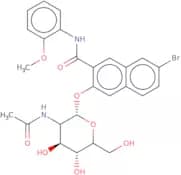
CAS:<p>Modified naphtol AS substrate used in histochemical and cytochemical staining</p>Formula:C26H27BrN2O8Purity:Min. 95%Color and Shape:PowderMolecular weight:575.41 g/molAldol® 518 α-D-galactopyranoside, Biosynth Patent: EP 2427431 and US 8940909
CAS:<p>Aldol® 518 alpha-D-galactopyranoside is a chromogenic and fluorogenic enzyme substrate used for detection of alpha-galactosidase activity. The enzyme substrate is cleaved by alpha-galactosidase positive bacteria and yeasts in liquid or solid media, yielding red color and red fluorescence signal. Aldol® 518 alpha-D-galactopyranoside can also be used to detect alpha-galactosidase (encoded by the Mel1 gene) in yeast gene reporter assays or for identification of alpha-gal positive transformants on agar plates. Aldol® 518 alpha-D-galactopyranoside can be used under aerobic and anaerobic conditions.</p>Formula:C29H29ClN2O7Purity:Min. 95.0 Area-%Molecular weight:553.01 g/mol7-((4'-L-Alaninamido)-rac-3'-hydroxybutyloxy) coumarin
<p>This Clips-O substrate 7-((4'-L-Alaninamido)-rac-3'-hydroxybutyloxy) coumarin allows the detection of single and dual enzymatic activity (L-alanine aminopetidase and oxidation of 4-amino-3-hydroxybutyloxy spacer either enzymatically or by exposure to sodium periodate) with a single substrate resulting in a fluorescent signal. The main virtues of Clips-O substrates are an increased stability towards non-enzymatic hydrolysis that results in a reduced background and high sensitivity.</p>Formula:C16H20N2O5Molecular weight:320.35 g/molL-Lysine 7-amido-4-methylcoumarin, acetate salt
CAS:Controlled Product<p>L-Lysine 7-amido-4-methylcoumarin, acetate salt is a fluorogenic peptide substrate for aminopeptidase. This AMC peptide substrate is normally used to rapidly profile the N-terminal specificity of proteases.</p>Formula:C18H25N3O5Molecular weight:363.42 g/mol3,4-Cyclohexenoesculetin β-D-glucuronide
<p>Chromogenic substrate for beta-glucuronidase</p>Purity:Min. 95%8-Hydroxyquinoline-beta-D-glucuronic acid, sodium salt
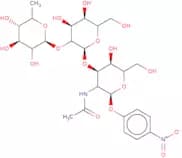
CAS:<p>8-Hydroxyquinoline-beta-D-glucuronic acid, sodium salt is a fluorogenic substrate that can be used for enzymatic detection of peroxidase. The substrate is available in a variety of forms, including powder and liquid. This product has been tested for environmental and bioluminescence activity, as well as food safety. It has also been shown to be a useful ligand in immunoassays.</p>Formula:C15H14NNaO7Purity:Min. 98 Area-%Color and Shape:White PowderMolecular weight:343.26 g/mol4-Nitrophenyl 2-acetamido-3-O-[2-O-a-L-fucopyranosyl-b-D-galactopyranosyl)-2-deoxy-b-D-galactopyranoside
CAS:<p>4-Nitrophenyl 2-acetamido-3-O-[2-O-a-L-fucopyranosyl-b-D-galactopyranosyl)-2-deoxyb-D-galactopyranoside is a water soluble, fluorescent probe that can be used for detecting the presence of β-(1→4) -linked galactosaminoglycans. The dye is a substrate for enzymes such as α--mannosidase, β--glucuronidase and β--galactosidase. The dye is also an excellent ligand for lectins such as concanavalin A and wheat germ agglutinin. This product is a diagnostic reagent that has been shown to have high purity and quality. It has CAS No. 93496-53-8 and can be used in food testing, bioluminescence, environmental testing, or high purity applications.</p>Formula:C26H38N2O17Purity:Min. 95%Molecular weight:650.58 g/mol5-Bromo-6-chloro-3-indolyl a-D-galactopyranoside
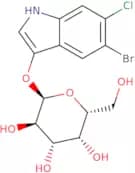
CAS:<p>5-Bromo-6-chloro-3-indolyl a-D-galactopyranoside is a chromogenic substrate that yields a magenta-colored product after cleavage. The chromophore 5-bromo-6-chloro-indoxyl is released, generating the observable color. It is used in glycolipid metabolism studies.</p>Formula:C14H15BrClNO6Color and Shape:White to off-white solid.Molecular weight:408.63 g/molResorufin b-D-xylobioside
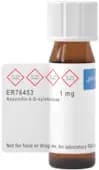
<p>Resorufin b-D-xylobioside is a fluorogenic substrate for xylanases useful for xylanase activity assays.</p>Purity:Min. 95%Color and Shape:PowderMolecular weight:477.42 g/molSTAADIUM™ PeptiZide L-Ala
<p>STAADIUM(TM) PeptiZide L-Ala, Patent pending is a chemiluminescent substrate that reacts with hydrogen peroxide to produce light. It can be used in diagnostic applications such as the detection of blood or fecal stains and in tests for the presence of enzymes or antibodies. STAADIUM(TM) PeptiZide L-Ala, Patent pending is an excellent choice for use with bacterial culture media and food testing. This product has been shown to have high purity and quality.</p>Formula:C15H18ClN3O2SPurity:Min. 95%Molecular weight:339.84 g/molAc-Abu-Tle-Leu-Gln-AMC TFA salt
<p>A fluorogenic substrate for detection of enzymatic activity of the SARS-CoV-2 Mpro protease. The fluorophore 7-Amino-4-methylcoumarin (AMC) is linked to the tetrapeptide via a peptide bond at the C-terminal of the glutamine residue. Following the hydrolytic activity of the Mpro protease, the fluorogenic AMC group get released from the substrate, generating a fluorescent signal (Ex 380 nm / Em 455 nm).</p>Formula:C33H48N6O8(freebase)Purity:Min. 95.0 Area-%Molecular weight:656.77 g/mol