Enzyme Substrates
Enzyme substrates are molecules upon which enzymes act to catalyze chemical reactions. The substrate binds to the active site of the enzyme, where it undergoes a specific transformation to form the product of the reaction. Enzyme substrates are essential tools in research for studying enzyme kinetics, specificity, and mechanism of action. They are also used in diagnostic assays and biochemical studies. At CymitQuimica, we provide a diverse selection of high-quality enzyme substrates to support your research in enzymology and biochemistry.
Subcategories of "Enzyme Substrates"
Found 1527 products of "Enzyme Substrates"
Sort by
Purity (%)
0
100
|
0
|
50
|
90
|
95
|
100
4-(Hydroxymethyl)phenyl-α-D-galactopyranoside tetraacetate
CAS:<p>4-(Hydroxymethyl)phenyl-alpha-D-galactopyranoside tetraacetate is a substrate for enzymes that catalyze the hydroxylation of carbohydrates. It can be used as a substrate for peroxidase and beta-glucosidase, which are important in the production of natural products such as resveratrol, catechins, and lignin. 4-(Hydroxymethyl)phenyl-alpha-D-galactopyranoside tetraacetate is also a chromogenic substrate for chemiluminescence reactions. The product is available as a powder and can be used in diagnostic kits to detect the presence of enzymes or other substances in food or environmental samples.</p>Formula:C21H26O11Molecular weight:454.43 g/mol5-Bromo-3-indoxyl caprylate
CAS:<p>5-Bromo-3-indoxyl caprylate is a fluorogenic substrate that can be used for the detection of β-galactosidase. It is an enzyme substrate that can be used to measure β-galactosidase activity in cell culture media. It has a high purity and high quality. 5-Bromo-3-indoxyl caprylate is also used as a chromogenic substrate for the detection of β-galactosidase. This product has a CAS number of 133950-69-3.</p>Formula:C16H20BrNO2Purity:Min. 99 Area-%Molecular weight:338.24 g/molAc-DEVD-6-amino-D-luciferin
<p>Ac-DEVD-6-amino-D-luciferin is a bioluminescence substrate for protease enzymes (eg caspase-3 protease).</p>Formula:C31H37N7O13S2Purity:Min. 95%Color and Shape:PowderMolecular weight:779.79 g/molAquaSpark® H2S probe, TFA salt, Ramot at Tel-Aviv University Ltd. Patent family WO 2017/130191
<p>AquaSpark® H2S probe is a chemiluminescent probe for the detection of hydrogen sulfide (H2S), with excellent selectivity for sulfide over thiols. The AquaSpark® H2S probe is ~760-fold more selective for Na2S than to L-cysteine, and ~380-fold more selective for Na2S than for glutathione. AquaSpark® H2S probe was used in a study identifying antibiotic-resistant bacterial strains by detecting the beta-lactamase-driven hydrolysis of beta-lactam antibiotics, where hydrogen sulfide is a biodegradation metabolite (Popat Gholap et al, 2021).</p>Formula:C35H31ClF3NO9SSePurity:Min. 85 Area-%Molecular weight:813.1 g/mol3-Indoxyl choline phosphate
CAS:<p>Please enquire for more information about 3-Indoxyl choline phosphate including the price, delivery time and more detailed product information at the technical inquiry form on this page</p>Formula:C13H19N2O4PPurity:Min. 99 Area-%Molecular weight:298.28 g/molRef: 3D-I-5696
1gTo inquire5gTo inquire10gTo inquire500mgTo inquire2500mgTo inquire-Unit-ggTo inquireAquaSpark® 510 acetate, 10 mM in DMSO, Ramot at Tel-Aviv University Ltd. Patent family WO 2017/130191
CAS:<p>AquaSpark® 510 acetate is a dioxetane-based luminogenic substrate for C2-esterase (acetyl esterase) activity. Upon hydrolytic cleavage by the enzyme AquaSpark® 510 acetate spontaneously emits green light. Esterases occur in all domains of life and fulfill important tasks in energy metabolism and recycling of cellular components. In microbiology C2-esterase activity can be used to detect specific microorganisms such as Bacillus cereus, Pseudomonas aeruginosa, Campylobacter jejuni and Candida albicans.</p>Formula:C30H31ClO8Molecular weight:554.17 g/mol5-Bromo-4-chloro-3-indoxyl-β-D-galactopyranoside
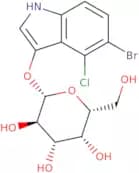
CAS:<p>X-Gal is a chromogenic substrate for β-galactosidase, yielding a blue precipitate. X-Gal is an indicator for coliforms in culture media, as well as for the detection of coliforms (E. coli) in municipal water supplies and food products. X-Gal can be used in conjunction with the inducer IPTG, which binds and inhibits the lac repressor thus inducing β-galactosidase expression. X-Gal is the substrate of choice for blue-white selection of recombinant bacterial colonies with the lac+ genotype.<br>Upon hydrolysis, X-Gal yields a localized, insoluble, blue precipitate, making it exceptionally useful in blotting, immunocytochemical, and ELISA assays. 5-Bromo-4-chloro-3-indoxyl-beta-D-galactopyranoside (X-beta-D-galactoside, X-Gal) is a chromogenic indicator for beta-galactosidase activity. The colorless product is cleaved by lactose-utilizing bacteria in liquid media or on agar plates and yields a blue-green colored precipitate.<br>X-Gal can also be used as a detecting agent for beta-galactosidase activity in reporter gene assays or for identification of positive transformants on agar plates when using the &alpha;-complementation approach. Color formation is due to dimerization and oxidation of 5-bromo-4-chloro-3-hydroxyindole which results from enzymatic cleavage of X-Gal. The reaction proceeds only in the presence of oxygen, i.e. in aerobic cultures. Well detectable color bacterial colonies or liquid cultures is obtained within 16-48 h. In the presence of purified beta-galactosidase, color develops within minutes to a few hours.</p>Formula:C14H15BrClNO6Purity:Min. 99.0 Area-%Molecular weight:408.64 g/molAquaSpark® β-D-galactoside, 10 mM in DMSO, Ramot at Tel-Aviv University Ltd. Patent family WO 2017/130191
CAS:<p>AquaSpark™ β-D-galactoside is a dioxetane-based luminogenic substrate for β-galactosidase activity. β-galactosidase assays are frequently used in molecular biology as reporter gene assays. AquaSpark™beta-D-galactoside can be used to replace X-gal (Cymit Quimica Cat. No.B-7150) that is frequently used in genetically modified bacteria, in the yeast two-hybrid system, or in mouse models to indicate lacZ gene activity. Furthermore, native β-galactosidase activity can be used to detect coliform bacteria, which is important in microbial diagnostics and hygiene monitoring.</p>Formula:C34H39ClO12Molecular weight:675.12 g/molAquaSpark® 510 Calibration Probe, Ramot at Tel-Aviv University Ltd. Patent family WO 2017/130191
CAS:<p>AquaSpark® Calibration Probe is a water-soluble dioxetane-based chemiluminescent probe. Deprotonation of the free phenol group of the calibration probe under mild basic conditions results in an emissive decomposition process. No addition of enhancer or sensitizing agent is required to produce the bright green light emission in aqueous solutions.<br>AquaSpark® Calibration Probe is used for:</p>Formula:C21H23ClO6Purity:Min. 95.0 Area-%Molecular weight:406.12 g/mol5-Bromo-4-chloro-3-indoxyl choline phosphate
CAS:<p>5-Bromo-4-chloro-3-indoxyl choline phosphate is a synthetic enzyme substrate for detecting phosphatidylcholine-specific phospholipase C.</p>Formula:C13H17BrClN2O4PPurity:Min. 99 Area-%Molecular weight:411.63 g/mol6-Chloro-3-indoxyl-α-D-mannopyranoside
CAS:<p>Chromogenic substrate for α-mannosidase yielding a salmon colored precipitate upon cleavage.</p>Formula:C14H16ClNO6Purity:Min. 98.0 Area-%Molecular weight:329.74 g/mol5-Bromo-6-chloro-3-indoxyl phosphate, disodium salt monohydrate
CAS:<p>5-Bromo-6-chloro-3-indoxyl phosphate, disodium salt monohydrate is a substrate used to visualize phosphatase activity via showing magenta colored end product when used with Nitroblue Tetrazolium.</p>Formula:C8H6BrClNNa2O5PPurity:Min. 99.0 Area-%Molecular weight:388.45 g/molAquaSpark® α-L-idopyranosiduronic acid, Ramot at Tel-Aviv University Ltd. Patent family WO 2017/130191
<p>AquaSpark is a high-quality chemiluminescent substrate for the detection of bacterial, yeast, and fungal cells. It is a fluorogenic substrate that is used in diagnostic applications such as bacterial identification. The product has been tested for quality and purity, and it is suitable for use in culture media, food testing, and enzyme substrates. AquaSpark can be used in conjunction with a wide range of ligands to produce chemiluminescence. AquaSpark has been shown to have a superior performance when compared with other fluorogenic substrates used in the detection of bacteria. AquaSpark® alpha-L-idopyranosiduronic acid is an organic compound that belongs to the group of sugars. This product was designed by Ramot at Tel-Aviv University Ltd., Israel Patent family WO 2017/130191. It can be used as an analytical reagent to detect organisms such as bacteria, yeast, and fungi</p>Formula:C34H36ClNaO13Purity:Min. 75 Area-%Molecular weight:711.09 g/mol4-Chloro-1-naphthol
CAS:<p>Substrate for horseradish peroxidase (HRP). HRP catalyzes oxidation of 4-chloro-1-naphthol in the presence of peroxide to the blue insoluble product 4-chloro-1-naphthon. It is used for both blotting and immunohistochemical staining but is less sensitive than other precipitating HRP substrates.</p>Formula:C10H7ClOPurity:Min. 97.0 Area-%Molecular weight:178.62 g/molRef: 3D-C-5180
1kgTo inquire100gTo inquire250gTo inquire500gTo inquire2500gTo inquire-Unit-ggTo inquire5-Bromo-4-chloro-3-indoxyl-β-L-fucopyranoside
CAS:<p>This product is a chromogenic substrate that is used in the detection of alkaline phosphatase and other enzymes. It is also used in food testing, staining, and diagnostics. This product has high purity with a CAS number of 125328-84-9.</p>Formula:C14H15BrClNO5Purity:Min. 99 Area-%Molecular weight:392.63 g/molRef: 3D-B-7138
10mgTo inquire25mgTo inquire50mgTo inquire100mgTo inquire250mgTo inquire-Unit-ggTo inquireAquaSpark® β-D-apiofuranoside, Ramot at Tel-Aviv University Ltd. Patent family WO 2017/130191
<p>AquaSpark® beta-D-apiofuranoside is a chemiluminescent substrate that can be used in the detection of various proteins, such as immunoglobulins, enzymes and hormones. The detection of these proteins can be done by the use of AquaSpark® beta-D-apiofuranoside conjugated with antibodies or enzymes. AquaSpark® beta-D-apiofuranoside is a substrate for the luciferase enzyme and it produces light when activated by a luciferin. This product has been tested for purity, quality and activity in various culture media. The product is also free from any detectable impurities and has passed all environmental testing requirements.</p>Formula:C33H37ClO11Molecular weight:645.1 g/mol5-Bromo-4-chloro-3-indoxyl butyrate
CAS:<p>Chromogenic substrate for carboxylesterase yielding a blue precipitate upon cleavage. It has been proposed for the rapid detection of Branhamella catarrhalis in a strip test because unlike most other members of the family Neisseriaceae, Branhamella catarrhalis produces a butyrateesterase.</p>Formula:C12H11BrClNO2Purity:Min. 98.0 Area-%Molecular weight:316.59 g/molAldol® 355 fluorescence enhancer
CAS:<p>Aldol® 355 fluorescence enhancer is an enhancer of fluorescence signals of the Aldol® fluorogenic substrates. Aldol® 355 fluorescence enhancer allows concentrations of fluorogenic Aldol® substrates in media to reduce up to 6 times. Aldol® 355 fluorescence enhancer can be combined with Aldol® substrates, releasing water-insoluble dyes upon enzymatic cleavage, such as Aldol® 470 range, Aldol® 495 range, Aldol® 518 range, and Aldol®515 range of fluorogenic enzyme substrates.</p>Formula:C39H52N2O2Purity:Min. 95.0 Area-%Molecular weight:580.84 g/molAldol® 495 β-D-glucuronic acid, Biosynth Patent: EP 2427431 and US 8940909
CAS:<p>Aldol® 495 beta-D-glucuronic acid is a chromogenic and fluorogenic enzyme substrate used for detection of beta-glucuronidase activity. The living cells of Escherichia coli can be reliably detected in growth media containing Aldol® 495 beta-D-glucuronic acid, as beta-glucuronidase occurs almost exclusively in E. coli. Aldol® 495 beta-D-glucuronic acid can also be in GUS reporter assays. Aldol® 495 beta-D-glucuronic acid can be used in liquid culture and solid media, and is suitable for use under aerobic and anaerobic conditions. Upon exposure to active beta-glucuronidase, Aldol® 495 beta-D-glucuronic acid develops orange colour and green fluorescence.</p>Formula:C26H23ClN2O8Purity:Min. 95.0 Area-%Molecular weight:526.93 g/molAquaSpark® H2S/-SH probe, TFA salt, Ramot at Tel-Aviv University Ltd. Patent family WO 2017/130191
<p>AquaSpark® H2S/-SH is a chemiluminescent probe for the detection of sulfides and thiols. The chemiluminescence obtained through sulfide is 3-5 fold higher than chemiluminescence obtained through thiols. AquaSpark® H2S/-SH probe was used in a study identifying antibiotic-resistant bacterial strains by detecting the beta-lactamase-driven hydrolysis of beta-lactam antibiotics, where hydrogen sulfide is a biodegradation metabolite (Popat Gholap et al, 2021).</p>Formula:C35H31ClF3NO9S2Purity:Min. 90 Area-%Molecular weight:766.2 g/molAquaSpark® Broad Range Phosphatase Substrate, 2 mM in DMSO, Ramot at Tel-Aviv University Ltd. Patent family WO 2017/130191
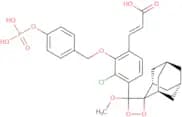
CAS:<p>AquaSpark® Broad Range Phosphatase Substrate is a chemiluminescent substrate for a variety of phosphatase enzymes including bacterial phosphatases and (calf intenstine) alkaline phosphatase (AP) commonly used in immuno-assays.</p>Formula:C28H30ClO10PMolecular weight:592.13 g/molAldol® 455 β-D-galactopyranoside, Biosynth Patent: EP 2427431 and US 8940909
CAS:<p>Aldol® 455 beta-D-galactopyranoside is a chromogenic substrate for the enzyme β-galactosidase. It is used to detect the activity of β-galactosidase in cell culture, and has been shown to be highly purified and of high quality. This product can be used as a ligand for receptor binding studies or as an agent in enzyme substrates in fluorescence and chemiluminescence reactions.</p>Formula:C27H24ClNO7Purity:Min. 93.0 Area-%Molecular weight:509.94 g/mol3,4-Cyclohexenoesculetine-N-acetyl-glucosamine
<p>Please enquire for more information about 3,4-Cyclohexenoesculetine-N-acetyl-glucosamine including the price, delivery time and more detailed product information at the technical inquiry form on this page</p>Purity:Min. 95%3,4-Cyclohexenoesculetine phosphate disodium
<p>Chromogenic substrate for phosphatase</p>Purity:Min. 95%Aldol® 470 L-alanine amide, acetate salt, Biosynth Patent: EP 2427431 and US 8940909
CAS:Controlled Product<p>Aldol® 470 L-alanine amide is a chromogenic and fluorogenic enzyme substrate used for detection of L-alanine aminopeptidase activity. The colorless enzyme substrate is cleaved by L-alanine aminopeptidase, yielding orange-yellow coloration. In addition, green fluorescence is generated when Aldol® 355 fluorescence enhancer or a suitable matrix is present. Aldol® 470 L-alanine amide can also be used in enzymatic assays or within live bacterial cultures. Aldol® 470 L-alanine amide is suitable for use in liquid and solid media, under aerobic as well as anaerobic conditions.</p>Formula:C28H29N3O6Purity:Min. 95.0 Area-%Molecular weight:503.55 g/molAldol® 495 inositol-phosphate, ammonium salt, Biosynth Patent: EP 2427431 and US 8940909
CAS:<p>Aldol® 495 inositol-phosphate is a chromogenic and fluorogenic enzyme substrate used for detection of phosphatidylinositol specific phospholipase C activity (PI-PLC, EC 4.6.1.13). The colorless enzyme substrate is cleaved by PI-PLC or PI-PLC-positive microorganisms in liquid or solid media, yielding orange color. In addition, green fluorescence is generated when a suitable matrix is present, e.g. PE-Pellets or cellulose acetate filter. Aldol® 495 inositol-phosphate is suitable for use in liquid and solid media, under aerobic as well as anaerobic conditions.</p>Formula:C26H29ClN3O10PPurity:Min. 95.0 Area-%Molecular weight:609.95 g/mol6-Chloro-3-indoxyl-β-D-glucuronic acid, cyclohexylammonium salt
CAS:6-Chloro-3-indoxyl-beta-D-glucuronic acid (cyclohexylammonium salt) is a chromogenic substrate for beta-glucuronidase yielding a salmon colored precipitate upon cleavage.Formula:C20H27ClN2O7Purity:Min. 98.0 Area-%Molecular weight:442.90 g/mol5-Bromo-4-chloro-3-indoxyl-α-D-N-acetylneuraminic acid, sodium salt
CAS:<p>Chromogenic substrate for neuraminidase yielding a blue precipitate upon cleavage.</p>Formula:C19H21BrClN2NaO9Purity:Min. 98.0 Area-%Molecular weight:559.74 g/molAldol® 518 β-D-glucopyranoside, Biosynth Patent: EP 2427431 and US 8940909
CAS:<p>Aldol® 518 beta-D-glucopyranoside is a chromogenic and fluorogenic enzyme substrate used for detection of beta-glucosidase activity. The colorless enzyme substrate is cleaved by beta-glucosidase-producing bacteria in liquid or solid media, yielding intense red color and red fluorescence. Aldol® 518 beta-D-glucopyranoside can be used under aerobic and anaerobic conditions.</p>Formula:C29H29ClN2O7Purity:Min. 95.0 Area-%Molecular weight:553 g/mol5-Iodo-3-indoxyl-β-D-galactopyranoside
CAS:<p>5-Iodo-3-indoxyl-beta-D-galactopyranoside is a chromogenic substrate for beta-galactosidase.</p>Formula:C14H16INO6Purity:Min. 99 Area-%Molecular weight:421.19 g/molL-Glutamic acid γ-(4-nitroanilide) monohydrochloride
CAS:<p>L-Glutamic acid gamma-(4-nitroanilide) monohydrochloride is a fluorescent substrate for various enzymes. It is used in the detection of aminopeptidase and dipeptidase activity, as well as in the determination of ATPase activity. L-Glutamic acid gamma-(4-nitroanilide) monohydrochloride is also used in fluorogenic assays for the detection of phosphate, pyruvate, pyrophosphate and sulfite. This product has been tested by both enzyme and cell culture methods to ensure high purity and quality.<br>L-Glutamic acid gamma-(4-nitroanilide) monohydrochloride is not intended for use in diagnostics, food testing or bioluminescence reactions.</p>Formula:C11H14ClN3O5Purity:Min. 98 Area-%Molecular weight:303.70 g/molGlutaryl-glycyl-L-arginine 7-amido-4-methylcoumarin hydrochloride
CAS:<p>Glutaryl-glycyl-L-arginine 7-amido-4-methylcoumarin hydrochloride is a chromogenic substrate that can be used in the detection of enzymes and other proteins. It is a fluorogenic substrate that can be used in chemiluminescence to detect and measure free radicals. Glutaryl-glycyl-L-arginine 7-amido-4-methylcoumarin hydrochloride is stable at pH 7, and has a high purity with a CAS number of 103213-40-7. This product is suitable for use as an enzyme substrate or ligand, as well as for staining and diagnostics.</p>Formula:C23H31ClN6O7Molecular weight:538.98 g/molRef: 3D-G-3950
1gTo inquire25mgTo inquire100mgTo inquire250mgTo inquire500mgTo inquire-Unit-ggTo inquire7-((4'-L-Alaninamido)-rac-3'-hydroxybutyloxy) coumarin hydrochloride
<p>This Clips-O substrate 7-((4'-L-Alaninamido)-rac-3'-hydroxybutyloxy) coumarin allows the detection of single and dual enzymatic activity (L-alanine aminopetidase and oxidation of 4-amino-3-hydroxybutyloxy spacer either enzymatically or by exposure to sodium periodate) with a single substrate resulting in a fluorescent signal. The main virtues of Clips-O substrates are an increased stability towards non-enzymatic hydrolysis that results in a reduced background and high sensitivity.</p>Formula:C16H21ClN2O5Molecular weight:356.8 g/mol5-Bromo-6-chloro-3-indoxyl-β-D-glucopyranoside
CAS:<p>Chromogenic substrate for β-D-glucosidase yielding a magenta precipitate. Differentiation of Salmonella spp. (negative) from other Enterobacteriaceae.</p>Formula:C14H15BrClNO6Purity:Min. 99 Area-%Molecular weight:408.64 g/mol3-Indoxyl phosphate disodium salt
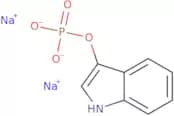
CAS:Controlled Product<p>Histochemical substrate for alkaline phosphatase; Dark-blue color</p>Purity:Min. 98 Area-%Color and Shape:PowderMolecular weight:257.09 g/mol4-Methylumbelliferyl-α-L-arabinofuranoside
CAS:<p>4-Methylumbelliferyl-alpha-L-arabinofuranoside is a nucleic acid molecule that has an average diameter of 10 nm. It is used as a tracer in electron microscopy to detect the presence of nucleic acid molecules in cells. This compound is also used to study the interactions between DNA and RNA molecules by labeling the DNA strand with 4-methylumbelliferyl-alpha-L-arabinofuranoside, which contains an alpha-(2,4,6) arabinofuranosyl group. The recombinant expression of this compound can be carried out in corynebacterium glutamicum, and it has a bulk density that ranges from 1.7 to 2.1 g/cm3 and an average particle diameter ranging from 0.5 to 1 micron. It is not soluble in water or alcohol but is soluble in acetone or chloroform.</p>Formula:C15H16O7Purity:Min. 98 Area-%Molecular weight:308.29 g/molRef: 3D-M-5509
1gTo inquire100mgTo inquire250mgTo inquire500mgTo inquire2500mgTo inquire-Unit-ggTo inquire5-Bromo-3-indoxyl-β-D-galactopyranoside
CAS:<p>Chromogenic substrate for beta-D-galactosidase yielding a lapis colored precipitate. 5-Bromo-3-indoxyl-beta-D-galactopyranoside can be used in conjunction with isopropyl-beta-D-thiogalactopyranoside as an alternative to 5-bromo-4-chloro-3-indolyl-beta-D-galactopyranoside (X-gal), producing a darker blue color for detection of beta-galactosidase activity in bacterial colonies in a colorimetric assay to detect recombinants (white) from non-recombinants (blue). 5-Bromo-3-indoxyl-beta-D-galactopyranoside is also used in histochemistry to demonstrate beta-galactosidase activity in tissues.</p>Formula:C14H16BrNO6Purity:Min. 99.0 Area-%Molecular weight:374.20 g/molIsopropyl-β-D-thiogalactopyranoside, approx. 15.0% dioxane
CAS:<p>A non-metabolizable allolactose analogue, widely used in molecular biology for overexpression of recombinant proteins from inducible systems under the control of lac promoter. IPTG binds to the LacI repressor and causes its release from the lac operator, allowing gene expression to take place. Present in vectors of pGEX, pGEM-T, pET, pRSET, pMAL class and others.</p>Formula:C9H18O5SMolecular weight:238.30 g/molChlorophenol red-b-D-galactopyranoside sodium salt
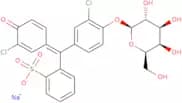
CAS:<p>Chlorophenol red-b-D-galactopyranoside sodium salt is the salt from of CPRG (chlorophenol red-b-D-galactopyranoside), that has a higher solubility. It is a chromogenic substrate for beta-galactosidases that, after enzymatic cleavage, releases chlorophenol red, a dark red compound quantified by absorbance at 570 nm.</p>Formula:C25H21Cl2O10SNaPurity:Min. 96 Area-%Color and Shape:PowderMolecular weight:607.4 g/mol4-Nitrophenyl-N-acetyl-β-D-glucosaminide
CAS:<p>Chromogenic β-glucosaminidase substrate yielding a yellow solution upon cleavage, used particularly in yeasts and molds.</p>Formula:C14H18N2O8Purity:Min. 99.0 Area-%Molecular weight:342.31 g/molD-Luciferin 1-(4,5-dimethoxy-2-nitrophenyl)ethyl ester
CAS:<p>DMNPE-caged Luciferin is a photoactivatable probe that can easily penetrate the cell membrane, and by exposure to UV light it undergoes a photochemical decomposition liberating a Luciferin molecule. Once exposed to Luciferase enzyme expressed by the cells, Luciferin emits visible (and measurable) light. Using_x000D_this technique, imaging of luciferase activity was performed both in living cells and in mouse tumor xenograft, by intraperitoneal injection of the caged DMNPE luciferin (Chem. Commun., 2009, 0, 4028-4030).</p>Formula:C21H19N3O7S2Purity:Min. 98 Area-%Molecular weight:489.53 g/mol4-Nitrophenyl-N-acetyl-β-D-galactosaminide
CAS:<p>4-Nitrophenyl-N-acetyl-beta-D-galactosaminide is a synthetic substrate that is used in enzyme kinetics. It is a beta-galactosidase substrate that reacts with the enzyme to form a product. The rate of reaction can be measured by following the change in absorbance over time. This product will react with an acceptor, such as chondroitin sulfate, to produce an observable reaction product. 4NPBGA has been shown to be an effective carbon source for plant physiology studies and has been shown to have optimal activity at pH 6.5.</p>Formula:C14H18N2O8Purity:Min. 98 Area-%Molecular weight:342.31 g/mol5-Nitro-3-indoxyl-β-D-galactopyranoside
<p>Please enquire for more information about 5-Nitro-3-indoxyl-β-D-galactopyranoside including the price, delivery time and more detailed product information at the technical inquiry form on this page</p>Formula:C14H16N2O8Purity:Min. 95%Molecular weight:340.29 g/molAldol® 515 L-pyroglutamic acid amide, Biosynth Patent: EP 2427431 and US 8940909
<p>A chromogenic and fluorogenic substrate, used for detection of esterase activity.</p>Formula:C28H26N4O3Purity:Min. 95.0 Area-%Molecular weight:466.54 g/molAquaSpark® α-D-galactoside, lyophilized, Patent WO 2017/130191
<p>Chemiluminescence beta-galactosidase substrate</p>Formula:C34H39ClO12Purity:Min. 90 Area-%Molecular weight:675.12 g/mol5-Bromo-4-chloro-3-indoxyl-α-L-fucopyranoside
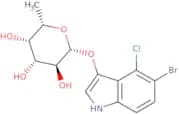
CAS:<p>Chromogenic substrate for α-D-Fucosidase yielding a blue precipitate.</p>Formula:C14H15BrClNO5Purity:Min. 98.0 Area-%Molecular weight:392.64 g/mol4-Methylumbelliferyl-α-L-arabinopyranoside
CAS:<p>Fluorogenic substrate for α-L-arabinosidase yielding a blue fluorescent solution upon cleavage.</p>Formula:C15H16O7Purity:Min. 98.0 Area-%Molecular weight:308.29 g/mol4-Nitrophenyl-α-D-mannopyranoside
CAS:<p>Chromogenic α-mannosidase substrate yielding a absorbent solution upon cleavage. Also used for studies of the crystal structure of the complexes of concanavalin A and binding studies with concanavalin A.</p>Formula:C12H15NO8Purity:Min. 99 Area-%Molecular weight:301.26 g/mol6-Fluoro-3-indoxyl-β-D-galactopyranoside
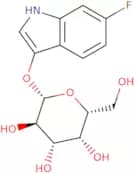
CAS:<p>6-Fluoro-3-indoxyl-beta-D-galactopyranoside is a fluorescent chromogenic substrate that is commonly used for the detection and quantification of beta-galactosidase activity. When this substrate is hydrolyzed by beta-galactosidase, it produces a fluorescent blue product that can be easily detected and measured using a fluorometer or spectrophotometer. This substrate is often used in microbiology and molecular biology research to study gene expression and enzyme kinetics, and is also used in medical diagnostics as a marker for specific diseases and conditions.</p>Formula:C14H16FNO6Purity:Min. 98.0 Area-%Molecular weight:313.29 g/mol3-Indoxyl phosphate, p-toluidine salt
CAS:Controlled Product<p>3-Indoxyl phosphate, p-toluidine salt is a fluorogenic substrate that can be used for the detection of β-galactosidase. 3-Indoxyl phosphate, p-toluidine salt is a highly active chromogenic substrate that can be used as a diagnostic tool in the food industry to determine whether or not milk has been adulterated with animal milk. This product is also used in environmental testing to detect bacteria and fungi. 3-Indoxyl phosphate, p-toluidine salt is a high purity, high quality conjugate that can be used for the detection of β-galactosidase.</p>Formula:C8H8NO4P·C7H9NPurity:Min. 98 Area-%Molecular weight:320.28 g/mol