Enzyme Substrates
Subcategories of "Enzyme Substrates"
Found 1527 products of "Enzyme Substrates"
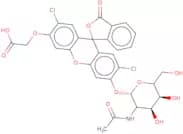
6'-(O-(Carboxymethyl))-2',7'-dichlorofluoroscein 3'-(O-(N-acetyl-b-D-glucosamide))
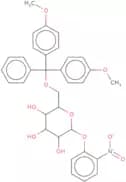
6'-(O-(Carboxymethyl))-2',7'-dichlorofluoroscein 3'-(O-(N-acetyl-b-D-glucosamide)) is a chemiluminescent substrate that can be used in the detection of ligands. This product has a CAS number of 44636-76-8 and is available at a purity level of 98%. It has been tested for bacterial contamination, as well as for adverse effects on culture media and environmental testing. 6'-(O-(Carboxymethyl))-2',7'-dichlorofluoroscein 3'-(O-(N-acetyl-b-D-glucosamide)) is an enzymatic substrate that can be used in diagnostic applications such as the detection of fluorescence, staining, and bioluminescence. It has also been shown to be useful in food testing.Purity:Min. 95%Molecular weight:662.44 g/mol2-Nitrophenyl 6-O-DMT-b-D-galactopyranoside
N-Acetyl-2-nitrophenyl 6-O-DMT-b-D-galactopyranoside is a fluorogenic substrate that is used in enzyme and chromogenic assays, including the determination of aminoglycoside activity. This product has been shown to be suitable for detection of bacterial contamination in food products and environmental samples. N-Acetyl-2-nitrophenyl 6-O-DMT-b-D-galactopyranoside reacts with aminoglycosides at the O4 position, forming a fluorescent product that can be measured using a fluorometer.Purity:Min. 95%Molecular weight:603.62 g/molOctyl 4-nitrophenyl hexyl phosphonate
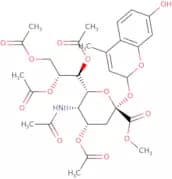
CAS:Octyl 4-nitrophenyl hexyl phosphonate is a lipase suicide inhibitor that is a chromogenic substrate for lipases which upon enzymatic action, binds irreversibly to the lipase and inactivates it. The substrate can be used for the determination of active sites in lipases, especially in lipases preferring hydrophobic leaving groups.Purity:Min. 95%Molecular weight:399.464-Methylumbelliferyl N-acetyl-4,7,8,9-tetra-O-acetyl-a-D-neuraminic acid methyl ester
CAS:4-Methylumbelliferyl N-acetyl-4,7,8,9-tetra-O-acetyl-a-D-neuraminic acid methyl ester (4MU) is a chemiluminescence substrate. It is used in the detection of an enzyme involved in the synthesis of glycoproteins and glycolipids. The enzyme conjugates 4MU with a sugar molecule to form a fluorescent product. This product can be detected by its emission of light at 560 nm when illuminated with light at 450 nm.Purity:Min. 95%Molecular weight:649.6 g/mol[2-Methoxy-4-(2-nitrovinyl)phenyl] b-D-galactopyranoside
CAS:[2-Methoxy-4-(2-nitrovinyl)phenyl] b-D-galactopyranoside (MNVP-gal) is a chromogenic enzyme substrate that is commonly used to detect the activity of beta-galactosidase in biological samples. MNVP-gal produces a distinctive magenta color when hydrolyzed by beta-galactosidase, making it particularly useful for applications where visual detection is necessary. This substrate is also resistant to endogenous proteases, making it well-suited for use in cellular and tissue preparations.Purity:Min. 95%Molecular weight:357.31 g/mol3-Indolyl-b-D-cellobioside
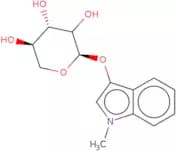
CAS:3-Indolyl-b-D-cellobioside is a fluorogenic substrate for alkaline phosphatase. It can be used in food testing, environmental testing, and diagnostics. 3-Indolyl-b-D-cellobioside is a chromogenic substrate for beta-galactosidase. It can be used in staining and enzyme substrates. 3-Indolyl-b-D-cellobioside is also a ligand for alkaline phosphatase. It can be used in conjugates and chemiluminescence or bioluminescence reactions. 3-Indolyl -b -D -cellobioside is a high purity product with high quality standards that are suitable for use in culture media.br>br> 3 - Indolyl - b - D - cellobioside CAS No . 914912 - 14 - 4 Food testing StPurity:Min. 95%Molecular weight:457.43 g/molN-Methyl-3-indolyl a-D-arabinopyranoside
3-indolyl-N-methyl a-D-arabinopyranoside is a fluorogenic substrate for the detection of beta-galactosidase. It also has been used as a chromogenic substrate for the detection of beta-glucuronidase. This product can be conjugated to an enzyme and used in enzyme substrates for the detection of beta-galactosidase, beta-glucuronidase, and other enzymes. 3-indolyl-N-methyl a-D-arabinopyranoside is also commonly used in culture media to detect bacteria and yeast.Purity:Min. 95%Molecular weight:279.29 g/mol4-Nitrophenyl hepta-O-acetyl-1-thio-b-lactoside
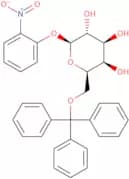
CAS:4-Nitrophenyl hepta-O-acetyl-1-thio-b-lactoside is an inorganic molecule that binds to the surface of bacteria. It has been used as a fingerprinting tool for a variety of organisms, including corynebacterium glutamicum. The molecule can be used to measure the metabolic activity of corynebacterium glutamicum with a technique called incremental acidification. This technique is based on the observation that the concentration of 4-nitrophenol decreases by one unit for each glucose metabolized by corynebacterium glutamicum. The use of 4NPHTBL and other primers can also be useful in diagnosing patients with autoimmune diseases such as celiac disease and inflammatory bowel disease.Purity:Min. 95%2-Nitrophenyl 6-O-trityl-b-D-galactopyranoside
CAS:2-Nitrophenyl 6-O-trityl-b-D-galactopyranoside is a chromogenic enzyme substrate used in assays to detect galactosidase activity. It is a derivative of galactose that can be hydrolyzed by galactosidase to release the yellow-colored 2-nitrophenyl group, which can be detected spectrophotometrically. The trityl group helps to stabilize the molecule and prevent undesired hydrolysis during storage. This substrate is commonly used in the study of carbohydrate metabolism and in the detection of galactosidase activity in microorganisms.Purity:Min. 95%Molecular weight:543.56 g/mol4-Nitrophenyl (N-acetyl-a-neuraminosyl)-(2,3)-O-b-D-galactopyranosyl-(1,3)-2-acetamido-2-deoxy-b-D-galactopyranoside
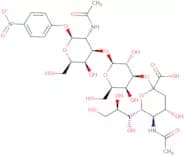
CAS:4-Nitrophenyl (N-acetyl-a-neuraminosyl)-(2,3)-O-b-D-galactopyranosyl-(1,3)-2-acetamido-2-deoxy-b-D-galactopyranoside is a fluorogenic substrate that is used in the detection of enzyme activity. It reacts with a specific enzyme to produce light. This product has been shown to be useful for detecting β -galactosidase, β -glucuronidase, α -mannosidase, and lactose permeases. The product is also used in the diagnosis of urinary tract infections and other diseases. This product is not intended for use in humans or animals.Purity:Min. 95%Molecular weight:795.7 g/molAquaSpark® H2S/-SH probe, TFA salt, Ramot at Tel-Aviv University Ltd. Patent family WO 2017/130191
AquaSpark® H2S/-SH is a chemiluminescent probe for the detection of sulfides and thiols. The chemiluminescence obtained through sulfide is 3-5 fold higher than chemiluminescence obtained through thiols. AquaSpark® H2S/-SH probe was used in a study identifying antibiotic-resistant bacterial strains by detecting the beta-lactamase-driven hydrolysis of beta-lactam antibiotics, where hydrogen sulfide is a biodegradation metabolite (Popat Gholap et al, 2021).Formula:C35H31ClF3NO9S2Purity:Min. 95%Molecular weight:766.2 g/mol4-Nitrophenyl 2-acetamido-3-O-[2-O-(2,3,4-tri-O-benzoyl-a-L-fucopyranosyl)-3,4,6-tri-O-acetyl-D-galactopyranosyl]-2-deoxy-6-O-trityl -b-D-glucopyranoside
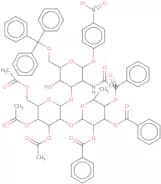
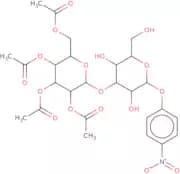
4-nitrophenyl 2-acetamido-3-O-[2-O-(2,3,4-tri-O-benzoyl-a-L-fucopyranosyl)-3,4,6-tri-O-acetyl -D -galactopyranosyl]-2 deoxy 6 O trityl b D glucopyranoside is a chemiluminescent substrate that can be used in biochemical assays. It reacts with oxygen to produce light when it is excited by a UV or blue light source. This product has been tested for purity and quality by HPLC analysis and spectroscopy.Purity:Min. 95%Molecular weight:1,331.33 g/mol4-Nitrophenyl b-D-cellobioside heptacetate
CAS:4-Nitrophenyl b-D-cellobioside heptacetate is a fluorogenic substrate that is used in food testing and environmental testing. The product is an enzyme substrate that can be used as a conjugate to produce chemiluminescence or bioluminescence. 4-Nitrophenyl b-D-cellobioside heptacetate has CAS number 69948-03-4 and is of high purity and quality. It has been shown to have good fluorescence properties, which makes it ideal for use in fluorescence microscopy applications.Purity:Min. 95%Molecular weight:757.65 g/molAldol® 470 N-tosyl-L-alanine ester, Biosynth Patent: EP 2427431 and US 8940909
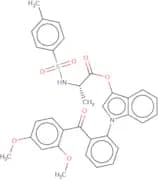
CAS:Controlled ProductAldol® 470 N-tosyl-L-alanine ester is a fluorogenic substrate that is used in enzyme and chromogenic assays. It is a high purity, high quality, and highly soluble substrate for chemiluminescent reactions. Aldol® 470 N-tosyl-L-alanine ester can be used to detect the presence of bacteria in culture media and as an indicator of bacterial growth. It is also used to test for the presence of different types of enzymes that catalyze the oxidation of alcohols.
Formula:C33H30N2O7SPurity:Min. 90.0 Area-%Molecular weight:598.67 g/molAldol® 496 acetate, Biosynth Patent: EP 2427431 and US 8940909
CAS:Aldol 496 acetate is a chromogenic substrate for the enzyme Aldolase. It is also used as a ligand to detect the presence of Aldolase in biological fluids and tissues. This product is designed for Food testing, Diagnostics, Chromogenic substrate, Staining, Enzyme substrate, Bioluminescence, Fluorogenic substrate, Chemiluminescence, and Culture media. Aldol 496 acetate is an organic chemical with high purity and high quality.Formula:C27H24N2O4Purity:Min. 95.0 Area-%Molecular weight:440.49 g/molAldol® 515 propionate, Biosynth Patent: EP 2427431 and US 8940909
CAS:Aldol® 515 propionate is a chromogenic substrate that is used as a reagent in food testing, diagnostics, and environmental testing. It reacts with an enzyme to form a fluorescent product that can be detected with a spectrophotometer. The substrate has been shown to have high purity and high quality.Formula:C26H24N2O3Purity:Min. 95.0 Area-%Molecular weight:412.48 g/molAldol® 450 acetate, Biosynth Patent: EP 2427431 and US 8940909
CAS:Aldol® 450 acetate is an enzyme substrate that is used in the detection of aldolase activity. Aldol® 450 acetate has been shown to be a useful alternative to the traditional bioluminescence and chemiluminescence methods for detecting aldolase activity. It has also been shown to be effective as a fluorogenic substrate for detecting aldolase activity in food products. Aldol® 450 acetate can be conjugated with other compounds, such as ligands and dyes, to enable it to detect different enzymes.
Aldol® 450 acetate has an absorption maximum at 450 nm and fluoresces blue-green under longwave UV light excitation. It is soluble in water and exhibits excellent stability at high temperatures (up to 50°C) and pH (1-14).Formula:C27H19NO3Purity:Min. 95.0 Area-%Molecular weight:405.44 g/molBCM® Histamine-producing bacteria Broth
Histamine (Scombrotoxin) fish poisoning is the most frequent cause of fish poisoning incidents today. Cymit Quimica's BCM®; Histamine-producingbacteria Broth (C-0450) is a growth medium for the detection of histamine-producing bacteria in food and water samples. The medium contains an indicator that turns orange to red due to metabolites released by histidine decarboxylase.5-Bromo-4-chloro-3-indoxyl nonanoate
CAS:5-Bromo-4-chloro-3-indoxyl nonanoate (5BCNI) is a chromogenic substrate for the detection of alkaline phosphatase. It is soluble in most organic solvents and is stable at room temperature for up to 30 days. 5BCNI has been shown to be a high quality, sensitive and specific substrate for the detection of alkaline phosphatase in culture media, diagnostics, conjugates, environmental testing and chemiluminescence. It has also been used as an enzyme substrate in bioluminescence studies. The CAS number for 5BCNI is 133950-77-3.Formula:C17H21BrClNO2Molecular weight:386.72 g/molAldol® 484 β-D-galactopyranoside, Biosynth Patent: EP 2427431 and US 8940909
CAS:Aldol® 484 beta-D-galactopyranoside is a chromogenic enzyme substrate for beta-galactosidase activity. The colorless product is cleaved by lactose-utilizing bacteria in liquid or solid media, yielding intense red color. Aldol® 484 beta-D-galacto-pyranoside can also be used in beta-gal reporter gene assays or for identification of beta-gal positive transformants on agar. Aldol® 484 beta-D-galactopyranoside can be used under aerobic and anaerobic conditions.Formula:C26H24ClFN2O7Purity:Min. 95.0 Area-%Molecular weight:530.93 g/molBoc-Val-Pro-Arg-AquaSpark®, Ramot at Tel-Aviv University Ltd. Patent family WO 2017/130191
CAS:Targets Factor C substrate and peptidaseFormula:C49H66ClN7O11Purity:Min. 85 Area-%Molecular weight:964.56 g/molAldol® 467 β-D-galactopyranoside, Biosynth Patent: EP 2427431 and US 8940909
CAS:Aldol® 467 beta-D-galactopyranoside is a chromogenic and fluorogenic enzyme substrate used for detection of beta-galactosidase activity. The colorless product is cleaved by lactose-utilizing bacteria grown in liquid or solid media, yielding yellow coloration and green fluorescence. Aldol® 467 beta-D-galactopyranoside can also be used in beta-galactosidase gene reporter assays or immunoassay applications (ELISA). Aldol® 467 beta-D-galactopyranoside can be used under aerobic and anaerobic conditions.
Formula:C29H28ClNO9Purity:Min. 95.0 Area-%Molecular weight:570 g/molAquaSpark® Alkaline Phosphatase Substrate, Ramot at Tel-Aviv University Ltd. Patent family WO 2017/130191
AquaSpark® Alkaline Phosphatase Substrate is a stand-alone reagent - no additives such as enhancers or detergents are required to start a strong light reaction. AquaSpark® Alkaline Phosphatase Substrate is superior to other luminogenic alkaline phosphatase substrates as it shows significantly higher signal intensities and very low background.Application Examples:
Formula:C21H24NaO9PPurity:Min. 80.0 Area-%Molecular weight:474.38 g/mol6-Bromo-2-naphthyl-α-D-mannopyranoside
CAS:6-Bromo-2-naphthyl-alpha-D-mannopyranoside is a strong inhibitor of alpha-mannosidase. It has been shown to inhibit the growth of Mycobacterium tuberculosis and Streptococcus pneumoniae, which are both known to cause bacterial infections in humans. 6BNA inhibits the enzyme alpha-mannosidase, which hydrolyzes terminal α-(1,4)-linked mannose residues from oligosaccharides and glycoproteins. This drug has a high affinity for the active site of alpha-mannosidase and an IC50 value of 0.2 mM, making it an effective inhibitor.
Formula:C16H17BrO6Purity:Min. 98.0 Area-%Molecular weight:385.22 g/molEspresso-Gal
Espresso-Gal (Espresso-beta-D-galactopyranoside) is a chromogenic indicator for beta-galactosidase activity. The colorless product is cleaved by lactose-utilizing bacteria in liquid media or on agar plates and yields an espresso brown colored precipitate. Espresso-Gal can also be used as detecting agent for beta-galactosidase activity in reporter gene assays or for identification of positive transformants on agar plates when using the α-complementation approach. Read more in the Application Notes.Molecular weight:495.6 g/molAldol® 458 phosphate, disodium salt, Biosynth Patent: EP 2427431 and US 8940909
CAS:Aldol® 458 phosphate is a chromogenic and fluorogenic enzyme substrate used for detection of phosphatase activity. The colorless enzyme substrate is cleaved by phosphatases secreted by bacteria grown in liquid media, yielding yellow color and green fluorescence. Aldol® 458 phosphate can also be used in assays involving phosphatase-coupled antibodies in immunoassay applications (ELISA). Aldol® 458 phosphate can be used under aerobic and anaerobic conditions.Formula:C16H12NNa2O6PPurity:Min. 95.0 Area-%Molecular weight:391.22 g/mol2-Chloro-4-nitrophenyl b-D-xylobioside
2-Chloro-4-nitrophenyl b-D-xylobioside is a chemiluminescent substrate that is used as a diagnostic agent. It has been used in the identification of gram positive and gram negative bacteria, which are differentiated by the color of the reaction. This substrate has also been used to detect the presence of certain enzymes produced by bacteria. 2-Chloro-4-nitrophenyl b-D-xylobioside has shown to be an effective enzyme substrate for detecting bacterial growth in culture media and is often used as a fluorogenic substrate in food testing.
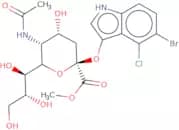
Purity:Min. 95%5-Bromo-4-chloro-3-indolyl N-acetyl-a-D-neuraminic acid methyl ester
CAS:5-Bromo-4-chloro-3-indolyl N-acetyl-a-D-neuraminic acid methyl ester is a chromogenic substrate that reacts with enzymes to produce a colored product. It can be used in diagnostic tests for the detection of various bacteria, including Salmonella and Brucella, as well as for the determination of concentration in food testing or environmental testing. 5B4C3INA can also be conjugated to other substances, such as biotin or an antibody, which allows it to be used in immunoassays.Formula:C20H24BrClN2O9Purity:Min. 95%Molecular weight:551.77 g/molrac-7-(3',4'-Dihydroxybutyloxy)coumarin-4'-phosphate disodium salt
CAS:This Clips-O substrate rac-7-(3',4'-Dihydroxybutyloxy)coumarin-4'-phosphate allows the detection of single and dual enzymatic activity (phosphatase and oxidation of 4-amino-3-hydroxybutyloxy spacer either enzymatically or by exposure to sodium periodate) with a single substrate resulting in a fluorescent signal. The main virtues of Clips-O substrates are an increased stability towards non-enzymatic hydrolysis that results in a reduced background and high sensitivity.Formula:C13H13Na2O8PPurity:Min. 95.0 Area-%Molecular weight:374.2 g/molAldol® 515 β-D-xylopyranoside, Biosynth Patent: EP 2427431 and US 8940909
CAS:Aldol® 515 beta-D-xylopyranoside is a chromogenic substrate that is used in food testing. It is an alternative to the more common glucose and sucrose, which are not suitable for some types of assays. Aldol® 515 beta-D-xylopyranoside is also used in diagnostics as a ligand for fluorescent antibody staining and chemiluminescence assays. It has been shown to increase the sensitivity of these tests by up to 10 times. The substrate has been tested extensively and is safe for use with a wide range of bacteria including E. coli, S. typhimurium, M. tuberculosis, and C. albicans at concentrations up to 100 mM without any inhibitory effects on growth or viability.
END>.Formula:C28H34N2O6Purity:Min. 95.0 Area-%Molecular weight:494.59 g/molL-Glutamic acid γ-(4-nitroanilide) monohydrochloride
CAS:L-Glutamic acid gamma-(4-nitroanilide) monohydrochloride is a fluorescent substrate for various enzymes. It is used in the detection of aminopeptidase and dipeptidase activity, as well as in the determination of ATPase activity. L-Glutamic acid gamma-(4-nitroanilide) monohydrochloride is also used in fluorogenic assays for the detection of phosphate, pyruvate, pyrophosphate and sulfite. This product has been tested by both enzyme and cell culture methods to ensure high purity and quality. L-Glutamic acid gamma-(4-nitroanilide) monohydrochloride is not intended for use in diagnostics, food testing or bioluminescence reactions.Formula:C11H14ClN3O5Purity:Min. 98 Area-%Molecular weight:303.70 g/molL-Glutamic acid γ-(7-amido-4-methylcoumarin)
CAS:Substrate for aminopeptidase a or the assay of γ-glutamyl transferase yielding a blue fluorescent solution upon cleavage.Formula:C15H16N2O5Purity:Min. 99 Area-%Molecular weight:304.31 g/molRef: 3D-G-3850
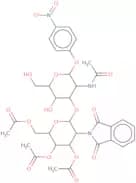
1gTo inquire50mgTo inquire250mgTo inquire500mgTo inquire2500mgTo inquire-Unit-ggTo inquire4-Nitrophenyl 2-acetamido-3-O-(3,4,6-tri-O-acetyl-2-deoxy-2-phthalimido-b-D-glucopyranosyl)-2-deoxy-a-D-galactopyranoside
4-Nitrophenyl 2-acetamido-3-O-(3,4,6-tri-O-acetyl-2-deoxy-2-phthalimido-b-D-glucopyranosyl)-2-deoxy -a -D -galactopyranoside is a Fluorogenic substrate that is used in the detection of beta glucuronidase activity. It can be used for food testing, staining, environmental testing and chromogenic substrate for diagnostic purposes. It has a CAS number of 184840–55–9 and is available in high purity and quality. 4NPPAG is an enzyme substrate that is used to measure the amount of beta glucuronidase activity in culture media by chemiluminescence or bioluminescence.Purity:Min. 95%Molecular weight:759.67 g/molLuciferin-myo-inositol-1-phosphate, sodium salt
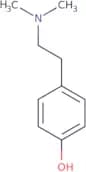
Luciferin-myo-inositol-1-phosphate, sodium salt is a conjugate of luciferin and myo-inositol. It is used as a substrate for certain enzymes, such as the enzyme that catalyzes the oxidation of luciferin to oxyluciferin. This product can be used in environmental testing, food testing, and diagnostics. Luciferin-myo-inositol-1-phosphate, sodium salt is available in high purity and high quality.Formula:C17H18N2NaO11PS2Purity:Min. 94 Area-%Molecular weight:544.42 g/molHordenine
CAS:Produces a fluorogenic signal in the presence of peroxidaseFormula:C10H15NOPurity:Min. 95%Color and Shape:Brown PowderMolecular weight:165.23 g/molIsoluminol
CAS:Isoluminol is a chromogenic molecule with a hydrophilic nature due to the location of the amino group in the phthalate ring, making it impermeable to cell membranes. It is used as a chemiluminescent probe to specifically detect extracellular reactive oxygen species (ROS) metabolites, which are known to be toxic for intra-erythrocytic parasites. Isoluminol-enhanced chemiluminescence has been employed as a sensitive method to study the release of superoxide anion from human neutrophils. Additionally, isoluminol has been utilized to measure extracellular ROS, distinguishing it from luminol, which is used to measure total ROS. Furthermore, isoluminol is suggested to detect mainly extracellular production of ROS, providing a lower chemiluminescence signal compared to luminol. Isoluminol is used as a chemiluminescence amplifier with pronounced affinity to oxidants outside polymorphonuclear leukocytes (PMNLs). It has been reported that isoluminol is less able to traverse biological membranes, making it suitable for detecting the release of NADPH oxidase-derived superoxide ions. Moreover, isoluminol is more hydrophilic and polar than luminol, as indicated by its lower capacity to form intramolecular hydrogen bridges. The molecule's impermeability ensures that only extracellularly excreted ROS are detected in the assay. In analytical chemistry, isoluminol is used as a chemiluminescence probe for labeling proteins and biomolecules, and its chemiluminescent oxidation is enhanced in the presence of certain catalysts. Isoluminol is also employed in open-tubular capillary chromatography systems for the elution of labeled biomolecules. Additionally, isoluminol has been used in microchip chromatography for the analysis of biomolecules.Formula:C8H7N3O2Purity:Min. 95%Molecular weight:177.053833-(2'-Spiroadamantane)-4-methoxy-4-(3''-phosphoryloxy)phenyl-1,2-dioxetane
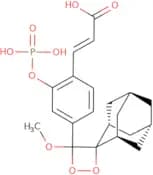
CAS:As an alternative to commonly used colorimetric and fluorescent substrates, 3-(2'-Spiroadamantane)-4-methoxy-4-(3''-phosphoryloxy)phenyl-1,2-dioxetane, abbreviated AMPPD, is a chemiluminescent substrate for alkaline phosphatase (ALP). It allows detection of alkaline phosphatase at a high sensitivity. Literature reports that the co-presence of 0.1% bovine serum albumin (BSA) leads to a signal increase of 10-folds under selected conditions.Formula:C18H23O7PPurity:Min. 97.0 Area-%Molecular weight:382.34 g/molRef: 3D-S-7601
1gTo inquire5gTo inquire250mgTo inquire500mgTo inquire2500mgTo inquire-Unit-ggTo inquire4-Nitrophenyl 3-O-(2,3,4,6-tetra-O-acetyl-b-D-glucopyranosyl)-b-D-glucopyranoside
4-Nitrophenyl 3-O-(2,3,4,6-tetra-O-acetyl-b-D-glucopyranosyl)-b-D-glucopyranoside is a chromogenic substrate that is used to test for the presence of an enzyme. It reacts with the enzyme to produce a light signal that can be detected by a spectrophotometer. The CAS number for this compound is 832476-41-8. This compound has been tested and found to be of high quality and purity. 4NP3OBG is also suitable for use in culture media, food testing, and as a fluorogenic substrate.Purity:Min. 95%Molecular weight:631.54 g/mol4-Nitrophenyl 4,6-cyclohexylidene-b-D-mannopyranoside
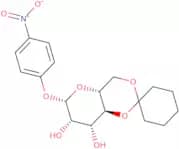
CAS:4-Nitrophenyl 4,6-cyclohexylidene-b-D-mannopyranoside is a fluorogenic substrate that can be used for the detection of β-glucosidase activity. It is a high purity product with a ligand that binds specifically to β-glucosidase. 4NPPM is an enzyme substrate that can be used in diagnostics for the detection of β-glucosidase activity and conjugate for chemiluminescence and bioluminescence. This product has been shown to react with glucose in the presence of hydrogen peroxide and luminol, emitting light when excited by ultraviolet light at 365 nm. 4NPPM also reacts with glucose oxidase to produce hydrogen peroxide, which then reacts with luminol, producing light. The CAS number for this compound is 102717-16-8.Purity:Min. 95%Molecular weight:381.38 g/mol6-Chloro-4-(trifluoromethyl)umbelliferyl b-D-galactopyranoside
6-Chloro-4-(trifluoromethyl)umbelliferyl b-D-galactopyranoside is a chromogenic substrate for the enzyme β-galactosidase, which hydrolyzes the substrate to produce a fluorescent product. This fluorogenic substrate can be used in chemiluminescent detection of β-galactosidase activity as well as in immunochemical and immunohistochemical analysis of glycoproteins. 6-Chloro-4-(trifluoromethyl)umbelliferyl b-D-galactopyranoside is also used for staining of glycoprotein substrates with periodic acid Schiff reagent or Alcian blue, and it can be used in the diagnosis of glycogen storage diseases.Purity:Min. 95%Molecular weight:426.73 g/mol4-Nitrophenyl 2-acetamido-3-O-(2-acetamido-3,4,6-tri-O-acetyl-b-D-glucopyranosyl)-4,6-di-O-acetyl-2-deoxy-a-D-galactopyranoside
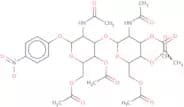
4-Nitrophenyl 2-acetamido-3-O-(2-acetamido-3,4,6-tri-O-acetyl-b-D-glucopyranosyl)-4,6-di-O-acetyl-2deoxy--aDgalactopyranoside is a substrate for enzymes such as beta galactosidase and alpha amylase. It can be used for the detection of these enzymes in biological samples, including culture media and body fluids. 4NPAG has also been used as a chromogenic substrate to measure the activity of NADH oxidase in neutrophils. 4NPAG is fluorescent in aqueous solution and can be used to detect bioluminescence reactions.Purity:Min. 95%Molecular weight:755.68 g/mol4-Nitrophenyl 2-acetamido-3-O-[2-O-(2,3,4-tri-O-benzoyl-a-L-fucopyranosyl)-3,4,6-tri-O-acetyl-2-deoxy-D-galactopyranosyl]-b-D-glucop yranoside
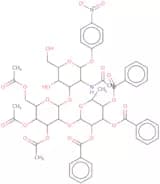
4-Nitrophenyl 2-acetamido-3-O-[2-O-(2,3,4-tri-O-benzoyl-a-L-fucopyranosyl)-3,4,6-tri-O-acetyl-2 deoxy -D-galactopyranosyl]-b D glucopyranoside is a fluorescent substrate for the enzyme β galactosidase. It can be used to test for β galactosidase activity in food products, environmental samples and diagnostics. 4NPFAPG is a conjugate of 4 nitrophenol and 2 acetamido 3 O-[2 O-(2,3,4 tri O benzoyl a L fucopyranosyl) 3,4 6 tri O acetyl 2 deoxy D galactopyranosyl] b D glucopyranose. 4NPFAPG is water soluble and hasPurity:Min. 95%Molecular weight:1,089.01 g/mol4-Nitrophenyl 2-acetamido-2-deoxy-4-O-(a-L-fucopyranosyl)-b-D-glucopyranoside
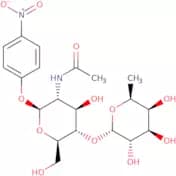
CAS:4-Nitrophenyl 2-acetamido-2-deoxy-4-O-(a-L-fucopyranosyl)-b-D-glucopyranoside is a fluorescent substrate for beta-galactosidase that is used in diagnostics and research. The product has been shown to be an excellent substrate for beta-galactosidase and beta-glucuronidase, as well as other glycosidases. It can be used to detect the presence of these enzymes in any sample containing glycosides. This product is also used in food testing, environmental testing, and bioluminescence experiments. 4NPAFG is available in high purity with a conjugate group at the C4 position.Purity:Min. 95%Molecular weight:488.44 g/mol4-Nitrophenyl 2,3,4-tri-O-acetyl-a-D-glucopyranoside
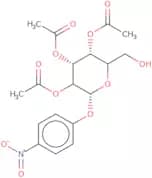
4-Nitrophenyl 2,3,4-tri-O-acetyl-a-D-glucopyranoside is a high quality chemical used in the development of various diagnostic and research applications. It is also used in the production of enzymatic substrates for enzyme activity assays. 4NPTAG is a chromogenic substrate that produces chemiluminescence when it reacts with an oxidizing agent and has been shown to be very effective as a fluorogenic substrate for protein kinases. This compound has been shown to bind to ligands and can be used as a bioluminescent reporter for molecular biology applications. The CAS number for this product is 54973-14-0.Purity:Min. 95%Molecular weight:427.36 g/mol4-Nitrophenyl 2-acetamido-6-O-(2-acetamido-3,4,6-tri-O-acetyl-2-deoxy-b-D-glucopyranosyl)-3-O-(2,3,4,6-tetra-O-acetyl-b-D-galactopyr anosyl)-2-deoxy-a-D-galactopyranoside
4-Nitrophenyl 2-acetamido-6-O-(2-acetamido-3,4,6-tri-O-acetyl-2-deoxy-b-D-glucopyranosyl)-3-O-(2,3,4,6-tetra -O acetyl -b D galactopyranosyl)-2 deoxy a D galactopyranoside is a high purity fluorogenic substrate for the enzyme β galactosidase. It can be used for the detection of β galactosidase in biological samples. 4NPAG can also be used as a ligand for various types of chromogenic substrates. This product is also commonly used in diagnostics and conjugates to detect β galactosidase activity or as a culture media supplement.Purity:Min. 95%Molecular weight:1,001.89 g/molBenzyl [13C6] 2-acetamido-3,4,6-tri-O-acetyl-2-deoxy-a-D-galactopyranoside
Benzyl [13C6] 2-acetamido-3,4,6-tri-O-acetyl-2-deoxy-a-D-galactopyranoside is a synthetic monosaccharide with a galactose backbone. The glycosylation of this molecule is the result of enzymatic modification by a glycosylase enzyme that specifically recognizes and removes the terminal glucose residue. This glycosylation process is called click chemistry because it occurs in one step, forming a covalent bond between the sugar and an acetamido group on the benzyl moiety.Purity:Min. 95%Color and Shape:White To Off-White SolidMolecular weight:443.4 g/mol4-Methylumbelliferyl 3,4,6-tri-O-acetyl-2-O-(2,3,4-tri-O-benzoyl-a-L-fucopyranosyl)-b-D-galactopyranoside
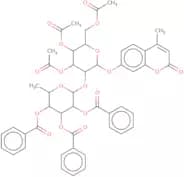
4-Methylumbelliferyl 3,4,6-tri-O-acetyl-2-O-(2,3,4-tri-O-benzoyl-a-L-fucopyranosyl)-b-D-galactopyranoside is a fluorogenic substrate that is used for the detection of β D -galactosidase. β D -Galactosidase is an enzyme that breaks down lactose in milk and is used as a diagnostic tool for identifying lactose intolerance. This substrate can be used as a conjugate in immunoassays to detect antibodies against the enzyme or it can be used to measure the activity of the enzyme in food samples. It also can be used to measure α1,3 galactosyltransferase activity in colorectal cancer cells or bacteria.Purity:Min. 95%Molecular weight:922.9 g/mol1-Naphthyl 2-acetamido-3,4,6-tri-O-acetyl-2-deoxy-b-D-glucopyranoside
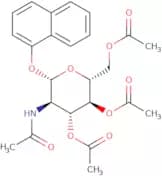
CAS:1-Naphthyl 2-acetamido-3,4,6-tri-O-acetyl-2-deoxy-b-D-glucopyranoside is a fluorogenic substrate for bacterial beta D glucosidase. It is used for measuring the enzyme activity in different types of culture media and in the detection of bacterial contamination in food and environmental samples. This product can be used to detect the presence of beta D glucosidase by measuring luminescence with a luminometer. 1NAAG can also be used as a chromogenic substrate or to conjugate with antibodies for use in immunoassays.br>Purity:Min. 95%Molecular weight:473.47 g/mol4-Methylumbelliferyl N,N',N'',N'''-tetraacetyl-b-D-chitotetraoside
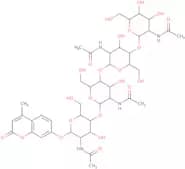
CAS:4-Methylumbelliferyl N,N',N'',N'''-tetraacetyl-beta-D-chitotetraoside is a fluorogenic substrate for chitinase. After enzymatic cleaveage, free 4-methylumbelliferone (also known as hymecromone) is released, exhibiting blue fluorescence upon excitation with UV light. The strongest fluorescence of 4-methylumbelliferone requires deprotonation of the hydroxyl group (thus requires alkaline pH), with a maximal fluorescence intensity obtained with excitation at 350 to 370 nm and emission at 440 to 470 nm. The use of 4-methylumbelliferyl N,N',N'',N'''-tetraacetyl-beta-D-chitotetraosideas a substrate for measuring the chitinase activity is used for fungal infection detection and Gaucher disease screening.Formula:C42H60N4O23Purity:Min. 95%Color and Shape:PowderMolecular weight:988.94 g/mol6,8-Difluoro-4-methylumbelliferyl 2-acetamido-3-O-(b-D-galactopyranosyl)-a-D-galactopyranoside
6,8-Difluoro-4-methylumbelliferyl 2-acetamido-3-O-(b-D-galactopyranosyl)-a-D-galactopyranoside is a chemiluminescent substrate that reacts with oxygen in the presence of luciferase to produce light. This product is an excellent replacement for luminol, especially in applications where aqueous solvents are not suitable. 6,8-Difluoro-4-methylumbelliferyl 2-acetamido-3-O-(b-D-galactopyranosyl)-a-D-galactopyranoside has been extensively tested and shown to be nonhazardous in a variety of different culture media. It is also nonhazardous to the environment, as it can be easily degraded by microorganisms.
Purity:Min. 95%


![[2-Methoxy-4-(2-nitrovinyl)phenyl] b-D-galactopyranoside](/_next/image/?url=https%3A%2Fstatic.cymitquimica.com%2Fproducts%2F3D%2Fthumb-webp%2FEM06779.webp&w=3840&q=75)















![Benzyl [13C6] 2-acetamido-3,4,6-tri-O-acetyl-2-deoxy-a-D-galactopyranoside](/_next/image/?url=https%3A%2Fstatic.cymitquimica.com%2Fproducts%2F3D%2Fthumb-webp%2FEB64839.webp&w=3840&q=75)