Enzyme Substrates
Enzyme substrates are molecules upon which enzymes act to catalyze chemical reactions. The substrate binds to the active site of the enzyme, where it undergoes a specific transformation to form the product of the reaction. Enzyme substrates are essential tools in research for studying enzyme kinetics, specificity, and mechanism of action. They are also used in diagnostic assays and biochemical studies. At CymitQuimica, we provide a diverse selection of high-quality enzyme substrates to support your research in enzymology and biochemistry.
Subcategories of "Enzyme Substrates"
Found 1527 products of "Enzyme Substrates"
Sort by
Purity (%)
0
100
|
0
|
50
|
90
|
95
|
100
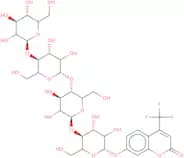
4-(Trifluoromethyl)umbelliferyl-b-D-cellotetraoside
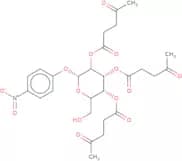
CAS:<p>4-(Trifluoromethyl)umbelliferyl-b-D-cellotetraoside is a chemiluminescent substrate that can be used in the detection of peroxidase, horseradish peroxidase, and other enzymes. It is a fluorescent product that emits light upon reaction with hydrogen peroxide. This product has been tested for purity and quality and has shown to have no detectable levels of heavy metals or other contaminants. 4-(Trifluoromethyl)umbelliferyl-b-D-cellotetraoside is not cytotoxic and can be used for the detection of enzyme activity in living cells. 4-(Trifluoromethyl)umbelliferyl-b-D-cellotetraoside is also known as TMBECFDA, which stands for Trifluoromethyl)umbelliferone (Cellobiose) (Biot</p>Purity:Min. 95%Molecular weight:878.7 g/mol4-Nitrophenyl 2,3,4-tri-O-levulinoyl-a-D-mannopyranoside
<p>4-Nitrophenyl 2,3,4-tri-O-levulinoyl-a-D-mannopyranoside is a fluorogenic substrate that contains a reactive group of 2,3,4-tri-O-levulinoyl. This compound can be used to measure the activity of enzymes such as beta-glucosidase and alpha-galactosidase. 4NP2OMP is an excellent ligand for metal ions and has been shown to bind to copper in the presence of ATP. 4NP2OMP can also be used as a diagnostic agent for measuring the activity of bacterial beta-glucosidase and alpha galactosidase.</p>Purity:Min. 95%Molecular weight:595.55 g/mol4-Nitrophenyl b-D-galactopyranoside hydrate
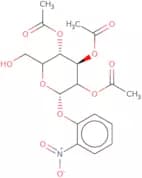
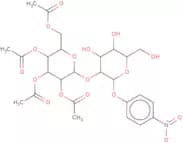
CAS:<p>4-Nitrophenyl b-D-galactopyranoside hydrate is a water-soluble pNP-based enzyme substrate ideal for quantifying b-galactosidase activity in a variety of sample types. This chromogenic substrate features a unique hydrate composition, which allows for enhanced solubility and stability when compared to standard pNP-galactosides. With its high sensitivity and robust performance, this substrate is widely used in biotechnology, biochemistry, and molecular biology fields, including the investigation of enzyme kinetics, characterization of glycoside hydrolase specificity, and assessment of gene expression levels.</p>Purity:Min. 95%Molecular weight:319.27 g/mol2-Nitrophenyl 2,3,4-tri-O-acetyl-b-D-galactopyranoside
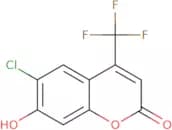
CAS:<p>2-Nitrophenyl 2,3,4-tri-O-acetyl-b-D-galactopyranoside is a fluorogenic substrate that can be used to detect β-galactosidase activity. This specific substrate is one of the most commonly used substrates for detecting β-galactosidase activity in diagnostic assays. It reacts with the enzyme to produce a blue color and has a fluorescence emission maximum at about 480 nm. The product is available in high purity and high quality and it is also an enzyme substrate.</p>Purity:Min. 95%Molecular weight:427.36 g/mol6-Chloro-7-hydroxy-4-(trifluoromethyl)coumarin
CAS:<p>6-Chloro-7-hydroxy-4-(trifluoromethyl)coumarin is a fungicide that inhibits the growth of fungi by interfering with their DNA synthesis. It does this by inhibiting the activity of two enzymes: the fungal enzyme oxime and the enzyme cinerea, which is found in many fungi. 6-Chloro-7-hydroxy-4-(trifluoromethyl)coumarin has been shown to be effective against Alternaria and Botrytis cinerea. The compound also has an antifungal effect against other types of fungi, such as Penicillium roqueforti, when used in combination with a solvent such as ether.</p>Purity:Min. 95%Molecular weight:264.58 g/mol6-Chloro-4-methylumbelliferyl b-D glucuronide
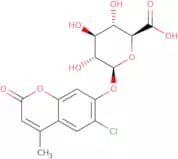
CAS:<p>6-Chloro-4-methylumbelliferyl b-D glucuronide is a fluorogenic substrate for beta-glucuronidase that exhibits longer absorption/emission maxima (~385/500 nm) than typical 4MU-derived substrates.</p>Formula:C16H15ClO9Purity:Min. 97 Area-%Color and Shape:White PowderMolecular weight:386.74 g/molMaltotetraose 2-aminobenzamide
<p>Maltotetraose 2-aminobenzamide is a chemiluminescent substrate that emits light in the presence of certain oxidizing agents. It provides high quality and environmental testing, as well as staining and ligand capability. Maltotetraose 2-aminobenzamide is used in diagnostics to identify bacteria and other microorganisms. Maltotetraose 2-aminobenzamide can be used for the detection of bacterial colonies on agar plates using a fluorogenic substrate, or for the detection of fungi using a chromogenic substrate. Maltotetraose 2-aminobenzamide is also used as an enzyme substrate in food testing or conjugate with enzymes for bioluminescence.</p>Purity:Min. 95%Aldol® 470 N-tosyl-L-alanine ester, Biosynth Patent: EP 2427431 and US 8940909
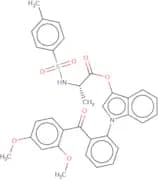
CAS:Controlled Product<p>Aldol® 470 N-tosyl-L-alanine ester is a fluorogenic substrate that is used in enzyme and chromogenic assays. It is a high purity, high quality, and highly soluble substrate for chemiluminescent reactions. Aldol® 470 N-tosyl-L-alanine ester can be used to detect the presence of bacteria in culture media and as an indicator of bacterial growth. It is also used to test for the presence of different types of enzymes that catalyze the oxidation of alcohols.</p>Formula:C33H30N2O7SPurity:Min. 90.0 Area-%Molecular weight:598.67 g/mol3-Carboxyumbelliferyl b-D-galactopyranoside
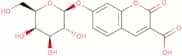
CAS:<p>3-Carboxyumbelliferyl b-D-galactopyranoside is a fluorescent probe that can be used to study protein synthesis in live cells. It binds to the active site of the enzyme peptidyl transferase, which catalyzes the covalent linkage of amino acids to form a polypeptide chain. 3CMBG is specific for the amino acid proline and is a substrate for peptidyl transferase. The fluorescence of 3CMBG increases when it is bound to peptidyl transferase, making it useful as a marker for protein synthesis.</p>Purity:Min. 95%Molecular weight:368.28 g/molAldol® 496 acetate, Biosynth Patent: EP 2427431 and US 8940909
CAS:<p>Aldol 496 acetate is a chromogenic substrate for the enzyme Aldolase. It is also used as a ligand to detect the presence of Aldolase in biological fluids and tissues. This product is designed for Food testing, Diagnostics, Chromogenic substrate, Staining, Enzyme substrate, Bioluminescence, Fluorogenic substrate, Chemiluminescence, and Culture media. Aldol 496 acetate is an organic chemical with high purity and high quality.</p>Formula:C27H24N2O4Purity:Min. 95.0 Area-%Molecular weight:440.49 g/mol6-Amino-6-deoxyluciferin
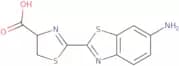
CAS:<p>6-Amino-6-deoxyluciferin is a synthetic analog of luciferin. It is used as a substrate for bacterial luciferase and in immunoassays to detect neutrophils, infectious diseases, and various protease activities. 6-Amino-6-deoxyluciferin is synthesized by the condensation of an amide with a hydroxyl group from acetaldehyde. This reaction requires the use of a coupling agent such as dicyclohexylcarbodiimide or 1-(3-dimethylaminopropyl)-3-ethylcarbodiimide hydrochloride (EDC), which are often used to form amides from carboxylic acids and amines. The conjugation of 6-amino-6-deoxyluciferin with antibodies can be accomplished by chemical crosslinking methods, such as glutaraldehyde, which react thiol groups on the antibody</p>Formula:C11H9N3O2S2Purity:Min. 95%Color and Shape:Yellow SolidMolecular weight:279.34 g/molAldol® 515 propionate, Biosynth Patent: EP 2427431 and US 8940909
CAS:<p>Aldol® 515 propionate is a chromogenic substrate that is used as a reagent in food testing, diagnostics, and environmental testing. It reacts with an enzyme to form a fluorescent product that can be detected with a spectrophotometer. The substrate has been shown to have high purity and high quality.</p>Formula:C26H24N2O3Purity:Min. 95.0 Area-%Molecular weight:412.48 g/mol6,8-Difluoro-4-methylumbelliferyl b-D-cellotrioside
<p>6,8-Difluoro-4-methylumbelliferyl b-D-cellotrioside is a ligand that binds to active sites of enzymes such as beta-glucuronidase and beta-glucosidase. It is used in diagnostics for the detection of bacteria in culture media and food testing where it can be used as a chromogenic or fluorogenic substrate. 6,8-Difluoro-4-methylumbelliferyl b-D-cellotrioside is also used to detect the presence of bacteria and fungi in environmental samples. It has a high purity and conjugate with other molecules for use in fluorescence microscopy.</p>Purity:Min. 95%Color and Shape:White to off-white powder.Molecular weight:698.57 g/molβ-Alanine 7-amido-4-methylcoumarin trifluoroacetate
CAS:<p>Beta-alanine 7-amido-4-methylcoumarin, trifluoroacetate salt is a high purity, ligand, and conjugate. It can be used in the food testing and environmental testing fields. This product has been shown to be a good substrate for enzyme activity and can also function as a fluorescent dye in chemiluminescence assays. Beta-alanine 7-amido-4-methylcoumarin, trifluoroacetate salt is soluble in water and has a CAS number of 201847-54-3.</p>Formula:C15H15F3N2O5Molecular weight:360.29 g/molRef: 3D-A-4501
1gTo inquire100mgTo inquire250mgTo inquire500mgTo inquire2500mgTo inquire-Unit-ggTo inquire2-Methyl-4-nitrophenyl b-D-galactopyranoside
<p>2-Methyl-4-nitrophenyl b-D-galactopyranoside is a chemiluminescent substrate that is used in various applications. It is a ligand that binds to the enzyme beta-galactosidase and is used in diagnostics for detecting the presence of the enzyme. 2-Methyl-4-nitrophenyl b-D-galactopyranoside has been shown to be an appropriate substrate for chemiluminescence reactions, such as those used in diagnostic or research applications. The product also has been tested for potential toxicity and found not to be toxic at concentrations up to 100mg/mL. This product can be used in a variety of applications, including food testing, bacterial culture media, and environmental testing.</p>Purity:Min. 95%Molecular weight:315.28 g/mol4-Nitrophenyl 2-O-(2,3,4,6-tetra-O-acetyl-a-D-mannopyranosyl)-a-D-mannopyranoside
<p>4-Nitrophenyl 2-O-(2,3,4,6-tetra-O-acetyl-a-D-mannopyranosyl)-a-D-mannopyranoside is a fluorogenic substrate that is used as a diagnostic tool and can be used to detect the presence of β--glucosidase in the gut. It is also used as a conjugate with enzymes such as peroxidase or alkaline phosphatase for use in enzyme catalyzed reactions. The product has been shown to be active against a variety of bacteria, including Staphylococcus aureus and Escherichia coli. This product has been shown to produce chemiluminescence when incubated with horseradish peroxidase and hydrogen peroxide. This product is light sensitive and should be stored at room temperature away from direct sunlight.</p>Purity:Min. 95%Molecular weight:631.54 g/molAldol® 515 N-glutaryl-L-phenylalanine amide potassium salt, Biosynth Patent: EP 2427431 and US 8940909
CAS:<p>Aldol® 515 N-glutaryl-L-phenylalanine amide is a chromogenic and fluorogenic enzyme substrate used for detection of L-glutamate-phenylalanine (GluPhe)-specific peptidase activity. The colorless enzyme substrate is cleaved the GluPhe-specific peptidase, yielding development of orange-red coloration. In addition, red fluorescence is generated when Aldol® 355 fluorescence enhancer or a suitable matrix is present. Aldol® 515 N-glutaryl-L-phenylalanine amide can be used in enzyme assays and live bacterial cultures. Aldol® 515 N-glutaryl-L-phenylalanine amide is suitable for use in liquid and solid media, under aerobic as well as anaerobic conditions.</p>Formula:C37H35KN4O5Purity:Min. 95.0 Area-%Molecular weight:654.80 g/molZ-Gly-Pro-Arg-pNA acetate
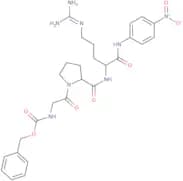
CAS:<p>Z-Gly-Pro-Arg-pnaacetate is a substrate commonly used in enzyme research, particularly in the study of proteases. Proteases are enzymes responsible for catalyzing the hydrolysis of peptide bonds in proteins. In a study investigating the activation of protein C in blood plasma by a protease from Aspergillus ochraceus, the enzyme activity was qualitatively assessed using chromogenic peptide substrates, such as pGlu-Pro-Arg-pNA.</p>Formula:C27H34N8O7Purity:Min. 95%Molecular weight:582.6 g/mol5-Bromo-6-chloro-1H-indol-3-yl-a-D-mannopyranoside
CAS:<p>5-Bromo-6-chloro-1H-indol-3-yl-a-D-mannopyranoside is a chromogenic substrate that yields a magenta-colored product after cleavage. The chromophore 5-bromo-6-chloro-indoxyl is released, generating the observable color. It is used in lysosomal storage disorder screening.</p>Formula:C14H15BrClNO6Purity:Min. 95 Area-%Color and Shape:White Off-White PowderMolecular weight:408.63 g/molAldol® 470 L-alanine ester, hydrochloride, Biosynth Patent: EP 2427431 and US 8940909
CAS:Controlled Product<p>Aldol® 470 L-alanine ester, hydrochloride is a chromogenic substrate that is used as a food testing reagent and enzyme substrate in diagnostics. It is also used to detect the presence of ligands in an environment. Aldol® 470 L-alanine ester, hydrochloride is used in chemiluminescence and bioluminescence reactions.</p>Formula:C26H25ClN2O5Purity:Min. 95.0 Area-%Molecular weight:480.95 g/molAldol® 495 phosphate, disodium salt, Biosynth Patent: EP 2427431 and US 8940909
CAS:Aldol® 495 phosphate is a chromogenic and fluorogenic enzyme substrate used for detection of phosphatase activity. The colorless enzyme substrate is cleaved by acid and alkaline phosphatases secreted by bacteria in liquid or solid media, yielding orange color and green fluorescence. Aldol® 495 phosphate can also be used in Western blots and other immunoassay applications with phosphatase-coupled secondary antibodies. Aldol® 495 phosphate can be used under aerobic and anaerobic conditions.Formula:C20H14ClN2Na2O5PPurity:Min. 98.0 Area-%Molecular weight:474.74 g/mol4-Nitrophenyl 2-acetamido-3-O-(2-O-a-L-fucopyranosyl-b-D-galactopyranosyl)-2-deoxy-a-D-galactopyranoside
CAS:<p>4-Nitrophenyl 2-acetamido-3-O-(2-O-a-L-fucopyranosyl-b-D-galactopyranosyl)-2,6,8,10,12-pentaoxoheptaacetic acid is a chemiluminescent substrate that is used for the detection of peroxidase and other enzymes. The reaction product is a yellow fluorescent product which can be measured using a fluorometer. It is sold as an aqueous solution at 1mg/mL in phosphate buffer at pH 7.4.</p>Purity:Min. 95%Molecular weight:650.58 g/molEspresso-Gal
Espresso-Gal (Espresso-beta-D-galactopyranoside) is a chromogenic indicator for beta-galactosidase activity. The colorless product is cleaved by lactose-utilizing bacteria in liquid media or on agar plates and yields an espresso brown colored precipitate. Espresso-Gal can also be used as detecting agent for beta-galactosidase activity in reporter gene assays or for identification of positive transformants on agar plates when using the α-complementation approach. Read more in the Application Notes.Molecular weight:495.6 g/mol4-Nitrophenyl 2,3,4,6-tetra-O-acetyl-a-D-glucopyranoside
CAS:<p>4-Nitrophenyl 2,3,4,6-tetra-O-acetyl-a-D-glucopyranoside is a useful substrate for enzymatic assays. This high-sensitivity chromogenic pNP substrate offers enhanced selectivity and increased detection ability, allowing for a broad range of applications in the field of glycosidase research. Featuring rapid colorimetric readouts with easily detectable endpoint determination, this substrate delivers clear and accurate results every time.</p>Purity:Min. 95%Molecular weight:469.4 g/mol4-Methylumbelliferyl 2-acetamido-3-O-(2,3,4-tri-O-acetyl-a-L-fucopyranosyl)-4-O-(2,3,4,6-tetra-O-acetyl-b-D-galactopyranosyl)-6-O-ac etyl-2-deoxy-b-D-glucopyranoside
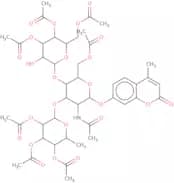
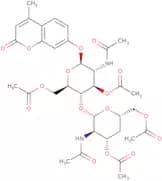
<p>4-Methylumbelliferyl 2-acetamido-3-O-(2,3,4-tri-O-acetyl-a-L-fucopyranosyl)-4-O-(2,3,4,6 -tetra-O-acetylbDgalactopyranosyl)-6-O-acetyldEoxybDglucopyranoside is a chemiluminescent substrate that has been used in the detection of beta galactosidase activity. It is a ligand for beta galactosidases and can be used for the study of enzyme kinetics. This compound also exhibits high purity and is available in CAS number: 916071. 4MUFAGAALF is suitable for use in culture media and environmental testing as well as diagnostics (e.g., bioluminescence), staining (fluorogenic substrate), and chromogenic substrates</p>Purity:Min. 95%Molecular weight:1,023.94 g/mol5-Bromo-3-indolyl β-D-glucuronide cyclohexylammonium
CAS:<p>chromogenic substrate for beta-glucuronidase</p>Formula:C14H14BrNO7•C6H13NPurity:Min. 95%Color and Shape:PowderMolecular weight:487.34 g/mol4-Nitrophenyl phosphate potassium salt
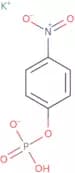
CAS:<p>4-Nitrophenyl phosphate potassium salt is a high quality, non-radioactive chemiluminescence substrate that is used in the detection of oxidase activity. This product can be used to measure the activity of peroxidase and catalase enzymes, as well as the accumulation of hydrogen peroxide. It also has been shown to be a ligand for some sulfhydryl groups and an inhibitor of phosphatases. 4-Nitrophenyl phosphate potassium salt has been tested for its ability to inhibit bacterial growth and fluorescence by staining cells. This product has also been shown to have bioluminescent properties and can be used for diagnostics or culture media.</p>Purity:Min. 95%Molecular weight:257.18 g/mol5-Bromo-4-chloro-3-indolyl a-L-arabinopyranoside
<p>This product is a fluorogenic substrate that reacts with the enzyme beta-galactosidase to produce a fluorescent product. It can be used in food testing, environmental testing, and diagnostics. The CAS number for this product is 609-33-2. This product is available in high purity and high quality.</p>Formula:C13H13BrClNO5Color and Shape:PowderMolecular weight:378.6 g/mol4-Methylumbelliferyl 4-deoxy-b-D-chitobiose peracetate
CAS:<p>4-Methylumbelliferyl 4-deoxy-b-D-chitobiose peracetate is a chromogenic substrate used for the detection of β-galactosidase activity. It is an analog of 4-methylumbelliferone that can be hydrolyzed by β-galactosidase to produce fluorescence. This product is supplied as a white crystalline solid and can be stored at room temperature. This substrate has been shown to work well in culture media, food testing, and environmental testing.</p>Purity:Min. 95%Color and Shape:Off-White PowderMolecular weight:734.7 g/mol6-Chloro-1H-indol-3-yl b-D-mannopyranoside
CAS:<p>6-Chloro-1H-indol-3-yl b-D-mannopyranoside is an enzyme substrate that is used in the fluorogenic and chromogenic assays for detecting indoleamines. This compound has a conjugate, which is a fluorescent molecule that can be attached to an antibody to target specific proteins or cells. 6-Chloro-1H-indol-3-yl b-D-mannopyranoside is used as a diagnostic agent in the detection of bacterial and fungal infections. It is also used as an indicator of cell growth in culture media.</p>Purity:Min. 95%Molecular weight:329.73 g/molAquaSpark® 510 Nitroreductase/NADH Probe, lyophilized, Ramot at Tel-Aviv University Ltd. Patent family WO 2017/130191
CAS:<p>The AquaSpark® 510 Nitroreductase/NADH Probe (CL-NTR) is a water-soluble probe for the selective chemiluminescent detection of nitroreductase (NTR) activity. It is a versatile tool for monitoring a number of biological processes.</p>Formula:C28H28ClNO8Molecular weight:541.15 g/molAldol® 515 palmitate, Biosynth Patent: EP 2427431 and US 8940909
CAS:<p>Aldol® 515 palmitate is a high quality, non-toxic and water soluble chromogenic substrate for enzymes. It is used to detect the presence of lipase activity due to yielding a red color.</p>Formula:C39H50N2O3Purity:Min. 95%Color and Shape:PowderMolecular weight:594.83 g/mol1-Naphthyl a-D-glucopyranoside
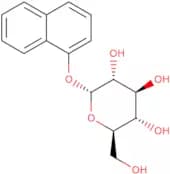
CAS:<p>1-Naphthyl a-D-glucopyranoside is a chromogenic substrate used to detect the presence of enzymes that catalyze the hydrolysis of glycosidic bonds, such as alpha-glucosidase. When the substrate is cleaved by the enzyme, it produces a colored product that can be visualized and quantified.</p>Purity:Min. 95%Molecular weight:306.31 g/molAldol® 458 phosphate, disodium salt, Biosynth Patent: EP 2427431 and US 8940909
CAS:<p>Aldol® 458 phosphate is a chromogenic and fluorogenic enzyme substrate used for detection of phosphatase activity. The colorless enzyme substrate is cleaved by phosphatases secreted by bacteria grown in liquid media, yielding yellow color and green fluorescence. Aldol® 458 phosphate can also be used in assays involving phosphatase-coupled antibodies in immunoassay applications (ELISA). Aldol® 458 phosphate can be used under aerobic and anaerobic conditions.</p>Formula:C16H12NNa2O6PPurity:Min. 95.0 Area-%Molecular weight:391.22 g/mol4-Methylumbelliferyl N-acetyl-a-D-neuraminic acid ammonium
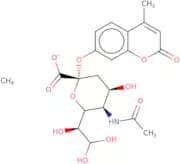
CAS:<p>4-Methylumbelliferyl N-acetyl-alpha-D-neuraminic acid ammonium is a fluorogenic substrate for neuraminidase. After enzymatic cleaveage, free 4-methylumbelliferone (also known as hymecromone) is released, exhibiting blue fluorescence upon excitation with UV light. The strongest fluorescence of 4-methylumbelliferone requires deprotonation of the hydroxyl group (thus requires alkaline pH), with a maximal fluorescence intensity obtained with excitation at 350 to 370 nm and emission at 440 to 470 nm. The use of 4-methylumbelliferyl N-acetyl-alpha-D-neuraminic acid ammoniumas a substrate for measuring the neuraminidase activity is used for detecting the glycoproteins on the surface of influenza A and B viruses, as well as for sialidosis diagnosis.</p>Formula:C21H28N2O11Purity:Min. 95%Color and Shape:PowderMolecular weight:471.44 g/molAldol® 484 acetate, Biosynth Patent: EP 2427431 and US 8940909
CAS:Controlled Product<p>Aldol® 484 acetate is a chromogenic substrate for carboxylesterases yielding a red precipitate. In contrast to classical indoxyl substrates, Aldol substrates work not only under aerobic but also under anaerobic conditions</p>Formula:C22H16ClFN2O3Purity:Min. 95.0 Area-%Molecular weight:410.83 g/mol2-Chloro-4-nitrophenyl b-D-xylobioside
<p>2-Chloro-4-nitrophenyl b-D-xylobioside is a chemiluminescent substrate that is used as a diagnostic agent. It has been used in the identification of gram positive and gram negative bacteria, which are differentiated by the color of the reaction. This substrate has also been used to detect the presence of certain enzymes produced by bacteria. 2-Chloro-4-nitrophenyl b-D-xylobioside has shown to be an effective enzyme substrate for detecting bacterial growth in culture media and is often used as a fluorogenic substrate in food testing.</p>Purity:Min. 95%4-Nitrophenyl 2-acetamido-2-deoxy-4-O-[2-O-(a-L-fucopyranosyl)-b-D-galactopyranosyl]-b-D-glucopyranoside
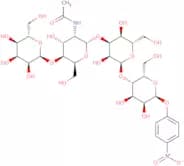
CAS:<p>The 4-Nitrophenyl 2-acetamido-2-deoxy-4-O-[2-O-(a-L-fucopyranosyl)-b-D-galactopyranosyl]-b-D-glucopyranoside is a specialized pNP enzyme substrate designed to study fucosyl-galactose-dependent enzymes. This chromogenic substrate is valuable for researchers investigating glycosyltransferase activity, structure-function relationships of glycan-binding proteins, and regulation of cellular signaling pathways involving fucose modifications. Its high specificity and sensitivity ensure accurate measurements in diverse experimental setups, and its chromogenic detection system facilitates rapid and reliable analysis.</p>Purity:Min. 95%Molecular weight:650.58 g/mol4-Nitrophenyl b-lacto-N-neotetraoside
CAS:<p>4-Nitrophenyl b-lacto-N-neotetraoside is a potent antibiotic that inhibits bacterial growth by binding to the beta subunit of DNA gyrase. This drug has been shown to be effective against methicillin resistant Staphylococcus aureus (MRSA) and Clostridium perfringens, although is not active against acid-fast bacteria such as Mycobacterium tuberculosis or Mycobacterium avium complex. Gatifloxacin has shown anti-inflammatory properties, which may be due to its inhibition of prostaglandin synthesis.</p>Purity:Min. 95%Molecular weight:828.72 g/mol5-Bromo-4-chloro-3-indolyl N-acetyl-a-D-neuraminic acid methyl ester
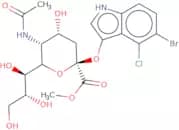
CAS:<p>5-Bromo-4-chloro-3-indolyl N-acetyl-a-D-neuraminic acid methyl ester is a chromogenic substrate that reacts with enzymes to produce a colored product. It can be used in diagnostic tests for the detection of various bacteria, including Salmonella and Brucella, as well as for the determination of concentration in food testing or environmental testing. 5B4C3INA can also be conjugated to other substances, such as biotin or an antibody, which allows it to be used in immunoassays.</p>Formula:C20H24BrClN2O9Purity:Min. 95%Molecular weight:551.77 g/mol2-Chloro-4-nitrophenyl b-D-cellobioside
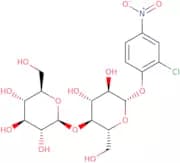
CAS:<p>2-Chloro-4-nitrophenyl b-D-cellobioside (CNPG) is a chromogenic enzyme substrate that is commonly used to detect and measure the activity of β-glucosidases. CNPG is cleaved by the enzyme into the chromogenic product, which can be detected spectrophotometrically. β-glucosidases are important enzymes in the breakdown of cellulose, and CNPG is a widely used substrate for the detection and quantification of these enzymes in various research studies.</p>Purity:Min. 95%Color and Shape:PowderMolecular weight:497.83 g/molrac-7-(3',4'-Dihydroxybutyloxy)coumarin-4'-phosphate disodium salt
CAS:This Clips-O substrate rac-7-(3',4'-Dihydroxybutyloxy)coumarin-4'-phosphate allows the detection of single and dual enzymatic activity (phosphatase and oxidation of 4-amino-3-hydroxybutyloxy spacer either enzymatically or by exposure to sodium periodate) with a single substrate resulting in a fluorescent signal. The main virtues of Clips-O substrates are an increased stability towards non-enzymatic hydrolysis that results in a reduced background and high sensitivity.Formula:C13H13Na2O8PPurity:Min. 95.0 Area-%Molecular weight:374.2 g/mol4-Methylumbelliferyl 3,4,6-tri-O-acetyl-b-D-galactopyranoside
<p>4-Methylumbelliferyl 3,4,6-tri-O-acetyl-b-D-galactopyranoside is a fluorescent compound that can be used as a substrate for the following enzymes: β-galactosidase, α-galactosidase, and β-glucuronidase. This product is used in diagnostics to measure the activity of these enzymes. It can also be used to detect bacteria in culture media and food testing. 4MUF3,4,6TABG is a high quality product that has been shown to have a high purity level by liquid chromatography. CAS number: 61440-03-2</p>Purity:Min. 95%Molecular weight:464.42 g/mol4-Methylumbelliferyl 3,4,6-tri-O-acetyl-2-azido-2-deoxy-a-D-galactopyranoside
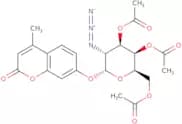
CAS:4-Methylumbelliferyl 3,4,6-tri-O-acetyl-2-azido-2-deoxy-a-D-galactopyranoside is a fluorogenic substrate for the enzyme beta galactosidase. It is used in food testing, environmental testing, and diagnostics. 4MUF3A2DGAL is an enzyme substrate that provides high quality chemiluminescence and bioluminescence signals. This product has a CAS number of 124167-43-7 and is available in both high purity and conjugate forms.Purity:Min. 95%Molecular weight:489.43 g/molAldol® 515 β-D-xylopyranoside, Biosynth Patent: EP 2427431 and US 8940909
CAS:<p>Aldol® 515 beta-D-xylopyranoside is a chromogenic substrate that is used in food testing. It is an alternative to the more common glucose and sucrose, which are not suitable for some types of assays. Aldol® 515 beta-D-xylopyranoside is also used in diagnostics as a ligand for fluorescent antibody staining and chemiluminescence assays. It has been shown to increase the sensitivity of these tests by up to 10 times. The substrate has been tested extensively and is safe for use with a wide range of bacteria including E. coli, S. typhimurium, M. tuberculosis, and C. albicans at concentrations up to 100 mM without any inhibitory effects on growth or viability.<br>END>.</p>Formula:C28H34N2O6Purity:Min. 95.0 Area-%Molecular weight:494.59 g/mol1-Naphthyl 2-acetamido-2-deoxy-b-D-glucopyranoside
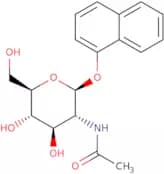
CAS:<p>1-Naphthyl 2-acetamido-2-deoxy-b-D-glucopyranoside is a chromogenic substrate commonly used to assay the activity of enzymes that cleave N-acetyl-beta-D-glucosaminide, such as beta-N-acetylglucosaminidase. Upon cleavage by the enzyme of interest, the substrate releases a yellow-colored 1-naphthylamine, which can be measured spectrophotometrically. This substrate is widely used in biomedical research and drug discovery for studying lysosomal storage disorders, bacterial infections, and neurological diseases.</p>Purity:Min. 95%Molecular weight:347.36 g/mol6,8-Difluoro-4-methylumbelliferyl b-D-glucopyranoside
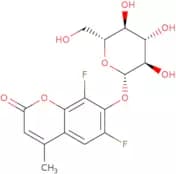
CAS:<p>6,8-Difluoro-4-methylumbelliferyl b-D-glucopyranoside is a versatile fluorogenic substrate suitable for the measurement of various glycosidase enzymes. Its unique structure allows for enhanced sensitivity and selectivity in enzyme assays, making it ideal for studying enzyme kinetics and screening of potential enzyme inhibitors.</p>Purity:Min. 95%Molecular weight:374.29 g/mol2-O-(2-Nitrophenyl)-a-D-N-acetylneuraminic acid
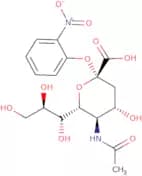
CAS:<p>2-O-(2-Nitrophenyl)-a-D-N-acetylneuraminic acid is a chromogenic substrate specifically designed for the detection and quantification of sialidase (neuraminidase) enzyme activity. Neuraminidases are enzymes that cleave sialic acid residues from glycoconjugates, and are produced by many microorganisms, including influenza viruses. Upon cleavage by sialidase, this substrate releases a yellow-colored 2-nitrophenol product, which can be easily monitored spectrophotometrically. This substrate is widely used in various applications, including enzyme kinetics studies, inhibitor screening, and the detection of bacterial and viral neuraminidases in clinical and environmental samples.</p>Purity:Min. 95%Color and Shape:SolidMolecular weight:430.36 g/molLuc-B.cereus Na
<p>Luc-B.cereus Na is a chemiluminescent substrate that is used for diagnostic purposes. This substrate emits light in the presence of peroxide and can be detected by a luminometer or photomultiplier tube. Luc-B.cereus Na is a high purity, high quality, and chemically stable product that can be stored at room temperature for up to one year. It has been tested for use with a wide variety of organisms such as bacteria, fungi, parasites, and viruses. Luc-B.cereus Na reacts with peroxide to produce light and is an excellent choice for use in diagnostics because it does not require any additional chemicals.</p>Purity:Min. 95%L-Glutamic acid γ-(7-amido-4-methylcoumarin)
CAS:<p>Substrate for aminopeptidase a or the assay of γ-glutamyl transferase yielding a blue fluorescent solution upon cleavage.</p>Formula:C15H16N2O5Purity:Min. 99 Area-%Molecular weight:304.31 g/molRef: 3D-G-3850
1gTo inquire50mgTo inquire250mgTo inquire500mgTo inquire2500mgTo inquire-Unit-ggTo inquire
















![4-Nitrophenyl 2-acetamido-2-deoxy-4-O-[2-O-(a-L-fucopyranosyl)-b-D-galactopyranosyl]-b-D-glucopyra…](/_next/image/?url=https%3A%2Fstatic.cymitquimica.com%2Fproducts%2F3D%2Fthumb-webp%2FEN04931.webp&w=3840&q=75)