Enzyme Substrates
Subcategories of "Enzyme Substrates"
Found 1526 products of "Enzyme Substrates"
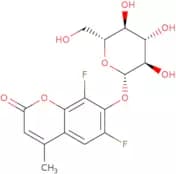
6,8-Difluoro-4-methylumbelliferyl b-D-glucopyranoside
CAS:6,8-Difluoro-4-methylumbelliferyl b-D-glucopyranoside is a versatile fluorogenic substrate suitable for the measurement of various glycosidase enzymes. Its unique structure allows for enhanced sensitivity and selectivity in enzyme assays, making it ideal for studying enzyme kinetics and screening of potential enzyme inhibitors.
Purity:Min. 95%Molecular weight:374.29 g/molRef: 3D-ED04972
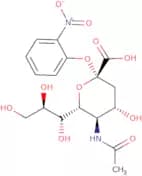
Discontinued product2-O-(2-Nitrophenyl)-a-D-N-acetylneuraminic acid
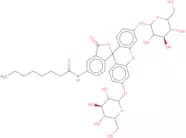
CAS:2-O-(2-Nitrophenyl)-a-D-N-acetylneuraminic acid is a chromogenic substrate specifically designed for the detection and quantification of sialidase (neuraminidase) enzyme activity. Neuraminidases are enzymes that cleave sialic acid residues from glycoconjugates, and are produced by many microorganisms, including influenza viruses. Upon cleavage by sialidase, this substrate releases a yellow-colored 2-nitrophenol product, which can be easily monitored spectrophotometrically. This substrate is widely used in various applications, including enzyme kinetics studies, inhibitor screening, and the detection of bacterial and viral neuraminidases in clinical and environmental samples.Purity:Min. 95%Color and Shape:SolidMolecular weight:430.36 g/mol5-Octanoylaminofluoroscein di-b-D-glactopyranoside
5-Octanoylaminofluoroscein di-b-D-glactopyranoside is a chemiluminescent substrate that can be used for the detection of peroxidase activity. It is a bifunctional substrate, which means it has two reactive groups: one at the 5 position and one at the 8 position. The 5-octanoylaminofluorescein reacts with hydrogen peroxide in a 1:1 ratio, emitting light at 490 nm. The 8-position amine reacts with 2,2'-azino-bis(3-ethylbenzthiazoline)6 sulphonic acid (ABTS) to produce an orange color product that acts as a chromogen. The substrate can be used in diagnostics, food testing, and enzyme substrates.
Purity:Min. 95%Molecular weight:797.8 g/molMTT
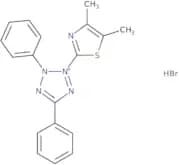
CAS:Used in the MTT assay to asses the viability of cells. The yellow MTT is reduced by the living cells to a water-insoluble purple formazan. In order to make a quantitative measurement the formazan is often dissolved by addition of a solubilization solution to yield a colored solution that can be measured in a spectrophotometer. The rate of color formation reflects the dynamics and intensity of the microbial metabolism.
Formula:C18H17BrN5SPurity:Min. 95%Molecular weight:415.3 g/molRef: 3D-CAA34871
Discontinued product4-Methylumbelliferyl 2,3,4-tri-O-benzoyl-b-D-galactopyranoside-6-sulfate
4-Methylumbelliferyl 2,3,4-tri-O-benzoyl-b-D-galactopyranoside-6-sulfate is a fluorogenic substrate for β-galactosidase and a chromogenic substrate for β-glucuronidase. It is used in food testing, environmental testing, and diagnostics.
Purity:Min. 95%Molecular weight:730.69 g/mol4-Nitrophenyl 2,6-di-O-benzoyl-a-D-galactopyranoside
CAS:4-Nitrophenyl 2,6-di-O-benzoyl-a-D-galactopyranoside is a specialized chromogenic substrate for the accurate evaluation of α-galactosidase activity. Upon enzymatic hydrolysis, it generates the chromophore 4-nitrophenol, which can be conveniently quantified by absorbance spectroscopy. The substrate features a unique benzoylated galactopyranoside moiety for enhanced selectivity and compound stability. This high-quality substrate is perfect for various research, analytical, and diagnostic applications involving α-galactosidase detection or quantification.
Purity:Min. 95%Molecular weight:509.46 g/molAquaSpark® beta-D-galactoside, lyophilized, Ramot at Tel-Aviv University Ltd. Patent family WO 2017/130191
Chemiluminescence beta-galactosidase substrate
Purity:Min. 95%4-Chloro-3-indoxyl-1,3-diacetate
CAS:4-Chloro-3-indoxyl-1,3-diacetate is a chromogenic substrate used in the identification of bile acids. It reacts with 4-chlorophenol to form a red dye. This compound is also used as a ligand for metal ions.
Formula:C12H10ClNO3Molecular weight:251.67 g/molRef: 3D-C-4848
Discontinued productAldol® 515 N-glutaryl-L-phenylalanine amide potassium salt, Biosynth Patent: EP 2427431 and US 8940909
CAS:Aldol® 515 N-glutaryl-L-phenylalanine amide is a chromogenic and fluorogenic enzyme substrate used for detection of L-glutamate-phenylalanine (GluPhe)-specific peptidase activity. The colorless enzyme substrate is cleaved the GluPhe-specific peptidase, yielding development of orange-red coloration. In addition, red fluorescence is generated when Aldol® 355 fluorescence enhancer or a suitable matrix is present. Aldol® 515 N-glutaryl-L-phenylalanine amide can be used in enzyme assays and live bacterial cultures. Aldol® 515 N-glutaryl-L-phenylalanine amide is suitable for use in liquid and solid media, under aerobic as well as anaerobic conditions.
Formula:C37H35KN4O5Purity:Min. 95.0 Area-%Molecular weight:654.80 g/molRef: 3D-A-4763_P00
Discontinued product4-Nitrophenyl 2-acetamido-2-deoxy-4-O-[2-O-(a-L-fucopyranosyl)-b-D-galactopyranosyl]-b-D-glucopyranoside
CAS:The 4-Nitrophenyl 2-acetamido-2-deoxy-4-O-[2-O-(a-L-fucopyranosyl)-b-D-galactopyranosyl]-b-D-glucopyranoside is a specialized pNP enzyme substrate designed to study fucosyl-galactose-dependent enzymes. This chromogenic substrate is valuable for researchers investigating glycosyltransferase activity, structure-function relationships of glycan-binding proteins, and regulation of cellular signaling pathways involving fucose modifications. Its high specificity and sensitivity ensure accurate measurements in diverse experimental setups, and its chromogenic detection system facilitates rapid and reliable analysis.Purity:Min. 95%Molecular weight:650.58 g/molRef: 3D-EN04931
Discontinued productβ-Alanine 7-amido-4-methylcoumarin trifluoroacetate
CAS:Beta-alanine 7-amido-4-methylcoumarin, trifluoroacetate salt is a high purity, ligand, and conjugate. It can be used in the food testing and environmental testing fields. This product has been shown to be a good substrate for enzyme activity and can also function as a fluorescent dye in chemiluminescence assays. Beta-alanine 7-amido-4-methylcoumarin, trifluoroacetate salt is soluble in water and has a CAS number of 201847-54-3.
Formula:C15H15F3N2O5Molecular weight:360.29 g/mol5-Bromo-4-chloro-3-indoxyl-a-D-xylopyranoside
5-Bromo-4-chloro-3-indoxyl-a-D-xylopyranoside is a fluorogenic substrate that can be used in food testing and environmental testing. This product is a conjugate of the xylosidase enzyme (EC 3.2.1.37) with 5-bromo-4-chloroindoxyl, which has been shown to have a high affinity for the enzyme's active site and enzymatic activity. The purity of this product is > 95% and the CAS number is 68618-41-5.
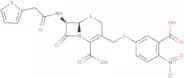
Purity:Min. 95%CENTA ²-Lactamase Substrate
CAS:CENTA²-Lactamase Substrate is a purified peptide that has been shown to be an effective inhibitor of lactamase enzymes. It is used as a signal peptide in the detection of pro-apoptotic proteins and peptide hormones, for the diagnosis of infectious diseases, and for the study of lactogenic hormones. The CENTA²-Lactamase Substrate can also be used in the polymerase chain reaction (PCR) to identify the presence of DNA from human serum. In addition, it is often used as a basic protein to detect antibodies in human serum or other biological samples by ELISA or Western blotting.
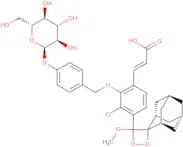
Formula:C21H17N3O8S3Purity:Min. 95%Molecular weight:535.57 g/molAquaSpark® α-D-glucoside, 10 mM in DMSO, Ramot at Tel-Aviv University Ltd. Patent family WO 2017/130191
CAS:AquaSpark alpha-D-glucoside is a chemiluminescent substrate for thealpha-glucosidase enzyme, based on the AquaSpark technology. Uponhydrolytic cleavage by alpha-glucosidase, AquaSpark alpha-D-glucosideemits green light that allows for sensitive detection ofalpha-glucosidase activity in a variety of biological samples.In microbiology alpha-glucosidase probes are used for the detection ofSaccharomyces cerevisiae, Cronobacter sakazakii, Staphylococcus aureus,Enterobacter spp., Bacillus stearothermophilus and other species.
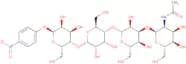
Formula:C34H39ClO12Molecular weight:675.12 g/mol4-Nitrophenyl b-globo-N-tetraoside
CAS:4-Nitrophenyl beta-galactoside (pNP-Gal) is a chromogenic substrate commonly used in enzymatic assays to detect and quantify the presence of beta-galactosidase. It is hydrolyzed by the enzyme to release 4-nitrophenol, which produces a yellow color that can be measured spectrophotometrically. Similarly, 4-Nitrophenyl beta-glucoside (pNP-Glc) can be used to assay beta-glucosidase activity. 4-Nitrophenyl beta-globotrioside (pNP-Glo) is a similar compound that has been designed as a substrate for glycosidases that cleave terminal beta-galactosyl-(1->3)-N-acetylgalactosamine residues. In these assays, the release of 4-nitrophenol can be measured to determine the activity of the enzyme under study. The use of chromogenic substrates like pNP-Glo allows for the rapid and reliable detection of glycosidase activity in a variety of biological samples.
Purity:Min. 95%Color and Shape:PowderMolecular weight:828.72 g/molRef: 3D-EN44929
Discontinued product4-Nitrophenyl a-D-maltotetraoside
CAS:4-Nitrophenyl alpha-D-maltotetraoside is a chromogenic substrate used for the detection of alpha-glucosidase and alpha-amylase activity. The four glucose units in the molecule are hydrolyzed by the enzyme, releasing 4-nitrophenol and allowing for easy colorimetric measurement of enzymatic activity
Purity:Min. 95%Molecular weight:787.67 g/molNaphthol AS-CL phosphate
CAS:Modified naphtol AS substrate used in histochemical and cytochemical staining
Purity:Min. 95%Molecular weight:407.74 g/molLuciferin-β-D-glucuronide, dipotassium salt
Luciferin-beta-D-glucuronide, dipotassium salt, is a bioluminescent substrate for beta-glucuronidase (GUS). It is used in various fields, including biomedical research, diagnostics, and imaging.
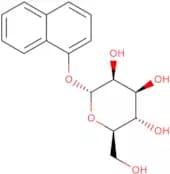
Formula:C17H14K2N2O9S2Purity:Min. 95%Color and Shape:PowderMolecular weight:531.941491-Naphthyl-α-D-mannopyranoside
CAS:1-Naphthyl-alpha-D-mannopyranoside is a chromogenic substrate. It is used in diagnostics and as a reagent for enzymatic analysis of alpha-mannosidase activity in culture media, food testing, and environmental testing.
Formula:C16H18O6Purity:Min. 95%Color and Shape:PowderMolecular weight:306.31 g/molRef: 3D-EN66033
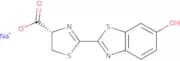
Discontinued productD-Luciferin Firefly, sodium salt monohydrate - Endotoxin-free
CAS:Water soluble substrate for firefly luciferase, with low endotoxin.
Formula:C11H9N2NaO4S2Purity:Min. 95%Molecular weight:320.3 g/molRef: 3D-EL175436
Discontinued productD-Luciferin Firefly, potassium salt - white
CAS:Water soluble substrate for firefly luciferase. Used for imaging the expression of the LUC marker gene and luciferase-fusion conjugates in living cells, tissues and organisms. Extensively utilized in reporter gene assays, immunoassays and hygiene monitoring. Endotoxin free product.
Formula:C11H7KN2O3S2Purity:Min. 95%Color and Shape:PowderMolecular weight:318.42 g/molRef: 3D-EL175434
Discontinued product4-Nitrophenyl valerate
CAS:Please enquire for more information about 4-Nitrophenyl valerate including the price, delivery time and more detailed product information at the technical inquiry form on this page
Formula:C11H13NO4Molecular weight:223.23 g/molRef: 3D-J-012670
Discontinued product4-Nitrophenyl-myo-inositol-1-yl phosphate
CAS:4-Nitrophenyl-myo-inositol-1-yl phosphate is a highly specific chromogenic substrate used for the detection, quantification, and characterization of phosphoinositide phosphatases. When cleaved by the target enzyme, it generates a highly absorbing 4-nitrophenyl moiety, producing a yellow color that can be measured spectrophotometrically. This versatile substrate is valuable in examining phosphoinositide phosphatase activity, enzyme kinetics, substrate specificity, and inhibition studies in various cellular processes, including signal transduction, lipid metabolism, and membrane trafficking.
Purity:Min. 95%Molecular weight:381.23 g/molLuciferin-beta-D-glucuronide, dipotassium salt
Luciferin-beta-D-glucuronide, dipotassium salt is a fluorescent compound that is used as a diagnostic tool. It can be used to detect the presence of enzymes, such as beta-galactosidase and beta-glucuronidase, in culture media or biological fluids. Luciferin-beta-D-glucuronide, dipotassium salt is also used for food testing and environmental testing.
Formula:C17H14K2N2O9S2Purity:Min. 94.0 Area-%Molecular weight:532.63 g/molRef: 3D-L-8122
Discontinued product6-Hexanoylamino-4-methylumbelliferyl b-D-galactopyranoside
6-Hexanoylamino-4-methylumbelliferyl b-D-galactopyranoside is a chromogenic substrate for beta-galactosidase.Purity:Min. 95%2-O-(4-Nitrophenyl)-a-D-N-glycolylneuraminic acid
CAS:2-O-(4-Nitrophenyl)-a-D-N-glycolylneuraminic acid is commonly used to measure the activity of sialidase enzymes, specifically those that cleave glycoconjugates containing 2-O-(4-nitrophenyl)-alpha-D-N-glycolylneuraminic acid. The resulting product can be detected by measuring the absorbance at a specific wavelength using a spectrophotometer. This substrate offers a high degree of specificity for glycolylneuraminic acid-containing substrates and is useful for both research and diagnostic purposes.Purity:Min. 95%Color and Shape:PowderMolecular weight:446.36 g/mol



![4-Nitrophenyl 2-acetamido-2-deoxy-4-O-[2-O-(a-L-fucopyranosyl)-b-D-galactopyranosyl]-b-D-glucopyra…](/_next/image/?url=https%3A%2Fstatic.cymitquimica.com%2Fproducts%2F3D%2Fthumb-webp%2FEN04931.webp&w=3840&q=75)