Enzyme Substrates
Subcategories of "Enzyme Substrates"
Found 1588 products of "Enzyme Substrates"
2-Amino-5-pyridyl 2-acetamido-3,4,6-tri-O-acetyl-2-deoxy-a-D-galactopyranose
2-Amino-5-pyridyl 2-acetamido-3,4,6-tri-O-acetyl-2-deoxy-a-D-galactopyranose is a chromogenic substrate for the enzyme β galactosidase. It is used to detect the presence of β galactosidase in bacterial cultures. The substrate is soluble in water and has a long shelf life. 2APAAG can be used for food testing and environmental testing as it produces a bioluminescent signal when cleaved by β galactosidase.
Purity:Min. 95%Espresso-Gal
Espresso-Gal (Espresso-beta-D-galactopyranoside) is a chromogenic indicator for beta-galactosidase activity. The colorless product is cleaved by lactose-utilizing bacteria in liquid media or on agar plates and yields an espresso brown colored precipitate. Espresso-Gal can also be used as detecting agent for beta-galactosidase activity in reporter gene assays or for identification of positive transformants on agar plates when using the α-complementation approach. Read more in the Application Notes.
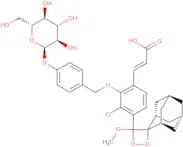
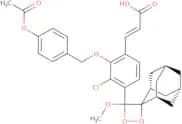
Purity:Min. 95%AquaSpark® 510 acetate, 10 mM in DMSO, Ramot at Tel-Aviv University Ltd. Patent family WO 2017/130191
CAS:Chemiluminescence substrate for C2-esterase (acetyl esterase)
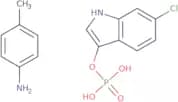
Formula:C30H31ClO8Purity:Min. 95%Color and Shape:Clear LiquidMolecular weight:554.17 g/mol6-Chloro-3-indolyl phosphate p-toluidine salt
CAS:A substrate for visualising alkaline phosphatase activity. Produces a red colored insoluble end product that is detected visually, when used together with Nitroblue tetrazolium. The substrate system is versatile and functions in a variety of applications, including Northern, Southern, and Western blotting, in situ hybridization, ELISAs and immunohistochemistry. DMF soluble.
Formula:C15H16ClN2O4PPurity:Min. 98%Color and Shape:White Off-White PowderMolecular weight:354.73 g/molRef: 3D-EC09439
Discontinued product2-Chloro-4-nitrophenyl-α-L-fucopyranoside
CAS:2-Chloro-4-nitrophenyl-alpha-L-fucopyranoside is a compound that is commonly used as an enzyme substrate for glycogen synthase kinase (GSK). It is activated by GSK-3β and has been shown to inhibit the activity of this enzyme. This compound has also been found to have inhibitory effects on other enzymes such as carbonic anhydrase and lactate dehydrogenase. Additionally, 2-Chloro-4-nitrophenyl-alpha-L-fucopyranoside exhibits antifungal activity against various fungi, including those resistant to other antifungal agents such as fluopyram and prothioconazole. Its mechanism of action involves interfering with ergosterol biosynthesis, an essential component of fungal cell membranes. Furthermore, this compound has potential applications in the development of new drugs targeting GSK-3β and β-catenin signaling pathways, which are implicated in various diseases including cancer and neuro
Formula:C12H14ClNO7Purity:Min. 98 Area-%Molecular weight:319.7 g/mol4-Methylumbelliferyl myo-inositol-1-phosphate N-methyl-morpholine salt
CAS:Please enquire for more information about 4-Methylumbelliferyl myo-inositol-1-phosphate N-methyl-morpholine salt including the price, delivery time and more detailed product information at the technical inquiry form on this page
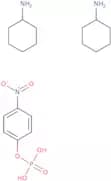
Formula:C16H19O11P·C5H11NOColor and Shape:PowderMolecular weight:519.44 g/mol4-Nitrophenyl phosphate bis(cyclohexylammonium)
CAS:4-Nitrophenyl phosphate bis(cyclohexylammonium) is an excellent chromogenic substrate designed for the detection and quantification of phosphatase enzyme activities. Aided by the presence of the cyclohexylammonium cation, it undergoes enzymatic hydrolysis, yielding the colored 4-nitrophenolate ion, which can be readily observed at 405 nm. The substrate has become an essential tool for biomedical research, playing a crucial role in unearthing cellular mechanisms, function, and potential drug targets.
Formula:C18H32N3O6PPurity:97.0 To 103.0%Color and Shape:PowderMolecular weight:417.44 g/molAc-D-Cha-GR-aminoluciferin
Please enquire for more information about Ac-D-Cha-GR-aminoluciferin including the price, delivery time and more detailed product information at the technical inquiry form on this page
Formula:C30H41N9O6S2Molecular weight:687.83 g/mol5-Bromo-4-chloro-3-indoxyl-1,3-diacetate
CAS:5-Bromo-4-chloro-3-indoxyl-1,3-diacetate (BCID) is a potent and selective inhibitor of the tyrosine kinase enzyme. BCID has been shown to inhibit the growth of various cell cultures in vitro including murine and human cells. BCID has been shown to be an effective inhibitor of TNF-α production in murine models for asthma and allergic rhinitis. The drug has also been shown to reversibly inhibit the activity of the enzyme without affecting its ability to bind substrate or to regenerate active enzyme form inactive enzyme, indicating that it does not act as a suicide inhibitor.
Formula:C12H9BrClNO3Purity:Min. 98.0 Area-%Molecular weight:330.56 g/molRef: 3D-B-7120
Discontinued producto-Dianisidine Dihydrochloride [for Biochemical Research]
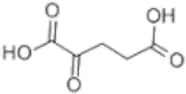
CAS:Formula:C14H16N2O2·2HClPurity:>98.0%(HPLC)Color and Shape:White to Gray to Red powder to crystalMolecular weight:317.21a-Ketoglutaric Acid (High Purity) extrapure AR, 99.5%
CAS:Formula:C5H6O5Purity:min. 99.5%Color and Shape:White to pale yellow, Crystalline powder, Clear, Colourless to pale yellowMolecular weight:146.10S-Acetylthiocholine Iodide extrapure AR, 99%
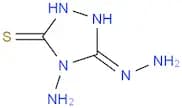
CAS:Formula:C7H16NOSIPurity:min. 99%Color and Shape:White to off - white, Crystalline powder, ClearMolecular weight:289.174-Amino-3-Hydrazino-5-Mercapto-1,2,4-Triazole (AHMT), 98%
CAS:Formula:C2H6N6SPurity:min. 98%Color and Shape:White, Powder, PurpleMolecular weight:146.17Phenylphosphate Disodium Salt Dihydrate (High Purity) extrapure AR, 98%
CAS:Formula:C6H5Na2O4P·2H2OPurity:min. 98%Color and Shape:White, Crystalline powder, Clear, ColourlessMolecular weight:254.09a-Ketoglutaric Acid extrapure, 99%
CAS:Formula:C5H6O5Purity:min. 99%Color and Shape:White to pale yellow, Crystalline powder, Clear, Colourless to pale yellowMolecular weight:146.103,3-Diaminobenzidine Tetrahydrochloride (DAB.4HCl) Buffer Substrate Solution for Peroxidase
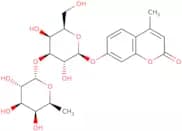
Color and Shape:Clear, Brown to purple to dark brown to dark purple, Liquid4-Methylumbelliferyl 3-O-(a-L-fucopyranosyl)-b-D-galactopyranoside
CAS:4-Methylumbelliferyl 3-O-(α-L-fucopyranosyl)-β-D-galactopyranoside is an organic compound that is used as a radioactive marker for DNA. It can be synthesized in the laboratory and its use allows for the tracking of DNA molecules. The production of this marker is achieved by recombinant expression of the gene encoding the enzyme β-D-galactosidase, which hydrolyzes 4-methylumbelliferyl β-D-galactopyranoside to release 4-methylumbelliferone and α-L-fucopyranose. The enzyme uses UDP glucose as a cofactor to catalyse the reaction. This product has been isolated from Corynebacterium glutamicum, with recombinant expression vectors used to produce it in host cells such as Escherichia coli or Corynebacterium glutamicum. It has been found that
Formula:C22H28O12Purity:Min. 95%Color and Shape:PowderMolecular weight:484.45 g/molRef: 3D-EM06429
Discontinued productLuc-Enterobacteria K
Please enquire for more information about Luc-Enterobacteria K including the price, delivery time and more detailed product information at the technical inquiry form on this page
Formula:C17H17KN2O8S2Purity:Min. 94 Area-%Molecular weight:480.55 g/molRef: 3D-L-8270
Discontinued productLuciferin-caprylate
Luciferin-caprylate is a chemiluminescent substrate that is used in the detection of various substances. It is a high purity compound with CAS No. 583-22-8 and an E number of E711. This product can be used in diagnostic, food testing, and other applications. Luciferin-caprylate has been shown to be an excellent substrate for bioluminescence, fluorescence, and chemiluminescence reactions. It generates light through the oxidation of luciferin by the enzyme luciferase in the presence of oxygen or other oxidizing agents. The light generated by this reaction can be detected using a photomultiplier tube or luminometer, which can then be used to detect substances such as bacteria, protozoa, or fungi.
Purity:Min. 96 Area-%Ref: 3D-L-8128
Discontinued product2'-(4-Methylumbelliferyl)-α-D-N-acetylneuraminic acid, sodium salt
CAS:2'-(4-Methylumbelliferyl)-alpha-D-N-acetylneuraminic acid, sodium salt is a fluorogenic substrate for alpha-galactosidase. It is used in the analysis of cultured media and as a conjugate for enzyme substrates. This product has been shown to be useful in food testing, diagnostics, and environmental testing. 2'-(4-Methylumbelliferyl)-alpha-D-N-acetylneuraminic acid, sodium salt has been used as a chromogenic substrate for the detection of alpha-galactosidase activity. This product is also used as a bioluminescent substrate for the detection of bioluminescence.
Formula:C21H24NNaO11Purity:Min. 96.5 Area-%Molecular weight:489.42 g/molβ-Alanine 7-amido-4-methylcoumarin trifluoroacetate
CAS:Beta-alanine 7-amido-4-methylcoumarin, trifluoroacetate salt is a high purity, ligand, and conjugate. It can be used in the food testing and environmental testing fields. This product has been shown to be a good substrate for enzyme activity and can also function as a fluorescent dye in chemiluminescence assays. Beta-alanine 7-amido-4-methylcoumarin, trifluoroacetate salt is soluble in water and has a CAS number of 201847-54-3.
Formula:C15H15F3N2O5Molecular weight:360.29 g/molAldol® 515 N-glutaryl-L-phenylalanine amide potassium salt, Biosynth Patent: EP 2427431 and US 8940909
CAS:Aldol® 515 N-glutaryl-L-phenylalanine amide is a chromogenic and fluorogenic enzyme substrate used for detection of L-glutamate-phenylalanine (GluPhe)-specific peptidase activity. The colorless enzyme substrate is cleaved the GluPhe-specific peptidase, yielding development of orange-red coloration. In addition, red fluorescence is generated when Aldol® 355 fluorescence enhancer or a suitable matrix is present. Aldol® 515 N-glutaryl-L-phenylalanine amide can be used in enzyme assays and live bacterial cultures. Aldol® 515 N-glutaryl-L-phenylalanine amide is suitable for use in liquid and solid media, under aerobic as well as anaerobic conditions.
Formula:C37H35KN4O5Purity:Min. 95.0 Area-%Molecular weight:654.80 g/molRef: 3D-A-4763_P00
Discontinued product4-Chloro-3-indoxyl-1,3-diacetate
CAS:4-Chloro-3-indoxyl-1,3-diacetate is a chromogenic substrate used in the identification of bile acids. It reacts with 4-chlorophenol to form a red dye. This compound is also used as a ligand for metal ions.
Formula:C12H10ClNO3Molecular weight:251.67 g/molRef: 3D-C-4848
Discontinued productPhenytoin sodium
CAS:Controlled ProductPlease enquire for more information about Phenytoin sodium including the price, delivery time and more detailed product information at the technical inquiry form on this page
Formula:C15H11N2O2NaMolecular weight:274.25 g/molRef: 3D-Q-201564
Discontinued productLuciferin-choline phosphate, sodium salt
Luciferin-choline phosphate, sodium salt is a chemical compound used for the detection of phosphatases and esterases. This compound is also used for the detection of bacteria and fungi in food testing and environmental testing. Luciferin-choline phosphate, sodium salt is a chromogenic substrate that can be detected using bioluminescence or fluorogenic substrates. It has an absorbance maximum at around 420 nm.
Formula:C16H17N3NaO6PS2Purity:Min. 95 Area-%Molecular weight:465.41 g/molLuciferin-beta-D-glucoside, potassium salt
Luciferin-beta-D-glucoside, potassium salt is a fluorogenic substrate that can be used as a ligand in enzyme assays. It is also used in the manufacture of diagnostic reagents, such as conjugates and culture media. It is often used to test for the presence of bacteria or fungi.
Purity:Min. 95%Luciferin-β-D-glucoside, potassium salt
Luciferin-beta-D-glucoside, potassium salt is a conjugate of luciferin and beta-D-glucose. This compound is a substrate for enzymes that catalyze the oxidation of luciferin to generate light. It can be used in diagnostic tests as a chromogenic or fluorogenic substrate to detect specific substances, such as metals and microbes.
Formula:C17H17KN2O8S2Purity:Min. 94 Area-%Molecular weight:464.47 g/molAquaSpark® α-D-glucoside, 10 mM in DMSO, Ramot at Tel-Aviv University Ltd. Patent family WO 2017/130191
CAS:AquaSpark alpha-D-glucoside is a chemiluminescent substrate for thealpha-glucosidase enzyme, based on the AquaSpark technology. Uponhydrolytic cleavage by alpha-glucosidase, AquaSpark alpha-D-glucosideemits green light that allows for sensitive detection ofalpha-glucosidase activity in a variety of biological samples.In microbiology alpha-glucosidase probes are used for the detection ofSaccharomyces cerevisiae, Cronobacter sakazakii, Staphylococcus aureus,Enterobacter spp., Bacillus stearothermophilus and other species.
Formula:C34H39ClO12Molecular weight:675.12 g/molAquaSpark® 510 Nitroreductase/NADH Probe, lyophilized, Ramot at Tel-Aviv University Ltd. Patent family WO 2017/130191
CAS:The AquaSpark® 510 Nitroreductase/NADH Probe (CL-NTR) is a water-soluble probe for the selective chemiluminescent detection of nitroreductase (NTR) activity. It is a versatile tool for monitoring a number of biological processes.
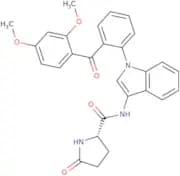
Formula:C28H28ClNO8Molecular weight:541.15 g/molAldol® 470 L-pyroglutamic acid amide, Biosynth Patent: EP 2427431 and US 8940909
CAS:Controlled ProductAldol® 470 L-pyroglutamic acid amide is a chromogenic and fluorogenic enzyme substrate used for detection of pyrrolidonyl peptidase (PYRase) activity. The colorless enzyme substrate is cleaved by PYRase-producing bacteria grown in liquid or solid media, yielding orange color. In addition, green fluorescence is generated when a suitable matrix is present, such as, the surface of cellulose acetate filters, polypropylene tubes or microplates, and polyethylene vials. Aldol® 470 L-pyroglutamic acid amide is suitable for use under aerobic and anaerobic conditions.
Formula:C28H25N3O5Purity:Min. 95.0 Area-%Molecular weight:483.52 g/mol5-Bromo-4-chloro-3-indoxyl-α-D-xylopyranoside
CAS:5-Bromo-4-chloro-3-indoxyl-alpha-D-xylopyranoside is an enzyme substrate that can be used in the detection of β-galactosidase activity. This product has been shown to be a good ligand for various xanthine oxidoreductases, including xanthine dehydrogenase and uricase. 5BBIX is also a chromogenic substrate for horseradish peroxidase and can be used to detect hydrogen peroxide in the presence of osmium tetroxide or potassium permanganate. 5BBIX has been extensively tested for use in diagnostics, food, and environmental testing.
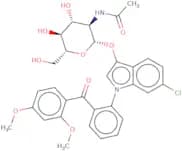
Formula:C13H13BrClNO5Purity:Min. 98.0 Area-%Molecular weight:378.61 g/molAldol® 467 N-acetyl-beta-D-glucosaminide, Biosynth Patent: EP 2427431 and US 8940909
CAS:Aldol® 467 N-acetyl-beta-D-glucosaminide is a chromogenic and fluorogenic enzyme substrate used for detection of beta-N-acetyl-glucosaminidase activity. The colorless enzyme substrate is cleaved in the presence of beta-N-acetyl-glucosaminidase yielding development of a yellow product. In addition, green fluorescence is generated when a suitable matrix or Aldol® 355 fluorescence enhancer is present. Aldol® 467 N-acetyl-beta-D-glucosaminide amide can be used in enzymatic assays or in live bacterial cultures. Aldol® 467 N-acetyl-beta-D-glucosaminide is suitable for use in liquid and solid media, under aerobic as well as anaerobic conditions.
Formula:C31H31ClN2O9Purity:Min. 95%Color and Shape:PowderMolecular weight:611.04 g/molAldol® 455 beta-D-glucopyranoside - Biosynth Patent: EP 2427431 and US 8940909
Aldol® 455 is a substrate for the enzyme beta-galactosidase. It is used in food testing, staining, and environmental testing. Aldol® 455 has been shown to be a good substrate for fluorogenic and chromogenic substrates. It can be conjugated with an antibody or other ligand for use in immunoassays. Aldol® 455 is of high purity and high quality, making it suitable for use in diagnostics and as an enzyme substrate. This product can also be used as a culture media additive.
Purity:Min. 95%5-Bromo-3-indoxyl-β-D-galactopyranoside-6-sulfate sodium salt
CAS:5-Bromo-3-indoxyl-beta-D-galactopyranoside (5BIG) is a fluorogenic substrate that has been shown to be an effective enzyme substrate. It is used in the chemiluminescence, bioluminescence, and fluorescence detection of enzymes. 5BIG is also a chromogenic substrate for nucleic acid staining and can be used in food testing as well as diagnostics. 5BIG is highly pure and high quality with a CAS number of 1301706-59-1.
Formula:C14H15BrNNaO9SPurity:Min. 98 Area-%Molecular weight:476.24 g/mol5-Bromo-4-chloro-3-indoxyl-a-D-xylopyranoside
5-Bromo-4-chloro-3-indoxyl-a-D-xylopyranoside is a fluorogenic substrate that can be used in food testing and environmental testing. This product is a conjugate of the xylosidase enzyme (EC 3.2.1.37) with 5-bromo-4-chloroindoxyl, which has been shown to have a high affinity for the enzyme's active site and enzymatic activity. The purity of this product is > 95% and the CAS number is 68618-41-5.
Purity:Min. 95%Luciferin-β-D-glucuronide, dipotassium salt
Luciferin-beta-D-glucuronide, dipotassium salt, is a bioluminescent substrate for beta-glucuronidase (GUS). It is used in various fields, including biomedical research, diagnostics, and imaging.
Formula:C17H14K2N2O9S2Purity:Min. 95%Color and Shape:PowderMolecular weight:531.94149D-Luciferin Firefly, potassium salt - white
CAS:Water soluble substrate for firefly luciferase. Used for imaging the expression of the LUC marker gene and luciferase-fusion conjugates in living cells, tissues and organisms. Extensively utilized in reporter gene assays, immunoassays and hygiene monitoring. Endotoxin free product.
Formula:C11H7KN2O3S2Purity:Min. 95%Color and Shape:PowderMolecular weight:318.42 g/molRef: 3D-EL175434
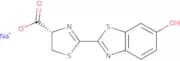
Discontinued productD-Luciferin Firefly, sodium salt monohydrate - Endotoxin-free
CAS:Water soluble substrate for firefly luciferase, with low endotoxin.
Formula:C11H9N2NaO4S2Purity:Min. 95%Molecular weight:320.3 g/molRef: 3D-EL175436
Discontinued product





![o-Dianisidine Dihydrochloride [for Biochemical Research]](/_next/image/?url=https%3A%2Fstatic.cymitquimica.com%2Fproducts%2F3B%2Fthumb-webp%2FD3893.webp&w=3840&q=75)