Enzyme Substrates
Subcategories of "Enzyme Substrates"
Found 1433 products for "Enzyme Substrates".
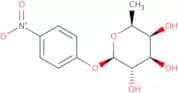
4-Nitrophenyl-beta-L-fucopyranoside
CAS:4-Nitrophenyl-beta-L-fucopyranoside is a high-quality pNP enzyme substrate developed for the sensitive detection and quantification of Beta-L-fucosidase activity. The enzymatic hydrolysis of the substrate generates 4-nitrophenol, a yellow chromogenic component that can be conveniently measured spectrophotometrically, allowing for accurate determination of enzyme concentration and kinetics. This substrate finds applications in various research fields, diagnostics, and industrial enzyme production.Formula:C12H15NO7Purity:Min. 95%Color and Shape:White PowderMolecular weight:285.25 g/mol3,4-Cyclohexenoesculetin β-D-galactopyranoside
CAS:Chromogenic substrate for beta-galactosidase
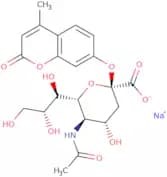
Formula:C19H22O9Purity:Min. 95 Area-%Molecular weight:394.37 g/mol2'-(4-Methylumbelliferyl)-alpha-D-N-acetylneuraminic acid, sodium salt
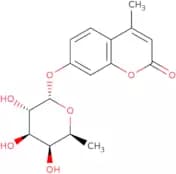
CAS:4-Methylumbelliferyl N-acetyl-a-D-neuraminic acid sodium salt (4-MUNANA) is a fluorogenic substrate of neuraminidase. 4-Methylumbelliferone is released from 4-MUNANA by neuraminidase in the assay and can be detected fluorometrically with excitation at 365-380 nm and emission at 445-454 nm. It can also be used for fluorescent staining of sialidases in PAGE.Formula:C21H24NNaO11Purity:Min. 98 Area-%Molecular weight:489.42 g/mol4-Methylumbelliferyl-α-L-fucopyranoside
CAS:Fluorogenic substrate for α-L-Fucosidase yielding a blue fluorescent solution upon cleavage.
Formula:C16H18O7Molecular weight:322.32 g/molLuciferin-α-D-galactoside, sodium salt
Luciferin-alpha-D-galactoside, sodium salt (LDA) is a bioluminescence substrate. It is used in diagnostic tests for the detection of bacteria and fungi. LDA is also used to measure the effectiveness of biocides and disinfectants. This product has been shown to be a potent fluorogenic substrate in chemiluminescent assays that can be used effectively with firefly luciferase.
Formula:C17H17NaN2O8S2Purity:Min. 94 Area-%Molecular weight:464.44 g/molRef: 3D-L-8126
-Unit-mgmgTo inquire5mgTo inquire10mgTo inquire25mgTo inquire50mgTo inquire100mgTo inquireL-Lysine 7-amido-4-methylcoumarin, acetate salt
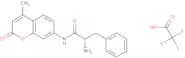
CAS:Controlled ProductL-Lysine 7-amido-4-methylcoumarin, acetate salt is a fluorogenic peptide substrate for aminopeptidase. This AMC peptide substrate is normally used to rapidly profile the N-terminal specificity of proteases.Formula:C18H25N3O5Molecular weight:363.42 g/molL-Phenylalanine 7-amido-4-methylcoumarin trifluoroacetate salt
CAS:L-Phenylalanine 7-amido-4-methylcoumarin trifluoroacetate salt is a fluorogenic peptide substrate for aminopeptidase. This AMC peptide substrate is normally used to rapidly profile the N-terminal specificity of proteases.Formula:C19H18N2O3•C2HF3O2Purity:Min. 98 Area-%Color and Shape:White PowderMolecular weight:436.38 g/mol5-Bromo-4-chloro-3-indolyl palmitate
CAS:5-Bromo-4-chloro-3-indolyl palmitate is a chromogenic substrate used to detect the specific enzymatic activity of lipase. After cleavage, 5-bromo-4-chloro-indoxyl is released, resulting in a blue to blue-green color change in bacterial colonies or media. 5-Bromo-4-chloro-3-indolyl palmitate is used in lipase activity assays or cystic fibrosis diagnostics.Formula:C24H35BrClNO2Purity:Min. 95%Color and Shape:PowderMolecular weight:484.9 g/molAldol® 518 alpha-D-glucopyranoside, Biosynth Patent: EP 2427431 and US 8940909
CAS:Aldol® 518 alpha-D-glucopyranoside is a fluorogenic enzyme substrate used for detection of alpha-D-glucosidase activity. The colorless enzyme substrate is cleaved by alpha-D-glucosidase, generating red fluorescent signal and in some conditions, an orange colour in the visible spectrum can get formed, staining bacterial colonies in faint orange coloration. Aldol® 518 alpha-D-glucopyranoside can be used under aerobic and anaerobic conditions.
Formula:C29H29ClN2O7Purity:Min. 95.0 Area-%Molecular weight:553 g/molDL-threo-2-methylisocitrate sodium salt
CAS:DL-threo-2-methylisocitrate sodium salt is an enzyme substrate for isocitrate lyase 1 (ICL1), an enzyme involved in the glyoxylate cycle, a metabolic pathway that allows organisms to convert acetate into glucose. It is also a substrate for bovine heart aconitase and acts as inhibitor of TPN-linked isocitrate dehydrogenase.
Formula:C7H10O7·xNaPurity:Min. 95%Color and Shape:PowderMolecular weight:206.15 g/mol2-Chloro-4-nitrophenyl b-D-maltoside
2-Chloro-4-nitrophenyl b-D-maltoside is a fluorescent substrate used in diagnostic kits. It is used to detect the presence of beta-glucuronidase enzymes, which are found in many bacteria and fungi. 2-Chloro-4-nitrophenyl b-D-maltoside has been shown to be a superior substrate for beta-glucuronidase as it can be used at lower concentrations and is more stable than other substrates. The enzyme hydrolyzes the 2,4 nitrophenyl ester bond and releases the fluorogenic product 4-(2'-hydroxyethyl)benzene diazonium chloride (HED). This product emits light under ultraviolet light, making it ideal for use in Bioluminescence Assays.Purity:Min. 95%2-Naphthyl-alpha-L-fucopyranoside
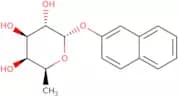
CAS:Chromogenic substrate for α-L-Fucosidase. 2-naphthol is released upon hydrolyzation. By simultaneous coupling with a suitable staining reagent, such as hexazonium p-rosaniline, the corresponding azo-dye is formed. Naphthols can also be detected by fluorescence analysis.Formula:C16H18O5Purity:Min. 98 Area-%Molecular weight:290.32 g/mol4-Nitrophenyl a-D-thiomannopyranoside
CAS:4-Nitrophenyl a-D-thiomannopyranoside is a chemiluminescence substrate that can be used to measure the activity of β-galactosidase, an enzyme involved in the hydrolysis of lactose. This product is available as a white to yellowish powder and has been shown to have high purity and quality. It also displays strong fluorescence when reacted with hydrogen peroxide and has been used for diagnostics tests such as staining, food testing, and enzyme substrate reactions.Purity:Min. 95%Molecular weight:317.32 g/mol4-Methylumbelliferyl b-D-galactopyranoside-6-sulphate sodium salt - Moscerdam™ biochemical purity
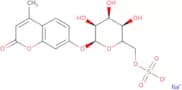
CAS:4-MU-Gal-6S (M4A) is a fluorogenic substrate of galactose-6-sulfate sulfatase (GALNS), used for the diagnosis of Mucopolysaccharidosis IV type A (MPS IV A). MPS IV, also known as Morquio syndrome, is a rare metabolic disorder in which the human body cannot process glycosaminoglycans (GAGs). MPS IV A is caused by the deficiency of the enzyme N-acetyl-galactosamine-6-sulfatase resulting in accumulation of keratan and chondroitin sulfate in tissues. M4A is used as the GALNS substrate in the anti-lysosomal enzyme antibody assay for the treatments of lysosomal storage disorders (LSDs) with enzyme replacement therapies (ERTs).Formula:C16H17NaO11SPurity:Min. 97 Area-%Color and Shape:White PowderMolecular weight:440.36 g/molAldol® 458 phosphate, disodium salt, Biosynth Patent: EP 2427431 and US 8940909
CAS:Aldol® 458 phosphate is a chromogenic and fluorogenic enzyme substrate used for detection of phosphatase activity. The colorless enzyme substrate is cleaved by phosphatases secreted by bacteria grown in liquid media, yielding yellow color and green fluorescence. Aldol® 458 phosphate can also be used in assays involving phosphatase-coupled antibodies in immunoassay applications (ELISA). Aldol® 458 phosphate can be used under aerobic and anaerobic conditions.Formula:C16H12NNa2O6PPurity:Min. 95%Color and Shape:PowderMolecular weight:391.22 g/mol3-Indoxyl-β-D-galactopyranoside
CAS:Chromogenic substrate for β-D-galactosidase, yielding a blue precipitate upon cleavage.Formula:C14H17NO6Purity:Min. 98 Area-%Molecular weight:295.29 g/molAldol® 458 beta-D-galactopyranoside, Biosynth Patent: EP 2427431 and US 8940909
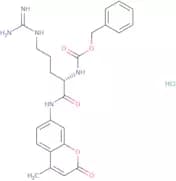
CAS:Aldol® 458 beta-D-galactopyranoside is a chromogenic and fluorogenic enzyme substrate used for detection of beta-galactosidase activity. The colorless enzyme substrate is cleaved by lactose utilizing bacteria grown in liquid or solid media, yielding yellow coloration and green fluorescence. Aldol® 458 beta-D-galactopyranoside can also be used in beta-galactosidase gene reporter assays or immunoassay applications (ELISA). Aldol® 458 beta-D-galactopyranoside can be used under aerobic and anaerobic conditions.Formula:C22H23NO8Purity:Min. 95 Area-%Color and Shape:PowderMolecular weight:429.42 g/molN-α-CBZ-L-Arginine 7-amido-4-methylcoumarin hydrochloride
CAS:N-alpha-CBZ-L-Arginine 7-amido-4-methylcoumarin hydrochloride is a high quality and highly purified substrate for enzymes that catalyze the release of light when they react with their specific substrates. It is used in a variety of applications, including diagnostics and food testing. NACBZLAMC hydrochloride is an excellent ligand for chemiluminescence reactions and can be used to detect the presence of various analytes. It can also be used as a staining agent to detect proteins on Western blots or to stain bacterial cultures for identification. This product has been shown to be effective against numerous bacteria, including Staphylococcus aureus and Pseudomonas aeruginosa, as well as fungi like Candida albicans.Formula:C24H28ClN5O5Purity:Min. 99 Area-%Molecular weight:501.97 g/molRef: 3D-C-2100
-Unit-ggTo inquire1gTo inquire5gTo inquire10gTo inquire500mgTo inquire2500mgTo inquireIsopropyl-β-D-thiogalactopyranoside
CAS:A non-metabolizable allolactose analogue, widely used in molecular biology for overexpression of recombinant proteins from inducible systems under the control of lac promoter. IPTG binds to the LacI repressor and causes its release from the lac operator, allowing gene expression to take place. Present in vectors of pGEX, pGEM-T, pET, pRSET, pMAL class and others.Formula:C9H18O5SPurity:Min. 99 Area-%Molecular weight:238.3 g/molRef: 3D-I-8020
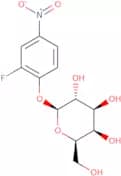
-Unit-ggTo inquire25gTo inquire50gTo inquire100gTo inquire250gTo inquire500gTo inquire2-Fluoro-4-nitrophenyl b-D-galactopyranoside
CAS:2-Fluoro-4-nitrophenyl b-D-galactopyranoside is a chromogenic substrate in enzymatic assays with β-galactosidase. Commonly abbreviated as PFONPG, it is a hydrophilic compound that can be dissolved in saline and blood samples, which makes it a suitable candidate for diagnostic applications as a gene reporter probe by simple analytic methodologies. 2-Fluoro-4-nitrophenyl b-D-galactopyranoside have been used to detect and monitor the growth of prostate tumor cells.Purity:Min. 95%Color and Shape:PowderMolecular weight:319.24 g/molLipase substrate
CAS:Synthetic chromogenic substrate for detection of lipase enzyme activity that produces a red coloured product, Suitable for use in serum of plasma matrices. This lipase substrate is commonly used in veterinary diagnostics for monitoring and detecting canine pancreatitis,Formula:C45H69NO8Molecular weight:752.03 g/mol2-Nitrophenyl-N-acetyl-beta-D-glucosaminide
CAS:Chromogenic β-Glucosaminidase substrate yielding a yellow absorbent solution upon cleavage.Formula:C14H18N2O8Purity:Min. 99 Area-%Molecular weight:342.31 g/molAldol® 470 choline phosphate, Biosynth Patent: EP 2427431 and US 8940909
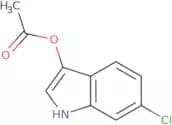
CAS:Aldol® 470 choline phosphate is a chromogenic and fluorogenic enzyme substrate used for detection of phosphatidyl-choline specific phospholipase C (PC-PLC, EC 3.1.4.3) activity. The colorless product is cleaved by PC-PLC positive microorganisms in liquid or solid media, yielding a yellow color and green fluorescence. Aldol® 470 choline phosphate therefore, enables the detection and identification of PC-PLC positive pathogenic bacteria, such as, Clostridium perfringens, Pseudomonas aeruginosa, Helicobacter pylori, Legionella pneumophila, Bacillus cereus, Bacillus anthracis, Listeria monocytogenes, and others. Aldol® 470 choline phosphate can be used under aerobic and anaerobic conditions.Formula:C28H31N2O7PPurity:Min. 95%Color and Shape:PowderMolecular weight:538.53 g/mol6-Chloro-3-indoxyl-3-acetate
CAS:6-Chloro-3-indoxyl-3-acetate is a chromogenic substrate for carboxylesterase yielding a salmon colored precipitate upon cleavage. Mainly used in histochemistry.Purity:Min. 95%Color and Shape:White PowderMolecular weight:209.63 g/molAquaSpark® beta-D-glucuronide, 10 mM in DMSO, Ramot at Tel-Aviv University Ltd. Patent family WO 2017/130191
CAS:For use in bacterial detection
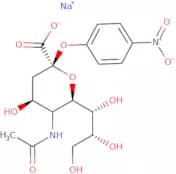
Formula:C34H37ClO13Purity:Min. 95%Color and Shape:Clear LiquidMolecular weight:688.19 g/mol2-O-(4-Nitrophenyl)-a-D-N-acetylneuraminic acid sodium salt
CAS:2-O-(4-Nitrophenyl)-alpha-D-N-acetylneuraminic acid sodium salt is a chromogenic substrate used to detect the enzymatic activity of neuraminidase or sialidase. After cleavage, the nitrophenyl moiety is released exhibiting a light yellowish color. 2-O-(4-Nitrophenyl)-alpha-D-N-acetylneuraminic acid sodium salt is used in bacterial neuraminidase activity assays.Purity:Min. 95%Color and Shape:Yellow PowderMolecular weight:452.35 g/mol6-Bromo-2-naphthyl 2-acetamido-2-deoxy-b-D-glucopyranoside
CAS:6-Bromo-2-naphthyl 2-acetamido-2-deoxy-b-D-glucopyranoside is a chromogenic substrate used for the detection of chitinase activity. Upon hydrolysis by chitinase, it releases a yellow-brown color, which is easily detected by spectrophotometry. This substrate has been used to study chitinases in various organisms, including bacteria, fungi, and insects. It can also be used to quantitate chitinase activity in various biological samples.
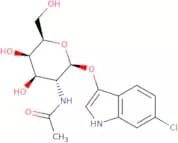
Formula:C18H20BrNO6Purity:Min 97%Color and Shape:White PowderMolecular weight:426.26 g/mol6-Chloro-3-indoxyl-N-acetyl-β-D-galactosaminide
CAS:Chromogenic substrate for N-Acetyl-β-D-galactosaminidase yielding a salmon-colored precipitate.Formula:C16H19ClN2O6Purity:Min. 98.0 Area-%Molecular weight:370.79 g/molRef: 3D-C-4762
-Unit-ggTo inquire1gTo inquire50mgTo inquire100mgTo inquire250mgTo inquire500mgTo inquire4-Methylumbelliferyl lignocerate
CAS:4-Methylumbelliferyl lignocerate is a fluorogenic substrate for lipase. After enzymatic cleaveage, free 4-methylumbelliferone (also known as hymecromone) is released, exhibiting blue fluorescence upon excitation with UV light. The strongest fluorescence of 4-methylumbelliferone requires deprotonation of the hydroxyl group (thus requires alkaline pH), with a maximal fluorescence intensity obtained with excitation at 350 to 370 nm and emission at 440 to 470 nm. The use of 4-methylumbelliferyl lignocerateas a substrate for measuring the lipase activity is used for X-linked adrenoleukodystrophy diagnosis and peroxisomal disorder screening.
Formula:C34H54O4Purity:Min. 95%Color and Shape:PowderMolecular weight:526.79 g/mol6-Chloro-3-indoxyl-alpha-D-galactopyranoside
CAS:Chromogenic substrate for α-galactosidase yielding a salmon-colored precipitate.Formula:C14H16ClNO6Molecular weight:329.74 g/mol4-Methylumbelliferone
CAS:4-Methylumbelliferone is a coumarin derivative that inhibits the activity of enzymes such as p-nitrophenyl phosphate oxidase and aminopeptidase. It is used in vitro to study oxidative injury, which plays a role in the pathogenesis of inflammatory diseases, including primary sclerosing cholangitis and bone marrow transplantation. 4-Methylumbelliferone has been shown to induce apoptosis by increasing reactive oxygen species levels and activating toll-like receptor 4 (TLR4). It also has inhibitory effects on osteosarcoma cell proliferation in vitro.Formula:C10H8O3Molecular weight:176.17 g/mol5-Bromo-4-chloro-3-indolyl a-L-rhamnoside
5-Bromo-4-chloro-3-indolyl a-L-rhamnoside is a chromogenic substrate used to detect the specific enzymatic activity of alpha-L-rhamnosidase. After cleavage, 5-bromo-4-chloro-indoxyl is released, resulting in a blue to blue-green color change in bacterial colonies or media. 5-Bromo-4-chloro-3-indolyl a-L-rhamnoside is used in bacterial rhamnose metabolism studies (e.g. E. coli).
Formula:C14H15BrClNO5Purity:Min. 95%Color and Shape:SolidMolecular weight:392.63 g/mol5-Bromo-4-chloro-3-indoxyl-beta-D-glucuronic acid, sodium salt trihydrate
CAS:Chromogenic substrate for beta-glucuronidase (GUS) yielding blue precipitate upon cleavage. Used for identification of beta-glucuronidase. X-beta-D-glucuronide has been reported as chromogenic substrate in a number of chromogenic E. coli/ coliform culture media. About 95% of common E. coli possess beta-D-glucuronidase activity. Such chromogenic culture media are used for detection and enumeration of E. coli in food samples such as meat, dairy products and shellfish and have clinical applications in the assessment of urinary infections. It has gained international acceptance as highly accurate test for the presence of E. coli in drinking water samples. It is also used for the detection of the expression of GUS (E. coli beta-glucuronidase) gene fusion marker constructs in plants. The sodium salt has advantages over the cyclohexylammonium salt as being non-electrostatic and possessing a naturally-occurring cation.Formula:C14H18BrClNNaO10Purity:Min. 99.0 Area-%Molecular weight:498.65 g/molL-Phenylalanine 7-amido-4-methylcoumarin, trifluoroacetate salt
CAS:Please enquire for more information about L-Phenylalanine 7-amido-4-methylcoumarin, trifluoroacetate salt including the price, delivery time and more detailed product information at the technical inquiry form on this pageFormula:C21H19F3N2O5Purity:Min. 99 Area-%Molecular weight:436.39 g/mol2-Naphthyl b-D-galactopyranoside
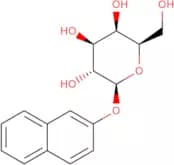
CAS:2-Naphthyl beta-D-galactopyranoside is a glycoside that is found in the flowers of the plant Eschscholzia californica. It is used as a localizer for bacterial strains and can be hydrolyzed by enzymes to release naphthalene. 2-Naphthyl beta-D-galactopyranoside has been shown to inhibit the growth of corynebacterium and diazonium salt, which may be due to its ability to bind to DNA and disrupt protein synthesis. The potential use of this molecule is for its insolubility, which prevents it from being absorbed by skin cells.
Formula:C16H18O6Purity:Min. 99 Area-%Color and Shape:PowderMolecular weight:306.31 g/molNaphthol AS-BI N-acetyl-beta-D-glucosaminide
CAS:Naphthol AS-BI N-acetyl-beta-D-glucosaminide is a fluorogenic substrate for the pararosaniline-glyoxalase (PG) reaction. This substrate is used to study enzymatic activity in two human isoenzymes of PG, PG I and PG II. The conversion of this substrate by PG I or PG II results in a color change from yellow to red. Naphthol AS-BI N-acetyl-beta-D-glucosaminide may be used as an experimental tool to measure the activity of these enzymes and to study the effect of inhibitors on their activity. It can also be used as a marker for studying enzyme transfer between cells.Formula:C26H27BrN2O8Purity:Min. 97.0 Area-%Molecular weight:575.42 g/mol3-Nitrophenyl β-D-glucopyranoside
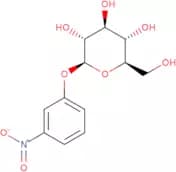
CAS:3-Nitrophenyl beta-D-glucopyranoside is a chromogenic enzyme substrate commonly used to assay for beta-glucosidase activity. Upon hydrolysis by the enzyme, it produces a yellow product that can be easily detected by spectrophotometry. This substrate is often used in the field of carbohydrate chemistry and biochemistry to study enzyme kinetics and inhibition in both in vitro and in vivo systems.Formula:C12H15NO8Purity:Min. 95%Color and Shape:White Yellow PowderMolecular weight:301.25 g/mol4-Methylumbelliferyl-N-acetyl-β-D-glucosaminide-6-sulfate, sodium salt
CAS:4-Methylumbelliferyl 2-acetamido-2-deoxy-beta-D-glucopyranoside-6-sulfate sodium salt is a high-quality fluorogenic substrate specifically designed for the detection and quantification of various enzymes, including beta-glucosidases and sulfatases. Upon hydrolysis by the target enzyme, this substrate releases the highly fluorescent 4-methylumbelliferone, allowing for real-time monitoring and accurate measurement of enzyme activities in biochemical assays, diagnostic tests, and research applications. 4-Methylumbelliferyl 2-acetamido-2-deoxy-beta-D-glucopyranoside-6-sulfate sodium salt has excellent solubility in water, ensuring a consistent and reliable performance in different experimental conditions. This versatile substrate is an essential tool for researchers and industry professionals who require a sensitive and reproducible detection method for enzymes of interest.Formula:C18H20NNaO11SPurity:Min. 98.0 Area-%Molecular weight:481.41 g/molRef: 3D-M-5505
-Unit-ggTo inquire5mgTo inquire25mgTo inquire50mgTo inquire100mgTo inquire250mgTo inquire4-Nitrophenyl-alpha-D-maltopyranoside
CAS:Chromogenic α-maltosidase substrate yielding a yellow solution upon cleavage.Formula:C18H25NO13Purity:Min. 98.0 Area-%Molecular weight:463.40 g/molNaphthol AS-BI sulphate potassium
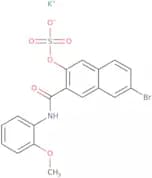
CAS:Naphthol AS-BI sulphate potassium salt is a modified naphtol AS substrate used for alkaline and acid phosphatase.Formula:C18H14BrNO6S•KPurity:Min. 95%Molecular weight:491.38 g/mol5-Bromo-6-chloro-3-indolyl a-D-galactopyranoside
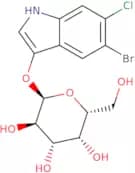
CAS:5-Bromo-6-chloro-3-indolyl a-D-galactopyranoside is a chromogenic substrate that yields a magenta-colored product after cleavage. The chromophore 5-bromo-6-chloro-indoxyl is released, generating the observable color. It is used in glycolipid metabolism studies.Formula:C14H15BrClNO6Color and Shape:White to off-white solid.Molecular weight:408.63 g/mol4-Nitrophenyl-beta-D-glucopyranoside
CAS:Chromogenic β-glucosidase substrate yielding a yellow solution upon cleavage.Formula:C12H15NO8Purity:Min. 99.0 Area-%Molecular weight:301.25 g/mol3-Indolyl β-D-galactopyranoside
CAS:Chromogenic substrate for β-D-galactosidase, yielding a blue precipitate upon cleavage.Formula:C14H17NO6Purity:Min. 95%Color and Shape:PowderMolecular weight:295.29 g/molN-CBZ-L-Lysyl-L-lysyl-L-arginine 7-amido-4-methylcoumarin triacetate
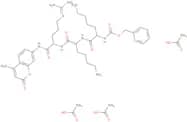
CAS:Controlled ProductN-CBZ-L-Lysyl-L-lysyl-L-arginine 7-amido-4-methylcoumarin triacetate is a synthetic peptide substrate used as a fluorogenic substrate for aminopeptidase.Formula:C35H51N9O7•(C2H4O2)3Purity:Min. 95%Color and Shape:PowderMolecular weight:903.03 g/mol4-Nitrophenyl-β-L-fucopyranoside
CAS:4-Nitrophenyl-beta-L-fucopyranoside is a chromogenic substrate used in the determination of alpha-glucosidase activity. The formation of phenol from 4-nitrophenyl leads to the production of a yellow color that can be quantified by measuring its absorbance at 490 nm. This assay is based on the principle that alpha-glucosidase hydrolyzes sucrose into glucose and fructose, which are then oxidized to form 4-nitrophenol and 4-nitroanomeric acid, respectively. The reaction product is detected by measuring the absorption at 490 nm.Formula:C12H15NO7Molecular weight:285.26 g/molL-Proline 7-amido-4-methylcoumarin hydrobromide
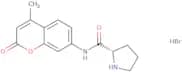
CAS:L-Proline 7-amido-4-methylcoumarin hydrobromide is a fluorogenic substrate that is used to measure esterase and peptidase activity in a variety of animal and microbial sources. This compound has been shown to have a lipase activity. L-Proline 7-amido-4-methylcoumarin hydrobromide is also used as an enzyme preparation and as an enzyme source.Formula:C15H17BrN2O3Molecular weight:353.22 g/molRef: 3D-P-7280
-Unit-ggTo inquire1gTo inquire5gTo inquire10gTo inquire500mgTo inquire2500mgTo inquire4-Nitrophenyl b-L-arabinofuranoside
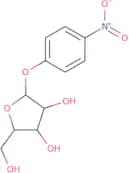
CAS:Chromogenic substrate targeting alpha-L-arabinofuranosidase
Purity:Min. 95%Color and Shape:White/Off-White SolidMolecular weight:271.22 g/mol4-Nitrophenyl a-D-mannopyranoside
CAS:4-Nitrophenyl a-D-mannopyranoside is a chromogenic pNP enzyme substrate that enables the detection and quantification of a-D-mannosidase activity in various biological samples through a colorimetric assay. The hydrolysis of the substrate by the enzyme releases 4-nitrophenol, a yellow compound whose absorption can be measured spectrophotometrically. Applications for this substrate span biomedical research, disease diagnostics, and industrial enzyme production.
Formula:C12H15NO8Purity:Min. 98.0 Area-%Color and Shape:Off-White PowderMolecular weight:301.25 g/molL-Lysyl-L-alanine 7-amido-4-methylcoumarin dihydrochloride
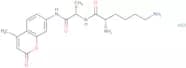
CAS:L-Lysyl-L-alanine 7-amido-4-methylcoumarin dihydrochloride is a fluorogenic peptide substrate for aminopeptidase. This AMC peptide substrate is normally used to rapidly profile the N-terminal specificity of proteases.Purity:Min. 98.0 Area-%Color and Shape:PowderDehydroluciferin
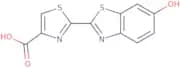
CAS:Dehydroluciferin is a bioluminescence probe that is a potent inhibitor of the firefly luciferase reaction. It is a byproduct of the oxidation of luciferin, the substrate for firefly luciferase, which catalyzes the bioluminescence reaction. It can also form during the synthesis or storage of luciferin. Its presence can potentially lead to issues in bioluminescent assays.Formula:C11H6N2O3S2Purity:Min. 97 Area-%Color and Shape:PowderMolecular weight:278.31 g/mol