Enzyme Substrates
Enzyme substrates are molecules upon which enzymes act to catalyze chemical reactions. The substrate binds to the active site of the enzyme, where it undergoes a specific transformation to form the product of the reaction. Enzyme substrates are essential tools in research for studying enzyme kinetics, specificity, and mechanism of action. They are also used in diagnostic assays and biochemical studies. At CymitQuimica, we provide a diverse selection of high-quality enzyme substrates to support your research in enzymology and biochemistry.
Subcategories of "Enzyme Substrates"
Found 1527 products of "Enzyme Substrates"
Sort by
Purity (%)
0
100
|
0
|
50
|
90
|
95
|
100
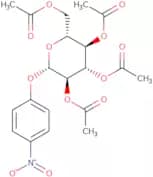
4-Nitrophenyl 2,3,4,6-tetra-O-acetyl-b-D-glucopyranoside
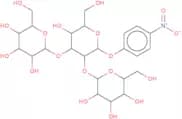
CAS:<p>4-Nitrophenyl 2,3,4,6-tetra-O-acetyl-β-D-glucopyranoside is a versatile chromogenic substrate designed for the detection and quantification of various glycosidase enzymes. This substrate is widely used in enzyme assays, producing a yellow color upon cleavage by target enzymes. The 4-Nitrophenol released in this reaction can be easily monitored spectrophotometrically, allowing for rapid and accurate enzyme analysis. This high-quality substrate provides a convenient and reliable tool for researchers in biochemistry, enzymology, and related fields.</p>Formula:C20H23NO12Purity:Min. 95 Area-%Color and Shape:PowderMolecular weight:469.4 g/mol4-Nitrophenyl 2,3-di-O-(b-D-glucopyranosyl)-b-D-glucopyranoside
<p>4-Nitrophenyl 2,3-di-O-(b-D-glucopyranosyl)-b-D-glucopyranoside is a chromogenic substrate that can be used to detect the presence of β-glucuronidase in human and animal tissue. The compound is also a fluoroquinolone substrate for the detection of β-lactamase activity. 4NPBG is used in diagnostics as well as food testing, due to its ability to detect bacteria in both food and water samples. 4NPBG is a chemiluminescent substrate that emits light upon hydrolysis by β-glucuronidase or β-lactamase. The compound has been shown to be an excellent ligand for binding to protein A or protein G and can be used for immunoassays such as ELISA or Western blotting.</p>Purity:Min. 95%Molecular weight:625.53 g/mol4-Nitrophenyl b-D-cellohexaoside
CAS:<p>4-Nitrophenyl b-D-cellohexaoside is a substrate for many enzymes and can be used to detect the presence of these enzymes in biological samples. It can also be used to detect the presence of bacteria, fungi, parasites, and viruses. 4-Nitrophenyl b-D-cellohexaoside is an excellent substrate for enzyme reactions that produce a chromogenic or fluorogenic product. This product is often conjugated with other compounds such as antibodies or antigens to form an immunoassay. 4-Nitrophenyl b-D-cellohexaoside is made from a high purity chemical by a process called nitration with sodium nitrate and sulfuric acid.</p>Purity:Min. 95%Molecular weight:1,111.95 g/mol4-Nitrophenyl 4-O-(b-D-mannopyranosyl)-b-D-glucopyranoside
<p>4-Nitrophenyl 4-O-(b-D-mannopyranosyl)-b-D-glucopyranoside is a fluorogenic substrate that can be used for the detection of β-glucosidase activity in biological samples. It is an excellent substrate for the enzyme β-glucosidase, which catalyzes the hydrolysis of ester bonds in glycosides with release of glucose and formation of a phenolic product. The 4-nitrophenol group reacts with oxygen to produce light, making it useful as a chemiluminescent or bioluminescent substrate. The conjugate may also be used to detect β-glucosidase activity in culture media by adding the substrate to the culture medium and measuring its fluorescence.<br>4NP4OBG has been shown to have high purity, with only trace amounts of impurities detected such as benzaldehyde and 2,6-dinitro</p>Purity:Min. 95%Molecular weight:463.39 g/molL-Citrulline-p-nitroanilide hydrobromide
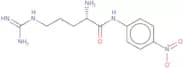
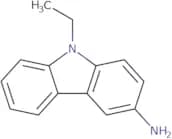
CAS:<p>L-Citrulline-p-nitroanilide hydrobromide is a substrate for enzymes such as beta-galactosidase, beta-glucuronidase, and alkaline phosphatase. It is used in biochemical assays for the detection of microorganisms and in medical diagnostics. This compound has been shown to be useful in fluorescence microscopy and bioluminescence. It also has applications in food testing, environmental testing, and high purity research.</p>Formula:C12H20Br2N6O3Purity:Min. 95%Molecular weight:453.996363-Amino-9-ethylcarbazole
CAS:<p>3-Amino-9-ethylcarbazole is a peroxidase substrate suitable for use in immunoblotting and immunohistochemical staining procedures. This substrate produces an insoluble end product that is red in color and can be observed visually.</p>Formula:C14H14N2Purity:Min. 95%Color and Shape:Beige PowderMolecular weight:210.27 g/mol4-Aminoantipyrine
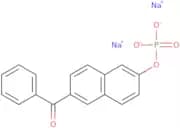
CAS:<p>4-Aminoantipyrine has been used as an analgesic and anti-inflammatory agent. It can also target peroxidase enzymes to produce a red color</p>Formula:C11H13N3OColor and Shape:Off-White To Yellow SolidMolecular weight:203.24 g/mol6-Benzoyl-2-naphthylphosphate disodium salt
CAS:<p>6-Benzoyl-2-naphthylphosphate disodium salt is a chromogenic substrate used to detect and quantify alkaline phosphatase activity. After enzymatic hydrolysis, 6-benzoyl-2-naphthol is released, which can be detect or even further react with other reagents (e.g. Fast Red) to increase the intensity of the colorimetric signal. It is used in common applications such as ELISA, immunohistochemistry and Western Blotting.</p>Purity:Min. 95%Molecular weight:374.24 g/mol1,8,15,22-Tetrazacyclooctacosane-2,7,16,21-tetraone
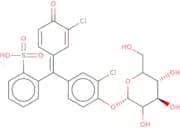
CAS:1,8,15,22-Tetrazacyclooctacosane-2,7,16,21-tetraone is an inhibitor with potent anticancer properties. It induces apoptosis in cancer cells by inhibiting kinases that are critical for cell survival and proliferation. This compound has been shown to be effective against various types of cancer in both Chinese hamster ovary and human cancer cell lines. Additionally, it has been found to increase the excretion of the anti-allergic drug rupatadine in urine. The use of 1,8,15,22-Tetrazacyclooctacosane-2,7,16,21-tetraone as a tumor inhibitor has also been investigated in combination with other kinase inhibitors such as bendamustine analogs. This compound holds great potential for the development of new anticancer therapies.Formula:C24H44N4O4Purity:Min. 95%Molecular weight:452.6 g/molChlorophenol red b-D-galactopyranoside
CAS:<p>Used in biological studies as a chromogenic substrate for β-galactosidase; red color.Chlorophenol red indicates changes of pH in the range of 4.8 to 6.7 by turning the solution from yellow (at pH 4.8) to violet (at pH 6.7). Converted as signalogenic moiety of an enzyme substrate, chlorophenol red beta-D-galactopyranoside has a good proven sensitivity in the detection of beta-galactosidase activity in transfected mammalian cells, when compared to ONPG (o-nitrophenyl-beta-D-galactopyranoside) (Eustice, 1991)</p>Formula:C25H22Cl2O10SPurity:Min. 95%Color and Shape:Orange Red PowderMolecular weight:585.41 g/molAmine transaminases kit
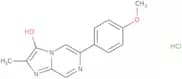
<p>Used for synthesis of chiral amines from ketones and ketoacids</p>Purity:Min. 95%2-Methyl-6-(4-methoxyphenyl)-3,7-dihydroimidazo(1,2-a)pyrazin-3-one hydrochloride
CAS:<p>2-Methyl-6-(4-methoxyphenyl)-3,7-dihydroimidazo(1,2-a)pyrazin-3-one hydrochloride (ABI) is a potent and selective inhibitor of the enzyme toll-like receptor. The drug has been shown to decrease the metabolic rate in experimental models. ABI has also been used as an analog for other compounds to study their effects on redox potentials and reactive species. It is unclear how ABI inhibits protein synthesis by polymerase chain reaction (PCR). One possible mechanism is that it may inhibit the binding of primers to DNA. ABI also inhibits the production of chemokines which are small proteins that stimulate inflammatory responses. This drug can be used in autoimmune diseases such as rheumatoid arthritis and multiple sclerosis.</p>Purity:Min. 95%Molecular weight:290.72 g/molSulindac sulphide
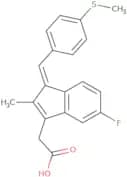
CAS:<p>COX inhibitor; nonsteroidal anti-inflammatory drug</p>Formula:C20H17FO2SPurity:Min. 95%Color and Shape:PowderMolecular weight:340.41 g/molNaphthol AS sulphate potassium
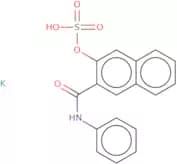
CAS:Modified naphtol AS substrate used in histochemical and cytochemical stainingFormula:C17H13NO5S•KPurity:Min. 95%Color and Shape:PowderMolecular weight:382.45 g/mol4-Nitrophenyl 2-azido-2-deoxy-b-D-galactopyranoside
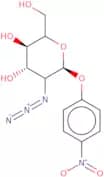
<p>4-Nitrophenyl 2-azido-2-deoxy-beta-D-galactopyranoside is a chromogenic substrate for beta-galactosidase. Upon hydrolysis, para-nitrophenol is released yielding a yellowish colour. 4-Nitrophenyl 2-azido-2-deoxy-beta-D-galactopyranoside is used in different applications such as the Bacterial enzyme assays (e.g., E. coli detection)</p>Purity:Min. 95%Color and Shape:White To Off-White SolidMolecular weight:326.26 g/mol2,4-Dinitrophenyl)-L-lysine hydrochloride monohydrate
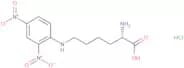
CAS:<p>2,4-Dinitrophenyl)-L-lysine hydrochloride monohydrate is a lysine derivative that has been modified with a 2,4-dinitrophenyl group. It could be used as an enzyme substrate to monitor enzymes that recognize and modify lysine residues, such as lysine methyltransferases and demethylases, lysine acylases and lysine oxidases.</p>Purity:Min. 95%Color and Shape:PowderMolecular weight:348.74 g/molRemazol brilliant blue R D-xylan
<p>Remazol Brilliant Blue R D-xylan is a chromogenic substrate used for the detection and quantification of xylanase enzyme activity. This substrate consists of a xylan polymer backbone covalently linked to the Remazol Brilliant Blue R dye. Upon cleavage by xylanase enzymes, the dye is released, producing a vibrant blue color that can be easily measured spectrophotometrically. This substrate is widely used in various applications, including the study of xylanase-producing microorganisms, optimization of enzyme production, and evaluation of enzyme kinetics.</p>Purity:Min. 95%Color and Shape:Powder