Enzyme Substrates
Enzyme substrates are molecules upon which enzymes act to catalyze chemical reactions. The substrate binds to the active site of the enzyme, where it undergoes a specific transformation to form the product of the reaction. Enzyme substrates are essential tools in research for studying enzyme kinetics, specificity, and mechanism of action. They are also used in diagnostic assays and biochemical studies. At CymitQuimica, we provide a diverse selection of high-quality enzyme substrates to support your research in enzymology and biochemistry.
Subcategories of "Enzyme Substrates"
Found 1527 products of "Enzyme Substrates"
Sort by
Purity (%)
0
100
|
0
|
50
|
90
|
95
|
100
4-Nitrophenyl a-L-galactopyranoside
<p>Chromogenic substrate targeting alpha-D-galactosidase</p>Purity:Min. 95%Molecular weight:301.25 g/molcis-6,7-Dimethyl-5,6,7,8-tetrahydropterin hydrochloride
CAS:<p>Please enquire for more information about cis-6,7-Dimethyl-5,6,7,8-tetrahydropterin hydrochloride including the price, delivery time and more detailed product information at the technical inquiry form on this page</p>Formula:C8H13N5O•HClPurity:Min. 95%Molecular weight:231.68 g/mol6,8-Difluoro-4-methylumbelliferyl β-D-galactopyranoside
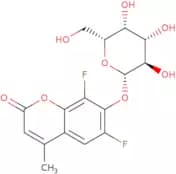
CAS:<p>6,8-Difluoro-4-methylumbelliferyl b-D-galactopyranoside, commonly known as DiFMUG, is a fluorogenic substrate to detect beta-galactosidase. It has higher sensitivity than the common MUG (4-methylumbelliferyl beta-D-galactopyranoside) subtrate.</p>Formula:C16H16F2O8Purity:Min. 95%Color and Shape:PowderMolecular weight:374.29 g/mol4-Methylumbelliferyl b-D-xylobioside
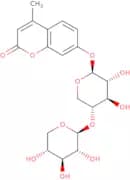
CAS:<p>4-Methylumbelliferyl beta-D-xylobioside is a fluorogenic substrate for xylanase. After enzymatic cleaveage, free 4-methylumbelliferone (also known as hymecromone) is released, exhibiting blue fluorescence upon excitation with UV light. The strongest fluorescence of 4-methylumbelliferone requires deprotonation of the hydroxyl group (thus requires alkaline pH), with a maximal fluorescence intensity obtained with excitation at 350 to 370 nm and emission at 440 to 470 nm. The use of 4-methylumbelliferyl beta-D-xylobiosideas a substrate for measuring the xylanase activity is used for detecting bacterial infection and gut microbiome analysis.</p>Formula:C20H24O11Purity:Min. 95 Area-%Color and Shape:White PowderMolecular weight:440.4 g/mol1,8,15,22,29,36-Hexaazacyclodotetracontane-2,7,16,21,30,35-hexone
CAS:<p>Please enquire for more information about 1,8,15,22,29,36-Hexaazacyclodotetracontane-2,7,16,21,30,35-hexone including the price, delivery time and more detailed product information at the technical inquiry form on this page</p>Formula:C36H66N6O6Purity:Min. 95%Color and Shape:PowderMolecular weight:678.9 g/mol6-Hexanoylamino-4-methylumbelliferyl b-D-galactopyranoside
<p>6-Hexanoylamino-4-methylumbelliferyl b-D-galactopyranoside is a chromogenic substrate for beta-galactosidase.</p>Purity:Min. 95%AquaSpark® Broad Range Phosphatase Substrate, Ramot at Tel-Aviv University Ltd. Patent family WO 2017/130191
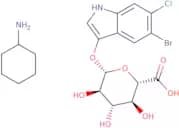
CAS:<p>Chemiluminescent phosphatase substrate in a wide pH range (pH 6 - 10)</p>Formula:C28H30ClO10PPurity:Min. 80 Area-%Molecular weight:592.13 g/mol5-Bromo-6-chloro-3-indolyl b-D-glucuronide cyclohexylammonium salt
CAS:<p>5-Bromo-6-chloro-3-indolyl b-D-glucuronide cyclohexylammonium salt is a magenta enzyme substrate commonly used in biochemical assays. This compound is a derivative of indole, containing bromine and chlorine atoms at positions 5 and 6, respectively. The glucuronide moiety is attached to the indolyl ring, and the cyclohexylammonium cation serves as a counterion to balance the charge. This substrate is often utilized in the detection and quantification of β-glucuronidase activity, an enzyme involved in the metabolism of glucuronides. Upon cleavage by β-glucuronidase, the substrate produces a magenta-colored product, allowing for easy visualization and measurement of enzyme activity.</p>Formula:C14H13BrClNO7·C6H13NPurity:Min. 98 Area-%Color and Shape:PowderMolecular weight:521.79 g/molRef: 3D-EB03300
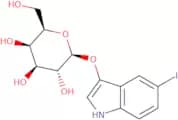
Discontinued product5-Iodo-3-indolyl b-D-galactopyranoside
CAS:<p>5-Iodo-3-indolyl b-D-galactopyranoside is a chromogenic substrate used for beta-galactosidase. It is incorporated into media or detection kits for rapid and direct identification of microorganisms.</p>Formula:C14H16INO6Purity:Min. 98 Area-%Color and Shape:PowderMolecular weight:421.18 g/molRef: 3D-EI03217
Discontinued productCrimson-Gal
<p>Crimson-Gal (Crimson-beta-D-galactopyranoside) is a chromogenic indicator for beta-galactosidase activity. The colorless product is cleaved by lactose-utilizing bacteria in liquid media or on agar plates and yields a crimson colored precipitate. Crimson-Gal can also be used as detecting agent for beta-galactosidase activity in reporter gene assays or for identification of positive transformants on agar plates when using the α-complementation approach. Read more in the Application Notes.</p>Purity:Min. 95%4-Methylumbelliferyl α-L-idopyranosiduronic acid 2-sulfate disodium salt
CAS:<p>4-Methylumbelliferyl alpha-L-idopyranosiduronic acid 2-sulfate disodium salt is a chromogenic substrate that is used in the detection of glycosidases. It reacts with enzymes such as alpha-amylase, beta-galactosidase, and beta-glucosidase to produce a fluorescent product. This product can be detected using a fluorometer or spectrophotometer. The CAS number for 4-methylumbelliferyl alpha-L-idopyranosiduronic acid 2-sulfate disodium salt is 1045020-74-3.</p>Formula:C16H14Na2O12SPurity:Min. 99.0 Area-%Molecular weight:476.32 g/mol4-Methylumbelliferyl-β-D-xylopyranoside
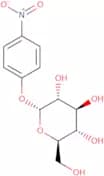
CAS:<p>4-Methylumbelliferyl-β-D-xylopyranoside is a fluorescent probe that has been used to visualize the enzyme activities of glycosidases, such as endoglycosidase H and α-amylase. It is also used as a tool in structural analysis of oligosaccharides. 4-Methylumbelliferyl-β-D-xylopyranoside has been shown to inhibit collagenase activity in mice, which may be due to its ability to inhibit protein synthesis and cell division.</p>Formula:C15H16O7Purity:Min. 99.0 Area-%Molecular weight:308.29 g/mol4-Nitrophenyl a-D-glucopyranoside
CAS:<p>Chromogenic substrate for alpha-glucosidase</p>Formula:C12H15NO8Purity:Min. 98 Area-%Color and Shape:White PowderMolecular weight:301.25 g/molBronze-Gal
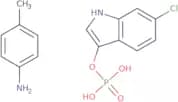
<p>Bronze-Gal (Bronze-beta-D-galactopyranoside) is a chromogenic indicator for beta-galactosidase activity. The colorless product is cleaved by lactose-utilizing bacteria in liquid media or on agar plates and yields a bronze colored precipitate. Bronze-Gal can also be used as detecting agent for beta-galactosidase activity in reporter gene assays or for identification of positive transformants on agar plates when using the α-complementation approach. Read more in the Application Notes.</p>Purity:Min. 95%Molecular weight:443.576-Chloro-3-indolyl phosphate p-toluidine salt
CAS:<p>A substrate for visualising alkaline phosphatase activity. Produces a red colored insoluble end product that is detected visually, when used together with Nitroblue tetrazolium. The substrate system is versatile and functions in a variety of applications, including Northern, Southern, and Western blotting, in situ hybridization, ELISAs and immunohistochemistry. DMF soluble.</p>Formula:C15H16ClN2O4PPurity:Min. 98%Color and Shape:White Off-White PowderMolecular weight:354.73 g/molRef: 3D-EC09439
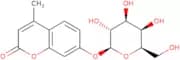
Discontinued product4-Methylumbelliferyl b-D-galactopyranoside
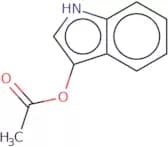
CAS:<p>Fluorogenic substrate for β-galactosidase</p>Formula:C16H18O8Purity:Min. 95%Color and Shape:White PowderMolecular weight:338.31 g/mol3-Indoxylacetate
CAS:<p>Please enquire for more information about 3-Indoxylacetate including the price, delivery time and more detailed product information at the technical inquiry form on this page</p>Formula:C10H9NO2Color and Shape:White PowderMolecular weight:175.18 g/molRef: 3D-FI10731
Discontinued product2-Amino-5-pyridyl 2-acetamido-3,4,6-tri-O-acetyl-2-deoxy-a-D-galactopyranose
<p>2-Amino-5-pyridyl 2-acetamido-3,4,6-tri-O-acetyl-2-deoxy-a-D-galactopyranose is a chromogenic substrate for the enzyme β galactosidase. It is used to detect the presence of β galactosidase in bacterial cultures. The substrate is soluble in water and has a long shelf life. 2APAAG can be used for food testing and environmental testing as it produces a bioluminescent signal when cleaved by β galactosidase.</p>Purity:Min. 95%Aldol® 515 nonanoate hydrochloride, Biosynth Patent: EP 2427431 and US 8940909
CAS:<p>Aldol® 515 nonanoate hydrochloride is a chromogenic and fluorogenic enzyme substrate for detection of lipase activity. The colorless product is cleaved by C9 esterases produced by bacteria in liquid or solid media, yielding a red color and red fluorescence when Aldol® 355 fluorescence enhancer or a suitable matrix is present. Aldol® 515 nonanoate can be used under aerobic and anaerobic conditions. Well detectable color/fluorescence of bacterial colonies or liquid cultures is obtained within 24-48 h. In the presence of a purified lipase, color and fluorescence develops within minutes to few hours.</p>Formula:C32H36ClN2O3Purity:Min. 95%Color and Shape:PowderMolecular weight:533.1 g/mol4-Nitrophenyl phosphate mono(2-amino-2-ethyl-1,3-propanediol) salt monohydrate
CAS:<p>Chromogenic substrate for alkaline phosphatase</p>Formula:C26H32N3NaO6S2Purity:Min. 95%Color and Shape:PowderMolecular weight:457.41 g/mol