Chromogenic Substrates
Found 712 products of "Chromogenic Substrates"
N,N,N',N'-Tetramethyl-p-phenylenediamine dihydrochloride
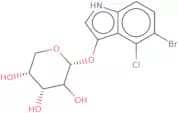
CAS:Reducing co-substrate for heme peroxidases; test reagent in microbiologyFormula:C10H16N2·2HClPurity:Min. 95%Color and Shape:White PowderMolecular weight:237.17 g/mol5-Bromo-4-chloro-3-indolyl a-D-xylopyranoside
CAS:5-Bromo-4-chloro-3-indolyl a-D-xylopyranoside is a chromogenic substrate used to detect the specific enzymatic activity of alpha-xylosidase. After cleavage, 5-bromo-4-chloro-indoxyl is released, resulting in a blue to blue-green color change in bacterial colonies or media. 5-Bromo-4-chloro-3-indolyl a-D-xylopyranoside is used in bacterial xylan metabolism studies and plant cell wall degradation assays.Formula:C13H13BrClNO5Purity:Min. 95%Color and Shape:White to off-white solid.Molecular weight:378.61 g/mol2-Chloro-4-nitrophenyl 4-O-b-D-galactopyranosylmaltoside
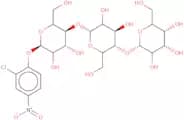
CAS:2-Chloro-4-nitrophenyl 4-O-b-D-galactopyranosylmaltoside, also known as Gal-G2-CNP, is a high quality, water soluble, chromogenic substrate that is used as an enzyme substrate and can be used in bioluminescence and chemiluminescence assays. This product is designed for use in diagnostics, culture media, food testing, environmental testing, and other research applications. 2-Chloro-4-nitrophenyl 4-O-b-D-galactopyranosylmaltoside has been tested in chromogenic assays with alpha-amylases.Formula:C24H34ClNO18Purity:(Hplc) Min. 90%Color and Shape:PowderMolecular weight:659.98 g/mol6-Chloro-3-indolyl 2-acetamido-2-deoxy-b-D-galactopyranoside
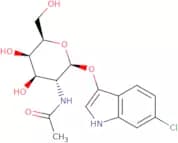
CAS:6-Chloro-3-indolyl 2-acetamido-2-deoxy-b-D-galactopyranoside is a chromogenic substrate for N-acetyl-beta-galactosaminidase. It produces a salmon-pink color after enzymatic cleavage.
Purity:Min. 95%Color and Shape:White PowderMolecular weight:370.78 g/mol6-Chloro-3-indoxyl nonanoate
CAS:Chromogenic substrate for esterase with C9 activity yielding a salmon colored precipitate upon cleavage.
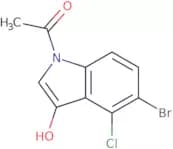
Formula:C17H22ClNO2Purity:Min. 98 Area-%Molecular weight:307.82 g/mol5-Bromo-4-chloro-3-indoxyl-1-acetate
CAS:5-Bromo-4-chloro-3-indoxyl-1-acetate is a chromogenic substrate used to detect the specific enzymatic activity of esterase. After cleavage, 5-bromo-4-chloro-indoxyl is released, resulting in a blue to blue-green color change in bacterial colonies or media. 5-Bromo-4-chloro-3-indoxyl-1-acetate is used in bacterial esterase activity assays (e.g. Pseudomonas spp.).
Purity:Min. 95%Color and Shape:PowderMolecular weight:288.52 g/mol5-Bromo-3-indolyl phosphate disodium salt
CAS:5-Bromo-3-indolyl phosphate disodium salt is a chemiluminescent substrate that is used for the detection of bacterial activity. It reacts with oxygen to produce light, which can be measured using a luminometer. It is also used as a chromogenic substrate for detection of bacterial activity in culture media. The enzyme reaction produces an intense blue fluorescence and is used for diagnostic purposes in food testing and medical diagnostics. 5-Bromo-3-indolyl phosphate disodium salt has been shown to be effective against many bacteria and fungi, including Staphylococcus aureus, Streptococcus pyogenes, Escherichia coli, Pseudomonas aeruginosa, Candida albicans and Aspergillus niger. This product is chemically stable at room temperature but should be stored at 4°C or below.
Formula:C8H5BrNO4PNa2Purity:Min. 95%Color and Shape:PowderMolecular weight:335.99 g/mol4-Nitrophenyl b-D-arabinopyranoside
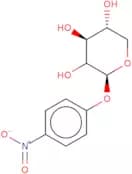
CAS:Chromogenic substrate targeting beta-L-arabinofuranosidasePurity:Min. 95%Molecular weight:271.22 g/molAldol® 458 nonanoate, Biosynth Patent: EP 2427431 and US 8940909
CAS:Controlled ProductAldol 458 nonanoate is a fluorogenic substrate that can be used in the detection of enzyme activity particularly C8/C9-esterases, lipases activity producing a yellow/green-orange color. Aldol 458 nonanoate reacts with enzymes, such as oxidoreductases and hydrolases, to produce light. This product is a conjugate of aldol 458 nonanoate and an enzyme substrate for the detection of these enzymes. It has been shown to be useful in food testing, staining, fluorogenic substrate, environmental testing, chromogenic substrate, conjugate, high purity, enzyme substrate for diagnostics and ligand.
Formula:C25H29NO4Purity:Min. 95%Molecular weight:407.5 g/mol3-Indoxyl phosphate, p-toluidine salt
CAS:Controlled Product3-Indoxyl phosphate, p-toluidine salt is a fluorogenic substrate that can be used for the detection of β-galactosidase. 3-Indoxyl phosphate, p-toluidine salt is a highly active chromogenic substrate that can be used as a diagnostic tool in the food industry to determine whether or not milk has been adulterated with animal milk. This product is also used in environmental testing to detect bacteria and fungi. 3-Indoxyl phosphate, p-toluidine salt is a high purity, high quality conjugate that can be used for the detection of β-galactosidase.
Formula:C8H8NO4P·C7H9NPurity:Min. 98 Area-%Molecular weight:320.28 g/mol4-Nitrophenyl-beta-D-glucuronic acid
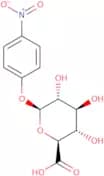
CAS:Chromogenic β-glucuronidase substrate yielding a yellow solution upon cleavage. Used to detect E. coli contamination in food and drinking water due to their β-glucuronidase activity.Formula:C12H13NO9Purity:Min. 98.0 Area-%Molecular weight:315.24 g/mol5-Bromo-4-chloro-3-indoxyl thymidine-3'-phosphate, cyclohexylammonium salt
CAS:5-Bromo-4-chloro-3-indoxyl thymidine (BCIT) is a chromogenic substrate that reacts with the enzyme β-galactosidase, which cleaves the BCIT to form a bromochloroindoxyl (BCI) and an indoxyl phosphate. The BCI is then detected by chemiluminescence or fluorescence. This product is used in food testing, diagnostics, environmental testing, and staining. It has been shown to be a good substrate for β-galactosidase from different sources such as calf thymus, bacteria, fungi, and plants.Formula:C24H31BrClN4O8PPurity:Min. 98 Area-%Molecular weight:649.87 g/molRef: 3D-B-7680
1gTo inquire50mgTo inquire100mgTo inquire250mgTo inquire500mgTo inquire-Unit-mgmgTo inquire4-Nitrocatechol sulfate dipotassium salt
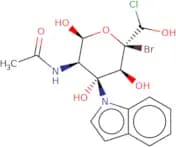
CAS:Chromogenic sulfatase substrateFormula:C6H3NO7SK2Purity:Min. 98 Area-%Color and Shape:PowderMolecular weight:311.35 g/mol5-Bromo-4-chloro-3-indoxyl-N-acetyl-beta-D-galactosaminide
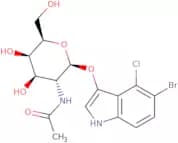
CAS:5-Bromo-4-Chloro-3-Indoxyl-N-Acetyl-Beta-D-Galactosaminide is a chromogenic substrate for detecting beta-galactosidase and GalNAc-transferase enzymes. Upon hydrolysis by the enzyme, it produces a blue-green colored compound that can be detected visually or measured spectrophotometrically. This substrate is useful in characterizing the activity of Beta-Galactosidase and GalNAc-transferase enzymes involved in glycobiology research and diagnostic applications.Formula:C16H18BrClN2O6Purity:Min. 98 Area-%Color and Shape:Crystalline PowderMolecular weight:449.68 g/mol5-Cyano-3-indoxyl-β-D-galactopyranoside
For detection of beta-galactosidase activity. The colors of the chromogen can be adjusted by incorporating different functional groups, e.g. cyano or nitro group, which yields purple or black green colonies with beta-galactosidase positive strain.Formula:C15H16N2O6Molecular weight:320.3 g/molAldol® 484 beta-D-galactopyranoside, Biosynth Patent: EP 2427431 and US 8940909
CAS:Aldol® 484 beta-D-galactopyranoside is a chromogenic enzyme substrate for beta-galactosidase activity. The colorless product is cleaved by lactose-utilizing bacteria in liquid or solid media, yielding intense red color. Aldol® 484 beta-D-galacto-pyranoside can also be used in beta-gal reporter gene assays or for identification of beta-gal positive transformants on agar. Aldol® 484 beta-D-galactopyranoside can be used under aerobic and anaerobic conditions.Formula:C26H24ClFN2O7Purity:Min. 95%Color and Shape:PowderMolecular weight:530.93 g/mol4-Nitrophenylphosphorylcholine
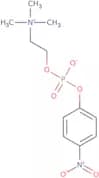
CAS:Chromogenic substrate used to measure phospholipase C (PLC) activity
Formula:C11H17N2O6PPurity:Min. 95 Area-%Color and Shape:PowderMolecular weight:304.24 g/molNaphthol AS-MX acetate
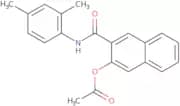
CAS:Modified naphtol AS substrate used in histochemical and cytochemical staining
Formula:C21H19NO3Purity:Min. 80%Color and Shape:White Off-White PowderMolecular weight:333.38 g/mol4-Chloro-1-naphthol
CAS:Substrate for horseradish peroxidase
Formula:C10H7ClOPurity:Min. 96.0 Area-%Color and Shape:Brown PowderMolecular weight:178.61 g/mol6-Bromo-2-naphthyl β-D-galactopyranoside
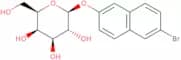
CAS:6-Bromo-2-naphthyl β-D-galactopyranoside is a chromogenic substrate commonly used for the detection of the enzymatic activity of β-galactosidase. It can produce a yellow precipitate upon hydrolysis by β-galactosidase, indicating the presence of the enzyme. It is often used in molecular biology applications to detect gene expression or to monitor cloning efficiency.Formula:C16H17BrO6Purity:Min. 98 Area-%Color and Shape:PowderMolecular weight:385.21 g/mol5-Nitro-3-indoxyl-β-D-galactopyranoside
Please enquire for more information about 5-Nitro-3-indoxyl-β-D-galactopyranoside including the price, delivery time and more detailed product information at the technical inquiry form on this pageFormula:C14H16N2O8Purity:Min. 95%Molecular weight:340.29 g/molChlorophenol red-b-D-galactopyranoside sodium salt
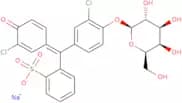
CAS:Chlorophenol red-b-D-galactopyranoside sodium salt is the salt from of CPRG (chlorophenol red-b-D-galactopyranoside), that has a higher solubility. It is a chromogenic substrate for beta-galactosidases that, after enzymatic cleavage, releases chlorophenol red, a dark red compound quantified by absorbance at 570 nm.Formula:C25H21Cl2O10SNaPurity:Min. 96 Area-%Color and Shape:PowderMolecular weight:607.4 g/mol5-Bromo-4-chloro-3-indolyl a-D-maltopyranoside
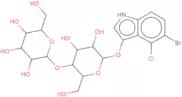
CAS:5-Bromo-4-chloro-3-indolyl a-D-maltopyranoside is a chromogenic substrate used to detect the specific enzymatic activity of alpha-glucosidase. After cleavage, 5-bromo-4-chloro-indoxyl is released, resulting in a blue to blue-green color change in bacterial colonies or media. 5-Bromo-4-chloro-3-indolyl a-D-maltopyranoside is used in Pompe disease screening and glycogen storage disorder diagnosis.Formula:C20H25BrClNO11Purity:Min. 95%Color and Shape:PowderMolecular weight:570.77 g/mol4-Nitrophenyl 3-O-(a-D-glucopyranosyl)-a-D-glucopyranoside
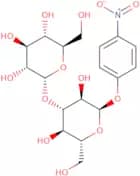
CAS:4-Nitrophenyl 3-O-(a-D-glucopyranosyl)-a-D-glucopyranoside (pNP-Glc-Glc) is a highly sensitive and potent chromogenic substrate for the enzymatic detection and measurement of alpha-glucosidase activity. The rapid color change triggered by the hydrolysis of pNP-Glc-Glc provides a clear and efficient method for monitoring enzyme kinetics, screening inhibitors, and functional characterization of α-glucosidases. This substrate is soluble in aqueous and polar organic solvents and yields a detectable 4-nitrophenol product with a distinct yellow color under both visible and ultraviolet light, enabling quantitative spectrophotometric measurements. With a superior signal-to-noise ratio and maximal sensitivity, pNP-Glc-Glc is a reliable and robust option for biochemical and biomedical research involving glucosidase enzymes.Purity:Min. 95%Color and Shape:PowderMolecular weight:463.39 g/mol2-Naphthyl-alpha-L-fucopyranoside
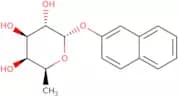
CAS:Chromogenic substrate for α-L-Fucosidase. 2-naphthol is released upon hydrolyzation. By simultaneous coupling with a suitable staining reagent, such as hexazonium p-rosaniline, the corresponding azo-dye is formed. Naphthols can also be detected by fluorescence analysis.Formula:C16H18O5Purity:Min. 98 Area-%Molecular weight:290.32 g/mol5-Bromo-4-chloro-3-indolyl a-L-arabinofuranoside
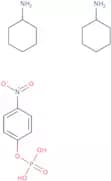
5-Bromo-4-chloro-3-indolyl a-L-arabinofuranoside is a chromogenic substrate used to detect the specific enzymatic activity of alpha-L-arabinofuranosidase. After cleavage, 5-bromo-4-chloro-indoxyl is released, resulting in a blue to blue-green color change in bacterial colonies or media. 5-Bromo-4-chloro-3-indolyl a-L-arabinofuranoside is used in bacterial arabinan degradation assays (e.g. Bacillus spp.).Formula:C13H13BrClNO5Purity:Min. 98.0 Area-%Color and Shape:PowderMolecular weight:378.6 g/mol4-Nitrophenyl phosphate, bis(cyclohexylammonium) salt
CAS:Chromogenic substrate yielding a soluble yellow chromophor for the colorimetric assay of phosphatases.Formula:C18H32N3O6PPurity:97.0 To 103.0%Molecular weight:417.45 g/mol2-Naphthyl caprylate
CAS:2-Naphthyl caprylate is a substrate that is employed in an assays for carboxylesterase and lipase and when hydrolyzed, produces 2-naphthol, a compound that can also be identified via fluorescence analysis. By combining it with a diazonium salt, the formation of the corresponding azo dye occurs. In particular, this substrate is used to detect the extracellular lipase of Pseudomonas fluorescens B52.Formula:C18H22O2Purity:Min. 95%Color and Shape:White PowderMolecular weight:270.37 g/mol2-Fluoro-4-nitrophenyl b-D-galactopyranoside
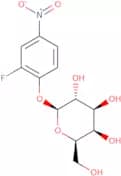
CAS:2-Fluoro-4-nitrophenyl b-D-galactopyranoside is a chromogenic substrate in enzymatic assays with β-galactosidase. Commonly abbreviated as PFONPG, it is a hydrophilic compound that can be dissolved in saline and blood samples, which makes it a suitable candidate for diagnostic applications as a gene reporter probe by simple analytic methodologies. 2-Fluoro-4-nitrophenyl b-D-galactopyranoside have been used to detect and monitor the growth of prostate tumor cells.Purity:Min. 95%Color and Shape:PowderMolecular weight:319.24 g/mol4-Nitrophenyl-beta-D-lactopyranoside
CAS:Chromogenic substrate for cellobiohydrolase and endoglucanase.Formula:C18H25NO13Purity:Min. 99.0 Area-%Molecular weight:463.40 g/mol2-Nitrophenyl-beta-D-galactopyranoside
CAS:Chromogenic β-galactosidase substrate yielding a yellow solution upon cleavage. Can be used for the detection of coliforms due to their beta-galactosidase activity.Formula:C12H15NO8Purity:Min. 99.0 Area-%Molecular weight:301.26 g/mol4-Nitrophenyl-alpha-D-galactopyranoside
CAS:Chromogenic substrate yielding a soluble chromophore for the colorimetric assay of α-D-galactosidase upon cleavage. Used for the detection of hydrolases in tissues and membranes.Formula:C12H15NO8Purity:Min. 99.0 Area-%Molecular weight:301.26 g/molLipase substrate
CAS:Synthetic chromogenic substrate for detection of lipase enzyme activity that produces a red coloured product, Suitable for use in serum of plasma matrices. This lipase substrate is commonly used in veterinary diagnostics for monitoring and detecting canine pancreatitis,Formula:C45H69NO8Molecular weight:752.03 g/molAldol® 470 nonanoate, Biosynth Patent: EP 2427431 and US 8940909
CAS:Controlled ProductAldol® 470 nonanoate is a chemiluminescent substrate that can be used as a ligand for the detection of C8/C9-esterases, lipases activity, to result in an orange/green color. Aldol® 470 nonanoate has been shown to be active with horseradish peroxidase in a number of different assay systems. The purity and quality of Aldol® 470 nonanoate has been tested with culture media, environmental testing, bioluminescence, staining, fluorogenic substrate, chromogenic substrate, enzyme substrate, food testing and conjugates.Formula:C32H35NO5Purity:Min. 95%Color and Shape:PowderMolecular weight:513.62 g/mol5-Bromo-6-chloro-3-indoxylphosphat, disodium salt trihydrate
5-Bromo-6-chloro-3-indoxylphosphate, disodium salt trihydrate is a bioluminescent substrate that can be used in a variety of diagnostic applications. This compound reacts with luciferase to yield light and can serve as an indicator for various enzymes and chemical reactions. 5-Bromo-6-chloro-3-indoxylphosphate, disodium salt trihydrate has been shown to be compatible with both culture media and food testing.Purity:Min. 95%6-Chloro-3-indoxyl-3-acetate
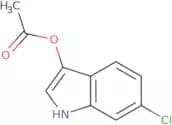
CAS:6-Chloro-3-indoxyl-3-acetate is a chromogenic substrate for carboxylesterase yielding a salmon colored precipitate upon cleavage. Mainly used in histochemistry.Purity:Min. 95%Color and Shape:White PowderMolecular weight:209.63 g/mol6-Chloro-3-indolyl butyrate
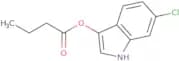
CAS:6-Chloro-3-indolyl butyrate is a chromogenic substrate for lipases. Use in lipid digestion and metabolism studies, it produces a salmon-pink color when 6-chloro-3-indolyl is released after enzymatic cleavage.Formula:C12H12ClNO2Purity:Min. 95%Color and Shape:PowderMolecular weight:237.68 g/mol5-Bromo-6-chloro-3-indolyl-2-acetamido-2-deoxy-a-D-glucopyranoside
5-Bromo-6-chloro-3-indolyl-2-acetamido-2-deoxy-a-D-glucopyranoside is a chemiluminescent substrate that is used as an indicator in diagnostic tests. This compound reacts with an oxidizing agent, such as hydrogen peroxide, to generate light. It is also used as a chromogenic substrate for the detection of bioluminescence and it can be applied in culture media or food testing. 5Bromo-6Chloro-3Indolyl2Acetamido2DeoxyA1DGlucopyranoside has a CAS number, which means that it meets the standards set by the Chemical Abstracts Service. It also has a high purity and quality, making it suitable for use in laboratories.Purity:Min. 95%3-Indoxyl sulfate, potassium salt
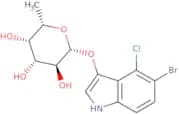
CAS:3-Indoxyl sulfate, potassium salt (3ISK) is a chemical compound that is soluble in water. It has been used as a marker for bowel disease, and it has been shown to react with analytical methods such as titration calorimetry and lc-ms/ms. 3ISK can be used to determine the optimum concentration for pharmacological treatment of bowel disease. The metabolic fate of 3ISK has been studied extensively and it is found that 3ISK is metabolized by microbial enzymes in the gut, which may lead to an increased incidence of bowel disease in patients with low levels of microbial metabolism. 3ISK also plays an important physiological function by maintaining mitochondrial membrane potential, which could have implications for pharmacological treatment of bowel disease.Formula:C8H6KNO4SPurity:Min. 98.0 Area-%Molecular weight:251.31 g/mol5-Bromo-4-chloro-3-indoxyl-β-L-fucopyranoside
CAS:This product is a chromogenic substrate that is used in the detection of alkaline phosphatase and other enzymes. It is also used in food testing, staining, and diagnostics. This product has high purity with a CAS number of 125328-84-9.Formula:C14H15BrClNO5Purity:Min. 99 Area-%Molecular weight:392.63 g/molRef: 3D-B-7138
10mgTo inquire25mgTo inquire50mgTo inquire100mgTo inquire250mgTo inquire-Unit-ggTo inquire2-Nitrophenyl a-D-galactopyranoside
CAS:2-Nitrophenyl alpha-D-galactopyranoside is a chromogenic substrate used to detect the enzymatic activity of alpha-galactosidase. After cleavage, the nitrophenyl moiety is released exhibiting a light yellowish color. 2-Nitrophenyl alpha-D-galactopyranoside is used in Fabry disease screening.Formula:C12H15NO8Purity:Min. 95%Color and Shape:White Off-White PowderMolecular weight:301.25 g/mol4-Nitrophenyl phosphate mono(2-amino-2-ethyl-1,3-propanediol) salt monohydrate
CAS:4-Nitrophenyl phosphate mono(2-amino-2-ethyl-1,3-propanediol) salt monohydrate is a chromogenic substrate that can be used to detect the presence of alkaline phosphatase. It is also used in food testing and diagnostics. 4NPPMD is a substrate for the enzyme alkaline phosphatase, which has been shown to play a role in the inflammatory response. The production of 4NPPMD by bacteria in the environment can be detected with chemiluminescence or bioluminescence. This product has been shown to react with both horseradish peroxidase and alkaline phosphatase, as well as other enzymes that are involved in metabolic pathways. This substrate also has high purity and fluorescence properties.Formula:C11H21N2O9PPurity:Min. 95 Area-%Molecular weight:356.26 g/mol2-Chloro-4-nitrophenyl b-D-maltoheptaoside
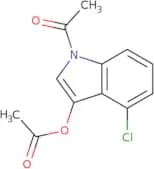
CAS:2-Chloro-4-nitrophenyl b-D-maltoheptaoside is a fluorescent compound that is used in medical research for the visualization of muscle glycogen. It is also used to study the binding of molecules to proteins, as well as to measure enzyme activity. The compound has been shown to be insensitive to changes in pH and temperature, so it can be used at different pH levels and temperatures without affecting its function. 2-Chloro-4-nitrophenyl b-D-maltoheptaoside can be detected by titration calorimetry due to its high molecular weight. The molecule's affinity for carbohydrates also allows it to be used in optimization studies of carbohydrate molecules.Purity:Min. 95%Molecular weight:1,308.54 g/mol4-Chloro-3-Indoxyl-1,3-diacetate
CAS:4-Chloro-3-indoxyl-1,3-diacetate is a fluorogenic or chromogenic substrate used in food testing. It is also an enzyme substrate that can be used to detect the presence of bioluminescence. 4-Chloro-3-indoxyl-1,3-diacetate has been shown to have high purity and high quality for use in diagnostic kits. 4-Chloro-3-indoxyl-1,3-diacetate is a ligand that is conjugated with other molecules to form complexes for use in fluorescence and chemiluminescence experiments.Purity:Min. 95%Molecular weight:251.67 g/mol6-Chloro-3-indoxyl choline phosphate
CAS:6-Chloro-3-indoxyl choline phosphate is a chromogenic substrate for phosphatidylcholine-specific phospholipase C (PC-PLC) for the detection of mibrobial metabolites. The use of this specific substrate permits monitoring the activity of PC-PLC. This an important enzyme for the regulation of steady-state levels of phosphatidylcholine (PC) and diacylglycerol (DAG). Abnormally high levels of PC-PLC activity in various tissues have been linked to many disease progressions.Formula:C13H18ClN2O4PPurity:Min. 99 Area-%Color and Shape:PowderMolecular weight:332.72 g/mol4-Nitrophenyl β-D-galactofuranoside
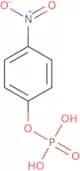
CAS:Chromogenic substrate for beta-galactofuranosidaseFormula:C12H15NO8Purity:Min. 98 Area-%Color and Shape:White PowderMolecular weight:301.25 g/molPhosphoric acid, mono(4-nitrophenyl) ester
CAS:Phosphatase substrate
Formula:C6H6NO6PPurity:Min. 95%Color and Shape:White PowderMolecular weight:219.09 g/mol5-Bromo-4-chloro-3-indoxyl phosphate p-toluidine, micronized
CAS:A substrate for alkaline phosphatase yielding a blue insoluble product upon cleavage. Colour can be further enhanced when used together with Nitroblue tetrazolium. The substrate system is versatile and has functions in a variety of applications, including Northern, Southern, and Western blotting, in situ hybridization, ELISAs, microarray and immunohistochemistry. The micronized structure enhances solubility.Formula:C8H6BrClNO4P•C7H9NPurity:Min. 95%Color and Shape:PowderMolecular weight:433.63 g/mol5-Bromo-6-chloro-3-indolyl sulfate potassium salt
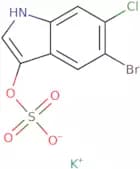
CAS:5-Bromo-6-chloro-3-indolyl sulfate potassium salt is a fluorogenic substrate that can be used for food testing. It is a conjugate of 5-bromo-6-chloroindolylsulfate and potassium, which is dissolved in buffer solution. This product can also be used as a chromogenic substrate in environmental testing, an enzyme substrate in diagnostics, and a ligand for bioluminescence. It has high purity and quality, and can be used for chemiluminescence or bioluminescence. The CAS number for this product is 6581-24-4.Formula:C8H4BrClNO4S·KPurity:Min. 95%Color and Shape:PowderMolecular weight:364.64 g/mol4-Nitrophenyl b-L-arabinofuranoside
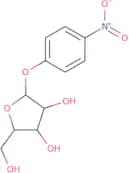
CAS:Chromogenic substrate targeting alpha-L-arabinofuranosidase
Purity:Min. 95%Color and Shape:White/Off-White SolidMolecular weight:271.22 g/mol