PPAR
Los receptores activados por proliferadores de peroxisomas (PPARs) son un grupo de proteínas receptoras nucleares que funcionan como factores de transcripción regulando la expresión de genes involucrados en el metabolismo, particularmente en el almacenamiento de ácidos grasos y el metabolismo de la glucosa. Los inhibidores de PPAR son herramientas importantes para estudiar trastornos metabólicos como la diabetes, la obesidad y las enfermedades cardiovasculares. Estos inhibidores pueden modular el metabolismo de los lípidos, la sensibilidad a la insulina y la inflamación, lo que los convierte en valiosos en la investigación terapéutica. En CymitQuimica, ofrecemos una gama de inhibidores de PPAR para apoyar su investigación en enfermedades metabólicas, endocrinología y desarrollo de fármacos.
Se han encontrado 179 productos para "PPAR".
Filtrar por
Porcentaje de pureza
0
100
|
0
|
50
|
90
|
95
|
100
- Precio más bajo
- Precio más alto
- Pureza más baja
- Pureza más alta
- Entrega estimada más rápida
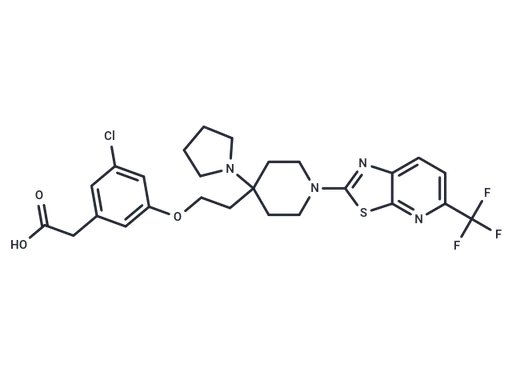
PPARδ agonist 9
CAS:PPARδ agonist 9 (compound 21), with an EC50 of 3.6 nM, is effective in vivo, decreasing serum MCP-1 concentrations in mice and markedly reducing atheroscleroticFórmula:C26H28ClF3N4O3SPureza:98%Forma y color:SolidPeso molecular:569.04Inolitazone
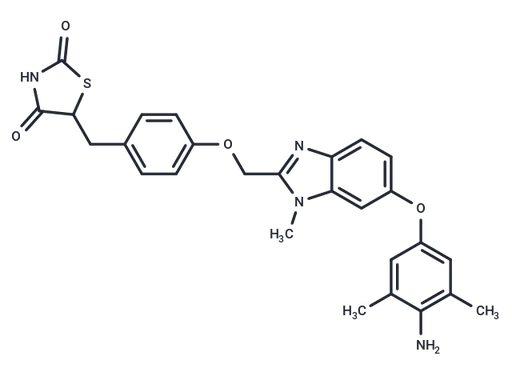
CAS:Inolitazone (RS5444) a high-affinity PPARγ agonist. Inolitazone exhibits IC50 for growth inhibition is ~0.8 nM in vitro.Fórmula:C27H26N4O4SPureza:99.41% - 99.53%Forma y color:SolidPeso molecular:502.58Ragaglitazar
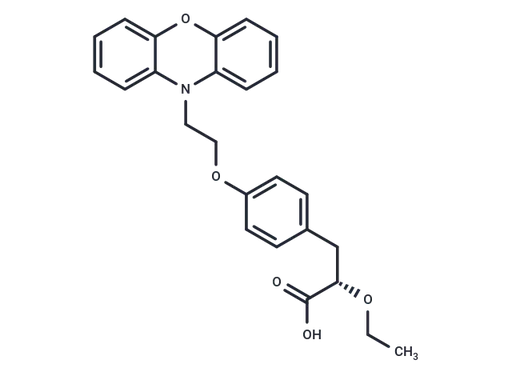
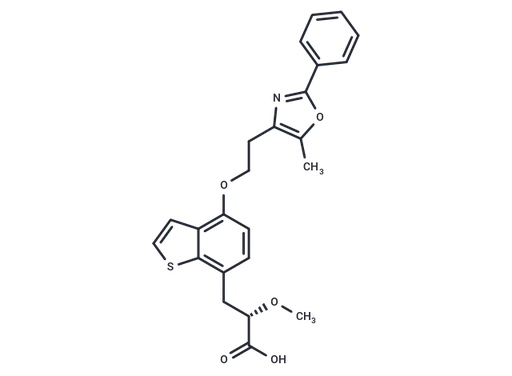
CAS:Ragaglitazar(NNC-61-0029) is a potent dual activator of PPARγ and PPARα.Cost-effective and quality-assured.Fórmula:C25H25NO5Pureza:97.46% - 98.56%Forma y color:SolidPeso molecular:419.47SR 11023
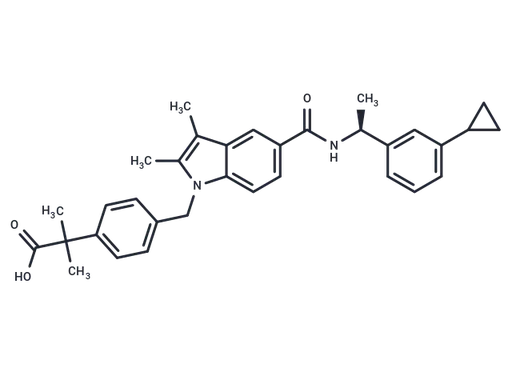
CAS:SR 11023, an orally active PPAR γ antagonist, exhibits an IC 50 value of 109 nM and is significant in diabetes research [1].Fórmula:C33H36N2O3Forma y color:SolidPeso molecular:508.65Anti-NASH agent 2
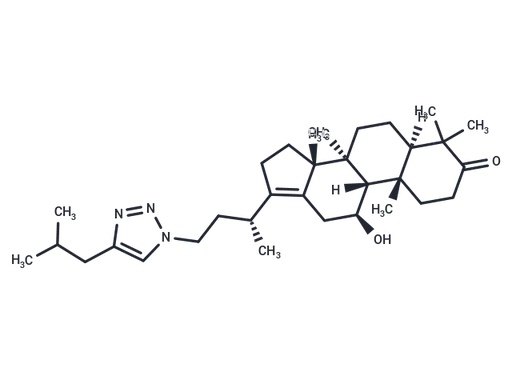
CAS:Anti-NASH agent 2 (compound 21) is an inhibitor of neolipogenesis activity and α-SMA gene expression. It improves hepatic steatosis, edema, inflammatory infiltration, and liver fibrosis in NASH mouse models.
Fórmula:C32H51N3O2Forma y color:SolidPeso molecular:509.766PPARγ agonist 17
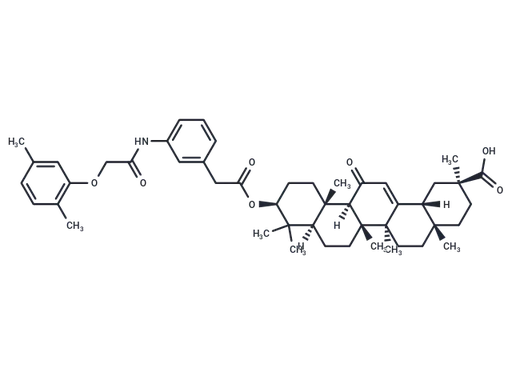
CAS:PPARγ agonist17 (Compound C1) is an orally active PPARγ agonist. It enhances PPARγ activity, arrests the cell cycle of HT-29 cells at the G2/M phase, inhibits cell migration, and induces apoptosis. PPARγ agonist17 exhibits broad-spectrum antiproliferative activity against cancer cells with relatively low toxicity to normal cells and does not cross the blood-brain barrier.Fórmula:C48H63NO7Forma y color:SolidPeso molecular:766.016GSK1820795A
CAS:GSK1820795A is a selective G2A/GPR132a antagonist and a telmisartan analog.Fórmula:C35H34N8Pureza:99.78%Forma y color:White SolidPeso molecular:566.70DS-6930
CAS:DS-6930 is a PPARγ agonist (EC50=41 nM) that lowers glucose with fewer side effects than Rosiglitazone for diabetes research.Fórmula:C23H21N3O4Pureza:99.64%Forma y color:SolidPeso molecular:403.43PPARγ modulator-2
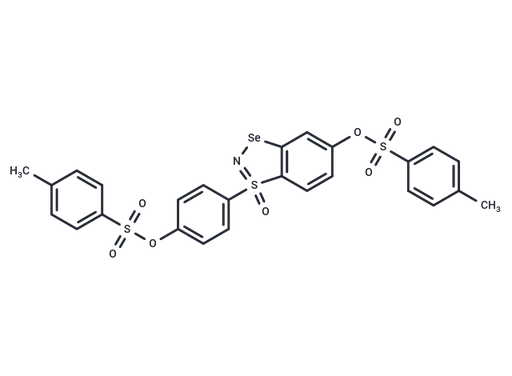
CAS:PPARγmodulator-2 (Compound (R)-2n) is a reversible modulator of PPARγ, inhibiting the PPARγ ligand-binding domain (LBD) with an IC50 of 41 nM. It helps lower blood glucose levels, improves glucose tolerance and insulin sensitivity, and demonstrates antidiabetic activity in db/db mouse models.Fórmula:C26H21NO7S3SeForma y color:SolidPeso molecular:634.6Amezalpat
CAS:Amezalpat is an oral, potent, selective PPARα antagonist with an IC₅₀ of 58 nM and antitumor activity.Fórmula:C34H41N3O4Pureza:99.59%Forma y color:White SolidPeso molecular:555.71PPARγ-IN-5
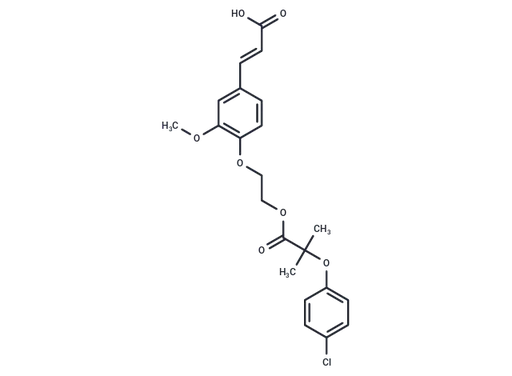
CAS:PPARγ-IN-5 (Compound A3) is an inhibitor of PPARγ. In liver cells, it reduces lipid accumulation and shows no significant cytotoxicity in HepG2 cells at a concentration of 400 µM. PPARγ-IN-5 is applicable for research on non-alcoholic fatty liver disease.Fórmula:C22H23ClO7Forma y color:SolidPeso molecular:434.867PPARα/δ agonist 3
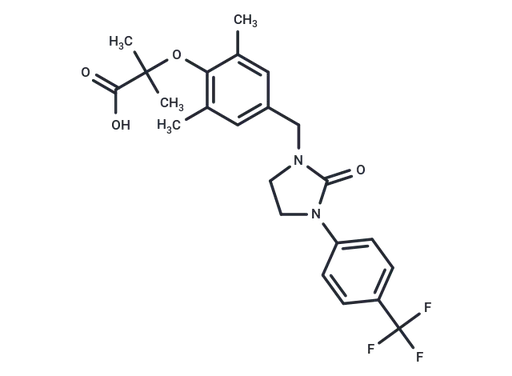
CAS:PPARα/δ agonist 3 (Compound 8) is an orally active PPAR agonist capable of activating PPARα, PPARδ, and PPARγ, with EC50 values of 5.6 nM, 3.4 nM, and 1278 nM, respectively. It exhibits anti-cholestatic activity in mouse models of cholestatic liver disease induced by ANIT or CDCA.Fórmula:C23H25F3N2O4Forma y color:SolidPeso molecular:450.451PPARδ agonist 11
CAS:Compound 11, a selective PPARδ agonist, demonstrates an EC50 of 20 nM, indicating its high affinity for PPARδ receptors. This compound efficiently reduces levels of nitric oxide (NO), as well as the pro-inflammatory cytokines TNFα and IL-6 in LPS-stimulated RAW264.7 cells via the NF-κB pathway, showcasing its anti-inflammatory properties. Additionally, Compound 11 exhibits remarkable stability in human liver microsomes and plasma. It significantly ameliorates foot edema induced by Carrageenan, displaying favorable pharmacokinetic properties with a bioavailability of approximately 100%.Fórmula:C19H15F3N2O3S2Forma y color:SolidPeso molecular:440.46Halofenate
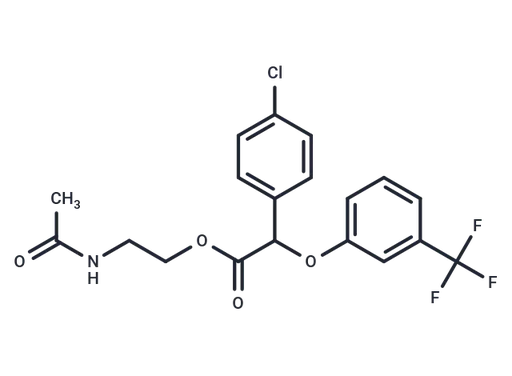
CAS:Halofenate is an inhibitor for hypertriglyceridemia, effectively lowering serum triglyceride levels while having minimal impact on serum cholesterol. Additionally, it reduces serum uric acid and promotes uric acid excretion independent of glomerular filtration rate. Halofenate is associated with a significant increase in plasma thyroxine (T4), along with reductions in protein-bound iodine and T4. It can displace T4 from thyroid-binding proteins, which may influence thyroid function in the body.Fórmula:C19H17ClF3NO4Forma y color:SolidPeso molecular:415.79SKLB102
CAS:SKLB102 exhibits high affinity for PPARγ. It has a potent ability to reduce fat deposition and protect the liver from non-alcoholic fatty liver disease (NAFLD) by regulating adipokine expression and preventing insulin resistance.Fórmula:C18H14N2O4Peso molecular:322.3148Fonadelpar
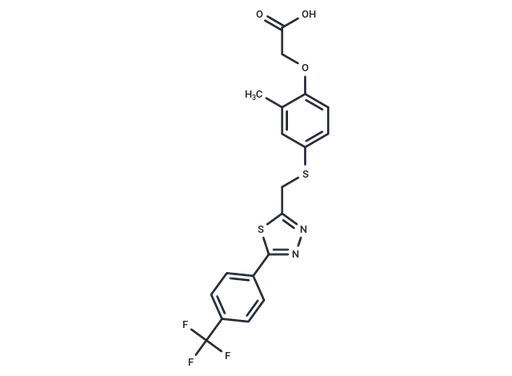
CAS:Fonadelpar is an agonist of PPARδ. It also is used in the research of neuroparalytic keratopathy.Fórmula:C25H23F3N2O4SPureza:98%Forma y color:SolidPeso molecular:504.52PPARγ phosphorylation inhibitor 1
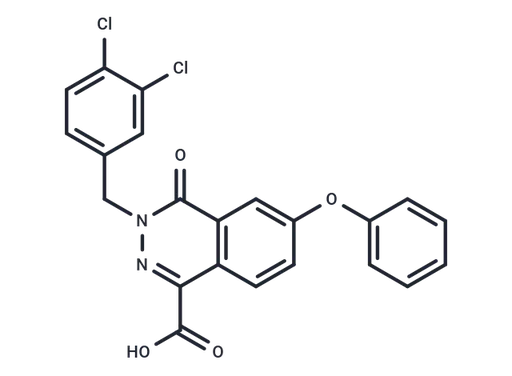
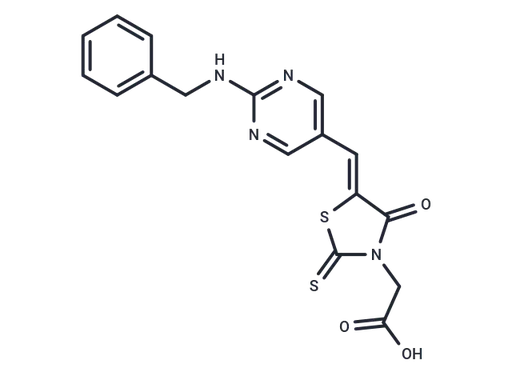
CAS:PPARγ phosphorylation inhibitor 1, PPARγ agonist (IC50=24 nM), inhibits CDK5-mediated Ser273 phosphorylation, antidiabetic activity.Fórmula:C22H14Cl2N2O4Pureza:99.86%Forma y color:White SolidPeso molecular:441.26PPARγ agonist 10
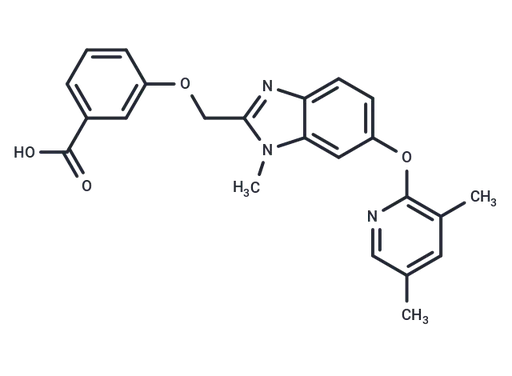
CAS:PPARγ agonist 10 (compound 33g) serves as a PPARγ agonist, enhancing insulin secretion, glucose uptake, and insulin sensitivity in βTC6 cells [1].Fórmula:C17H14N4O3S2Forma y color:SolidPeso molecular:386.45Aleglitazar
CAS:Aleglitazar (R1439) (R1439) is a potent dual PPARα/γ agonist, with IC50s of 38 nM and 19 nM for human PPARa and PPARγ, respectively.Fórmula:C24H23NO5SPureza:99.03%Forma y color:White SolidPeso molecular:437.51