Polisacáridos
Los polisacáridos son compuestos orgánicos formados por la unión de múltiples monómeros, los cuales están unidos por enlaces glucosídicos para crear moléculas grandes y a menudo ramificadas. Estos carbohidratos complejos desempeñan roles cruciales en diversas funciones biológicas, incluyendo el almacenamiento de energía, el soporte estructural y la comunicación celular. En esta sección, encontrará una amplia gama de polisacáridos esenciales para la investigación en bioquímica, biología molecular y glicociencia. Estos compuestos son vitales para estudiar las vías metabólicas, las estructuras de las paredes celulares y el potencial terapéutico de los carbohidratos. En CymitQuimica, proporcionamos polisacáridos de alta calidad para apoyar su investigación científica, asegurando precisión y fiabilidad en sus resultados experimentales.
Se han encontrado 503 productos de "Polisacáridos"
Ordenar por
Pureza (%)
0
100
|
0
|
50
|
90
|
95
|
100
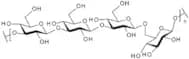
Laminaran - from Eisenia bicyclis
CAS:<p>Laminaran is a polysaccharide that co-occurs with fucoidan and alginate in brown seaweeds such as Laminaria digitata, Laminaria cloustoni, Eisenia bicyclis and Thallus laminariae. It is a β-1,3-linked glucan which it is claimed stimulates the immune system in mammals and fish.<br>The image was kindly provided by Prof Mike Guiry from Cork who runs ‘The Seaweed Site’.</p>Forma y color:White Off-White PowderHyaluronic acid sodium, average MW 2.0 - 2.5 million Da
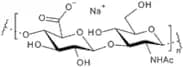
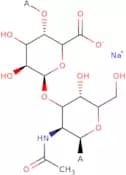
CAS:<p>Gycosaminoglycan in many organs; joint lubricant and shock absorber</p>Fórmula:(C14H20NO11Na)nPureza:Min. 95%Forma y color:PowderHyaluronic sodium - Average MW 0.2-0.5 million Daltons
CAS:The sodium salt of hyaluronic acid is a glycosaminoglycan found in many organs, where it functions as a joint lubricant and shock absorber. It is obtained principally from synovial fluid, vitreous humor of the eye, umbilical tissue and cocks comb. The chemical structure of hyaluronic is a disaccharide repeat of β-(1,3) glucuronic acid and β-(1,4) N-acetyl glucosamine.Fórmula:(C14H20NO11Na)nPureza:Min. 95%Forma y color:PowderFucoidan - Ascophyllum nodosum, analytical grade
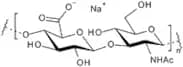
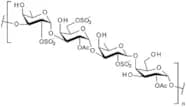
CAS:<p>A fucan sulphate found in brown marine algae (Phaeophyta-typically Fucus vesiculotus, Ascophyllum nodosum (illustrated), Alaria and Cladosiphon) and has been shown to have anticoagulant activity. The main constituents are α-1,4 and α-1,2 linked L-fucose sulphates although galactose also occurs and there are many variations of the basic structure found in different species of Phaeophyta.Molecular weight cut off at 300kDa.The image was kindly provided by Prof Mike Guiry from Cork who runs ‘The Seaweed Site’.</p>Forma y color:PowderHyaluronic acid sodium - MW 30000-40000
CAS:<p>Gycosaminoglycan in many organs; joint lubricant and shock absorber</p>Fórmula:(C14H20NO11Na)nPureza:Min. 95%Forma y color:PowderDextran sulfate sodium salt - MW 9,000-16,000
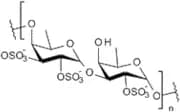
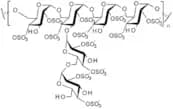
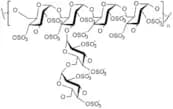
CAS:<p>Dextran sulphate is a dextran derivative whose ulcer (colitis) -causing properties were first reported in hamsters and extrapolated a few years later to mice and rats. The exact mechanisms through which dextran sulphate induces intestinal inflammation are unclear but may be the result of direct damage of the monolayer of epithelial cells in the colon, leading to the crossing of intestinal contents (for e.g. commensal bacteria and their products) into underlying tissue and therefore induction of inflammation. The dextran sulphate sodium induced ulceration model in laboratory animals has some advantages, when compared to other animal models of colitis, due to its simplicity and similarities to human inflammatory bowel disease.</p>Forma y color:PowderFucoidan - Ascophyllum nodosum
CAS:<p>Please enquire for more information about Fucoidan - Ascophyllum nodosum including the price, delivery time and more detailed product information at the technical inquiry form on this page</p>Forma y color:PowderArabinoxylan
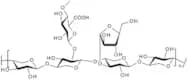
CAS:<p>Arabinoxylans consist of α-L-arabinofuranose residues attached as branch-points to β-(1,4)-linked D-xylopyranose main chains. These may be 2- or 3-substituted or 2- and 3- di-substituted. The arabinose residues may also be linked to other groups attached such as glucuronic acid residues, ferulic acid cross links and acetyl groups. Arabinoxylans generally consist of between 1500 - 5000 residues.</p>Pureza:Min. 95%Forma y color:PowderGuar gum
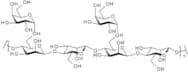
CAS:<p>Guar gum is obtained from the seed of the legume Cyamopsis tetragonolobus, an annual plant that grows mainly in semi-arid regions of India. The structure of the polysaccharide consists of a main chain of (1,4)-linked β-D-mannopyranosyl units with single α-D-galactopyranosyl units linked (1,6) on average to every second main chain unit. Guar has a high viscosity in aqueous solution, shows marked pseudoplastic behaviour and forms synergistic gels in the presence of other gums such as carrageenan and xanthan gum.</p>Fórmula:C10H14N5Na2O12P3Forma y color:White PowderPeso molecular:535.15 g/molSodium alginate, low viscosity
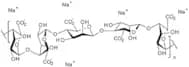
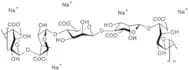
CAS:Sodium salt of a polysaccharide obtained from the brown seaweeds (e.g. Laminaria hyperborea, Fucus vesiculosus, Ascophyllum nodosum). The chemical structure consists of blocks of (1,4) linked-β-D-polymannuronic acid (poly M), (1,4) linked-α-L-polyguluronic acid (poly G) and alternating blocks of the two uronic acids (poly MG). Alginates form strong gels with divalent metal cations and the egg box model has been used to describe this form of gelation. The main use for alginate is in textile printing as a thickener in the printing of cottons with reactive dyes. In the food industry it is used as a thickener and gelling agent. Recently, it has been shown that ternary mixtures of Konjac glucomannan, Xanthan gum and Sodium alginate can form a non-covalently linked complex which exhibits enhanced rheological properties of value in, for example, functional foods. The image was kindly provided by Prof Mike Guiry from Cork who runs ‘The Seaweed Site’.Viscosity: min 50 mPa.sForma y color:White PowderPropylene glycol alginate
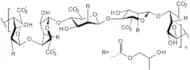
CAS:<p>Propylene glycol alginate is a reaction product of propylene oxide and alginic acid. At the 49th JECFA meeting (1997) it was resolved that the total dietary propylene glycol intake from all sources should be allocated an ADI of 0-25 mg/kg. Applications include as a stabiliser in beer foam due to electrostatic interaction between carboxyl groups on the glycol alginate molecules and amino groups on the peptides in the bubble wall and in ice cream by emulsifying the fat.Esterification is greater then 80%Viscosity (1% aq solution): 200-300 mpa.s</p>Pureza:Min. 95%Forma y color:PowderFucogalactan - from Undaria pinnatifida
CAS:<p>Fucogalactan (GFS) is a polysaccharide isolated and purified from the brown seaweed Undaria pinnatifida. The polysaccharide is a sulphated galactose containing fucan. Fucogalactan is currently under investigation for possible therapeutic indications including anti-inflammatory properties, immuno- modulating activities, inhibition of tumor growth, stem cell replentishment, antiviral activity, dementia and ulcer healing.Fucoidan ≥ 75 %<br>The image was kindly provided by Prof Mike Guiry from Cork who runs ‘The Seaweed Site’.</p>Pureza:(%) Min. 75%Forma y color:Off-White PowderDextran sulfate sodium - MW 5,000-8,000
CAS:<p>Dextran sulphate is a dextran derivative whose ulcer (colitis) -causing properties were first reported in hamsters and extrapolated a few years later to mice and rats. The exact mechanisms through which dextran sulphate induces intestinal inflammation are unclear but may be the result of direct damage of the monolayer of epithelial cells in the colon, leading to the crossing of intestinal contents (for e.g. commensal bacteria and their products) into underlying tissue and therefore induction of inflammation. The dextran sulphate sodium induced ulceration model in laboratory animals has some advantages, when compared to other animal models of colitis, due to its simplicity and similarities to human inflammatory bowel disease.</p>Fórmula:(C6H7Na3O14S3)nPureza:Min. 95%Forma y color:PowderAmylopectin - from maize
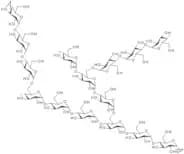
CAS:<p>Amylopectin is composed of between 2,000 to 200,000 glucose residues linked α (1→4) with α (1→6) branching. The molecule is highly branched, every 24 to 30 glucose units, resulting in a soluble molecule with many terminal residues. Starch is made of about 70% amylopectin by weight, though it varies depending on the source (higher in medium-grain rice to 100% in glutinous rice, waxy potato starch, waxy corn, and lower in long-grain rice, amylomaize, and russet potatoes).</p>Forma y color:PowderBacterial alginate - from fermentation of Azotobacter vinelandii or Pseudomonas mendocina
<p>An alginate-like polysaccharide produced by the fermentation of Azotobacter vinelandii or Pseudomonas mendocina. The chemical structure consists of blocks of (1,4) linked-β-D-polymannuronic acid (poly M), (1,4) linked-α-L-polyguluronic acid (poly G) and alternating blocks of the two uronic acids (poly MG). Unlike the alginate from seaweed, this polysaccharide is partially acetylated.</p>Forma y color:PowderPeso molecular:~100KDaWheat starch
CAS:<p>Starch is an energy storing polysaccharide produced by higher plants and some algae. Pure starch is a white, tasteless and odorless powder that is insoluble in cold water or alcohol. It consists of two types of polysaccharide: the linear and helical amylose (α-1,4-linked glucose) and the branched amylopectin (α-1,4 and α-1,6-linked glucose). Depending on the plant, starch generally contains 20 to 25% amylose and 75 to 80% amylopectin by weight.</p>Pureza:Min. 95%Forma y color:PowderChondroitin sulfate A sodium salt - Average MW 10,000 - 50,000
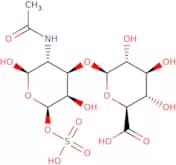
CAS:<p>Chondroitin sulfate A sodium salt is a glycosaminoglycan that is derived from chondroitin. It is a complex carbohydrate with a high molecular weight and an average MW of 10,000 to 50,000 Da. The synthesis of the monosaccharide units in chondroitin sulfate A sodium salt occurs by Methylation, Click modification, Polysaccharide, or Fluorination. Chondroitin sulfate A sodium salt can be custom synthesized according to customer specifications and can be ordered as a CAS No. 39455-18-0 with high purity.</p>Pureza:Min. 95%Forma y color:White Off-White PowderCellulose, particle size 20μm
CAS:Cellulose with a particle size of 20μm is an industrial biomass material that has various applications. It is commonly used in the production of paper, textiles, and biofuels. Cellulose is a complex carbohydrate that provides structural support to plant cell walls. It can also be used as an excipient in pharmaceutical formulations, such as in the production of tablets.Pureza:Min. 95%Forma y color:PowderEthyl cellulose
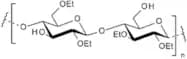
CAS:Ethyl cellulose is similar in structure to methyl cellulose with ethyl replacing the methyl groups. It is approved for use in regulated markets such as food and pharmaceuticals. In pharmaceuticals it can mask the taste of bitter actives, enhance the strength and appearance of tablets and capsules, and enable controlled release formulations. In food products it functions as a binder, film former and flavour fixative.Pureza:Min. 95%Forma y color:White Yellow PowderCellulose - Arbocel
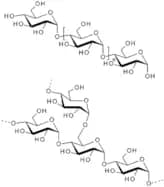
CAS:<p>Cellulose is a linear polysaccharide of β 1-4 linked glucose residues. The polysaccharide chains are bundled as microfibrils in cell walls and provide the essential structural components within growing plants. Each microfibril exhibits a high degree of three-dimensional internal bonding resulting in a crystalline structure that is insoluble in water, resistant to reagents and very strong.</p>Forma y color:Powder