APIs para investigación e impurezas
Subcategorías de "APIs para investigación e impurezas"
- Aminoácidos y derivados(12.348 productos)
- Antraquinonas y derivados(405 productos)
- Derivados de Benzimidazol e Imidazol(10.463 productos)
- Derivados de Benzodiazepinas(335 productos)
- Carbohidratos y glucoconjugados(5.048 productos)
- Ésteres y derivados(42.305 productos)
- Ácidos Grasos y Derivados Lipídicos(32.454 productos)
- Flavonoides y Polifenoles(17.098 productos)
- Radicales libres y agentes oxidantes/reductores(214 productos)
- Cetonas y Derivados(2.402 productos)
- Antibióticos naturales y semisintéticos(6.398 productos)
- Nitrilos y Cianoderivados(3.070 productos)
- Nitrosaminas y derivados(55 productos)
- Nucleósidos y Nucleótidos(3.486 productos)
- Fosfatos y Fosfonatos Orgánicos(1.202 productos)
- Sulfonatos y Sulfatos Orgánicos(10.447 productos)
- Organometálicos(4.424 productos)
- Otros(6.322 productos)
- Péptidos y Proteínas(3.151 productos)
- Polímeros y derivados(100 productos)
- Derivados de Purinas y Pirimidinas(8.957 productos)
- Derivados de Quinazolina y Quinolina(66.131 productos)
- Quinonas y derivados(24.376 productos)
- Sales y derivados de API(80.360 productos)
- Esteroides y derivados(4.975 productos)
- Sulfonamidas y derivados(2.606 productos)
- Terpenoides y derivados(3.858 productos)
- Tiazolidinedionas y Tiopiranos(2.755 productos)
- Compuestos β-adrenérgicos(231 productos)
Se han encontrado 57677 productos de "APIs para investigación e impurezas"
Vortioxetine Impurity 25
CAS:Vortioxetine Impurity 25 is a drug product that is an analytical impurity. It is a natural impurity found in the synthetic process of Vortioxetine, which is an active pharmaceutical ingredient (API). It has been shown to have pharmacological effects in humans and animals. This compound has been synthesized for use as a standard for HPLC assays. The CAS number for this substance is 1639263-80-1.
Fórmula:C18H22N2O2SPureza:Min. 95%Peso molecular:330.4 g/mol6-Acetoxymethyl-4-methoxy-5-methyl-3-pyridylmethanol o-toluate
CAS:6-Acetoxymethyl-4-methoxy-5-methyl-3-pyridylmethanol o-toluate is a synthetic compound that is used as an analytical reference standard for the metabolism studies. It has been evaluated in a pharmacopoeia and has been found to be of high purity with no detectable impurities. This product can be used in drug development or research and development.
Fórmula:C19H21NO5Pureza:Min. 95%Peso molecular:343.40 g/molRef: 3D-JWB97701
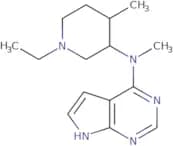
Producto descatalogadoTofacitinib impurity 69
CAS:Please enquire for more information about Tofacitinib impurity 69 including the price, delivery time and more detailed product information at the technical inquiry form on this page
Fórmula:C15H23N5Pureza:Min. 95%Peso molecular:273.38 g/molRef: 3D-IMD51970
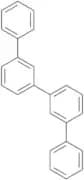
Producto descatalogadoM,M-Quaterphenyl
CAS:M,M-Quaterphenyl is a low energy fluorescent molecule that emits light in the near ultraviolet region of the electromagnetic spectrum. It is chemically stable and has a high quantum yield. The structure of M,M-Quaterphenyl consists of a skeleton made up of alternating carbon and chlorine atoms. This molecule can be synthesized from the reaction of biphenyl with hydrochloric acid and sodium carbonate.
Fórmula:C24H18Pureza:Min. 95%Peso molecular:306.4 g/molRef: 3D-BAA16618
Producto descatalogadoFR900359
CAS:FR900359 is a drug product that is custom synthesized and characterized. It has a purity of 99% and CAS No. 107530-18-7. This product is used in metabolism studies, natural drug development, pharmacopoeia, and research and development. The impurity standard for this product is HPLC standard.
Fórmula:C49H75N7O15Pureza:Min. 95%Peso molecular:1,002.20 g/molRef: 3D-HEA53018
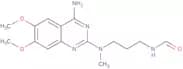
Producto descatalogadoN-(4-Amino-6,7-dimethoxyquinazol-2-yl)-N-methylpropylenediamine formamide hydrochloride
CAS:N-(4-Amino-6,7-dimethoxyquinazol-2-yl)-N-methylpropylenediamine formamide hydrochloride is an impurity in the synthesis of N-(4-amino-6,7-dimethoxyquinazol-2-yl)-N'-methylpropylenediamine formamide hydrochloride. It is a white solid that can be used as an analytical reference standard for HPLC. It has been detected in the urine of people taking this drug and can be used to identify the presence of this drug in urine samples.
Fórmula:C14H17N5O2·HClPureza:Min. 95%Peso molecular:323.78 g/molMesulergine hydrochloride
CAS:Mesulergine hydrochloride is a drug that inhibits the dopamine and serotonin receptors. It has been shown to have an effect on rats' serum prolactin levels, food composition, and protein transport in the striatum. Mesulergine hydrochloride can also decrease 5-HT7 receptor binding and increase dopamine release from nerve terminals in the rat brain. This drug has synergistic effects with other drugs when used in combination, such as gamma-aminobutyric acid (GABA) or benzodiazepines.
Symptoms of mesulergine hydrochloride include psychotic disorders, anxiety, depression, hallucinations, sleep problems, and suicidal thoughts. These symptoms may be due to mesulergine's effect on 5-HT2C receptors.Fórmula:C18H27ClN4O2SPureza:Min. 95%Peso molecular:399 g/molRef: 3D-XCA78612
Producto descatalogado1-Hydroxy carvedilol
CAS:1-Hydroxycarvedilol is a drug product that is used as a standard in HPLC. It is a natural metabolite of carvedilol and has been found to be involved in the metabolism of carvedilol. The purity of 1-hydroxycarvedilol is >98%. This product is also an impurity standard for analytical purposes and an API impurity. It can also be used in metabolism studies and has CAS No. 146574-41-6.
Fórmula:C24H26N2O5Pureza:Min. 95%Peso molecular:422.50 g/molRef: 3D-WFA57441
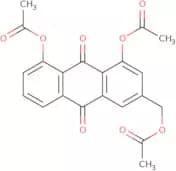
Producto descatalogadoTriacetyl aloe-emodin (impurity A)
CAS:Triacetyl aloe-emodin (impurity A) is an impurity found in the Triacetyl Aloe-Emodin HPLC standard, which is a drug product. It is not approved for use as a drug and should be used only for research and development purposes. The impurity can be custom synthesized or purchased from a specialty chemical supplier. Impurities are not typically found in the final drug product but can occur during synthesis or purification of the API. This impurity is not present in any pharmacopoeia and has no known biological activity. The CAS number of this impurity is 25395-11-3.
Fórmula:C21H16O8Pureza:Min. 95%Peso molecular:396.35 g/molRef: 3D-IT28380
Producto descatalogado2-[2-[4-(5,5-Dioxidodibenzo[b,f][1,4]thiazepin-11-yl)-1-piperazinyl]ethoxy]ethanol
CAS:Quetiapine is a drug that belongs to the class of sulfoxides. It is usually administered orally, but can also be given intravenously or intramuscularly. Quetiapine has been studied for its clinical use in the treatment of schizophrenia and bipolar disorder. The plasma concentrations of quetiapine are determined by high-performance liquid chromatography (HPLC) with tandem mass spectrometry (LC-MS/MS) detection. Validation studies have shown that the HPLC-MS/MS method is accurate and precise, with good linearity over a range of concentrations. Analysis was performed on plasma samples from healthy volunteers who were administered either 2 mg or 10 mg doses of quetiapine by intravenous injection. Concentrations were calculated and compared to those found in patients with schizophrenia and bipolar disorder who had been given oral doses of 300 mg per day for four weeks, yielding a therapeutic plasma concentration range from 100 to 300 ng/mL.
Fórmula:C21H25N3O4SPureza:Min. 95%Peso molecular:415.51 g/molEsomeprazole Impurity Q
Esomeprazole Impurity Q is a drug product. It is an impurity standard of esomeprazole, CAS No. 131428-60-1, which is used in the development of drugs and as an analytical reagent. It is synthesized from natural materials and has a purity of 99%. The metabolite can be found in animal and human metabolism studies. Esomeprazole Impurity Q is used for niche purposes such as HPLC standards, analytical reagents, or pharmacopoeia reference substances.
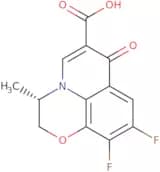
Pureza:Min. 95%Levofloxacin carboxylic acid
CAS:Levofloxacin is a synthetic molecule with an asymmetric carbon atom in its heterocycle. It is synthesized by reacting chloroform with 2-fluoro-5-nitrobenzaldehyde, which reacts further with sodium hydroxide and hydrochloric acid to form the levofloxacin carboxylic acid. Impurities can be found in the reaction product due to chlorine atoms that are formed during the synthesis. The amount of impurities present in the final product can be determined using a titration method or through HPLC analysis. Levofloxacin has been shown to be effective against methicillin-resistant Staphylococcus aureus (MRSA) and Clostridium perfringens, although is not active against acid-fast bacteria such as Mycobacterium tuberculosis or Mycobacterium avium complex.
Fórmula:C13H9F2NO4Pureza:Min. 95%Forma y color:PowderPeso molecular:281.21 g/molRef: 3D-IL24882
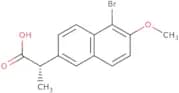
Producto descatalogadoNaproxen Impurity C
CAS:Naproxen Impurity C is an analytical impurity that is found in Naproxen. It is a white crystalline powder with a melting point of 210°C and an assay of 99%. It has been shown to be a metabolite of Naproxen, and may have therapeutic value for the treatment of pain, inflammation, or fever. The purity of this product has been verified by HPLC analysis.
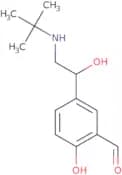
Fórmula:C14H13BrO3Pureza:Min. 95%Peso molecular:309.16 g/molSalbutamol Impurity D
CAS:Salbutamol Impurity D is a chiral, metal chelator impurity of the drug substance Salbutamol. It is a prodrug that is hydrolyzed to its active form, salbutamol sulfate, in vivo. Salbutamol Impurity D binds to chloride ions and has been shown to be an interferent for many analytical methods. The reversed-phase chromatography retention time for Salbutamol Impurity D is about 10 minutes shorter than for Salbutamol sulfate.
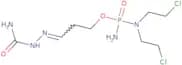
Fórmula:C13H19NO3Pureza:Min. 95%Peso molecular:237.29 g/molHydroxy cyclophosphamide semicarbazone-d4
CAS:Hydroxy cyclophosphamide semicarbazone-d4 is an analytical standard used to monitor the purity of a drug product. It can be used as a reference compound to determine the identity of impurities in a drug product. Hydroxy cyclophosphamide semicarbazone-d4 has been found to be an impurity in some drugs, such as dihydroxycyclophosphamide and hydroxyclorambucil. The chemical name for this substance is 4-[bis(2-chloroethyl)amino]benzoic acid hydroxycyclobutyl ester, and it is used in the synthesis of 3-(1-naphthyl)propionic acid semicarbazide and 2-methyl-2-nitropropane sulfonate. Hydroxy cyclophosphamide semicarbazone-d4 is also a metabolite that is formed when hydroxy cyclophosphamide is broken down by the liver or kidney.
Fórmula:C8H18Cl2N5O3PPureza:Min. 95%Peso molecular:334.14 g/molRef: 3D-DCA94846
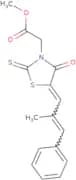
Producto descatalogado(E,Z)-Epalrestat methyl ester
CAS:(E,Z)-Epalrestat methyl ester is a drug product that is custom-synthesized for research and development purposes. It is a natural metabolite of (E,Z)-epalrestat acid. The chemical name for this compound is 3-[(2-chlorophenyl)methyl]-N-(1H-indol-3-ylmethylene)malonamide. The molecular weight of this compound is 284.87 g/mol and it has an empirical formula of C24H27ClN2O2. It has been found to inhibit the activity of phosphodiesterase (PDE), which plays a role in the breakdown of cyclic nucleotides such as cAMP and cGMP. This product has high purity and analytical data that can be used for metabolism studies or clinical trials.
Fórmula:C16H15NO3S2Pureza:Min. 95%Peso molecular:333.43 g/molRef: 3D-HCB77570
Producto descatalogadoElsinochrome A
CAS:Elsinochrome A is a drug product that has not been approved for human use. It belongs to the class of drugs called natural products and has not been synthesized. Elsinochrome A is a metabolite of erythromycin, which is produced by the fungus Elsinoë sp. The chemical structure of this natural product was determined using spectral analysis, and it was found to be similar to the antibiotic erythromycin. Elsinochrome A has shown promising results in pharmacological studies as a potential drug candidate for tuberculosis treatment because it inhibits bacterial growth by binding to DNA-dependent RNA polymerase, thereby preventing transcription and replication.
Fórmula:C30H24O10Pureza:Min. 95%Peso molecular:544.50 g/molRef: 3D-ZAA56867
Producto descatalogado2-Methoxy-5-sulfamoylbenzoic acid
CAS:2-Methoxy-5-sulfamoylbenzoic acid (2MSBA) is a reactive compound that reacts with the proton of vancomycin to form a dianion. This reaction is reversible and can be catalyzed by chloride ions. 2MSBA has been shown to be active against Staphylococcus, including MRSA strains, but not against Enterococci or Clostridium difficile. 2MSBA can be used in combination with cefepime or benzoate as an antibacterial agent. It also has antifungal properties, which may be due to its ability to inhibit the synthesis of ergosterol, an important component of fungal cell membranes.
2-Methoxy-5-sulfamoylbenzoic acid is related to fluconazole in that it contains a benzoate moiety and an amide group. These structural features confer antibacterial and antifFórmula:C8H9NO5SPureza:Min. 95%Peso molecular:231.23 g/molRef: 3D-IM145487
Producto descatalogadoTolterodine S-enantiomer
CAS:Tolterodine S-enantiomer is a drug product that belongs to the class of prodrugs. It is metabolized in vivo to the active form, tolterodine. Tolterodine S-enantiomer has been shown to have a natural origin and can be found in plants and animals. Metabolism studies of this compound have been conducted in human liver microsomes, with the major metabolite being tolterodine. Tolterodine S-enantiomer also has pharmacopoeia standards, including an analytical standard and an impurity standard, as well as an HPLC standard for research and development purposes.
Fórmula:C22H31NO·C4H6O6Pureza:Min. 95%Peso molecular:475.57 g/molRef: 3D-YJB55103
Producto descatalogadoBinospirone hydrochloride
CAS:Binospirone hydrochloride is a drug product that is used in the treatment of depression. It belongs to the class of antidepressants and has been shown to be effective against major depressive disorder (MDD). Binospirone hydrochloride is metabolized by cytochrome P450 enzymes into two metabolites: 3-hydroxybinospirone and 2,3-dihydroxybinospirone. The natural form of binospirone hydrochloride is synthesized from tyrosine and phenylalanine. It is also found as an impurity in other pharmaceuticals, such as clomipramine, amitriptyline, and fluoxetine. It has been shown that this compound binds to the serotonin transporter (SERT) at high affinity. This binding inhibits the reuptake of serotonin from synapses, leading to increased extracellular concentrations of serotonin.
Fórmula:C20H27ClN2O4Pureza:Min. 95%Peso molecular:394.9 g/molRef: 3D-CEA90860
Producto descatalogado


![2-[2-[4-(5,5-Dioxidodibenzo[b,f][1,4]thiazepin-11-yl)-1-piperazinyl]ethoxy]ethanol](/_next/image/?url=https%3A%2Fstatic.cymitquimica.com%2Fproducts%2F3D%2Fthumb-webp%2FID27366.webp&w=3840&q=75)