APIs para investigación e impurezas
Subcategorías de "APIs para investigación e impurezas"
- Aminoácidos y derivados(12.441 productos)
- Antraquinonas y derivados(407 productos)
- Derivados de Benzimidazol e Imidazol(10.465 productos)
- Derivados de Benzodiazepinas(335 productos)
- Carbohidratos y glucoconjugados(5.388 productos)
- Ésteres y derivados(42.307 productos)
- Ácidos Grasos y Derivados Lipídicos(32.488 productos)
- Flavonoides y Polifenoles(17.101 productos)
- Radicales libres y agentes oxidantes/reductores(214 productos)
- Cetonas y Derivados(2.692 productos)
- Antibióticos naturales y semisintéticos(6.411 productos)
- Nitrilos y Cianoderivados(3.070 productos)
- Nitrosaminas y derivados(55 productos)
- Nucleósidos y Nucleótidos(3.492 productos)
- Fosfatos y Fosfonatos Orgánicos(1.205 productos)
- Sulfonatos y Sulfatos Orgánicos(10.452 productos)
- Organometálicos(4.425 productos)
- Otros(6.340 productos)
- Péptidos y Proteínas(3.163 productos)
- Polímeros y derivados(100 productos)
- Derivados de Purinas y Pirimidinas(8.975 productos)
- Derivados de Quinazolina y Quinolina(66.221 productos)
- Quinonas y derivados(24.379 productos)
- Sales y derivados de API(92.967 productos)
- Esteroides y derivados(4.987 productos)
- Sulfonamidas y derivados(2.607 productos)
- Terpenoides y derivados(3.871 productos)
- Tiazolidinedionas y Tiopiranos(2.755 productos)
- Compuestos β-adrenérgicos(232 productos)
Se han encontrado 66884 productos de "APIs para investigación e impurezas"
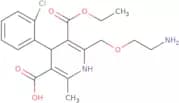
3-O-Desmethyl amlodipine
CAS:3-O-Desmethyl amlodipine is a metabolite of the drug amlodipine. It has been shown to be formed in vivo and may contribute to the pharmacological activity of amlodipine, although its contribution is not well understood. 3-O-Desmethyl amlodipine has been used as an analytical standard for chemical purity testing of pharmaceuticals, and as an impurity standard for HPLC analysis.Fórmula:C19H23ClN2O5Pureza:Min. 95%Forma y color:PowderPeso molecular:394.85 g/mol3-[Methyl(phenylmethyl)amino]-1-phenyl-1-propanone hydrochloride
CAS:Nisoxetine is a norepinephrine (NE) reuptake inhibitor that is used as an antidepressant. It has been shown to be a potent and selective NE reuptake inhibitor with a high affinity towards the NE transporter in rat brain synaptosomes, with potency several times higher than that of tricyclic antidepressants. Nisoxetine's major advantage over other antidepressants is its high efficiency, which makes it suitable for large-scale production. The synthesis of nisoxetine involves two steps: 1) reaction of 3-[methyl(phenylmethyl)amino]-1-phenyl-1-propanone hydrochloride with toluene to form the corresponding methyl ester and 2) hydrogenation of the methyl ester to form nisoxetine. This synthesis is efficient, stable, and chiral due to the use of bimetallic catalysts.Fórmula:C17H19NO•HClPureza:Min. 95%Forma y color:PowderPeso molecular:289.8 g/molN-Desmethyl galanthamine
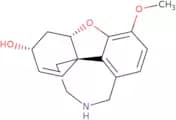
CAS:Producto controladoN-Desmethyl galanthamine is a plant alkaloid that is found in the Huperzia serrata plant. It has been shown to have cholinergic activity and calcium binding properties. N-Desmethyl galanthamine inhibits acetylcholinesterase, an enzyme responsible for the breakdown of acetylcholine, which is a neurotransmitter. This inhibition leads to increased levels of acetylcholine, which results in increased neuron stimulation and improved memory function. N-Desmethyl galanthamine also binds to β2 nicotinic receptor sites and blocks the binding of nicotine, leading to decreased nicotine dependence.
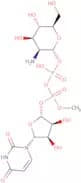
Fórmula:C16H19NO3Pureza:Min. 95%Peso molecular:273.33 g/mol2'-Deoxy-2',2'-difluorocytidine 5'-monophosphate
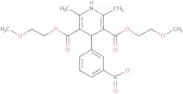
CAS:2'-Deoxy-2',2'-difluorocytidine 5'-monophosphate (CDFMP) is a potent antitumor agent that has been shown to have a strong anti-angiogenic effect. It inhibits the cancer cell's production of microvessels and interferes with the formation of new blood vessels from pre-existing ones, which can be used to deliver chemotherapy drugs to the tumor. CDFMP is synthesized by reacting 2'-deoxy-2',2'-difluorocytidine with phosphoric acid and then converting it into the monophosphate form using phosphorus oxychloride. This drug is also resistant to platinum-based chemotherapy agents, making it a promising drug for patients who are resistant to other treatments.Fórmula:C9H12F2N3O7PPureza:Min. 97 Area-%Forma y color:PowderPeso molecular:343.18 g/mol(RS)-Di-(2-methoxyethyl) 1,4-dihydro-2,6-dimethyl-4-(3-nitrophenyl)pyridine-3,5-dicarboxylate
CAS:(RS)-Di-(2-methoxyethyl) 1,4-dihydro-2,6-dimethyl-4-(3-nitrophenyl)pyridine-3,5-dicarboxylate is an impurity standard for the API (Active Pharmaceutical Ingredient) Impurity Standard. It may be used as a reference compound in HPLC analyses of analytical samples. This compound has been evaluated by the National Institute of Standards and Technology (NIST) to be a niche HPLC standard. It is also a metabolite of the drug product Metaxalone.Fórmula:C21H26N2O8Pureza:Min. 95%Forma y color:Slightly Yellow PowderPeso molecular:434.44 g/molCetirizine glycerol ester impurity
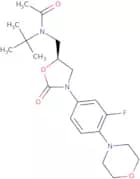
CAS:Cetirizine glycerol ester impurity is a drug product that is an analytical impurity. It is a natural, API impurity, and synthetic. The CAS number for this impurity is 1243652-36-9. Research and Development (R&D) of cetirizine glycerol ester impurity is required for the manufacture of pharmaceutical products. High purity cetirizine glycerol ester impurity can be used as a pharmacopoeia standard for HPLC analyses.Fórmula:C24H31ClN2O5Pureza:Min. 95%Peso molecular:462.97 g/molN-tert-butyl-N-(((S)-3-(3-fluoro-4-morpholinophenyl)-2-oxooxazolidin-5-yl)methyl)acetamide
CAS:N-tert-butyl-N-(((S)-3-(3-fluoro-4-morpholinophenyl)-2-oxooxazolidin-5-yl)methyl)acetamide (CAS 1215006-11, API impurity) is a synthetic compound from the drug development process. This impurity has been identified in the natural product and is not an active ingredient. It is found as a Metabolite in the pharmacopoeia and analytical methods. This substance is used for research and development of drugs, such as for standardizing HPLC.Fórmula:C20H28FN3O4Pureza:Min. 95%Forma y color:White PowderPeso molecular:393.45 g/mol2-N-Butyl 3-(4-methoxy benzoyl)-benzofuran
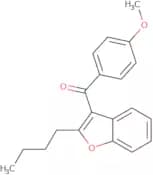
CAS:2-N-Butyl 3-(4-methoxy benzoyl)-benzofuran is a x-ray crystal structure of an antibacterial agent that belongs to the class of β-unsaturated ketones. It has been shown to have cardiovascular activity, and is used in the treatment of depression. The compound binds to the active methylene group on the bacterial cell wall, which prevents cross linking of peptidoglycan chains. This leads to a reduction in cell wall synthesis and increased permeability of cells, which may result in death. The 2-N-butyl 3-(4-methoxy benzoyl)-benzofuran molecule also contains two phenyl groups that are able to form hydrogen bonds with each other, as well as dihedral angles that can form hydrogen bonds with water molecules. These properties contribute to its antidepressant activity.Fórmula:C20H20O3Pureza:Min. 95%Forma y color:Clear LiquidPeso molecular:308.37 g/molCarbendazim
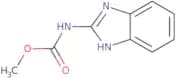
CAS:Carbendazim is a fungicide that inhibits the growth of fungi and bacteria. It has been shown to be potent inducers of polymerase chain reaction (PCR) amplification, with a rate constant of 0.0103 per minute. Carbendazim also has a significant effect on electrochemical impedance spectroscopy (EIS). The EIS analysis was used to compare carbendazim-treated cells with untreated cells, which showed that carbendazim causes an increase in the resistance across the cell membrane. This research suggests that carbendazim may be genotoxic, as it increased the amount of DNA damage observed in wild-type strains and altered the optical properties of DNA. Carbendazim is also an effective inhibitor of nitrite ion oxidation and colloidal gold deposition, which has led to its use as a water vapor control agent for plants.
Fórmula:C9H9N3O2Pureza:Min. 95%Forma y color:PowderPeso molecular:191.19 g/mol6-(2,4-Dichlorophenyl)-1,2,4-triazine-3,5-diamine
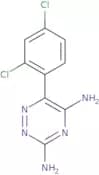
CAS:6-(2,4-Dichlorophenyl)-1,2,4-triazine-3,5-diamine is a metabolite that can be found in the urine and blood of humans. It has been shown to have cytotoxic effects on human lymphocytes and erythrocytes. 6-(2,4-Dichlorophenyl)-1,2,4-triazine-3,5-diamine is used as an impurity standard for HPLC analysis and as a reference compound for pharmacopoeia. This chemical is also used in the synthesis of some drugs. 6-(2,4-Dichlorophenyl)-1,2,4-triazine-3,5-diamine is not listed in any pharmacopoeia or natural product database.
Fórmula:C9H7Cl2N5Pureza:Min. 95%Forma y color:White PowderPeso molecular:256.09 g/molD-Ala-(19)-Semaglutide
D-Ala(19)-Semaglutide is a semaglutide impurity. The amino acid at position 19 has been replaced by the D-form of the amino acid D-alanine (D-Ala). Semaglutide impurities are structurally related compounds that arise during synthesis, purification, or storage of semaglutide, a long-acting GLP-1 receptor agonist for managing type 2 diabetes and obesity.Fórmula:C187H291N45O59Peso molecular:4,113.64 g/molBicalutamide sulfide
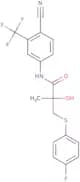
CAS:Bicalutamide sulfide is a synthetic, phosphotungstic acid-reactive, bifunctional reagent that is synthesized from the reaction of bicalutamide and trifluoroacetic acid. This product can be used for the separation of fatty acids in environmental pollutants. The product has been shown to be useful for the analysis of fatty acid esters in recycled oils and fats. Bicalutamide sulfide is also used as an intermediate in the synthesis of pharmaceuticals, such as phosphotungstitane derivatives.Fórmula:C18H14F4N2O2SPureza:Min. 95%Forma y color:White To Off-White SolidPeso molecular:398.37 g/molLansoprazole sulfone - Bio-X ™
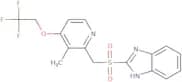
CAS:Lansoprazole is a proton pump inhibitor that is used in the treatment of gastrointestinal ulcers, symptoms of GERD and to eradicate Helicobacter pylori. This drug works by decreasing gastric acid secretion by targeting H+ and K+ ATPase. It offers pain relief from heartburn and reduces ulcer related pain.Fórmula:C16H14F3N3O3SPureza:Min. 95%Forma y color:PowderPeso molecular:385.36 g/molDihexyl 3,3'-(pyrazine-2,5-diyl)dipropanoate
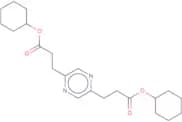
CAS:Dihexyl 3,3'-(pyrazine-2,5-diyl)dipropanoate is a drug product that is used as an impurity standard for the determination of metabolites in drug development and metabolism studies. It has been shown to be a metabolite in the human body and is also found in rat urine. The purity of this substance is high and can be custom synthesized to meet specific needs. Dihexyl 3,3'-(pyrazine-2,5-diyl)dipropanoate can be used as an analytical standard for HPLC analysis. This compound can also be used in pharmacopoeia as a reference substance for the determination of purity and impurities.Fórmula:C22H36N2O4Pureza:Min. 95%Forma y color:Off-white to yellow liquid.Peso molecular:392.53 g/molUrolithin M5
CAS:Urolithin M5 is a drug product that has undergone custom synthesis, and is high in purity. It has CAS No. 91485-02-8, analytical data, metabolism studies, and drug development. Urolithin M5 is natural, with a metabolite pharmacopoeia and niche. There are impurities in this substance that are of synthetic origin and have an analytical HPLC standard. This substance has been researched and developed for use as an Impurity Standard.
Fórmula:C13H8O7Pureza:Min. 95%Forma y color:PowderPeso molecular:276.2 g/molTacrolimus Impurity 6
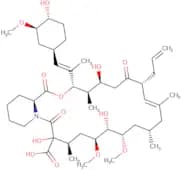
CAS:Tacrolimus Impurity 6 is a product that is custom-synthesized by our company. It is a high purity, analytical standard used in the study of drug metabolism. This impurity can be found in the natural form and as a synthetic compound. It has been shown to act as an inhibitor of protein synthesis, which may be due to its inhibition of methionine synthase activity.Fórmula:C44H71NO13Pureza:Min. 95%Peso molecular:822.03 g/molAtorvastatin epoxydione impurity
CAS:Atorvastatin epoxydione impurity (EPI) is a heptanoic, hydrate, diastereoisomer, racemic mixture, enantiomer and impurity of Atorvastatin. The EPI has been minimized in the formulation process by using a novel synthesis route that employs a chiral pyrrole derivative as an intermediate. This minimization has allowed for the elimination of the tautomer and other impurities present in the original compound.
Fórmula:C26H22FNO4Pureza:Min. 95 Area-%Forma y color:White PowderPeso molecular:431.46 g/mol(RS)-Isopropyl 2-methoxyethyl 1,4-dihydro-2,6-dimethyl-4-(2-nitrophenyl)pyridine-3,5-dicarboxylate
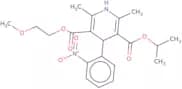
CAS:(RS)-Isopropyl 2-methoxyethyl 1,4-dihydro-2,6-dimethyl-4-(2-nitrophenyl)pyridine-3,5-dicarboxylate is a drug product with an analytical purpose. This compound is metabolized by the liver and excreted in the urine. It has been shown that this compound is not present in natural sources. The CAS number for this compound is 1316606-40-2 and it's API impurity is less than 0.0001%. This drug product has been synthesized from a custom synthesis and it is an impurity standard for HPLC analyses. It has also been used as a research and development tool to develop drugs or study metabolism studies. This compound is pure enough to be used as a pharmacopoeia standardFórmula:C21H26N2O7Pureza:Min. 95%Peso molecular:418.44 g/molAtorvastatin lactone
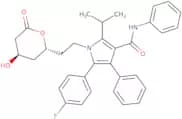
CAS:Atorvastatin lactone is a prodrug for atorvastatin. It is an inhibitor of the enzyme HMG-CoA reductase, which is involved in cholesterol synthesis and reduces LDL cholesterol levels. Atorvastatin lactone is absorbed from the gut into the bloodstream and then converted to atorvastatin, which has a higher potency than atorvastatin lactone. This conversion occurs in the liver by cytochrome P450 enzymes, including cytochrome CYP3A4. The pharmacokinetics of atorvastatin lactone are influenced by drugs that inhibit these enzymes. Atorvastatin and its metabolites are excreted in human serum as glucuronide or sulfate conjugates.Fórmula:C33H33FN2O4Pureza:Min. 98 Area-%Forma y color:PowderPeso molecular:540.62 g/mol1-Phenyl-1-(2-pyridinyl)methanol
CAS:1-Phenyl-1-(2-pyridinyl)methanol is an organic compound that has a reactive, functional group. It is used as a solvent in the laboratory and industry. This chemical reacts with chloride to produce 1-chloro-1-phenylmethanol. It can also be reacted with basic groups such as sodium hydroxide to produce 1-phenyl-1-(2-hydroxy pyridinium) methanol. The reaction of 1-phenyl-1-(2-pyridinyl) methanol with carbon tetrachloride produces trichlorobenzene and carbon dioxide. Impurities in this compound include inorganic acids such as hydrochloric acid and sulfuric acid, which are found at levels below 0.5%. Alcohols found in this compound include ethanolamine, which is an impurity at levels exceeding 2%.Fórmula:C12H11NOPureza:Min. 95%Forma y color:White PowderPeso molecular:185.22 g/mol

![3-[Methyl(phenylmethyl)amino]-1-phenyl-1-propanone hydrochloride](/_next/image/?url=https%3A%2Fstatic.cymitquimica.com%2Fproducts%2F3D%2Fthumb-webp%2FIM58070.webp&w=3840&q=75)