Apoptose
Les inhibiteurs de l'apoptose sont des composés qui empêchent ou retardent le processus de mort cellulaire programmée, connu sous le nom d'apoptose. Ces inhibiteurs sont essentiels pour étudier les mécanismes de survie cellulaire et sont utilisés pour enquêter sur les maladies où l'apoptose est dysrégulée, telles que le cancer, les troubles neurodégénératifs et les maladies auto-immunes. En modulant l'apoptose, ces inhibiteurs peuvent aider au développement de thérapies visant à contrôler la mort cellulaire. Chez CymitQuimica, nous offrons une sélection complète d'inhibiteurs de l'apoptose de haute qualité pour soutenir vos recherches en biologie cellulaire, oncologie et domaines connexes.
Sous-catégories appartenant à la catégorie "Apoptose"
- ASK(9 produits)
- BCL(8 produits)
- Caspase(145 produits)
- FOXO1(3 produits)
- IAP(67 produits)
- Mdm2(12 produits)
- PD-1/PD-L1(140 produits)
- PDK(9 produits)
- PERK(26 produits)
- Sérine/thréonine kinase(18 produits)
- Survivant(14 produits)
- TNF(92 produits)
- c-RET(61 produits)
- p53(63 produits)
Affichez 6 plus de sous-catégories
6109 produits trouvés pour "Apoptose"
Trier par
Degré de pureté (%)
0
100
|
0
|
50
|
90
|
95
|
100
JNK-IN-19
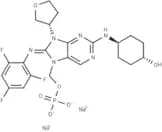
CAS :JNK-IN-19 (Compound Q8) is an inhibitor of c-Jun N-terminal kinase, utilized for the treatment and/or prevention of injuries prior to, during, or following surgery.Formule :C22H24F3N6Na2O6PCouleur et forme :SolidMasse moléculaire :602.41Flufenoxadiazam
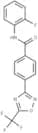
CAS :Flufenoxadiazam is a fungicide known for its potent fungicidal activity, particularly effective against soybean rust (Phakopsora pachyrhizi) and wheat leaf rust (Puccinia triticina).Formule :C16H9F4N3O2Couleur et forme :SolidMasse moléculaire :351.26Antibacterial agent 254
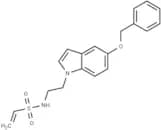
CAS :Antibacterialagent 254 (Compound 2) is an antimicrobial agent capable of eradicating 7-day-old P. aeruginosa biofilms at a concentration of 50 μM without affecting bacterial growth. Additionally, Antibacterialagent 254 enhances the efficacy of Ciprofloxacin against P. aeruginosa and upregulates the expression of the matrix-degrading enzyme genes pelA, pslG, and eddA.Formule :C13H15NO4Masse moléculaire :249.26YAP/TAZ-TEAD-IN-2
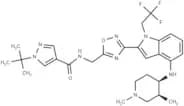
YAP/TAZ-TEAD-IN-2 (Compound 51) is a YAP/TAZ-TEAD inhibitor that disrupts the interaction between YAP/TAZ and TEAD. It inhibits the transcriptional activity of TEAD with an IC50 of 1.2 nM. Additionally, YAP/TAZ-TEAD-IN-2 suppresses the expression of target genes (Cyr61, CTGF, AXL, and Survivin) and the proliferation of breast cancer cells.Formule :C19H20N2O3SCouleur et forme :SolidMasse moléculaire :356.44PKM2-IN-6
CAS :PKM2-IN-6 (compound 7d) is an orally active PKM2 inhibitor (IC50=23 nM) capable of inducing apoptosis and G2 cell cycle arrest. It reduces PKM1 and PKM2 expression at the mRNA level, exhibits antitumour activity, and is suitable for investigating triple-negative breast cancer (TNBC).Formule :C17H14N4OSDegré de pureté :99.83%Couleur et forme :SolidMasse moléculaire :322.38FKBP51-Hsp90-IN-2
CAS :FKBP51-Hsp90-IN-2 (Compound E08) functions as a selective inhibitor for the FKBP51 - Hsp90 protein-protein interaction, exhibiting IC 50 values of 0.4 µM for FKBP51 and 5 µM for FKBP52. Beyond its inhibitory actions, FKBP51-Hsp90-IN-2 enhances cellular energy metabolism and promotes neurite growth. This compound is utilized in the study of neurodegenerative diseases and cancer [1].Formule :C25H27N3O2SMasse moléculaire :433.57Antitumor agent-100
CAS :Antitumor Agent-100 (compound A6) is a molecular gel and apoptosis inducer targeting PDE3A-SLFN12 with an IC50 of 0.3 μM, demonstrating potent antitumor activity. This orally available agent binds to the PDE3A enzyme pocket, recruiting and stabilizing SLFN12 which disrupts protein translation and induces apoptosis [1].Formule :C17H14ClN3OCouleur et forme :SolidMasse moléculaire :311.77Anticancer agent 16
Anticancer agent 16 showed good cytotoxic effects on HCT-116 cell line (IC50: 8.55 μM), NCI-H460 cell line (IC50: 5.41 μM) and SKOV3 cell line (IC50: 6.4 μM).Formule :C27H33N5O6Couleur et forme :SolidMasse moléculaire :523.58p53 Activator 12
CAS :Compound 510B, also known as p53 Activator 12, is a powerful activator of p53. This compound specifically interacts with mutant p53 to restore its DNA-binding function.Formule :C28H35F3N8O2Couleur et forme :SolidMasse moléculaire :572.63PSF-IN-2
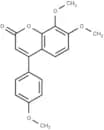
CAS :PSF-IN-2 (Compound (C)-30) is a PSF inhibitor with an IC50 value of 0.005 pM. It exhibits anticancer properties, inhibiting the proliferation of 22Rv1 cells with an IC50 value of 0.5 μM. PSF-IN-2 activates the p53 signaling pathway by disrupting PSF-RNA binding, inducing expression of related genes, promoting apoptosis, and inhibiting the cell cycle. This compound is applicable in cancer research.Formule :C18H16O5Couleur et forme :SolidMasse moléculaire :312.317RIP1 kinase inhibitor 1
CAS :RIP1 kinase inhibitor 1 is an orally available and brain-penetrating inhibitor of RIP1 kinase with pKi of 9.04.Formule :C24H20ClN5O3Degré de pureté :98%Couleur et forme :SolidMasse moléculaire :461.9PI3K-IN-35
CAS :PI3K-IN-35 (6l) selectively inhibits PI3K-α, β, δ (IC50: 13.98, 7.22, 10.94 μM), blocks G2/M phase, induces apoptosis, and is useful in leukemia research.Formule :C25H23N7O2Couleur et forme :SolidMasse moléculaire :453.5Antitumor agent-202
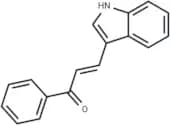
CAS :Antitumor agent-202 is a stabilizer of the p53Y220C mutant, selectively inhibiting the proliferation of tumor cells carrying the p53Y220C mutation. It is applicable for research focused on cancers associated with the p53 Y220C mutation.Formule :C17H13NOCouleur et forme :SolidMasse moléculaire :247.291CHI-KAT8i5
CAS :CHI-KAT8i5 is a selective inhibitor of KAT8 with a KD of 19.72 μM. It induces apoptosis (Apoptosis) in a dose-dependent manner. CHI-KAT8i5 can inhibit tumor growth in esophageal squamous cell carcinoma, colon cancer, melanoma, gastric cancer, non-small cell adenocarcinoma, and liver cancer.Formule :C23H29N3O5S3Couleur et forme :SolidMasse moléculaire :523.688(S)-JDQ-443
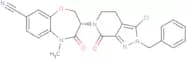
CAS :(S)-JDQ-443, an isomer of JDQ-443, is a selective, potent oral KRAS G12C inhibitor with antitumor properties.Formule :C29H28ClN7OCouleur et forme :SolidMasse moléculaire :526.03PD-L1-IN-1
PD-L1-IN-1, potent PD-L1 inhibitor with 115 nM IC50, suppresses tumors, boosts immune response, and spares healthy cells.Formule :C21H23N5O2Couleur et forme :SolidMasse moléculaire :377.44Keap1-Nrf2-IN-4
Keap1-Nrf2-IN-4 hinders MGC-803 cell growth (IC50=2.55μM), migration, and induces apoptosis with low toxicity.Formule :C26H34N2OCouleur et forme :SolidMasse moléculaire :390.56Lonitoclax
CAS :Lonitoclax is an inhibitor of B-cell lymphoma 2 (Bcl-2). It demonstrates antitumor activity in B-cell and myeloid malignancy models comparable to Venetoclax. Lonitoclax holds potential for research in relapsed or refractory chronic lymphocytic leukemia (CLL), small lymphocytic lymphoma, and certain low-grade lymphomas.Formule :C43H45ClN4O5Couleur et forme :SolidMasse moléculaire :733.294FAK-IN-4
FAK-IN-4 (Compound 7d) has anticancer activities that can induce cell apoptosis. FAK-IN-4 is potential inhibitor of FAK [1].Formule :C20H22N4OCouleur et forme :SolidMasse moléculaire :334.41CRT0066101
CAS :CRT0066101 is a potent, orally active PKD inhibitor with IC 50 values of 1 nM, 2.5 nM, and 2 nM for PKD1, PKD2, and PKD3, respectively [1]. Additionally, it inhibits PIM2 with an IC 50 of approximately 135.7 nM and demonstrates anticancer effects [2].Formule :C18H22N6OCouleur et forme :SolidMasse moléculaire :338.41