Enzyme
Sous-catégories appartenant à la catégorie "Enzyme"
- Anhydrase carbonique(196 produits)
- Hydroxylase(36 produits)
- MPO(2 produits)
- Réductase(51 produits)
- Tyrosinase(70 produits)
3618 produits trouvés pour "Enzyme"
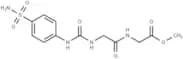
Carbonic anhydrase inhibitor 10
CA inhibitor 10 targets MCF-7 cells, IC50: 11.9 μM; potent h CA IX inhibitor, Ki: 6.2 nM. Anti-cancer research.Formule :C14H17N5O3SCouleur et forme :SolidMasse moléculaire :335.38hCAII-IN-3
hCAII-IN-3 inhibits key hCA isoforms with Ki: hCA I (403.8 nM), hCA II (5.1 nM), hCA IX (10.2 nM), hCA XII (5.2 nM); shows anticancer potential.
Formule :C17H21N3O3SCouleur et forme :SolidMasse moléculaire :347.43Carbonic anhydrase inhibitor 2
CAS :Compound 7c inhibits carbonic anhydrase II, lowering intraocular pressure in glaucomatous rabbits.Formule :C12H16N4O6SCouleur et forme :SolidMasse moléculaire :344.34hCA XII/II/IX-IN-1
hCA XII/II/IX-IN-1 inhibits hCA I/II/IX/XII (IC50: 2.6, 0.004, 0.005, 0.001 μM) with anticancer properties.Formule :C25H34N4O7SCouleur et forme :SolidMasse moléculaire :534.63Carbonic anhydrase inhibitor 8
R-13, a carbonic anhydrase inhibitor, has Ki of 60.7 nM (hCA I), 320.7 nM (hCA II), and 2298 nM (hCA IV).Formule :C20H25N3O4SCouleur et forme :SolidMasse moléculaire :403.5NSC 828467
NSC 828467 is one of the top five CA-IX inhibitors with significant in vitro anticancer activity (IC50: 27.2 nM).Formule :C21H19N9O2SCouleur et forme :SolidMasse moléculaire :461.5hCA VB-IN-1
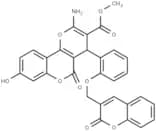
hCA VB-IN-1 (compound 15) is a potent and selective inhibitor of hCA VB (carbonic anhydrase) with a KI of 515.7 nM [1].Formule :C9H13N3O4SCouleur et forme :SolidMasse moléculaire :259.28β-Glucuronidase/hCAII-IN-1
CAS :β-Glucuronidase/hCAII-IN-2 (Compound 12e) is a compound that effectively inhibits both β-glucuronidase and human Carbonic Anhydrase II (hCA II), exhibiting IC50Formule :C30H21NO9Couleur et forme :SolidMasse moléculaire :539.49hCAIX/XII-IN-15
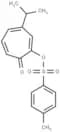
CAS :hCAIX/XII-IN-15 (Compound 17β) is an inhibitor of hCA IX and hCA XII, exhibiting Ki values of 0.42 and 4.37 μM, respectively. It demonstrates a pro-apoptotic effect in multiple myeloma cells.Formule :C17H18O4SCouleur et forme :SolidMasse moléculaire :318.387CAII-IN-2
CAII-IN-2 (3g): potent, selective CA-II inhibitor; IC50-12.1 μM for bovine CA-II; valuable in CA-related disorder research.Formule :C18H19BrN4SCouleur et forme :SolidMasse moléculaire :403.34CAII-IN-3
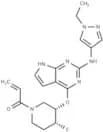
CAII-IN-3, a thiosemicarbazone, potently inhibits CA-II with an IC50 of 13.4 μM.Formule :C18H18F2N4SCouleur et forme :SolidMasse moléculaire :360.42Plodicitinib
CAS :Plodicitinib is an inhibitor of Janus tyrosine kinase 3/TEC family kinase, exhibiting anti-inflammatory properties.Formule :C19H22FN7O2Couleur et forme :SolidMasse moléculaire :399.422Tyrosinase-IN-29
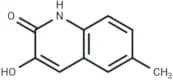
CAS :Tyrosinase-IN-29 (compound 5c) is an effective inhibitor of abTYR tyrosinase, demonstrating an IC50 value of 6.11 μM. It is suitable for further research into the inhibition of excessive skin pigmentation.Formule :C10H9NO2Couleur et forme :SolidMasse moléculaire :175.18EGFR/VEGFR2-IN-2
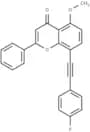
EGFR/VEGFR2-IN-2 (compound 4b) serves as a dual inhibitor of VEGFR-2 and EGFR.Formule :C24H15FO3Couleur et forme :SolidMasse moléculaire :370.37Carbonic anhydrase inhibitor 4
CA inhibitor 4, photoprobe; targets hCA I-XIV; Ki: 640-1166 nM.Formule :C21H18N2O4SCouleur et forme :SolidMasse moléculaire :394.44Carbonic anhydrase inhibitor 19
CAS :Carbonic anhydrase inhibitor19 (compound 26a) targets glaucoma-associated isozymes hCA II and hCA XII, with inhibition constants (Kis) of 9.4 nM and 6.7 nM, respectively. This compound is effective in reducing intraocular pressure.Formule :C23H25N3O6S2Masse moléculaire :503.59Carbonic anhydrase inhibitor 17
CAS :Carbonic anhydrase inhibitor 17 (compound 7c) is a pyrazine-based sulfonamide that acts as a carbonic anhydrase II inhibitor, with an IC50 value of 0.63 nM.Formule :C18H15ClN4O3S2Masse moléculaire :434.92Alkaline phosphatase
CAS :One unit of alkaline phosphatase (EC 3.1.3.1) will hydrolyze 1.0 µmol of 4-nitrophenyl phosphate per min at 25°C and pH 9.6.Degré de pureté :Min. 95%Couleur et forme :PowderKRAS Protein, Human, Recombinant (G12S, GST)
Expression system: E. coli<br>Length: 1-169, Partial<br>Activity: BLI
Couleur et forme :Odour Lyophilized PowderCarboxypeptidase Q Protein, Human, Recombinant (His)
Expression system: HEK297 Cells<br>Length: 21-472, Full Length of Mature Protein<br>Activity: Not Tested
Couleur et forme :Lyophilized PowderMasse moléculaire :49.72 kDa (Predicted)Cyclophilin A Protein, Human, Recombinant (His)
Cyclophilin A Protein, Human, Recombinant (His) is expressed in E.
Couleur et forme :Lyophilized PowderMasse moléculaire :19.4 kDa (predicted); 19.4 kDa (reducing conditions)ACE2/ACEH Protein, Human, Recombinant (hFc), Biotinylated
ACE2/ACEH Protein, Human, Recombinant (hFc), Biotinylated is expressed in HEK293 mammalian cells with hFc tag.
Couleur et forme :Lyophilized PowderMasse moléculaire :110.3 kDa (predicted); 127.74 kDa (reducing condition, due to glycosylation)PKC iota Protein, Human, Recombinant (GST)
Protein kinase C iota type, also known as Atypical protein kinase C-lambda/iota, aPKC-lambda/iota and PRKCI, is a cytoplasm, membrane and nucleus protein which
Couleur et forme :Lyophilized PowderMasse moléculaire :93.5 kDa (predicted); 100 kDa (reducing conditions)GUCY2C Protein, Canine, Recombinant (His)
GUCY2C Protein, Canine, Recombinant (His) is expressed in HEK293 mammalian cells with His tag.
Couleur et forme :Lyophilized PowderMasse moléculaire :47.9 kDa (predicted); 84.32 kDa (reducing conditions)Carboxypeptidase B2 Protein, Human, Recombinant (His)
Carboxypeptidase B2 Protein, Human, Recombinant (His) is expressed in HEK293 mammalian cells with His tag.
Couleur et forme :Lyophilized PowderMasse moléculaire :47.4 kDa (predicted); 45-50 kDa (reducing condition, due to glycosylation)GST Protein, Schistosoma japonicum, Recombinant
Genetic engineers have used glutathione S-transferase to create the GST gene fusion system.
Degré de pureté :97.9%Couleur et forme :Lyophilized PowderMasse moléculaire :26.9 kDa (predicted); 28 kDa (reducing conditions)Ref: TM-TMPY-02157
Produit arrêtéPPM1G Protein, Human, Recombinant (aa 317-546, His)
Protein phosphatase 1G, also known as Protein phosphatase 1C, Protein phosphatase 2C isoform gamma, Protein phosphatase magnesium-dependent 1 gamma, PP2C-gamma
Couleur et forme :Lyophilized PowderMasse moléculaire :26.6 kDa (predicted); 30 kDa (reducing conditions)VEGFR3/FLT4 Protein, Human, Recombinant (His & Avi), Biotinylated
VEGFR3/FLT4 Protein, Human, Recombinant (His & Avi), Biotinylated is expressed in HEK293 mammalian cells with His and Avi tag.
Couleur et forme :Lyophilized PowderMasse moléculaire :87.80 kDa (predicted); 126.18, 81.32 and 69.37 kDa (reducing conditions)PFKFB3 Protein, Human, Recombinant (His & GST)
Fructose-2,6-biphosphatase 3, also known as 6-phosphofructo-2-kinase or PFK2 or PFKFB3, is a potent activator of phosphofructokinase, which is a rate-limiting
Couleur et forme :Lyophilized PowderMasse moléculaire :87.4 kDa (predicted); 75 kDa (reducing conditions)Carbonic Anhydrase 9 Protein, Human, Recombinant (His & Avi), Biotinylated
Carbonic Anhydrase 9 Protein, Human, Recombinant (His & Avi), Biotinylated is expressed in HEK293 mammalian cells with His and Avi tag.
Couleur et forme :Lyophilized PowderMasse moléculaire :44.23 kDa (predicted); 52.2 kDa (reducing conditions)GUCY2C Protein, Cynomolgus, Recombinant (His)
GUCY2C Protein, Cynomolgus, Recombinant (His) is expressed in HEK293 mammalian cells with His tag.
Couleur et forme :Lyophilized PowderMasse moléculaire :47.59 kDa (predicted); 81.26 kDa (reducing conditions)Ref: TM-TMPY-06381
Produit arrêtéEndopeptidase, liquid, food grade
CAS :Endopeptidase, liquid, food grade is an enzymatic product that functions as a crucial component in the hydrolysis of protein substrates. This enzyme is typically derived from microbial sources, such as bacteria or fungi, and is cultivated under controlled fermentation processes to ensure high purity and activity levels. The primary mode of action of endopeptidases involves the cleavage of peptide bonds within protein molecules, effectively breaking down long protein chains into smaller peptides and amino acids.
Dextranase
CAS :Dextranase (alternative names dextran hydrolase, endo-dextranase, endodextranase, dextranase DL 2, α-D-1,6-glucan-6-glucanohydrolase, 1,6-α-D-glucan 6-glucanohydrolase, EC 3.2.1.11) is dextran-degrading enzyme that hydrolyzes the α(1→6) glycosidic linkage of dextran, cutting it into progressively shorter fragments, ultimaly producing isomaltose (a disaccharide) and glucose. One unit of dextranase will cleave dextrane to yield 1.0 μmole of isomaltose per min at pH 6.0 and 37 °C.
Formule :C66H56N4Degré de pureté :Min. 95%EUCODIS® Lipase 030, screening grade, recombinant, from microbial sources - EL030
Lipase 30 recombinantly expressed in E. coli comes in a spray-dried formulation. It has its pH optimum at 5.5-8 and temp. optimum at >55°C. Lipases belong to the family of esterases and naturally act on triglycerides at lipid-water interfaces catalyzing hydrolytic reactions, esterifications and transesterification reactions in industrial and food applications. Lipase 30 was shown to hydrolyze p-Nitrophenyl esters of butyrate (100 % activity), octanoate (72 %), laurate (38 %), palmitate (7 %) and stearate (2 %).
Catalase 01
CAS :A catalase product which neutralizes hydrogen peroxide at much higher concentrations (>10 %) compared to pyruvate, which is only capable of completely neutralizing hydrogen peroxide at the lowest concentration tested (2 %). Catalase (EC 1.11.1.6) catalyzes the following reaction:2H2O2 → 2H2O + O21 unit of catalase will decompose 1.0 μmole of H2O2 per min at pH 7.0 and 25 °C.
EUCODIS® Lipase 014, screening grade, recombinant, from microbial sources - EL014
Lipase 14 recombinantly expressed in E. coli comes in a spray-dried formulation. It has its pH optimum at 6-8 and temp. optimum at 30-40°C. Lipases belong to the family of esterases and naturally act on triglycerides at lipid-water interfaces catalyzing hydrolytic reactions, esterifications and transesterification reactions in industrial and food applications. Lipase 14 was shown to hydrolyze p-Nitrophenyl esters of butyrate (74 % activity compared to octanoate), octanoate (100 %), laurate (8 %), palmitate (5 %), stearate (4 %), arachidate (1 %) and behenate (0.6 %).
Phospholipase D
CAS :Phospholipases D belong to the family of esterases and act on phosphatidylcholine in the plasma membrane to release phosphatidic acid (PA) and choline. Phospholipases D can be used as versatile tools in hydrolysis and transphosphatidylation reactions for industrial, chemical and food applications.
EUCODIS® Lipase 016, screening grade, recombinant, from microbial sources - EL016
Lipase 16 recombinantly expressed in E. coli comes in a spray-dried formulation. It has its pH optimum at 7-8 and temp. optimum at >40°C. Lipases belong to the family of esterases and naturally act on triglycerides at lipid-water interfaces catalyzing hydrolytic reactions, esterifications and transesterification reactions in industrial and food applications. Lipase 16 was shown to hydrolyze p-Nitrophenyl esters of butyrate (58 % activity compared to octanoate), octanoate (100 %), laurate (40 %), palmitate (27 %), stearate (13 %), arachidate (2 %) and behenate (0.2 %).
Phospholipase D 40, from Streptomyces antibioticus, recombinant - EPLD040
CAS :Phospholipases D belong to the family of esterases and act on phosphatidylcholine in the plasma membrane to release phosphatidic acid (PA) and choline. Phospholipases D can be used as versatile tools in hydrolysis and transphosphatidylation reactions for industrial, chemical and food applications.Spray dried version of EPLD840.6_R
Couleur et forme :PowderLipase Y 01
CAS :Lipase Y 01 is an enzymatic catalyst, which is derived from microbial fermentation with a specific mode of action involving the hydrolysis of triglycerides into glycerol and free fatty acids. This enzyme operates by breaking ester bonds in fats, facilitating their breakdown and conversion into simpler molecules.
Catalase ECAT01™, EUCODIS® Patent: US 9951306 and EP2861715
CAS :A proprietary potent and stable alternative to chemical neutralizers such as pyruvate - for the utilization in environmental monitoring applications. Use of catalase as a supplement in media plates offers a more effective and reliable solution for safe and secure environmental monitoring of sterilization in clean rooms, isolators or production facilities by also removing remaining traces and spots of high concentration of H2O2. Currently, agar plates for monitoring disinfection or sterilization are supplemented with pyruvate, which is consumed during the neutralization of hydrogen peroxide. One of the main benefits of this catalase is its high stability in agar media at 50°C, which allows easy preparation of media and processing into plates. Due to the high stability no special storage conditions are needed and a shelf-life of > 6 months at 4-25°C can be guaranteed.
Key features are:Penase, 3300 IU, β-lactamase I, lyophilized - EBL051.2
Freeze-dried powder with 3300 IU beta-lactamase I activity per vial against all relevant penicillins. Our penase (penicillinase) posesses a specific substrate range solely against all relevant penicillins.
Couleur et forme :PowderLacBuster® - Settle Plates, available via other suppliers in cooperation with EUCODIS® - EB010.1
LacBuster® Settle Plates contain a general purpose growth medium (tryptone soya agar) supplemented with LacBuster®, a high-performing beta-lactamase to effectively neutralize beta-lactam antibiotics. The media plates are suitable for the cultivation of a wide variety of microorganisms in environmental monitoring within the pharmaceutical industry.
Pyruvate oxidase from microorganisms
CAS :Pyruvate oxidase is a phosphorylating oxidoreductase which uses FAD as a cofactor to convert pyruvate into acetate and CO2. Pyruvate oxidase (PoxB) is used in metabolism studies in bacteria and in clinical assays for pyruvate, and requires thiamine pyrophosphate (TPP) and magnesium alongside FAD for optimum activity.
Degré de pureté :(Sds-Page) Min. 90%Couleur et forme :PowderRef: 3D-JAA00196
Produit arrêtéAldehyde dehydrogenase, ≥2.0 units/mg protein potassium-activated
CAS :Aldehyde dehydrogenase (EC 1.2.1.3) is the enzyme that catalyzes oxidation of aldehydes to carboxilic acids, using NAD+ as a cofactor in the following reaction: R-CHO + NAD+ + H2O → R-COOH + NADH + H+ One enzyme unit will oxidize 1.0 μmole of acetaldehyde to acetic acid per min at 25 °C at pH 8.0 in the presence of β-NAD+, potassium and thiols.
Couleur et forme :PowderRef: 3D-JAA02888
Produit arrêtéEUCODIS® Peroxidase 12, from bacterial, fungal and plant origin, recombinant - EP012
CAS :Peroxidase 12 recombinantly expressed in P. pastoria comes in a freeze-dried formulation. It has its pH optimum at 5-8 and temp. optimum at 20-40°C. Peroxidases can be utilized as enzymes catalyzing e.g. aromatic ring hydroxylation, epoxidation, halogenation, N- or S-oxidation, ether cleavage and alcohol/aldehyde oxidation reactions. Peroxidase 12 was shown to act on styrene, veratryl alcohol, vanillyl alcohol, n-methyl anthranilate and thioanisole.
Couleur et forme :PowderSucrose phosphorylase, liquid
CAS :Please enquire for more information about Sucrose phosphorylase, liquid including the price, delivery time and more detailed product information at the technical inquiry form on this page
Pancreatin from porcine pancreas, powder
CAS :Pancreatin is an enzyme preparation, which is derived from the porcine pancreas. This product contains a mixture of several digestive enzymes, including amylase, lipase, and protease. It is typically obtained through the extraction and purification of these enzymes from the pancreas of pigs, providing a natural and effective source for enzymatic activity.
Ribokinase, liquid
CAS :Please enquire for more information about Ribokinase, liquid including the price, delivery time and more detailed product information at the technical inquiry form on this page
Glucosyltransferase227-freeze dried
CAS :Glucosyltransferase227-freeze dried is an enzyme-derived product, originating from microbial sources known for its role in catalyzing the transfer of glucose moieties from a donor molecule to specific acceptor molecules. The enzyme operates by facilitating covalent bond formation between glucose and target substrates, displaying specificity that can be exploited in various biochemical pathways.