


Glucides et Glycoconjugués
Les glucides sont des composés organiques constitués de carbone, d’hydrogène et d’oxygène, avec une structure de base formée par des monosaccharides. Ceux-ci peuvent s’assembler pour former des disaccharides, des oligosaccharides ou des polysaccharides, selon le nombre d’unités monomériques. Les glucides jouent un rôle fondamental dans le stockage de l’énergie, la structure cellulaire et la communication cellulaire. Leurs dérivés sont utilisés dans les produits pharmaceutiques, tels que les édulcorants et les excipients.
Chez CymitQuimica, nous proposons une large gamme de glucides et de leurs dérivés pour la recherche et les applications industrielles.
5010 produits trouvés pour "Glucides et Glycoconjugués"
Trier par
Degré de pureté (%)
0
100
|
0
|
50
|
90
|
95
|
100
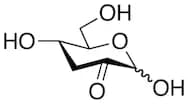
3-Deoxyglucosone
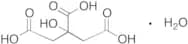
CAS :<p>Stability Hygroscopic, Light Sensitive, Temperature Sensitive<br>Applications An intermediate in the Maillard reaction of proteins with glucose, which is metabolised to 3-Deoxyfructose. An intermediate in the formation of pyrraline, which might contribute to a pathological effect, such as carcinogenesis.<br>References Kato, H. et al.: Agric. Biol. Chem., 51, 683 (1987), Hayase, F. et al.: J. Biol. Chem., 264, 3758 (1989), Kato, H. et al.: Biochimica et Biophysica Acta, 1035, 71 (1990)<br></p>Formule :C6H10O5Couleur et forme :White To YellowMasse moléculaire :162.14Citric Acid Monohydrate
CAS :Produit contrôlé<p>Applications Citric Acid Monohydrate is a useful buffer component for antigen and epitope unmasking.<br></p>Formule :C6H8O7·H2OCouleur et forme :White To Off-WhiteMasse moléculaire :210.14Lauramine Oxide
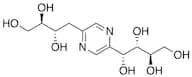
CAS :Produit contrôlé<p>Applications Lauramine Oxide, is an frequently-used amine oxide surfactant. It is strongly hydrophilic , and it forms normal micelles and normal liquid crystalline phases.<br> Not a dangerous good if item is equal to or less than 1g/ml and there is less than 100g/ml in the package<br>References Kocherbitov, v., et al.: J. Molec. Struct.: Theochem., 808, 111 (2007); Kocherbitov, v., et al.: J. Phys. Chem. B., 110 (27), 13649 (2006);<br></p>Formule :C14H31NOCouleur et forme :NeatMasse moléculaire :229.402,5-Deoxyfructosazine
CAS :Produit contrôlé<p>Applications Contained in tobacco flavor additives.<br>References Sumoto, K., et al.: Chem. Pharm. Bull., 39, 792 (1991), Shimamura, T., et al.: Biosci., Biotechnol., Biochem., 67, 295 (2003),<br></p>Formule :C12H20N2O7Couleur et forme :NeatMasse moléculaire :304.32'-Fucosyllactose (~90%)
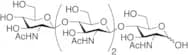
CAS :Produit contrôléFormule :C18H32O15Degré de pureté :~90%Couleur et forme :NeatMasse moléculaire :488.44N,N’,N’’,N’’’-Tetraacetylchitotetraose
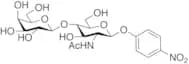
CAS :Produit contrôlé<p>Stability Store in freezer<br>Applications Prepared by acetolysis of chitin. Studies have shown this compound to have anti tumor effects.<br>References Barker, S.A., et al.: J. Chem. Soc., 2218 (1958); Suzuki, K., et al.: Carbohydrate Research, 151, 403 (1986)<br></p>Formule :C32H54N4O21Couleur et forme :NeatMasse moléculaire :830.79p-Nitrophenyl 2-Acetamido-2-deoxy-4-O-(b-D-galactopyranosyl)-b-D-glucopyranoside
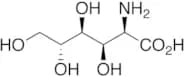
CAS :Produit contrôléFormule :C20H28N2O13Couleur et forme :NeatMasse moléculaire :504.44D-Glucosaminic Acid
CAS :<p>Applications D-Glucosaminic Acid is a useful starting material for the synthesis of aldonic acids containing a free carboxyl group and having all hydroxyl functions esterified with a simple carboxylic acid are well established deriviatives.<br>References Major, R.T., et al.: J.A.C.S., 58, 2474 (1936), Hurd, C.D., et al.: J.A.C.S., 60, 235 (1938), Wolfrom, M., et al.: J.A.C.S., 61, 574 (1939)<br></p>Formule :C6H13NO6Couleur et forme :NeatMasse moléculaire :195.17trans-4-[[(2-Amino-5-bromophenyl)methyl]amino]-cyclohexanol
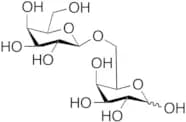
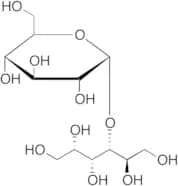
CAS :<p>Applications trans-4-[[(2-Amino-5-bromophenyl)methyl]amino]-cyclohexanol is an impurity of Ambroxol (A575900), a bronchosecretolytic drug and a metabolite of Bromohexine.<br>References Jauch, R., et al.: Arzneim-Forsch., 13, 474 (1963)<br></p>Formule :C13H19BrN2OCouleur et forme :NeatMasse moléculaire :299.216-O-β-D-Galactopyranosyl-D-galactose
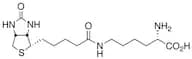
CAS :<p>Applications 6-O-β-D-Galactopyranosyl-D-galactose can be as a substrate of β-galactosidase in research studies.<br>References Kotake, T., et al.: Plant Physio., 138(3), 1563-1576 (2005)<br></p>Formule :C12H22O11Couleur et forme :NeatMasse moléculaire :342.30Biocytin
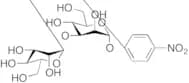
CAS :<p>Applications Useful for the synthesis of Biocytin containing peptides to study the mechanism of reactions catalyzed by biotin - containing enzymes.<br>References Bodanszky, M., and Fagan, D.T.: J. Am. Chem. Soc., 99, 235 (1977)<br></p>Formule :C16H28N4O4SCouleur et forme :White To Off-WhiteMasse moléculaire :372.484-Nitrophenyl 3-O-(α-D-Mannopyranosyl)-α-D-mannopyranoside
CAS :Produit contrôlé<p>Stability Very Hygroscopic<br>Applications 4-Nitrophenyl 3-O-(α-D-Mannopyranosyl)-α-D-mannopyranoside (cas# 93979-06-7) is a compound useful in organic synthesis.<br></p>Formule :C18H25NO13Couleur et forme :NeatMasse moléculaire :463.39Xylobiose
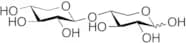
CAS :Produit contrôlé<p>Applications Xylobiose is a disaccharide that can reduce the blood sugar and blood fat and inhibit the fat accumulation of diet-induced obese rats.<br>References Chen, H., et al.: Shipin Kexue, 35, 255 (2014)<br></p>Formule :C10H18O9Couleur et forme :NeatMasse moléculaire :282.244-Methylumbelliferyl 2-Acetamido-2-deoxy-a-D-galactopyranoside
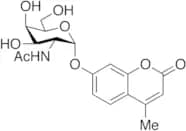
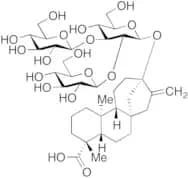
CAS :Produit contrôléFormule :C18H21NO8Couleur et forme :NeatMasse moléculaire :379.36Steviolbioside
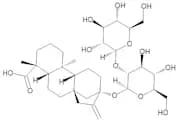
CAS :Produit contrôléFormule :C32H50O13Couleur et forme :White To Off-WhiteMasse moléculaire :642.73trans-Doxercalciferol
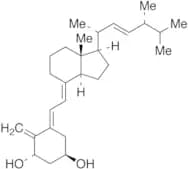
CAS :Produit contrôlé<p>Applications A Vitamin D derivative.<br> Not a dangerous good if item is equal to or less than 1g/ml and there is less than 100g/ml in the package<br>References Koeffler, M.R., et al.: Blood, 74, 82 (1989),<br></p>Formule :C28H44O2Couleur et forme :NeatMasse moléculaire :412.65rac FTY720 Phosphate
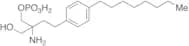
CAS :Produit contrôlé<p>Applications rac FTY720 is a sphingosine 1-phosphate receptor modular, ameliorates experimental autoimmune encephalomyelitis by inhibition of T cell infiltration.<br>References Igarashi, J., et al.: J. Biol. Chem., 275, 32363 (2000), Bandhuvula, P., et al.: J. Biol. Chem., 280, 33697 (2005),<br></p>Formule :C19H34NO5PCouleur et forme :NeatMasse moléculaire :387.45Uridine Diphosphate Choline Ammonium Salt
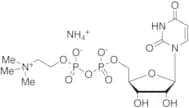
CAS :Produit contrôlé<p>Stability Very Hygroscopic<br>Applications CDPcholine cholinephosphotransferase analog.<br>References Kennedy, E.P., et al.: J. Biol. Chem.,222,185 (1956),<br></p>Formule :C14H28N4O12P2Couleur et forme :White To Dark YellowMasse moléculaire :506.341-Bromo-6-(trimethylammonium)hexyl Bromide
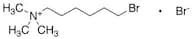
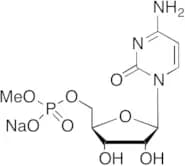
CAS :Produit contrôléFormule :C9H21BrN·BrCouleur et forme :NeatMasse moléculaire :303.08Cytidine 5’-Monophosphate Methyl Ester Sodium Salt
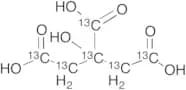
CAS :<p>Applications Cytidine 5’-Phosphate Methyl Ester Sodium Salt is an byproduct formed in the synthesis of analogs of Cytidine 5’-Diphosphate with an important role in the metabolism of phospholipids.<br>References Trotter, P., et al.: J. Biol. Chem., 270, 6062 (1995), Janssen, M., et al.: Yeast, 16, 641 (2000), Henneberry, A., et al.: Mol. Biol. Cell, 12, 511 (2001), Boumann, H., et al.: Biochemistry, 42, 3054 (2003),<br></p>Formule :C10H15N3NaO8PCouleur et forme :White To Off-WhiteMasse moléculaire :359.2Citric Acid-13C6
CAS :<p>Applications Citric Acid-13C6 is an isotope labelled compound of citric acid (C521000). Citric acid is mainly used as an acidifier, flavoring agent and chelating agent. Citric acid is also a metabolite of Dimethyl Fumarate (D464965), a compound used as a treatment for the relapsing forms of multiple sclerosis and psoriasis.<br>References Dawson, R.M., et al.: Data for Biochem. Rsch., (1959); Gruber, C. M., et al.: J. Pharmacol. Exp. Ther., 94, 65 (1948); Lofty, W.A., et al.: Bioresource. Tech., 98, 3470 (2007); Schimrigk, S., et al.: Eur. J. Neurol., 13, 604 (2006)<br></p>Formule :C6H8O7Couleur et forme :NeatMasse moléculaire :198.08rac 1-Oleoyl Glycerol-d5
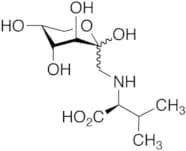
CAS :Produit contrôlé<p>Applications Monoglycerides fatty acid esters are useful for improvement of texture and flavor of beverages. 93% 1-Oleoyl, 7% 2-oleoyl.<br>References Lee, T.-H., et al.: J. Nat. Prod., 72, 1960 (2009),<br></p>Formule :C21D5H35O4Couleur et forme :NeatMasse moléculaire :361.57Fructose Valine (mixture of diastereomers)
CAS :Produit contrôlé<p>Applications An Amadori compound having the potential to alter cellular adhesion, inhibit cancer metastasis and induce apoptosis.<br>References Horiuchi, T., et al.: Agric. Biol. Chem., 55, 333 (1991), Sosnovsky, G., et al.: J. Pharm. Sci., 82, 649 (1993), Glinsky, G., et al.: Cancer Res., 56, 5319 (1996),<br></p>Formule :C11H21NO7Couleur et forme :Off-White To Dark BrownMasse moléculaire :279.29Thymidine-α,α,α,6-d4
CAS :Produit contrôlé<p>Applications Thymidine-alpha,alpha,alpha,6-d4 (CAS# 347841-67-2) is a useful isotopically labeled research compound.<br></p>Formule :C10H10D4N2O5Couleur et forme :NeatMasse moléculaire :246.2532D-(-)-Tartaric Acid
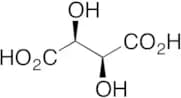
CAS :<p>Applications D-(-)-Tartaric Acid the synthetic enantiomer of L-(+)-Tartaric Acid (T007630), used in the preparation of synthetic analgesics.<br>References Van Bever, W. et al.: J. Med. Chem., 17, 1047 (1974);<br></p>Formule :C4H6O6Couleur et forme :NeatMasse moléculaire :150.09Sucrose Octasulfate, Ammonium Salt
CAS :Produit contrôléFormule :C12H14O35S8·8H4NCouleur et forme :NeatMasse moléculaire :1119.05(-)-3-Dehydro Shikimic Acid
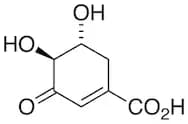
CAS :Produit contrôlé<p>Stability Temperature Sensitive<br>Applications A metabolite of Shikimic Acid.<br>References Lauhon, C.T. and Bartlett, P.A.: Biochemistry, 33, 14100 (1994), Balasubramanian, S., et al.: Biochemistry, 34, 341 (1995),<br></p>Formule :C7H8O5Couleur et forme :NeatMasse moléculaire :172.14Xylotetrose
CAS :<p>Applications Xylotetrose is a xylose oligomer that is of interest to many fields of study and is an intermediate reaction product of the hydrolysis of hemicelluloses.<br>References Bunnell, K., et al.: J. Liq. Chromatogr. R. T., 38, 801 (2015)<br></p>Formule :C20H34O17Couleur et forme :NeatMasse moléculaire :546.472-Oleoyl Glycerol-d5
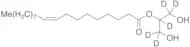
CAS :Produit contrôlé<p>Applications Labelled 2-Oleoylglycerol (O528020). A metabolite of 2-acylglycerol used as biomarker.<br>References Owen, M., et al.: Biochem. J., 323, 17 (1997), Waterman, I., et al.: J. Lipid Res., 43, 1555 (2002), Chon, S., et al.: J. Biol. Chem., 282, 33346 (2007),<br></p>Formule :C21H35D5O4Couleur et forme :NeatMasse moléculaire :361.57rac Guaifenesin-d5
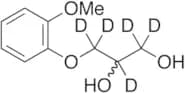
CAS :Produit contrôléFormule :C10H9D5O4Couleur et forme :NeatMasse moléculaire :203.25Rebaudioside B
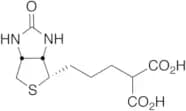
CAS :Produit contrôléFormule :C38H60O18Couleur et forme :White To Off-WhiteMasse moléculaire :804.87Biotin Diacid
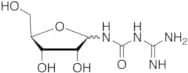
CAS :Produit contrôlé<p>Impurity Biotin EP Impurity B<br>Applications Biotin Diacid (Biotin EP Impurity B) is an impurity of Biotin (B389040).<br>References Trotter, J., et al.: Biochemistry, 5, 713 (1966), Suurkuusk, J., et al.: Eur. J.Biochem., 28, 438 (1972),<br></p>Formule :C11H16N2O5SCouleur et forme :NeatMasse moléculaire :288.321-D-Ribofuranosyl-3-guanylurea (α/β-Mixture)
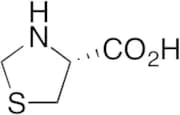
CAS :Produit contrôlé<p>Stability Very Hygrocsopic<br>Applications A labile hydrolysis product of the antitumor nuceloside 5-Azacytidine (A796000).<br>References Beisler, J. A. et al.: J. Med. Chem., 21, 204 (1978); Chan, K.K. et al.: J. Pharmac. Sci., 68, 807 (1979);<br></p>Formule :C7H14N4O5Couleur et forme :NeatMasse moléculaire :234.21L-Thioproline
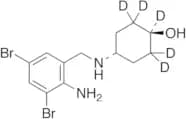
CAS :<p>Applications L-Thioproline is used to create a monolayer on gold electrodes for the determination Copper(II). L-Thioproline has shown to be an effect inhibitor of proline absorption in Saccharomyces chevalieri.<br> Not a dangerous good if item is equal to or less than 1g/ml and there is less than 100g/ml in the package<br>References Cui, X., et. al.: Sci. China Chem., 53, 257 (2010); Magana-Schwenchke, N., Schwencke, J.: BBA-Biomembranes, 173, 313 (1969)<br></p>Formule :C4H7NO2SCouleur et forme :NeatMasse moléculaire :133.17rac-trans-Ambroxol-d5
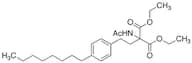
CAS :Produit contrôlé<p>Applications A labelled metabolite of Bromohexine. Ambroxol Hydrochloride is a bronchosecretolytic drug.<br>References Jauch, R., et al.: Arzneim-Forsch., 13, 474 (1963)<br></p>Formule :C13H13D5Br2N2OCouleur et forme :NeatMasse moléculaire :383.13Diethyl 2-Acetamido-2-[2-(4-octylphenylethyl)malonate
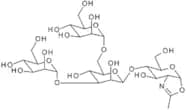
CAS :Produit contrôlé<p>Applications An impurity found in fingolimod (F805000).<br></p>Formule :C25H39NO5Couleur et forme :NeatMasse moléculaire :433.582-Methyl-(4-O-(3,6-di-O-a-D-mannopyranosyl)-b-D-mannopyrannosyl)-1,2-dideoxy-a-D-glucopyrano)-[2,1-d]-2-oxazoline
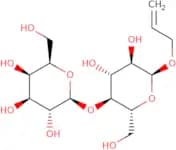
<p>This is a custom synthesis, modification, and fluorination of a polysaccharide. The monosaccharide units are methylated and then modified with a click reaction. The saccharides are glycosylated with 2-O-a-D-mannopyranosyl moieties for the purpose of increasing their water solubility. This saccharide has been synthesized by the modification of an oligosaccharide that has been modified to include a hydroxyl group. The carbohydrate is complex and contains many different types of sugars including glucose, mannose, and galactose.</p>Formule :C26H43NO20Degré de pureté :Min. 95%Couleur et forme :PowderMasse moléculaire :689.61 g/molAllyl a-D-lactose
CAS :<p>A functionalized carbohydrate that serves as a valuable precursor for the synthesis of complex glycoconjugates, oligosaccharides, and glycopolymers through reactions like glycosylation and click chemistry</p>Formule :C15H26O11Masse moléculaire :382.36 g/molZymosan A (from Saccharomyces cerevisiae)
CAS :<p>Zymosan is prepared from the cell walls of baker's yeast (Saccharomyces cerevisiae) and consists of polysaccharide chains of various molecular weights, containing approximately 73% polysaccharide, 15% protein, 7% lipid and other inorganic components. When injected into animals, it induces inflammation and has been used for many years in inflammation and immunology research. The conditions activated include components of the complement system, prostaglandins and leukotrienes, platelet aggregation factor, and lysosomal enzymes. Zymosan preparations are often insoluble but can be made soluble for separation on DE cellulose or Sepharose to produce more active fractions.</p>Carboxymethyl cellulose sodium - Viscosity 700-1500 mPa·s
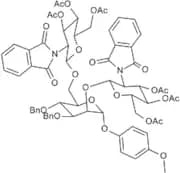
CAS :<p>Food additive; soil suspension polymer in detergents; thickening agent</p>Degré de pureté :Min. 95%4-Methoxyphenyl 3,4-di-O-benzyl-2,6-di-O-(3,4,6-tri-O-acetyl-2-deoxy-2-phthalimido-β-D-glucopyranosyl)-α-D-mannopyranoside
<p>4-Methoxyphenyl 3,4-di-O-benzyl-2,6-di-O-(3,4,6-tri-O-acetyl-2-deoxy-2-phthalimido-b-D-glucopyranosyl)-a-D -mannopyranoside is a synthetic glycoside that can be custom synthesized to order. It is considered to be of high purity with a CAS number 58314−10−1. This product has been fluorinated and glycosylated and is synthetically produced. 4MPBP has the following modifications: methylation, modification, and glycosylation. 4MPBP is an oligosaccharide that is composed of saccharides and a complex carbohydrate.</p>Formule :C67H68N2O25Degré de pureté :Min. 95%Masse moléculaire :1,301.26 g/mol3-O-(b-D-Galactopyranosyl)-D-mannopyranose
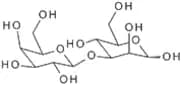
<p>3-O-(b-D-Galactopyranosyl)-D-mannopyranose is a synthetic sugar that is modified with fluorine at the C-3 position. It is a member of the carbohydrate family and has been shown to be useful for glycosylation or click chemistry. 3-O-(b-D-Galactopyranosyl)-D-mannopyranose can be custom synthesized to meet your needs. This product also features high purity and methylation, which makes it an excellent candidate for synthesis projects. This product can be used in research applications, such as complex carbohydrate modification, glycosylation, or click chemistry.</p>Formule :C12H22O11Degré de pureté :Min. 95%Masse moléculaire :342.3 g/mol2-Acetamido-4-O-{2-acetamido-4-O-[[3-O-[2,4-di-O-(2-acetamido-2-deoxy-b-D-glucopyranosyl)-a-D-mannopyranosyl]-6-O-[2,6-di-O-(2-aceta mido-2-deoxy-b-D-glucopyranosyl)-b-D-mannopyranosyl]-b-D-mannopyranosyl]]-2-deoxy-b-D-glucopyranosyl}-6-O-(a-L-fucopyr
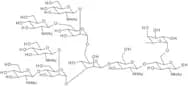
<p>2-Acetamido-4-O-{2-acetamido-4-O-[3-O-[2,4-di-O-(2-acetamido-2,6-dideoxyb -D-glucopyranosyl)-a,D -mannopyranosyl]-6-O-[2,6 -di(2 -acetamido)-b -D -glucopyranosyl]-b D mannopyranosyl]] b D mannopyranosyl} 2,6 dideoxy b D glucopyranosyl} 6 O-(a L fucopyranosyl)}</p>Formule :C72H120N6O49SDegré de pureté :Min. 95%Masse moléculaire :1,885.8 g/molGalacturonan DP7/DP8 sodium
<p>Mixed DP 7/8 Na galacturonans (α-1,4 galacturonoheptoses and octaoses), are derived from pectin or pectic acid, by enzymatic or partial acid hydrolysis. They are used in galacturonic acid metabolism research as a substrate to identify, differentiate, and characterized endo- and exopolygalacturonase(s), and gluconase(s). The addition of very short fragments of homogalacturonan oligosaccharides, restores development in dark-grown, de-etiolated seedling mutants, suggesting that they are unable to generate de-methylesterified pectin fragments. A model of spatiotemporally separated photoreceptive and signal-responsive cell types has been proposed, that contains overlapping subsets of the regulatory network of light-dependent seedling development.</p>Degré de pureté :Min. 95%Couleur et forme :PowderBlood group A type 3/4 linear trisaccharide
<p>GalNAca1-3Galb1-3GalNAc</p>Formule :C22H38N2O16Degré de pureté :Min. 95%Masse moléculaire :586.54 g/mol2,3,6-Tri-O-acetyl-4-O-(2,3,6-tri-O-acetyl-4-O-[(2,3,4,6-tetra-O-acetyl-b-D-galactopyranosyl)]-b-D-glucopyranosyl)-a-D-glucopyranosy l bromide
<p>2,3,6-Tri-O-acetyl-4-O-(2,3,6-tri-O-acetyl-4-O-[(2,3,4,6-tetra-O-acetyl bDgalactopyranosyl)]bDglucopyranosyl)-aDglucopyranosyldimethyl bromide is a synthetic sugar that is used as a building block for the synthesis of glycosides. This monosaccharide has been modified using click chemistry to obtain a methylated form that can be used in the synthesis of oligosaccharides and polysaccharides. It is also used to produce an acetal derivative that can be used in the synthesis of glycosidic linkages.</p>Formule :C38H51BrO25Degré de pureté :Min. 95%Masse moléculaire :987.7 g/molN,N',N'',N''',N'''',N'''''-Hexaacetylchitohexaose
CAS :<p>Hexaacetylchitohexaose is a hexamer of N-acetylgucosamine subunits which are linked by β-(1,4)-glucosidic bonds. N-acetylgucosamine is the monomeric unit of the natural polymer chitin which is degraded by chitinases, in mammals, to form smaller fragments that can induce an immune response. Like chitin and some of its derivatives, hexaacetylchitohexaose is a substrate of lysozymes. Hexaacetylchitohexaose has been shown to significantly inhibit tumour growth in mice by the activation of innate and adaptive immune cells.</p>Formule :C48H80N6O31Degré de pureté :Min. 90 Area-%Couleur et forme :White PowderMasse moléculaire :1,237.2 g/mol4-O-(2,3,4,6-Tetra-O-acetyl-b-D-glucopyranosyl)-1,2,3,6-tetra-O-acetyl-b-D-thioglucopyranose
CAS :<p>4-O-(2,3,4,6-Tetra-O-acetyl-b-D-glucopyranosyl)-1,2,3,6-tetra-O-acetyl-b-D-thioglucopyranose is a glycosylated saccharide that belongs to the group of complex carbohydrates. The glycosylation of 4-O-(2,3,4,6,-Tetra-O-acetyl b -D -glucopyranosyl)-1,2,3,6,-tetra -O -acetyl b -D -thioglucopyranose is achieved by the enzymatic reaction of an acetate donor and an acceptor molecule in the presence of glucose 1 phosphate (G1P) and UDP sugar pyrophosphorylase. It has been modified by methylation with dimethyl sulphate in the presence of</p>Formule :C28H38O18SDegré de pureté :Min. 95%Masse moléculaire :694.66 g/molCellulase inhibitor PG 7145185
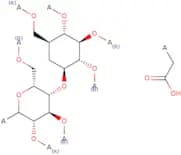
<p>Inhibitor that targets cellulase enzymes engaged in the degradation of cellulose.</p>Formule :C13H21O11F3Degré de pureté :Min. 95%Couleur et forme :White/Off-White SolidMasse moléculaire :410.29 g/mol



![trans-4-[[(2-Amino-5-bromophenyl)methyl]amino]-cyclohexanol](/_next/image/?url=https%3A%2Fstatic.cymitquimica.com%2Fproducts%2FTR%2Fthumb-webp%2FA601985.webp&w=3840&q=75)







![2,3,6-Tri-O-acetyl-4-O-(2,3,6-tri-O-acetyl-4-O-[(2,3,4,6-tetra-O-acetyl-b-D-galactopyranosyl)]-b-D…](/_next/image/?url=https%3A%2Fstatic.cymitquimica.com%2Fproducts%2F3D%2Fthumb-webp%2FOT11432.webp&w=3840&q=75)


