Apoptosi
Gli inibitori dell'apoptosi sono composti che prevengono o ritardano il processo di morte cellulare programmata, noto come apoptosi. Questi inibitori sono fondamentali per lo studio dei meccanismi di sopravvivenza cellulare e vengono utilizzati per indagare sulle malattie in cui l'apoptosi è disregolata, come il cancro, i disturbi neurodegenerativi e le malattie autoimmuni. Modulando l'apoptosi, questi inibitori possono aiutare nello sviluppo di terapie mirate a controllare la morte cellulare. Presso CymitQuimica, offriamo una vasta selezione di inibitori dell'apoptosi di alta qualità per supportare le tue ricerche in biologia cellulare, oncologia e campi correlati.
Sottocategorie di "Apoptosi"
- ASK(6 prodotti)
- BCL(11 prodotti)
- Caspasi(127 prodotti)
- FOXO1(3 prodotti)
- IAP(65 prodotti)
- Mdm2(12 prodotti)
- PD-1/PD-L1(126 prodotti)
- PDK(9 prodotti)
- PERK(24 prodotti)
- Chinasi di serina/treonina(15 prodotti)
- Survivin(13 prodotti)
- TNF(91 prodotti)
- c-RET(51 prodotti)
- p53(62 prodotti)
Mostrare 6 più sottocategorie
Trovati 5622 prodotti di "Apoptosi"
Ordinare per
Purezza (%)
0
100
|
0
|
50
|
90
|
95
|
100
Diethanolamine hydrochloride
CAS:<p>Diethanolamine hydrochloride is HSD17B4 (hydroxysteroid 17-beta dehydrogenase 4) and pregnane X receptor (PXR), p53 Estrogen receptor.</p>Formula:C4H12ClNO2Purezza:99.69%Colore e forma:SolidPeso molecolare:141.6COG-1410 acetate
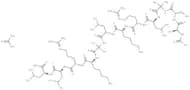
<p>COG-1410 acetate is an apolipoprotein E-derived peptide and can be used in studies about neurological diseases.</p>Formula:C66H125N21O16Purezza:99.61%Colore e forma:SolidPeso molecolare:1468.83[Au(L4)(CyJohnPhos)]SbF6
[Au(L4)(CyJohnPhos)]SbF6 is a gold-containing compound that exhibits inhibitory effects on cyclooxygenase-1/2 (COX-1/2), suppresses the proliferation of colon cancer cells Caco2-/TC7 with an IC50 of 0.98 μM, and induces cell apoptosis (apoptosis). Additionally, [Au(L4)(CyJohnPhos)]SbF6 acts as an inhibitor of thioredoxin reductase (TrxR) and demonstrates antioxidative activity by modulating ROS levels.Formula:C44H56AuF6NO4PSSbColore e forma:SolidPeso molecolare:1158.68Taccalonolide E
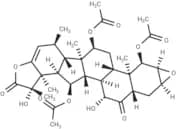
CAS:<p>Taccalonolide E is a microtubule stabilizer and induces cancer cell apoptosis .</p>Formula:C34H44O12Colore e forma:SolidPeso molecolare:644.71SC-2001
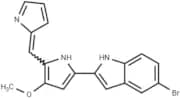
CAS:<p>SC-2001 inhibits MCL-1 and STAT3, enhances SHP-1, induces apoptosis in breast cancer, and counters STAT3-driven sorafenib resistance in liver cancer.</p>Formula:C18H14BrN3OPurezza:98%Colore e forma:SolidPeso molecolare:368.23Tubulin polymerization-IN-70
<p>Tubulin polymerization-IN-70 (compound Q19) is an effective inhibitor of tubulin polymerization. This compound exerts antiproliferative properties by targeting the colchicine binding site on tubulin, thereby inhibiting its polymerization. Tubulin polymerization-IN-70 also induces apoptosis and cell cycle arrest at the G2/M phase. Additionally, it triggers a decrease in mitochondrial membrane potential and elevates levels of reactive oxygen species (ROS). Moreover, Tubulin polymerization-IN-70 possesses anti-angiogenic and anticancer activities.</p>Formula:C25H23N3O2Colore e forma:SolidPeso molecolare:397.47PROTAC MNK1 degrader-1
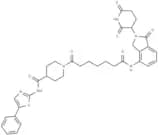
<p>ROTACMNK1degrader-1 is a selective MNK1 PROTAC degrader with a DC50 of 11.92 nM and a Dmax greater than 96% in MV4-11 cells. It significantly reduces p-eIF4E levels with an IC50 of 22.07 nM, induces apoptosis, and causes cell cycle arrest at the G1 phase. This compound exhibits potent antitumor activity, demonstrating strong anti-leukemic effects in MV4-11 xenograft mouse models with acceptable drug safety.</p>Formula:C35H38N6O6SColore e forma:SolidPeso molecolare:670.78Apoptosis inducer 30
<p>Apoptosisinducer 30 (Compound 15a) acts as an anticancer agent. It induces apoptosis in MCF-7 cells through the mitochondrial pathway. This compound elevates intracellular levels of reactive oxygen species (ROS), decreases mitochondrial membrane potential, and arrests the cell cycle at the G0/G1 phase. Apoptosisinducer 30 inhibits cell growth, with an IC50 value of 0.32 μM against MCF-7 cells, and suppresses tumor growth in a mouse breast cancer model.</p>Formula:C52H69BrNO4PColore e forma:SolidPeso molecolare:882.99Quercetin-d3
<p>Quercetin-d3 hydrate, a deuterated form of Quercetin hydrate, acts as a flavonoid that stimulates recombinant SIRT1 and serves as a PI3K inhibitor. The compound specifically exhibits IC50 values of 2.4 μM, 3.0 μM, and 5.4 μM against PI3Kγ, PI3Kδ, and PI3Kβ, respectively.</p>Formula:C15H9D3O8Colore e forma:SolidPeso molecolare:323.27Antitumor photosensitizer-3
<p>Antitumor Photosensitizer-3 (Compound I), a chlorin derivative, effectively induces apoptosis and necrosis in tumor cells upon exposure to 650 nm laser</p>Formula:C48H34N4O4Colore e forma:SolidPeso molecolare:730.81STK17A/B-IN-1 hydrochloride
STK17A/B-IN-1 hydrochloride is a potent, selective, orally active inhibitor of STK17A/B, displaying an IC50 value of 23 nM against STK17A. It is utilized in the research of tumors.Formula:C26H28ClN7OColore e forma:SolidPeso molecolare:490.00Bursehernin
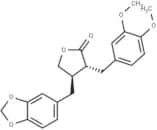
CAS:<p>Bursehernin is a useful organic compound for research related to life sciences and the catalog number is T124894.</p>Formula:C21H22O6Colore e forma:SolidPeso molecolare:370.401SZU-B6
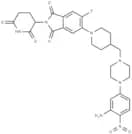
CAS:SZU-B6, a PROTAC degrader, targets and degrades SIRT6 with DC50 values of 45 nM in SK-HEP-1 cells and 154 nM in Huh-7 cells. It inhibits the proliferation of SK-HEP-1 cells with an IC50 of 1.51 μM and suppresses colony formation in both SK-HEP-1 and Huh-7 cell lines. Additionally, SZU-B6 induces apoptosis in SK-HEP-1 cells and causes cell cycle arrest at the G2/M phase. It demonstrates anti-tumor activity in murine models.Formula:C29H32FN7O6Colore e forma:SolidPeso molecolare:593.61FGA139
<p>FGA139 is an inhibitor of cysteine proteases, specifically targeting cathepsin B and L with IC50 values of 4.98 μM and 3.14 μM, respectively. It reduces the production of NO in LPS-induced RAW264.7 cells and lowers TNFα levels in microglia, demonstrating antioxidant and anti-inflammatory properties. Additionally, FGA139 enhances the secretion of neuroprotective metabolites such as purines and linoleic acid in LPS-stimulated microglia. This compound is applicable in the study of neuroinflammatory diseases.</p>Formula:C48H58BF2N7O5Colore e forma:SolidPeso molecolare:861.45605Sarglaroids F
<p>Sarglaroids F (compound 6), an anti-inflammatory agent extracted from the roots of Grass Coral, suppresses LPS/ATP-induced IL-1β secretion by modulating K+</p>Formula:C38H44O12Purezza:98%Colore e forma:SolidPeso molecolare:692.75PH14
<p>PH14, a dual PI3K/HDAC inhibitor, demonstrates potent inhibition with IC50 values of 20.3 nM for PI3Kα and 24.5 nM for HDAC3.</p>Purezza:98%Colore e forma:Odour SolidMDM2 ligand 4
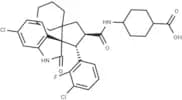
<p>MDM2ligand 4 is a ligand of MDM2 and can be used in the synthesis of the PROTAC degrader [KT-253].</p>Formula:C31H33Cl2FN2O4Colore e forma:SolidPeso molecolare:587.509EGFR-IN-143
<p>EGFR-IN-143 (Compound 5f) is a potent EGFR inhibitor with an IC50 value of 0.15 μM. It induces apoptosis by arresting the cell cycle at the G2/M phase and exhibits antitumor activity.</p>Formula:C20H21ClN6O3Colore e forma:SolidPeso molecolare:428.872TRF2-IN-1
<p>TRF2-IN-1 (compound F2) is a potent inhibitor of telomere repeat-binding factor 2 (TRF2). It exhibits antiproliferative activity and induces apoptosis. TRF2-IN-1 binds directly to the TRF2TRFH domain, selectively inhibiting TRF2 protein expression and telomere localization. Additionally, TRF2-IN-1 possesses anticancer properties and shows potential for osteosarcoma research.</p>Formula:C18H17BrO4Colore e forma:SolidPeso molecolare:377.229LD4172
CAS:<p>LD4172 is a PROTAC degrader capable of degrading RIP kinase (RIPK1) with a DC50 in the nanomolar range. When used in combination with TNF-α, LD4172 can induce apoptosis in B16F10 cells. In mouse models, it demonstrates antitumor activity. (Pink: ligand for target protein; Black: linker; Blue: ligand for E3 ligase VHL)</p>Formula:C61H75F3N10O7SColore e forma:SolidPeso molecolare:1149.37ECDD-S18
<p>ECDD-S18 (compound ECDD-S18) induces apoptosis in a dose-dependent manner, effectively targeting the vacuolar ATPase (V-ATPase) and impairing lysosomal acidification.</p>Formula:C35H31BrO12Colore e forma:SolidPeso molecolare:723.52YJ1206
CAS:YJ1206 is a highly potent and selective CDK12/13 PROTAC degrader oral, DNA damage and cell-cycle arrest,and inhibits the proliferation of prostate cancer cells.Formula:C49H52FN11O5Purezza:97.14%Colore e forma:SolidPeso molecolare:894.01N-Acetylpsychosine
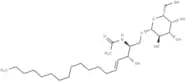
CAS:<p>N-Acetylpsychosine, also known as α-galactosylated C2-ceramide (d18:1/2:0), exhibits immunostimulatory properties.</p>Formula:C26H49NO8Colore e forma:SolidPeso molecolare:503.67Lambertianic acid
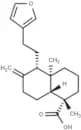
CAS:<p>Lambertianic acid is a bioactive chemical that has anti-allergic and antibacterial effects.</p>Formula:C20H28O3Purezza:98%Colore e forma:SolidPeso molecolare:316.441UNC10245380
<p>UNC10245380 is a CIB1 inhibitor with an IC50 of 8 μM. It also inhibits the phosphorylation of AKT and ERK while upregulating the expression of TRAIL-R1/D5. UNC10245380 specifically kills cancer cells that are dependent on CIB1, demonstrating its potential value in the development of CIB1 probes and cancer research.</p>Colore e forma:Odour SolidBIIB023
<p>BIIB023 is a human monoclonal antibody (mAb) that targets TNFRSF12A/TWEAKR/CD266. It is applicable for research in lupus nephritis and rheumatoid arthritis.</p>Colore e forma:Odour LiquidSodium propionate
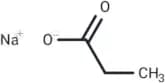
CAS:Sodium propionate (Propionic acid sodium salt) has potential anti-inflammatory and anti-apoptotic activities, inhibiting certain signaling pathways.Formula:C3H5NaO2Colore e forma:SoildPeso molecolare:96.06Pantinin-1
CAS:<p>Pantinin-1 is an antimicrobial peptide found in the venom of the emperor scorpion (Pandinus imperator). This compound exhibits strong antibacterial activity against Gram-positive bacteria and fungi, but has weaker effects on Gram-negative bacteria. Additionally, Pantinin-1 demonstrates very low hemolytic activity on human red blood cells and possesses anticancer properties, specifically inducing apoptosis in tumor cells.</p>Formula:C75H119N17O18Colore e forma:SolidPeso molecolare:1546.85Apoptosis inducer 29
Apoptosis Inducer 29 (compound Y9) demonstrates anticancer efficacy in non-small cell lung cancer by inducing lysosomal dysfunction and apoptosis, and exhibits superior performance to Gboixn both in vitro and in vivo.Formula:C33H46ClN3O3Colore e forma:SolidPeso molecolare:568.19Antitumor agent-103
<p>Antitumor Agent-103 (compound 24l) induces apoptosis and possesses antiproliferative and anti-colony formation properties.</p>Formula:C36H36N8O9S2Purezza:98%Colore e forma:SolidPeso molecolare:788.85Anticancer agent 132
<p>Compound Rh1 (Anticancer agent 132) acts as an inducer of apoptosis and autophagy, exhibiting both antitumor and antimetastatic activities.</p>Formula:C24H16Cl3F3N5ORhPurezza:98%Colore e forma:SolidPeso molecolare:656.68Thalidomide-O-amido-PEG1-(C1-PEG)2-C2-NH2
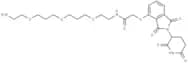
CAS:<p>Thalidomide-O-amido-PEG1-(C1-PEG)2-C2-NH2 is a synthetic conjugate compound that combines a Thalidomide-based cereblon ligand and a linker, which is commonly</p>Formula:C25H34N4O9Purezza:98%Colore e forma:SolidPeso molecolare:534.566PROTAC GPX4 degrader-4
CAS:<p>PROTACGPX4 degrader-4 is a GPX4 PROTAC degrader with a DC50 of 5.32 nM. It inhibits the activity of cancer cell lines RT4, T24, and J82 with IC50 values of 0.09, 2.97, and 7.58 μM, respectively. This compound elevates lipid ROS levels and induces ferroptosis in T24 and RT4 cells. In T24 tumor-bearing BALB/c nude mouse models, PROTACGPX4 degrader-4 demonstrates antitumor activity. It is applicable to bladder cancer research.</p>Formula:C43H58N2O13Colore e forma:SolidPeso molecolare:810.93A011
<p>A011, a potent and selective ataxia-telangiectasia mutated (ATM) inhibitor, exhibits an IC50 of 1.0 nM and triggers apoptosis as well as G2/M phase cell cycle</p>Formula:C27H28N6OPurezza:98%Colore e forma:SolidPeso molecolare:452.55Antiproliferative agent-27
<p>Antiproliferative Agent-27 (Compound 11) is a notable antiproliferative agent that markedly diminishes tumor cell colony formation and induces apoptosis,</p>Formula:C26H40FNO6SPurezza:98%Colore e forma:SolidPeso molecolare:513.66CRM1-IN-2
<p>CRM1-IN-2 (Compound KL2) is a noncovalent inhibitor that targets CRM1, localizing it to the nuclear periphery, depleting its nuclear presence, and inhibiting</p>Formula:C29H48N2O5Purezza:98%Colore e forma:SolidPeso molecolare:504.7Ferroptosis-IN-1
<p>Ferroptosis-IN-1, a diterpene derived from A.</p>Formula:C22H34O5Purezza:98%Colore e forma:SolidPeso molecolare:378.5fac-[Re(CO)3(L6)(H2O)][NO3]
<p>Compound 6, fac-[Re(CO)3(L6)(H2O)][NO3], a rhenium(I) tricarbonyl aqua complex, serves as an anticancer agent by disrupting mitochondrial function.</p>Formula:C24H14N5O7ReSPurezza:98%Colore e forma:SolidPeso molecolare:702.67BKM1644
CAS:<p>BKM1644 is an effective inhibition of the proliferation of metastatic, castration-resistant PCa (mCRPC) cells.</p>Formula:C34H37Cl2F5N2O9P2Purezza:98%Colore e forma:SolidPeso molecolare:845.51Ru-Poma
<p>Ru-Poma is an Ru(II)-based photosensitizer designed to enhance the efficacy of photodynamic therapy (PDT) against tumors resistant to Cisplatin. It targets Pomalidomide to partially degrade CRBN, inducing ferroptosis by increasing lipid peroxides and downregulating GPX4 and GAPDH expression. In A549 cells, Ru-Poma exhibits cytotoxicity with IC50 values of 18.46 μM in the dark and 0.37 μM under illumination.</p>Formula:C89H75Cl2N11O11Ru·7H2OTopoisomerase II inhibitor 17
<p>TopoisomeraseII inhibitor 17 (compound 4c) is a thiazolopyrimidine-based inhibitor of Topoisomerase II with an IC50 of 0.23 μM. This compound significantly disrupts the cell cycle and induces apoptosis.</p>Formula:C25H22Cl3N3O5SPeso molecolare:581.03458RIP1 kinase inhibitor 9
<p>RIP1 kinase inhibitor 9 (compound SY-1) is a selective inhibitor of RIP kinase. It effectively reduces central inflammatory responses caused by seizures. RIP1 kinase inhibitor 9 also obstructs Z-VAD-FMK-induced necroptosis in HT-29 cells, with an EC50 of 7.04 nM.</p>Formula:C25H21N3O3Peso molecolare:411.15829PROTAC PD-L1 degrader-1
<p>PROTACPD-L1 degrader-1 is a CRBN-based PD-L1-PROTAC degrader with significant PD-L1 protein degradation capacity. It demonstrates strong PD-L1 degradation activity in 4T1 cells, with a DC50 of 0.609 μM. This compound is applicable to breast cancer research.</p>EGFR-PK/JNK-2-IN-1
<p>EGFR-PK/JNK-2-IN-1 (Compound 6c) is a dual inhibitor of EGFR-PK and JNK-2, with IC50 values of 2.7 and 3.0 μM, respectively. It can induce apoptosis and cause cell cycle arrest at various stages. This compound is applicable in cancer research.</p>Formula:C22H17ClN4O3SPeso molecolare:452.07099HDAC6-IN-28
<p>HDAC6-IN-28 (compound 10C) is a potent inhibitor of HDAC6 with an IC50 of 261 nM. It significantly induces apoptosis in B16-F10 cells and causes S phase arrest. Additionally, HDAC6-IN-28 effectively increases the expression of acetylated-α-tubulin both in vitro and in vivo.</p>Formula:C23H16FN3O2Peso molecolare:385.12265NCA029
<p>NCA029 is a potent activator of human caseinolytic protease P (HsClpP) with an EC50 of 0.15 μM. It targets HsClpPP and triggers an ATF3-dependent integrated stress response, resulting in the death of colon cancer cells.</p>Formula:C22H20F3N3OPeso molecolare:399.15585MALT1-IN-13
MALT1-IN-13 (compound 10m) is an inhibitor of the mucosa-associated lymphoid tissue lymphoma translocation protein (MALT1), forming a covalent and irreversible bond with the MALT1 protease, thereby inhibiting its activity with an IC50 of 1.7 μM. It suppresses the proliferation of ABC-DLBCL and induces apoptosis in ABC-DLBCL HBL1 cells. Additionally, MALT1-IN-13 regulates the mTOR and PI3K-Akt pathways.Formula:C20H15BrClN3O3S2Peso molecolare:522.94267VEGFR-2-IN-66
<p>VEGFR-2-IN-66 (Compound 6) is an orally active VEGFR-2 inhibitor with an IC50 of 0.509 µM and an IC50 value of 7.48 μM for inhibiting MCF-7 cell proliferation. Its anticancer activity is exerted through cell cycle arrest, induction of apoptosis (Apoptosis), and modulation of gene expression, making it suitable for breast cancer research.</p>Colore e forma:Odour SolidEGFR-IN-153
<p>EGFR-IN-153 (Compound 5l) is an EGFR inhibitor that suppresses the proliferation of MDA-MB-231 cells with an IC50 of 0.73 μM and induces apoptosis. It is applicable for research in breast cancer.</p>Colore e forma:Odour Solidα-Tubulin polymerization-IN-1
<p>α-Tubulin polymerization-IN-1 (Compound 8l) functions as an inhibitor of α-tubulin polymerization. This compound modulates the NRF2/KEAP-1 signaling pathway and induces ROS production in PC-3 cells, leading to apoptosis. It inhibits the proliferation of PC-3 cells with a GI50 of 0.17 µM, causing cell cycle arrest in the G2/M phase. Additionally, α-Tubulin polymerization-IN-1 demonstrates antitumor activity in mouse models.</p>Colore e forma:Odour Solid