Apoptosi
Gli inibitori dell'apoptosi sono composti che prevengono o ritardano il processo di morte cellulare programmata, noto come apoptosi. Questi inibitori sono fondamentali per lo studio dei meccanismi di sopravvivenza cellulare e vengono utilizzati per indagare sulle malattie in cui l'apoptosi è disregolata, come il cancro, i disturbi neurodegenerativi e le malattie autoimmuni. Modulando l'apoptosi, questi inibitori possono aiutare nello sviluppo di terapie mirate a controllare la morte cellulare. Presso CymitQuimica, offriamo una vasta selezione di inibitori dell'apoptosi di alta qualità per supportare le tue ricerche in biologia cellulare, oncologia e campi correlati.
Sottocategorie di "Apoptosi"
- ASK(9 prodotti)
- BCL(11 prodotti)
- Caspasi(144 prodotti)
- FOXO1(3 prodotti)
- IAP(67 prodotti)
- Mdm2(12 prodotti)
- PD-1/PD-L1(139 prodotti)
- PDK(9 prodotti)
- PERK(26 prodotti)
- Chinasi di serina/treonina(18 prodotti)
- Survivin(14 prodotti)
- TNF(93 prodotti)
- c-RET(62 prodotti)
- p53(63 prodotti)
Mostrare 6 più sottocategorie
Trovati 6070 prodotti di "Apoptosi"
Ordinare per
Purezza (%)
0
100
|
0
|
50
|
90
|
95
|
100
UAMC-4821
UAMC-4821 is a ferroptosis inhibitor with an IC50 of 5.2 nM. It effectively scavenges free radicals, inhibits lipid peroxidation, and prevents ML162-induced ferroptosis, providing protective effects on HT-1080 cells. With favorable pharmacokinetic properties in mice, UAMC-4821 presents an oral bioavailability of 63% and demonstrates blood-brain barrier permeability.Formula:C15H19N3OColore e forma:SolidPeso molecolare:257.33OA-Br-1
<p>OA-Br-1 is an orally active, selective inhibitor of PTP1B with an IC50 value of 7.08 μM. It induces apoptosis and exhibits broad-spectrum anti-cancer cell proliferation activity. OA-Br-1 exerts anti-breast cancer effects both in vitro and in vivo through the PTP1B/PI3K/AKT signaling pathway.</p>Formula:C43H70BrNO8Colore e forma:SolidPeso molecolare:808.92CDK2-IN-41
<p>CDK2-IN-41 (Compound 7a) is a CDK2 inhibitor that impedes the cell cycle by binding to CDK2, leading to cytotoxicity, increased ROS production, and apoptosis (Apoptosis). It exhibits anticancer activity with an IC50 of 10 µM against acute myeloid leukemia (AML) HL-60 cells. CDK2-IN-41 is applicable in research related to AML-associated cancers.</p>Formula:C19H21N3SColore e forma:SolidPeso molecolare:323.46BRD6257
BRD6257 is an orally active inhibitor of protein phosphatase 1D (proteinphosphatase, Mg2+/Mn2+ dependent 1D, PPM1D) with an IC50 of 5 nM. It activates the p53 signaling pathway (EC50 of 51 nM), enhances p21 expression, and inhibits the proliferation of cancer cells MOLM13 (IC50 = 2.8 μM). BRD6257 demonstrates good metabolic stability in human and rat liver microsomes.Formula:C24H22F4N6O3SColore e forma:SolidPeso molecolare:550.53HDAC3-IN-2
HDAC3-IN-2 (compound 4i), a pyrazinyl hydrazide-based HDAC3 inhibitor with an IC50 of 14 nM, effectively targets triple-negative breast cancer cells.Formula:C16H21N5O2Purezza:98%Colore e forma:SolidPeso molecolare:315.37CQ1373
CQ1373 is a potent RET inhibitor that demonstrates cellular activity against BaF3 cells expressing CCDC6-RET, CCDC6-RET-G810C, and CCDC6-RET-G810R, with IC50 values of 13.0, 25.7, and 28.4 nM, respectively. It shows excellent selectivity for wild-type RET and solvent front mutants G810C/R, with IC50 values of 4.2, 7.1, and 32.4 nM. CQ1373 inhibits RET phosphorylation and downstream signaling through SHC. Additionally, it induces apoptosis (Apoptosis) and cell cycle arrest in BaF3 cells. CQ1373 possesses antitumor efficacy, making it a candidate for cancer research.Formula:C25H22ClF3N6O3Colore e forma:SolidPeso molecolare:546.93Nur77 modulator 4
Nur77 modulator 4 (Compound 15h) is a Nur77 inducer with a KD of 0.477 μM. It significantly promotes Nur77 expression and apoptosis, exhibiting excellent growth inhibitory effects on HepG2 and MCF-7 cells, with an IC50 of less than 5 μM. Nur77 modulator 4 activates Nur77-mediated ER stress through the PERK-ATF4 and IRE1 signaling pathways, leading to apoptosis. This compound is applicable in cancer research.Formula:C26H28ClN5O2Colore e forma:SolidPeso molecolare:477.99SDU-071
CAS:SDU-071 is a BRD4-p53 inhibitor, suppressing MDA-MB-231 cell proliferation, inducing cell cycle arrest and apoptosis.Formula:C28H25N3O2Purezza:99.54%Colore e forma:SolidPeso molecolare:435.52NYY-6a
NYY-6a is a ferroptosis (Ferroptosis) inhibitor, demonstrating significant suppression of RSL3-induced ferroptosis in 786-O and HT-1080 cells, with EC50 values of 52 nM and 50 nM, respectively. As a radical-trapping antioxidant (RTA), NYY-6a effectively reduces lipid peroxidation, comparable to ferrostatin-1 and liproxstatin-1, making it useful for research into ferroptosis-related pathologies.Formula:C23H22N2O3Colore e forma:SolidPeso molecolare:374.43FMP
FMP is a platinum (IV) complex. It significantly upregulates the expression of γ-H2AX and p53, enhances ROS production, and markedly increases the expression of apoptosis (Apoptosis) related proteins (DR5, Fas, caspase-8, Cyt-c, caspase-3, cleaved-PARP1, Bax). FMP exhibits antiproliferative activity against breast cancer.Formula:C18H18Cl2N2O7PtColore e forma:SolidPeso molecolare:640.33TS-IN-6
TS-IN-6 (Compound 10) is a thymidylate synthase (TS) inhibitor with an IC50 value of 0.54 μM, showing significant antiproliferative activity. It can induce G1 phase cell cycle arrest and apoptosis (with notable increases in early and late apoptosis rates) and is useful for research in cancers such as colon, breast, and liver cancer.Formula:C29H22F2N6OSColore e forma:SolidPeso molecolare:540.59HPOB
CAS:HPOB is an effective and specific HDAC6 inhibitor (IC50: 56 nM), >30-fold selectivity over other HDACs.Formula:C17H18N2O4Purezza:99.91%Colore e forma:SolidPeso molecolare:314.34Tubulin polymerization-IN-76
Tubulin polymerization-IN-76 (compound 20b) is a potent and orally active inhibitor of tubulin polymerization. It acts at the colchicine binding site to inhibit tubulin polymerization with an IC50 value of 2.505 μM, effectively disrupting the intracellular microtubule network and interfering with mitosis. Tubulin polymerization-IN-76 shows significant inhibitory effects on MGC-803 and HGC-27 cells, with IC50 values of 1.61 and 1.82 nM, respectively. It effectively suppresses colony formation and cell migration activities in these cell lines, inducing G2/M phase cell cycle arrest and apoptosis (Apoptosis). Furthermore, Tubulin polymerization-IN-76 exhibits broad-spectrum antiproliferative activity.Formula:C20H21N5SColore e forma:SolidPeso molecolare:363.48rac-CCT-250863 HCl
<p>rac-CCT-250863 HCl: NEK 2 inhibitor, halts cell cycle, anti-cancer growth, boosts Pomalidomide-induced apoptosis.</p>Formula:C24H26ClF3N4O2SPurezza:98.21%Colore e forma:SoildPeso molecolare:527VEGFR-2-IN-61
VEGFR-2-IN-61 (Compound 7b) is an inhibitor of VEGFR-2 with an IC50 of 2.83 µM. It effectively inhibits the proliferation of various cancer cells, including MCF-7 cells, with an IC50 of 2.12 µM. Additionally, VEGFR-2-IN-61 suppresses cell migration and induces oxidative stress and apoptosis in MCF-7 cells.Formula:C27H25N5OColore e forma:SolidPeso molecolare:435.52MC-25B
MC-25B is a selective FKBP12 PROTAC degrader. It effectively degrades FKBP12 with a DC50 of 0.35 μM and a Dmax of 89%. MC-25B facilitates the degradation of nuclear-localized FKBP12 through a mechanism dependent on DCAF16.Formula:C65H92ClN7O14Colore e forma:SolidPeso molecolare:1230.92GL392
GL392 is a senolytic agent that delivers the potent senescence-clearing compound Dasatinib specifically to senescent cells. By targeting the LBD domain, it binds lipofuscin in these cells and releases Dasatinib via an ester linkage, inducing apoptosis (Apoptosis) in senescent cells. Additionally, GL392 is encapsulated in PEO-b-PCL microcapsules to ensure efficient intracellular delivery while minimizing systemic toxicity. GL392 is applicable in cancer research.Formula:C55H52ClN13O5SColore e forma:SolidPeso molecolare:1042.6Flaccidoside II
CAS:Flaccidoside II, an active triterpenoid saponin from Anemone flaccida rhizome, both inhibits proliferation and induces apoptosis in Malignant Peripheral NerveFormula:C59H96O25Purezza:98%Colore e forma:SolidPeso molecolare:1205.38Thalidomide-5-propargyne-NH2 hydrochloride
CAS:Thalidomide derivative for CRBN protein recruitment, used in PROTACs production for protein degradation.Formula:C16H14ClN3O4Colore e forma:SolidPeso molecolare:347.753Antitumor agent-96
"Antitumor agent-96 (Compound D34) is a potent MRE11 inhibitor that down-regulates the homologous recombination (HR) pathway by binding to and suppressing theFormula:C27H32N2O2Purezza:98%Colore e forma:SolidPeso molecolare:416.56Anti-inflammatory agent 45
Compound 2v (Anti-inflammatory agent 45) demonstrates anticancer properties with direct inhibitory impacts on the proliferation of various blood malignancies,Formula:C25H22BrNO6Purezza:98%Colore e forma:SolidPeso molecolare:512.35Odoroside A
CAS:Odoroside A, from Nerium oleander leaves, induces cancer cell death via ROS/p53, causing apoptosis and cell cycle arrest.Formula:C30H46O7Colore e forma:SolidPeso molecolare:518.68Xylopine
CAS:Xylopine: an aporphine alkaloid, cytotoxic to cancer cells, induces oxidative stress, G2/M arrest, and apoptosis.Formula:C18H17NO3Colore e forma:SolidPeso molecolare:295.33BAY 1892005
CAS:BAY 1892005 is a p53 protein modulator that targets the p53 condenser for the study of diseases associated with misfolded p53 proteinFormula:C11H8ClFN2OSPurezza:99.42%Colore e forma:SoildPeso molecolare:270.71Asparanin A
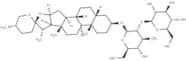
CAS:Asparanin A, an apoptosis inducer with anticancer properties, arrests the cell cycle in the G0/G1 phase via the mitochondria and PI3K/AKT signaling pathways.Formula:C39H64O13Purezza:98%Colore e forma:SolidPeso molecolare:740.92Tripchlorolide
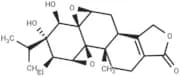
Tripchlorolide is a useful organic compound for research related to life sciences and the catalog number is T126047.Formula:C20H25ClO6Colore e forma:SolidPeso molecolare:396.86Bromoiodoacetamide
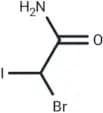
CAS:Bromoiodoacetamide (I-HAcAm): cytotoxic, induces ROS & apoptosis in HepG-2 cells.Formula:C2H3BrINOColore e forma:SolidPeso molecolare:263.86Anticancer agent 130
Anticancer agent 130 (compound 8d) significantly induces apoptosis in A549 cells [1].Formula:C38H46FN5O5Purezza:98%Colore e forma:SolidPeso molecolare:671.8KP1019
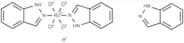
CAS:KP1019 is now discontinued.Formula:C21H19Cl4N6RuColore e forma:SolidPeso molecolare:598.30Anticancer agent 146
Anticancer Agent 146 (Compound 1.19) acts as a necroptosis inducer and demonstrates anti-tumor efficacy in the MDA-MB-231 mouse xenograft model [1].Formula:C19H16Cl2N2O2Purezza:98%Colore e forma:SolidPeso molecolare:375.25Anticancer agent 136
Anticancer agent 136 (compound 22), a C17-triazole analogue of Geldanamycin (GDM), exhibits an IC50 value of 3.38 μM against human dermal fibroblasts (HDF) andFormula:C40H50N6O8Purezza:98%Colore e forma:SolidPeso molecolare:742.86eIF4A3-IN-7
CAS:eIF4A3-IN-7: Potent eIF4A3 inhibitor, potential cancer/dysproliferation research (WO2019161345A1, Compound 8).Formula:C26H25NO7Colore e forma:SolidPeso molecolare:463.486BK60106
BK60106 is a selective and direct inhibitor of the transmembrane protein CD99, which causes cell death in Ewing Sarcoma cells.Formula:C15H15FN6O3Purezza:99.30% - >99.99%Colore e forma:SolidPeso molecolare:346.32Bcl-2-IN-4
CAS:Bcl-2-IN-4: potent, selective, oral Bcl-2 inhibitor with 1.5 nM IC50, >200x selectivity over Bcl-xL.Formula:C46H50ClN9O7SColore e forma:SolidPeso molecolare:908.465-LOX-IN-2
CAS:5-LOX-in-2: a 5-lipoxygenase inhibitor with IC50 of 0.33 μM, reduces kidney cancer cell activity, induces apoptosis.Formula:C17H16O4Purezza:98.74%Colore e forma:SoildPeso molecolare:284.31PDE4D inhibitor 1
PDE4-IN-1 is a PDE4 inhibitor characterized by high potency (IC50: 8.6 nM) and superior selectivity over other PDE subtypes. This compound inhibits the release of inflammatory cytokines and chemokines. Additionally, PDE4-IN-1 significantly restores the damaged cAMP-CREB signaling pathway, inhibits proliferation, and promotes differentiation to reverse psoriasis formation.Colore e forma:Odour SolidPERK-IN-6
CAS:PERK-IN-6 is a novel and highly potent PERK inhibitor (IC50:2.5 nM).Formula:C23H22N6OPurezza:99.62% - 99.92%Colore e forma:SolidPeso molecolare:398.46Lorigerlimab
CAS:Lorigerlimab (MGD019) is a bispecific IgG4 DART that blocks PD-1/CTLA-4, enhancing T-cells for mCRPC research.Colore e forma:LiquidFludarabine triphosphate
CAS:Fludarabine triphosphate inhibits key enzymes, causing cell death.Formula:C10H15FN5O13P3Colore e forma:SolidPeso molecolare:525.17ARI-1
ARI-1 is a receptor tyrosine kinase-like orphan receptor 1 (ROR1) inhibitor that binds to ROR1's extracellular Frizzled domain, effectively inhibiting aberrantColore e forma:Odour SolidCWI1-2 HCL
CAS:CWI1-2 HCL: Potent IGF2BP2 inhibitor, induces apoptosis/differentiation, targets leukemia therapy.Formula:C22H18Cl4N6O3Purezza:98.09%Colore e forma:SolidPeso molecolare:556.23Ref: TM-T67930L
1mg52,00€5mg97,00€10mg154,00€25mg298,00€50mg432,00€100mg612,00€200mg842,00€1mL*10mM (DMSO)123,00€TNF-α-IN-11
TNF-α-IN-11 (Compound 10) is a TNF-α inhibitor exhibiting a dissociation constant (K D) of 12.06 μM.Formula:C24H26N2O5Colore e forma:SolidPeso molecolare:422.47LL-K9-3
CAS:LL-K9-3, a selective hydrophobic tagging technology (HyT)-based degrader, specifically targets the CDK9-cyclin T1 complex, displaying DC50 values of 589 nM forFormula:C31H49N5O6S3Colore e forma:SolidPeso molecolare:683.94BODIPY FL thalidomide
CAS:BODIPY FL thalidomide is a fluorescent probe that binds human cereblon protein with high affinity, exhibiting a dissociation constant (Kd) of 3.6 nM [1].Formula:C37H43BF2N6O7Colore e forma:SolidPeso molecolare:732.58fac-[Re(CO)3(L3)(H2O)][NO3]
Fac-[Re(CO)3(L3)(H2O)][NO3] (Compound 3), a rhenium(I) tricarbonyl aqua complex, acts as an anticancer agent through the induction of mitochondrial dysfunction.Formula:C25H17N6O8ReColore e forma:SolidPeso molecolare:715.64Thalidomide-Piperazine 5-fluoride hydrochloride
CAS:Thalidomide-Piperazine 5-fluoride hydrochloride, a derivative of the cereblon (CRBN) inhibitor Thalidomide, serves as a ligand for E3 ubiquitin ligase (Ligands for E3 Ligase), facilitating the synthesis of PROTACs [1].Formula:C17H18ClFN4O4Colore e forma:SolidPeso molecolare:396.8FA4-Cu
FA4-Cu is a compound formed from the effective pancreatic cancer inhibitor FA4 and Cu(II), which can induce apoptosis by triggering ER and mitochondrial stress.Formula:C27H33Cl2CuN5O2SColore e forma:SolidPeso molecolare:626.1Δ8-Tetrahydrocannabinoquinone
CAS:Δ8-Tetrahydrocannabinoquinone (HU-336) is a potent anti-angiogenic agent that inhibits angiogenesis by directly inducing apoptosis in vascular endothelial cells. It achieves this without altering the expression of pro-angiogenic and anti-angiogenic cytokines and receptors. Δ8-Tetrahydrocannabinoquinone also shows significant effectiveness against tumor xenografts in nude mice.Formula:C21H28O3Colore e forma:SolidPeso molecolare:328.45N-Stearoyltyrosine
CAS:N-Stearoyltyrosine (N-(1-Oxooctadecyl)-L-tyrosine) is an analog of Anandamide. It exhibits neuroprotective effects by safeguarding the CA1 region of the hippocampus in a gerbil ischemia-reperfusion model. Additionally, N-Stearoyltyrosine inhibits free radical generation, enhances antioxidant capacity, and reduces IR-induced apoptosis (cell apoptosis).Formula:C27H45NO4Colore e forma:SolidPeso molecolare:447.65BM-962
CAS:BM-962 (Compound 31) is a potent small-molecule inhibitor with an IC50 value of 4 nM (Ki=0.8 nM) for Bcl-2 and an IC50 of 3.9 nM (Ki<1 nM) for Bcl-xL. It inhibits H1417 and H146 cell lines with IC50 values of 9 and 13 nM, respectively, and shows potential for use in cancer research.Formula:C53H58ClF3N6O7S3Colore e forma:SolidPeso molecolare:1079.71