Apoptosi
Gli inibitori dell'apoptosi sono composti che prevengono o ritardano il processo di morte cellulare programmata, noto come apoptosi. Questi inibitori sono fondamentali per lo studio dei meccanismi di sopravvivenza cellulare e vengono utilizzati per indagare sulle malattie in cui l'apoptosi è disregolata, come il cancro, i disturbi neurodegenerativi e le malattie autoimmuni. Modulando l'apoptosi, questi inibitori possono aiutare nello sviluppo di terapie mirate a controllare la morte cellulare. Presso CymitQuimica, offriamo una vasta selezione di inibitori dell'apoptosi di alta qualità per supportare le tue ricerche in biologia cellulare, oncologia e campi correlati.
Sottocategorie di "Apoptosi"
- ASK(9 prodotti)
- BCL(2 prodotti)
- Caspasi(153 prodotti)
- FOXO1(2 prodotti)
- IAP(67 prodotti)
- Mdm2(12 prodotti)
- PD-1/PD-L1(94 prodotti)
- PDK(9 prodotti)
- PERK(26 prodotti)
- Chinasi di serina/treonina(18 prodotti)
- Survivin(14 prodotti)
- TNF(49 prodotti)
- c-RET(60 prodotti)
- p53(63 prodotti)
Mostrare 6 più sottocategorie
Trovati 6034 prodotti di "Apoptosi"
Ordinare per
Purezza (%)
0
100
|
0
|
50
|
90
|
95
|
100
(R)-Q-VD-OPh
(R)-Q-VD-OPh is the less active enantiomer of Q-VD-OPha. Q-VD-OPha is an irreversible inhibitor of pan-caspase, with potent antiapoptotic properties.Formula:C26H25F2N3O6Purezza:98%Colore e forma:SolidPeso molecolare:513.49ElteN378
CAS:ElteN378: potently inhibits FKBP12 (Ki=0.5 nM), low weight, similar affinity to Rapamycin.Formula:C23H26N2O3Purezza:99.06%Colore e forma:SolidPeso molecolare:378.46Ref: TM-T9950
1mg167,00€5mg356,00€10mg528,00€25mg848,00€50mg1.153,00€100mg1.603,00€200mg2.142,00€1mL*10mM (DMSO)295,00€GSNOR-IN-1
GSNOR-IN-1 is a prodrug of GSNOR-IN-2 and functions as an S-nitrosoglutathione reductase (GSNOR) inhibitor capable of crossing the blood-brain barrier. GSNOR-IN-1 offers significant protective effects against damage induced by oxygen-glucose deprivation/reoxygenation (OGD/R). It regulates calcium signaling and synaptic function through Clstn1 S-nitrosylation and inhibits neuronal apoptosis. Additionally, GSNOR-IN-1 markedly reduces infarct volume in rat models of ischemic stroke while enhancing neurological function. With its neuroprotective properties, GSNOR-IN-1 holds potential for ischemic stroke research.Colore e forma:Odour SolidPARP1-IN-16
PARP1-IN-16 (compound 12a) serves as a potent PARP1 inhibitor, exhibiting an IC50 value of 1.89 nM.Purezza:98%Colore e forma:Odour SolidAnticancer agent 273
Anticanceragent 273 (Compound 9q) is an effective anticancer compound identified from matrine. It inhibits cancer cell proliferation, with an IC50 of 4.48 μM against HeLa cells. Anticanceragent 273 exerts its anticancer effects by modulating PI3K/AKT expression and activating activating transcription factor 4 (ATF4), which induces endoplasmic reticulum stress and triggers apoptosis. It holds potential for cancer research, including cervical cancer.Colore e forma:Odour SolidEGFR/COX-2-IN-1
EGFR/COX-2-IN-1 is an EGFR/COX-2 inhibitor that effectively targets EGFRWT, EGFRT790M, COX-1, and COX-2 with IC50 values of 0.12, 0.076, 20.1, and 1.52 μM, respectively. It inhibits MCF-7, HT-29, and A-549 cells with IC50 values of 1.20, 5.14, and 14.81 μM, respectively. The compound induces apoptosis by upregulating Bax protein and downregulating Bcl-2 protein levels. Additionally, EGFR/COX-2-IN-1 significantly increases the proportion of cells in the G2/M phase in MCF-7 cells, demonstrating a broad-spectrum antitumor effect.Formula:C20H17FN6O2S2Colore e forma:SolidPeso molecolare:456.52Garlic oil
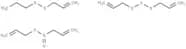
CAS:Garlic oil can inhibit lung tumors caused by 4-(methylnitrosamino)-1-(3-pyridyl)-1-butanone (NNK) by inducing second-phase drug metabolizing enzymes.Formula:C18H32OS7Colore e forma:SolidPeso molecolare:488.87Ferroptosis-IN-20
Ferroptosis-IN-20 (Compound 34a) is an inhibitor of ferroptosis targeting voltage-dependent anion channels (VDAC) with an EC50 of 24.2 nM. It prevents VDAC oligomerization and lipid peroxidation. Additionally, Ferroptosis-IN-20 reduces ROS levels, diminishes TFR1-mediated iron uptake, inhibits Fe2+ levels, and restores glutathione (GSH) levels. It also alleviates acute kidney injury (AKI) caused by folic acid.Colore e forma:Odour SolidPTP1B-IN-30
PTP1B-IN-30 (Compound 3j) is an inhibitor of PTP1B with an IC50 of 0.51 µM. It suppresses the proliferation of T47D cancer cells with an IC50 of 21.21 µM, induces cell cycle arrest at the S phase, and triggers apoptosis in T47D cells.Formula:C22H21N3O5SColore e forma:SolidPeso molecolare:439.48SHP1 activator 1
SHP1 activator 1 (Compound 3n) is an activator of protein tyrosine phosphatase 1 containing the src homology-2 domain (SHP1), with an EC50 of 17.66 μM. It inhibits the proliferation of ABC-DLBCL cells and induces apoptosis by suppressing the STAT3 signaling pathway. In MDA-MB-231 cells, SHP1 activator 1 emits blue and green fluorescent signals, making it suitable as a cellular imaging agent.Formula:C27H34N4O4Colore e forma:SolidPeso molecolare:478.58HDAC-IN-88
HDAC-IN-88 (Compound HJ-9) is a potent inhibitor of HDAC, effectively targeting HDAC6, HDAC1, HDAC2, HDAC8, and HDAC3 with IC50 values of 0.226, 1.103, 2.308, 3.255, and 3.864 μM, respectively. This compound suppresses the proliferation of cancer cells HepG2, HCT116, and MV4-11 with IC50 values of 5.47, 9.78, and 0.38 μM, respectively. Additionally, it inhibits the migration of HCT116 cells, causes cell cycle arrest at the G0/G1 phase, and induces apoptosis and autophagy in MV4-11 cells. HDAC-IN-88 reduces ROS levels and mitochondrial membrane potential and demonstrates antimalarial activity by inhibiting Plasmodium falciparum 3D7 with an EC50 of 165 nM. Furthermore, HDAC-IN-88 exhibits anti-angiogenic properties.Formula:C23H36N4O4Colore e forma:SolidPeso molecolare:432.56UAMC-4821
UAMC-4821 is a ferroptosis inhibitor with an IC50 of 5.2 nM. It effectively scavenges free radicals, inhibits lipid peroxidation, and prevents ML162-induced ferroptosis, providing protective effects on HT-1080 cells. With favorable pharmacokinetic properties in mice, UAMC-4821 presents an oral bioavailability of 63% and demonstrates blood-brain barrier permeability.Formula:C15H19N3OColore e forma:SolidPeso molecolare:257.33OA-Br-1
OA-Br-1 is an orally active, selective inhibitor of PTP1B with an IC50 value of 7.08 μM. It induces apoptosis and exhibits broad-spectrum anti-cancer cell proliferation activity. OA-Br-1 exerts anti-breast cancer effects both in vitro and in vivo through the PTP1B/PI3K/AKT signaling pathway.Formula:C43H70BrNO8Colore e forma:SolidPeso molecolare:808.92CDK2-IN-41
CDK2-IN-41 (Compound 7a) is a CDK2 inhibitor that impedes the cell cycle by binding to CDK2, leading to cytotoxicity, increased ROS production, and apoptosis (Apoptosis). It exhibits anticancer activity with an IC50 of 10 µM against acute myeloid leukemia (AML) HL-60 cells. CDK2-IN-41 is applicable in research related to AML-associated cancers.Formula:C19H21N3SColore e forma:SolidPeso molecolare:323.46BRD6257
BRD6257 is an orally active inhibitor of protein phosphatase 1D (proteinphosphatase, Mg2+/Mn2+ dependent 1D, PPM1D) with an IC50 of 5 nM. It activates the p53 signaling pathway (EC50 of 51 nM), enhances p21 expression, and inhibits the proliferation of cancer cells MOLM13 (IC50 = 2.8 μM). BRD6257 demonstrates good metabolic stability in human and rat liver microsomes.Formula:C24H22F4N6O3SColore e forma:SolidPeso molecolare:550.53XIAP ligand-Linker Conjugate 2
XIAPligand-Linker Conjugate 2 is an E3 ubiquitin ligase ligand-linker conjugate (E3 ligase Ligand-linker conjugate) that includes the XIAPBIR2 ligand XB2M54 and a linker. It is utilized in the synthesis of PROTACGNE-1567.Colore e forma:Odour SolidCQ1373
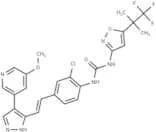
CQ1373 is a potent RET inhibitor that demonstrates cellular activity against BaF3 cells expressing CCDC6-RET, CCDC6-RET-G810C, and CCDC6-RET-G810R, with IC50 values of 13.0, 25.7, and 28.4 nM, respectively. It shows excellent selectivity for wild-type RET and solvent front mutants G810C/R, with IC50 values of 4.2, 7.1, and 32.4 nM. CQ1373 inhibits RET phosphorylation and downstream signaling through SHC. Additionally, it induces apoptosis (Apoptosis) and cell cycle arrest in BaF3 cells. CQ1373 possesses antitumor efficacy, making it a candidate for cancer research.Formula:C25H22ClF3N6O3Colore e forma:SolidPeso molecolare:546.93Nur77 modulator 4
Nur77 modulator 4 (Compound 15h) is a Nur77 inducer with a KD of 0.477 μM. It significantly promotes Nur77 expression and apoptosis, exhibiting excellent growth inhibitory effects on HepG2 and MCF-7 cells, with an IC50 of less than 5 μM. Nur77 modulator 4 activates Nur77-mediated ER stress through the PERK-ATF4 and IRE1 signaling pathways, leading to apoptosis. This compound is applicable in cancer research.Formula:C26H28ClN5O2Colore e forma:SolidPeso molecolare:477.991R,3R-RSL3
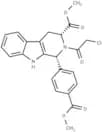
CAS:1R,3R-RSL3 is a negative control for1S, 3R-RSL3.Formula:C23H21ClN2O5Colore e forma:SolidPeso molecolare:440.88m7GpppAmpG
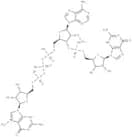
CAS:M7GpppAmpG is a trinucleotide 5′ cap analog, exhibiting capping efficiencies of 90% for the produced RNAs [1].Formula:C32H43N15O24P4Colore e forma:SolidPeso molecolare:1145.66MC-25B
MC-25B is a selective FKBP12 PROTAC degrader. It effectively degrades FKBP12 with a DC50 of 0.35 μM and a Dmax of 89%. MC-25B facilitates the degradation of nuclear-localized FKBP12 through a mechanism dependent on DCAF16.Formula:C65H92ClN7O14Colore e forma:SolidPeso molecolare:1230.92GL392
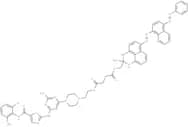
GL392 is a senolytic agent that delivers the potent senescence-clearing compound Dasatinib specifically to senescent cells. By targeting the LBD domain, it binds lipofuscin in these cells and releases Dasatinib via an ester linkage, inducing apoptosis (Apoptosis) in senescent cells. Additionally, GL392 is encapsulated in PEO-b-PCL microcapsules to ensure efficient intracellular delivery while minimizing systemic toxicity. GL392 is applicable in cancer research.Formula:C55H52ClN13O5SColore e forma:SolidPeso molecolare:1042.6DNMT-IN-4
DNMT-IN-4 (Compound 4d) is a DNMT inhibitor with an IC50 value of 5.78 µM. It induces apoptosis and exhibits anticancer activity.Formula:C22H25ClN4S2Colore e forma:SolidPeso molecolare:445.04CDK4/6/HDAC-IN-1
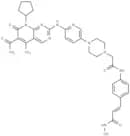
CDK4/6/HDAC-IN-1 (Compound N14) is a dual-target inhibitor of CDK4/6 and HDAC, with IC50 values of 7.23 nM for CDK4, 13.20 nM for CDK6, 55.66 nM for HDAC1, and 48.38 nM for HDAC6. It induces apoptosis and G0/G1 phase arrest through the HDAC-p21-CDK signaling pathway and can inhibit hepatocellular carcinoma.Formula:C35H39N9O5Colore e forma:SolidPeso molecolare:665.742Antitumor agent-198
Antitumor agent-198 (Compound A3) exhibits cytotoxicity in head and neck squamous cell carcinoma (HNSCC) cells, effectively inhibiting the proliferation of CAL27, HN6, HN30, SCC9, and SCC25, with an IC50 ranging from 4 nM to 77 nM. Additionally, Antitumor agent-198 suppresses HNSCC cell migration, arrests the cell cycle, and induces apoptosis.Formula:C32H28O12SColore e forma:SolidPeso molecolare:636.62Scr-IN-1
Scr-IN-1 (Compound 4e) is a tyrosine kinase inhibitor demonstrating inhibitory activity against HCT-116 and MIA-PaCa-2 cells, with IC50 values of 0.16 μM and 1.16 μM, respectively. It shows selectivity towards HCT-116 cells and MIA-PaCa-2 cells, with a selectivity index (SI) greater than 625 and 86. Scr-IN-1 induces apoptosis in HCT-116 colon cancer cells without altering the proportion of necrotic cells and is a potential novel SRC kinase inhibitor for HCT-116 cells. This compound is suitable for cancer research.Formula:C26H16ClF3N2O3Colore e forma:SolidPeso molecolare:496.87CDK9-IN-36
CDK9-IN-36 (Compound T7) is a potent, selective, and metabolically stable CDK9 inhibitor with an IC50 value of 1.2 nM. It effectively suppresses the proliferation of Osimertinib-resistant NSCLC cells by downregulating Mcl-1, reducing colony formation, and inducing apoptosis. Additionally, CDK9-IN-36 exhibits antitumor activity in xenograft models.Formula:C30H33F2N5O4Colore e forma:SolidPeso molecolare:565.61Tubulin polymerization-IN-73
Tubulin polymerization-IN-73 (Compound 37) is an inhibitor of microtubule polymerization with an IC50 of 1.8 μM. It induces cell cycle arrest at the G2/M phase and triggers apoptosis in A549 cells. The compound inhibits the proliferation of both A549 WT and A549/T resistant cells with IC50 values of 0.023 μM and 0.057 μM, respectively. Additionally, Tubulin polymerization-IN-73 demonstrates antitumor activity in mouse models.Formula:C23H23N3O4Colore e forma:SolidPeso molecolare:405.446Hypoxia inducer-1
Hypoxia inducer-1 (Compound N6) is a NO donor compound that is orally active and activated under hypoxic conditions. It exhibits high selectivity in releasing NO, inhibiting apoptosis, necrosis, and elevated levels of reactive oxygen species (ROS) associated with hypoxia. It modulates vasodilation and shows protective effects in a mouse model of myocardial hypoxic injury, making it useful for coronary heart disease research.Formula:C14H12FN3O4Colore e forma:SolidPeso molecolare:305.261DefNEtTrp
DefNEtTrp is an iron bis-chelating ligand composed of Def and Trp groups. It demonstrates potent broad-spectrum antiproliferative and cytotoxic effects in cancer cell lines. DefNEtTrp induces apoptosis and ferroptosis, exhibiting cytotoxicity with an IC50 value of 0.77 μM.Formula:C30H27N9O3SColore e forma:SolidPeso molecolare:593.659FTI 277 TFA
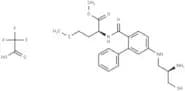
CAS:FTI 277, a FTI 276 prodrug, blocks farnesyltransferase (IC50 = 0.5 nM), H-Ras/K-Ras processing, and fights tumor cell growth.Formula:C24H30F3N3O5S2Colore e forma:SolidPeso molecolare:561.64PD-L1/VISTA-IN-2
PD-L1/VISTA-IN-2 (Compound S8) is an orally active dual inhibitor targeting PD-L1 and VISTA, with an IC50 of 1.4 μM for PD-L1 and a KD of 2.1 μM for VISTA. This compound can activate the tumor immune microenvironment, exerting anticancer effects.Formula:C22H22N2O3Colore e forma:SolidPeso molecolare:362.42Src Inhibitor 4
Src Inhibitor4 (Compound 18) is a derivative of KX-01 and functions as a Src inhibitor. It effectively disrupts tumor cells, damages microtubules, and induces cell cycle arrest, apoptosis, and immunogenic cell death. After introducing phenol or aniline functional groups, Src Inhibitor4 serves as a payload conjugation site for antibody-drug conjugates, showcasing antitumor activity.Formula:C33H34N4O3Colore e forma:SolidPeso molecolare:534.648PDE4-IN-28
PDE4-IN-28 (Compound G1) is an inhibitor of PDE4D, with an IC50 of 29 nM. It suppresses the production of TNF-α and NO, with IC50 values of 13.32 μM and 2.32 μM, respectively. In a rat pressure ulcer (PU) model, PDE4-IN-28 exhibits anti-inflammatory, antibacterial, and analgesic properties, while promoting HUVEC cell migration to enhance wound healing.Colore e forma:Odour SolidType-I/-II Photosensitizer-1
Type-I/-II Photosensitizer-1 (compound 8b) is a photosensitizer with anticancer properties. It exhibits significant phototoxicity against A549 and 4T1 tumor cells. Under laser irradiation, Type-I/-II Photosensitizer-1 demonstrates strong oxygen-independent antitumor activity with an IC50 ranging from 1.50 to 1.76 μM.Formula:C60H48F12N8P2RuColore e forma:SolidPeso molecolare:1272.07TV 3279
CAS:TV 3279 is a ChE-MAI inhibitor with neuroprotection via anti-apoptotic protein induction and blocks pro-apoptotic enzymes in cells.
Formula:C16H20N2O2Purezza:97%Colore e forma:SoildPeso molecolare:272.34Cuprichydroxide
CAS:Cuprichydroxide exhibits inhibitory activity against Ralstonia solanacearum and A549 cells and has acute pulmonary toxicity.Formula:CuH2O2Colore e forma:SolidPeso molecolare:97.56Topoisomerase IIα-IN-10
TopoisomeraseIIα-IN-10 (Compound 13r) is a topoisomerase IIα inhibitor that binds to the active site of DNA when complexed with topoisomerase IIα. This binding is stabilized through interactions with DNA base pairs and amino acid residues. By intercalating into DNA, TopoisomeraseIIα-IN-10 induces apoptosis and disrupts the mitochondrial membrane potential in HCT116 cells, effectively inhibiting their growth with an IC50 of 4.37 μM. It is applicable for cancer research studies.Formula:C32H27N3O3Colore e forma:SolidPeso molecolare:501.575WH244
CAS:WH244 is a second-generation dual degrader (PROTAC) targeting BCL-2 and BCL-xL proteins. It effectively degrades these proteins with high specificity, exhibiting a DC50 of 0.6 nM for BCL-xL and 7.4 nM for BCL-2. By promoting ubiquitination and subsequent proteasomal degradation of these proteins, WH244 restores apoptotic pathways in cells. The compound shows strong antitumor activity.Formula:C83H105ClF3N13O11S4Colore e forma:SolidPeso molecolare:1681.51p38α inhibitor 6
p38α inhibitor6 (compound 19) is a p38α inhibitor with an IC50 value of 0.68 μM. It induces apoptosis, arrests the cell cycle in the G0 and G2/M phases, reduces TNF-α concentration, upregulates the expression of the tumor suppressor gene p53, increases the Bax/BCL-2 ratio, and activates caspase3/7.Colore e forma:Odour Solid(+)-Mcl-1 inhibitor 21
CAS:(+)-Mcl-1 inhibitor 21 (Example 1-37) is a chemical compound that acts as an Mcl-1 inhibitor with an IC50 value of 172 nM. It demonstrates pro-apoptotic and antiproliferative activities in SUDHL5 and SUDHL10 cell lines, making it useful for cancer research.Formula:C32H33N3O4Colore e forma:SolidPeso molecolare:523.622Thalidomide-NH-(CH2)2-NH2 TFA
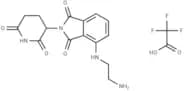
CAS:Thalidomide-NH-(CH2)2-NH2 TFA is an alkyl-modified derivative of Thalidomide serving as a Cereblon ligand to recruit CRBN proteins and a pivotal intermediate inFormula:C17H17F3N4O6Colore e forma:SolidPeso molecolare:430.34MS78
MS78, an acetylation targeting chimera (AceTAC), specifically acetylates the p53Y220C mutant by recruiting the histone acetyltransferase p300/CBP.Formula:C57H66FN9O6SColore e forma:SolidPeso molecolare:1024.25TTQ-SA
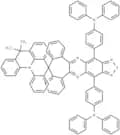
TTQ-SA is a near-infrared spiraling aggregation-induced emitter capable of converting near-infrared light (NIR) into thermal energy, resulting in thermal damage and death of tumor cells. In cancer cells MF-7, TTQ-SA shows cell uptake and targeting capabilities. TTQ-SA binds with DNAzyme to inhibit the expression of the survivin gene, enhancing the sensitivity of tumor cells to photothermal therapy.Formula:C78H53N7SColore e forma:SolidPeso molecolare:1120.37Tat-ASIC1a (1-20) (mouse, rat)
Tat-ASIC1a (1-20) (mouse, rat) is a competitive ASIC1a transmembrane peptide with significant neuroprotective effects. It alleviates acidotoxic neuronal damage by targeting the ASIC1a-RIPK1 pathway and an auto-inhibition mechanism. This compound effectively safeguards the brain in ischemic stroke mouse models against damage from ischemia and is applicable in research on neurodegenerative diseases, such as Huntington's disease and Parkinson’s disease.Colore e forma:Odour SolidBC13
BC13 is a CDK6/BRD4 inhibitor with IC50 values of 234 nM for CDK6 and 36 nM for BRD4. It exhibits antiproliferative properties, induces apoptosis (cell death) and DNA damage, and elevates ROS levels.Formula:C37H39N7O5Colore e forma:SolidPeso molecolare:661.758(E),10(E),12(Z)-Octadecatrienoic Acid
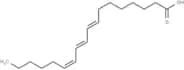
CAS:Conjugated PUFA in C. officinalis oil, anticancer, inhibits Caco-2 growth and PG biosynthesis, induces DLD-1 apoptosis.Formula:C18H30O2Colore e forma:SolidPeso molecolare:278.436Tubulin polymerization-IN-72
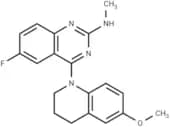
Tubulin polymerization-IN-72 (Compound 4a4) is a microtubule synthesis inhibitor with anticancer properties. By binding to the colchicine site, it disrupts the polymerization of tubulin, resulting in the arrest of cancer cells at the G2/M phase and inducing apoptosis (Apoptosis). The IC50 for its activity against cancer cells is 0.4-2.7 nM.Formula:C19H19FN4OColore e forma:SolidPeso molecolare:338.379SFI003
CAS:SFI003 is a novel SRSF3 inhibitor that exerts anticancer activity against colorectal cancer by modulating the SRSF3 / DHCR24 / ROS axis and driving apoptosis inFormula:C19H17N5OSPurezza:99.44%Colore e forma:SoildPeso molecolare:363.44Ref: TM-T72068
1mg75,00€5mg164,00€10mg255,00€25mg495,00€50mg712,00€100mg973,00€200mg1.341,00€1mL*10mM (DMSO)172,00€Narasin (sodium salt)
CAS:Narasin (sodium salt) (HainanMycin) induces tumor necrosis factor-related apoptosis-induced ligand (TRAIL)-mediated apoptosis by ER stress in glioma cells andFormula:C43H71NaO11Purezza:98%Colore e forma:SolidPeso molecolare:787.01