Apoptosi
Gli inibitori dell'apoptosi sono composti che prevengono o ritardano il processo di morte cellulare programmata, noto come apoptosi. Questi inibitori sono fondamentali per lo studio dei meccanismi di sopravvivenza cellulare e vengono utilizzati per indagare sulle malattie in cui l'apoptosi è disregolata, come il cancro, i disturbi neurodegenerativi e le malattie autoimmuni. Modulando l'apoptosi, questi inibitori possono aiutare nello sviluppo di terapie mirate a controllare la morte cellulare. Presso CymitQuimica, offriamo una vasta selezione di inibitori dell'apoptosi di alta qualità per supportare le tue ricerche in biologia cellulare, oncologia e campi correlati.
Sottocategorie di "Apoptosi"
- ASK(9 prodotti)
- BCL(1 prodotti)
- Caspasi(154 prodotti)
- FOXO1(2 prodotti)
- IAP(67 prodotti)
- Mdm2(12 prodotti)
- PD-1/PD-L1(134 prodotti)
- PDK(9 prodotti)
- PERK(23 prodotti)
- Chinasi di serina/treonina(17 prodotti)
- Survivin(14 prodotti)
- TNF(93 prodotti)
- c-RET(61 prodotti)
- p53(63 prodotti)
Mostrare 6 più sottocategorie
Trovati 6222 prodotti di "Apoptosi"
Ordinare per
Purezza (%)
0
100
|
0
|
50
|
90
|
95
|
100
Telitacicept
CAS:Telitacicept (RC18), a fully human TACI-Fc fusion protein, acts as a dual inhibitor of B lymphocyte stimulator (BLyS) and APRIL (a proliferation-inducing ligandColore e forma:LiquidHLDA-212
CAS:HLDA-212 (Compound 43) is a bifunctional small molecule designed to target HaloTag-tagged protein (target protein, TP) and Aurora kinase A/B (AURKA/B, effector protein, EP). By binding TP and EP, it forms a stable ternary complex (TP:RIPTAC:EP) that inhibits the cell survival functions of EP, inducing apoptosis in cancer cells expressing TP. In 293_HFL cells, HLDA-212 demonstrates antiproliferative activity with a GI50 of 0.011 μM. This compound holds promise for treating cancers with high TP expression, such as prostate cancer and hematological malignancies.Formula:C70H90BrFN8O19SColore e forma:SolidPeso molecolare:1478.47Enlonstobart
CAS:Enlonstobart is a humanized IgG4-κ monoclonal antibody targeting PDCD1, functioning as both an immunostimulant and antineoplastic agent [1].Colore e forma:LiquidAnti-Mouse CD44 Antibody (IM7)
Anti-Mouse CD44 Antibody (IM7) is a monoclonal antibody targeting CD44 in mice.Purezza:99%Colore e forma:Odour LiquidPeso molecolare:150 kDaBalstilimab
CAS:Balstilimab (AGEN2034) is a fully human monoclonal IgG4 antibody against PD-1 [1] .Colore e forma:LiquidAtacicept
CAS:Atacicept (TACI-Ig) is a homodimeric fusion protein that inhibits B cell stimulation.Purezza:97.9% (SDS-PAGE); 98.7% (SEC-HPLC) - 97.9% (SDS-PAGE); 98.7% (SEC-HPLC)Colore e forma:LiquidPeso molecolare:35.36 kDaZeluvalimab
CAS:Zeluvalimab (AMG-404) is a monoclonal antibody designed to target the PD-1 receptor, and is utilized in cancer research [1].Colore e forma:LiquidAZD5153
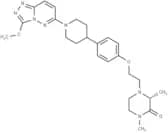
CAS:AZD5153 is an orally active and selective BET/BRD4 bromodomain inhibitor with an IC50 value of 1.7nM for BRD4.Formula:C25H33N7O3Purezza:99.25%Colore e forma:SolidPeso molecolare:479.57HX009
HX009 is a bispecific antibody that targets PD1 and CD47, though its binding to CD47 is attenuated. HX009 functions by blocking PD1/CD47 and can be utilized in research related to non-Hodgkin lymphoma (NHL).Colore e forma:Odour LiquidIDOi-Pt(IV) prodrug-1
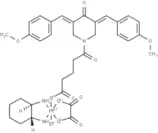
IDOi-Pt(IV) prodrug-1 (Compound 10) is an IDOi-Pt(IV) prodrug that suppresses IDO expression. It induces apoptosis, reduces mitochondrial membrane potential, and inhibits tumor cell migration and invasion. Additionally, IDOi-Pt(IV) prodrug-1 triggers reactive oxygen species-mediated endoplasmic reticulum stress and the secretion of damage-associated molecular patterns (DAMPs), leading to immunogenic cell death (ICD). Compared to cisplatin, IDOi-Pt(IV) prodrug-1 exhibits relatively high efficiency and low toxicity in its antitumor activity.Formula:C21H26Cl3N3O6PtSColore e forma:SolidPeso molecolare:749.969(E),11(E),13(E)-Octadecatrienoic Acid
CAS:β-ESA, a polyunsaturated fatty acid in seed oils, inhibits Caco-2 cell growth dose- and time-dependently.Formula:C18H30O2Colore e forma:SolidPeso molecolare:278.436TNF-α/IL-1β-IN-1
TNF-α/IL-1β-IN-1 (compound 11a) is an anti-inflammatory agent that effectively reduces the expression of TNF-α and IL-1β, inhibits oxidative stress and myocardial cell apoptosis, and demonstrates significant activity against septic myocardial injury. Additionally, it improves myocardial blood flow in vivo.Formula:C41H58N2O7Colore e forma:SolidPeso molecolare:690.91BRD9 ligand-5
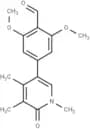
CAS:BRD9 Ligand-5 (Compound 172-11) serves as a ligand for the target protein in PROTAC applications. It is utilized in the synthesis of CFT8634.Formula:C17H19NO4Colore e forma:SolidPeso molecolare:301.34C199
C199 is a PROTAC degrader targeting PRMT4 with a DC50 of 106 nM. It demonstrates high selectivity for PRMT4 compared to other protein arginine methyltransferases. C199 exhibits strong cellular degradation capacity and induces apoptosis in multiple myeloma cell lines. It efficiently eliminates PRMT4 protein through the VHL-proteasome pathway. C199 has a relatively long half-life and shows potent anti-multiple myeloma (MM) activity.Colore e forma:Odour SolidWR-S-462
WR-S-462 is a STAT3 inhibitor. It effectively blocks the phosphorylation and biological functions of STAT3 in vitro. The IC50 of WR-S-462 for inhibiting MDA-MB-231 cells is 0.03 μM, and it exhibits a strong binding affinity for STAT3 protein with a Kd of 58 nM. WR-S-462 prevents the nuclear translocation of p-STAT3 and selectively inhibits the expression of p-STAT3Tyr705 in MDA-MB-231 cells, as well as the expression of downstream target genes regulated by STAT3, such as Cyclin D1, Bcl-2, and Bcl-xl. This compound inhibits the growth and metastasis of triple-negative breast cancer (TNBC).Formula:C24H22N4O4SColore e forma:SolidPeso molecolare:462.52STAT3-IN-40
CAS:STAT3-IN-40 (Compound 8b) is an anticancer agent. It initiates immune responses in CD4+ and CD8+ T lymphocytes by inhibiting the expression and phosphorylation of STAT3, and induces ferroptosis and apoptosis in tumor cells. STAT3-IN-40 is valuable for research into cancer chemoimmunotherapy drugs.Formula:C34H40ClN3O10PtColore e forma:SolidPeso molecolare:881.232Dual Galectin-3/EGFR-IN-1
Dual Galectin-3/EGFR-IN-1 (Compound 29) is a dual inhibitor targeting Galectin-3 and EGFR, with dissociation constants (KD) of 52.29 μM and 3.31 μM, respectively. It inhibits TGF-β-induced hepatic stellate cell (HSC) activation, induces apoptosis in LX-2 cells, and shows antifibrotic activity in the liver.Formula:C32H41N7O10Colore e forma:SolidPeso molecolare:683.709Zaptuzumab
CAS:Zaptuzumab (AD5-10) is a humanized monoclonal antibody targeting death receptor 5 (DR5) with high selective binding affinity. It specifically induces cancer cell death through caspase-mediated apoptosis and autophagic cell death (ACD). Zaptuzumab can activate antibody-dependent cell-mediated cytotoxicity (ADCC) and complement-dependent cytotoxicity (CDC). Additionally, it induces reactive oxygen species (ROS) production and reduces glutathione (GSH) levels. In various xenograft mouse tumor models, Zaptuzumab has demonstrated significant tumor growth inhibition and favorable safety profiles.Colore e forma:LiquidGLPG4970
GLPG4970 is a potent, selective, orally active dual inhibitor of salt-inducible kinases 2 and 3 (SIK2/SIK3), with IC50 values of 0.3 nM and 0.7 nM, respectively. It exhibits weak inhibition of the hERG channel, with an IC50 value of 29 μM. GLPG4970 reduces the release of tumor necrosis factor α (TNFα) and increases the release of interleukin 10 (IL-10). This compound is applicable for research in inflammation and immunology, such as studies on colitis.Colore e forma:Odour SoliddASK1
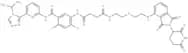
CAS:dASK1 is a selective CRBN-based PROTAC degrader targeting apoptosis signal-regulating kinase 1 (ASK1). It forms a stable ternary complex with ASK1, facilitating its rapid and sustained degradation via the ubiquitin-proteasome pathway. dASK1 exhibits strong ASK1 degradation capabilities and is applicable for hepatitis research.Formula:C38H38F2N10O8Colore e forma:SolidPeso molecolare:800.77