Peptidi
Sottocategorie di "Peptidi"
Trovati 29613 prodotti di "Peptidi"
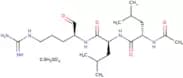
Leupeptin Hemisulfate
CAS:Leupeptin hemisulfate is a protease inhibitor with cell membrane-permeable, reversible, competitive, and oral activities.Formula:C20H38N6O4H2SO4Purezza:90% - ≥98%Colore e forma:White SolidPeso molecolare:475.59Fibronectin CS1 Peptide acetate
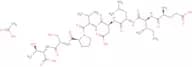
CS1 peptide in IIICS and C-274 lacks RGD, inhibits tumor metastasis.Formula:C40H68N8O17Purezza:98.09%Colore e forma:SolidPeso molecolare:933.01Dabsyl chloride
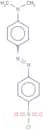
CAS:Dabsyl chloride (DABS-Cl) is an amine derivatizing agent and able to give rise to stable products that can be easily monitored spectrophotometrically at 460 nm.Formula:C14H14ClN3O2SPurezza:≥98%Colore e forma:Red Crystalline PowderPeso molecolare:323.80TCTU
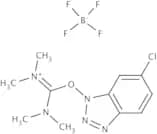
CAS:Formula:C11H15BClF4N5OPurezza:≥ 98.0%Colore e forma:White to off-white crystalline powderPeso molecolare:355.53Malantide acetate(86555-35-3 free base)
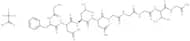
Malantide acetate is a dodecapeptide phosphorylated by cyclic AMP-dependent protein kinase (PKA), and increases PKA activity.Malantide is a synthetic peptideFormula:C74H128N22O23Purezza:>99.99%Colore e forma:SolidPeso molecolare:1693.97Speract TFA(76901-59-2(free base))
Speract TFA is a sea urchin egg peptide that regulates sperm motility, also stimulates sperm mitochondrial metabolism.
Formula:C40H58F3N11O16Purezza:>99.99%Colore e forma:SolidPeso molecolare:1005.96Alytesin acetate
Alytesin acetate is an amphibian bombesin-like peptide.
Formula:C70H110N22O19SPurezza:95.79%Colore e forma:SolidPeso molecolare:1595.82Ref: TM-TP2219L
1mg245,00€2mg366,00€5mg550,00€10mg787,00€25mg1.198,00€50mg1.596,00€100mg2.175,00€500mg4.351,00€Bacitracin Zinc
CAS:Bacitracin Zinc is a dephosphorylated disruptor of C55-isoprene pyrophosphate that inhibits Tyr cleavage in Met-enkephalin with an IC50 of 10 μM.Formula:C66H101N17O16SZnPurezza:63.98%Colore e forma:Light-Colored Free-Flowing PowdersPeso molecolare:1486.07GSNKGAIIGLM(131602-53-4(free base))
GSNKGAIIGLM(131602-53-4(free base)) (Amyloid beta-peptide(25-35)) is the fragment Aβ(25-35) of the Alzheimer's amyloid β-peptide.Formula:C49H83F6N13O18SPurezza:>99.99%Colore e forma:SolidPeso molecolare:1288.32Ref: TM-T7680
1mg88,00€2mg140,00€5mg208,00€10mg331,00€1mL*10mM (DMSO)505,00€25mg560,00€50mg800,00€100mg1.103,00€Cyclo(-RGDyC)acetate
Cyclo(-RGDyC)acetate is an integrin avb3-affine polypeptide, a circular RGDyc sequence.
Purezza:97.18%Colore e forma:Solid[Leu5]-Enkephalin Acetate
CAS:Applications [Leu5]-Enkephalin is a neurotransmitter used in molecular dynamics studies for the insertion of neurotransmitters into lipid bilayer membranes and their implication on membrane stability.
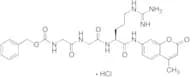
References Shen, C., et al.: ChemPhysChem, pages ahead of print (2017)Formula:C28H37N5O7·x(C2H4O2)Colore e forma:NeatPeso molecolare:615.67N-CBZ-Glycyl-glycyl-L-arginine 7-Amido-4-methylcoumarin Hydrochloride
CAS:Applications N-CBZ-Glycyl-glycyl-L-arginine 7-Amido-4-methylcoumarin Hydrochloride is a fluorogenic substrate for uPA (urokinase).
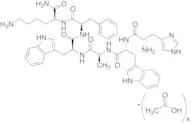
References Zimmerman, M., et al. Proc. Natl. Acad. Sci. USA 75, 750 (1978);Formula:C28H33N7O7·HClColore e forma:NeatPeso molecolare:579.6L-Histidyl-D-tryptophyl-L-alanyl-L-tryptophyl-D-phenylalanyl-L-lysinamide Acetate Salt
CAS:Prodotto controllatoFormula:C46H56N12O6·x(C2H4O2)Colore e forma:NeatPeso molecolare:873.01 + x(60.05)N-Boc-D-leucine
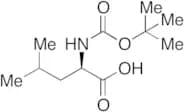
CAS:Prodotto controllatoApplications N-Boc-D-leucine is an N-Boc-protected form of D-Leucine (L330150). D-Leucine is an unnatural isomer of L-Leucine (L330110) that acts as an auto-inhibitor of lactic streptococci in culture. D-Leucine causes analgesia in humans and also exhibits inhibitory activity in bacterial cell cultures.
References Chuan, Y., et al.: Chin. J. Anim. Vet. Sci., 4, 003 (1985); Fox, S., et al.: J. Biol. Chem., 155, 465 (1944); Gillillad, S. & Speck, M.: J. Dairy Sci., 51, 1573 (1968); Schoenheimer, R., et al.: J. Biol. Chem., 130, 703 (1939); Seltzer, S., et al.: Pain, 11, 141 (1981)Formula:C11H21NO4Colore e forma:NeatPeso molecolare:231.29H-Beta-Ala-pNA HBr
CAS:Prodotto controllatoFormula:C9H11N3O3·HBrColore e forma:NeatPeso molecolare:290.114Linaclotide
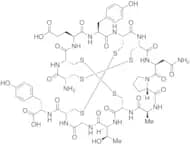
CAS:Prodotto controllatoApplications Linaclotide is a guanylate cyclase-C agonist currently being studied in Phase 3 trials for the treatment of irritable bowel syndrome with constipation.
References Chey, W.D., et al.: Am. J. Gastroenterol., 107, 1702 (2012); Rao, S., et al.: Am. J. Gastroentrol., 107, 1714 (2012); Brierley, S.M., et al.: Curr. Opinion. Pharmacol., 12, 632 (2012);Formula:C59H79N15O21S6Colore e forma:NeatPeso molecolare:1526.74L-Cysteinylglycine
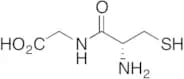
CAS:Stability Air Sensitive
Applications L-Cysteinylglycine, is a biologically important compound since it is formed during the γ-glutamyl cycle. It is a cysteinyl peptide, that can be used in the studies of many peptides and important proteins.
References Marvin D., et al.: New J. Org. Synth., 12, 185 (1980); Sheehan, J. C., et al.: New Synth. Cysteinyl Peptide, 1159 (1958);Formula:C5H10N2O3SColore e forma:NeatPeso molecolare:178.21Urolithin A
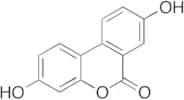
CAS:Applications Urolithin A is a major metabolite of ellagitannin and exhibits anti-inflammatory and antioxidant properties.
References Ishimoto, H., et. al.: Bioorg. Med. Chem. Lett., 21, 5901 (2011);Formula:C13H8O4Colore e forma:NeatPeso molecolare:228.2N-Carbamoyl-2-fluoro-(β)-alanine
CAS:Prodotto controllatoApplications A metabolite of Capecitabine.
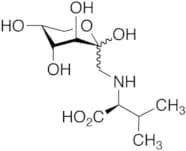
References Arellano, M., ET AL.: Br. J. Cancer, 77, 79 (1998), Budman, D., ET AL.: J. Clin. Oncol., 16, 1795 (1998), Khanna, R., et al.: Cancer Res., 60, 4725 (2000), Charasson, V., et al.: Drug Metab. Dispos., 30, 731 (2002),Formula:C4H7FN2O3Colore e forma:NeatPeso molecolare:150.11Fructose Valine (mixture of diastereomers)
CAS:Prodotto controllatoApplications An Amadori compound having the potential to alter cellular adhesion, inhibit cancer metastasis and induce apoptosis.
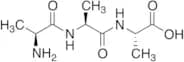
References Horiuchi, T., et al.: Agric. Biol. Chem., 55, 333 (1991), Sosnovsky, G., et al.: J. Pharm. Sci., 82, 649 (1993), Glinsky, G., et al.: Cancer Res., 56, 5319 (1996),Formula:C11H21NO7Colore e forma:Off-White To Dark BrownPeso molecolare:279.29L-Alanyl-L-alanyl-L-alanine
CAS:Prodotto controllatoApplications L-Alanyl-L-alanyl-L-alanine (cas# 5874-90-8) is a useful research chemical.
Formula:C9H17N3O4Colore e forma:White To Off-WhitePeso molecolare:231.25TCEP Hydrochloride
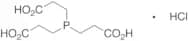
CAS:Applications Biochemical tool for selective reduction of disulfide bridges at low pH; reductant for redox assay.
Not a dangerous good if item is equal to or less than 1g/ml and there is less than 100g/ml in the package
References Neuburger, M., et al.: Eur. J. Biochem., 267, 2882 (2000), Krijt, J., et al.: Clin. Chem., 47, 1821 (2001), Yen, T.-Y., et al.: J. Mass Spectrom., 37, 15 (2002),Formula:C9H15O6P·ClHColore e forma:NeatPeso molecolare:286.65Exenatide-d5 Acetate
CAS:Prodotto controllatoApplications Exenatide-d5 Acetate is labelled Exenatide Acetate (E957300) which causes an increase in acinar cAMP without stimulating amylase release. Exenatide has found use as a medication of diabetes II.
References Pugazhenthi, U. et al.: Diabetol., 53, 2357 (2010); Li, C. et al.: Bioche,. Biophys. Res. Comm., 400, 563 (2010); Lupi, R. et al.: Diab. Obes. Metab., 10, 515 (2008); Kim, T.H. et al.: Bioconj. Chem., 22, 625 (2011);Formula:C186H281D5N50O62SColore e forma:NeatPeso molecolare:4251.71Thyrotropin-Releasing Hormone
CAS:Prodotto controllatoApplications Thyrotropin-Releasing Hormone is a hypothalamic hypophysiotropic neuropeptide, which has the ability to stimulate the release of thyroid-stimulating hormone in mammals. It is proven that Thyrotropin-Releasing Hormone can be used to accelerate wound healing.
References Kanasaki, H., et al.: Neuropeptides., 54, 73 (2015); Nie, C., et al.: J. Surg. Res., 189, 364 (2014);Formula:C16H22N6O4Colore e forma:Off-WhitePeso molecolare:362.38Nα-(2,4-Dinitro-5-fluorophenyl)-L-alaninamide
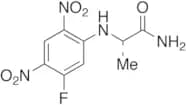
CAS:Prodotto controllatoApplications Used for chiral amino acid analysis.
References Bhushan, R., et al.: Anal. Bioanal. Chem., 394, 1697 (2009), Jamindar, D., et al.: Anal. Biochem., 396, 1 (2010),Formula:C9H9FN4O5Colore e forma:Light YellowPeso molecolare:272.193X HA Tag
3X HA Tag (Triple-HA Tag) is a bioactive peptide consisting of three repetitive HA tags (YPYDVPDYA) and is mainly used for protein and peptide detection.Formula:C205H272N38O67SPurezza:99.78%Colore e forma:SoildPeso molecolare:4372.63Poly(ethylene Glycol) ~6000
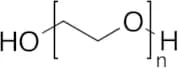
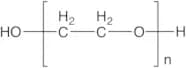
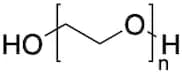
CAS:Prodotto controllatoApplications Poly(ethylene Glycol) molecules of an average molecular mass of 6000. Poly(ethylene Glycol) is used in various applications from industrial chemistry to biological chemistry. Recent research has shown PEG maintains the ability to aid the spinal cord injury recovery process, helping the nerve impulse conduction process in animals. In rats, it has been shown to aid in the repair of severed sciatic axons, helping with nerve damage recovery. It is industrially produced as a lubricating substance for various surfaces to reduce friction. PEG is also used in the preparation of vesicle transport systems in with application towards diagnostic procedures or drug delivery methods.
References Borgens, R. et al.: J. Neurosci. Res., 66, 1179 (2001); Stavisky, R. et al.: Neurosci. Lett., 376, 98 (2005); Nalam, P. et al.: Tribiol. Lett., 37, 541 (2010); Steinmetz, N. et al.: J. Am. Chem. Soc., 131, 17093 (2009); Li, X. et al.: J. Am. Chem. Soc., 133, 11147 (2011); Li, L. et al.: Int. J. Pharm., 447, 192 (2013)Formula:H2O(C2H4O)nColore e forma:White To Off-WhitePeso molecolare:62.07γ-L-Glutamyl L-Glutamic Acid
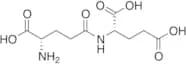
CAS:Prodotto controllatoApplications H-GAMMA-GLU-GLU-OH (cas# 1116-22-9) is a useful research chemical.
Formula:C10H16N2O7Colore e forma:NeatPeso molecolare:276.24O-(Benzotriazol-1-yl)-N,N,N’,N’-tetramethyluronium Tetrafluoroborate
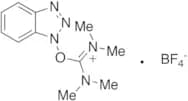
CAS:Prodotto controllatoApplications O-(Benzotriazol-1-yl)-N,N,N’,N’-tetramethyluronium Tetrafluoroborate is used in the synthesis of tetrapeptoid analogues of the antiprotocoal compound Apicidin (A726300). Also used in the synthesis of acid based t-antigen glycodendrimers.
References Murray, P. et al.: Bioorg. Med. Chem. Lett., 11, 773 (2001); Roy, R. et al.: J. Am. Chem. Soc., 123, 1809 (2001);Formula:C11H16BF4N5OColore e forma:NeatPeso molecolare:321.08N-L-γ-GLUTAMYL-L-LEUCINE
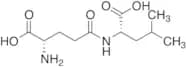
CAS:Prodotto controllatoApplications N-L-GAMMA-GLUTAMYL-L-LEUCINE (cas# 2566-39-4) is a useful research chemical.
Formula:C11H20N2O5Colore e forma:White To Off-WhitePeso molecolare:260.29tert-Butoxycarbonyl-D-proline
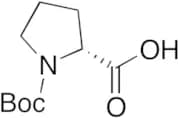
CAS:Prodotto controllatoApplications tert-Butoxycarbonyl-D-proline is Boc protected D-proline (P755990). It is used to prepare trichostatin A and trapoxin B analogs as histone deacetylase inhibitors. It is also used to prepare potent and selective nonpeptide inhibitors of caspases 3 and 7.
References Jung, M., et al.: Bioorg. Med. Chem. Lett., 7, 1655 (1997); Lee, D., et al.: J. Med. Chem,, 44, 2015 (2001)Formula:C10H17NO4Colore e forma:NeatPeso molecolare:215.25Insulin (Human)
CAS:Applications Insulin (Human) is a peptide hormone regulating the metabolism of carbohydrates and fats. It is used in the treatment of those suffering from the diabetes type I and II metabolic disorders. Regulates the absorption of glucose from the blood to skeletal muscles and fat storage.
References Lai, Y. et al.: Biochem. J., 460, 363 (2014); Hedman, C. et al.: Clin. Endocrinol., 81, 58 (2014);Formula:C257H383N65O77S6Colore e forma:NeatPeso molecolare:5807.57Lactoferrin
CAS:Prodotto controllatoApplications Lactoferrin is a multifunctional protein of transferin family. A glycoprotein present in various secretions including milk, saliva and tears. Antiviral agent, it binds to liproproteins of cell membranes dispersing virus molecules from host cells.
References Sánchez L. et al.: Arch. Dis. CHild., 67, 657 (1992); Harmsen MC. et al.: J. Infect. Dis., 172, 380 (1995);Formula:C141H224N46O29S3Colore e forma:NeatPeso molecolare:3123.8N,N'-Dicyclohexylcarbodiimide
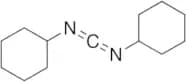
CAS:Prodotto controllatoFormula:C13H22N2Colore e forma:Off-White To Light YellowPeso molecolare:206.33Poly(ethylene Glycol) ~600
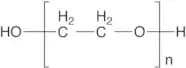
CAS:Prodotto controllatoApplications Poly(ethylene Glycol) molecules of an average molecular mass of 600. Poly(ethylene Glycol) is used in various applications from industrial chemistry to biological chemistry. Recent research has shown PEG maintains the ability to aid the spinal cord injury recovery process, helping the nerve impulse conduction process in animals. In rats, it has been shown to aid in the repair of severed sciatic axons, helping with nerve damage recovery. It is industrially produced as a lubricating substance for various surfaces to reduce friction. PEG is also used in the preparation of vesicle transport systems in with application towards diagnostic procedures or drug delivery methods.
References Borgens, R. et al.: J. Neurosci. Res., 66, 1179 (2001); Stavisky, R. et al.: Neurosci. Lett., 376, 98 (2005); Nalam, P. et al.: Tribiol. Lett., 37, 541 (2010); Steinmetz, N. et al.: J. Am. Chem. Soc., 131, 17093 (2009); Li, X. et al.: J. Am. Chem. Soc., 133, 11147 (2011); Li, L. et al.: Int. J. Pharm., 447, 192 (2013);Formula:H2O(C2H4O)nColore e forma:Colourless To Off-WhitePeso molecolare:62.07TCEP Hydrochloride (0.5M in water)
CAS:Prodotto controllatoFormula:C9H15O6P·ClHColore e forma:ColourlessPeso molecolare:286.65Poly(ethylene Glycol) ~1000
CAS:Prodotto controllatoApplications Poly(ethylene Glycol) molecules of an average molecular mass of 1000. Poly(ethylene Glycol) is used in various applications from industrial chemistry to biological chemistry. Recent research has shown PEG maintains the ability to aid the spinal cord injury recovery process, helping the nerve impulse conduction process in animals. In rats, it has been shown to aid in the repair of severed sciatic axons, helping with nerve damage recovery. It is industrially produced as a lubricating substance for various surfaces to reduce friction. PEG is also used in the preparation of vesicle transport systems in with application towards diagnostic procedures or drug delivery methods.
References Borgens, R. et al.: J. Neurosci. Res., 66, 1179 (2001); Stavisky, R. et al.: Neurosci. Lett., 376, 98 (2005); Nalam, P. et al.: Tribiol. Lett., 37, 541 (2010); Steinmetz, N. et al.: J. Am. Chem. Soc., 131, 17093 (2009); Li, X. et al.: J. Am. Chem. Soc., 133, 11147 (2011); Li, L. et al.: Int. J. Pharm., 447, 192 (2013);Formula:H2O(C2H4O)nColore e forma:White To Off-WhitePeso molecolare:62.07Carbetocin
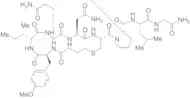
CAS:Applications An obstetric drug used to control postpartum hemorrhaging.
References Sanz-Nebot, V., et al.: Anal. Bioanal. Chem., 377, 306 (2003), Gimpl, G., et al.: Eur. J. Pharmacol., 510, 9 (2005), Handler, J., et al.: Theriogenol., 66, 1397 (2006), Klenerova, V., et al.: J. Physiol. Pharmacol., 60, 57 (2009),Formula:C45H69N11O12SColore e forma:NeatPeso molecolare:988.16L-Cysteine Hydrochloride Monohydrate
CAS:Stability Moisture Sensitive
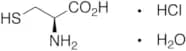
Applications L-Cysteine is a non-essential amino acid that can be synthesized by the human body under normal physiological conditions if a sufficient quantity of methionine is available. L-Cysteine is commonly used as a precursor in the food and pharmaceutical industries. L-Cysteine is used as a processing aid for baking, as an additive in cigarettes, as well as in the preparation of meat flavours.
References Hui, N. et al.: Meat Sci. Appl., 74 (2001); Kiviharju, K. et al.: J. Biotechnol., 117, 299 (2005); Pecivova, P. et al.: J. Sci. Food Agric., 90, 1681 (2010);Formula:C3H7NO2S·ClH·H2OColore e forma:NeatPeso molecolare:175.63Poly(ethylene Glycol) ~2000
CAS:Applications Poly(ethylene Glycol) molecules of an average molecular mass of 2000. Poly(ethylene Glycol) is used in various applications from industrial chemistry to biological chemistry. Recent research has shown PEG maintains the ability to aid the spinal cord injury recovery process, helping the nerve impulse conduction process in animals. In rats, it has been shown to aid in the repair of severed sciatic axons, helping with nerve damage recovery. It is industrially produced as a lubricating substance for various surfaces to reduce friction. PEG is also used in the preparation of vesicle transport systems in with application towards diagnostic procedures or drug delivery methods.
References Borgens, R. et al.: J. Neurosci. Res., 66, 1179 (2001); Stavisky, R. et al.: Neurosci. Lett., 376, 98 (2005); Nalam, P. et al.: Tribiol. Lett., 37, 541 (2010); Steinmetz, N. et al.: J. Am. Chem. Soc., 131, 17093 (2009); Li, X. et al.: J. Am. Chem. Soc., 133, 11147 (2011); Li, L. et al.: Int. J. Pharm., 447, 192 (2013);Formula:H2O(C2H4O)nColore e forma:White To Off-WhitePeso molecolare:62.07N-Boc-L-proline
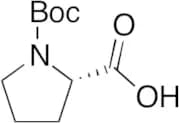
CAS:Prodotto controllatoApplications N-Boc-L-proline is a useful synthetic intermediate. It is used to synthesize Daclatasvir (D101500) which nhibits the HCV protein NS5A. Daclatasvir (D101500) can be used as a drug candidate for the treatment of hepatitis C (HCV).
References Gao, M., et al.: Nature, 465(7294), 96 (2010); Bell, T. W., Chem. Med. Chem., 5(10), 1663 (2010);Formula:C10H17NO4Colore e forma:NeatPeso molecolare:215.25Glycyl-Glycyl-Glycine
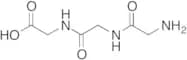
CAS:Prodotto controllatoApplications Glycyl-glycyl-glycine is used as a model peptide for studies of physicochemical parameters and molecular associations of small peptides. It is also used as a copper chelator.
Formula:C6H11N3O4Colore e forma:NeatPeso molecolare:189.17Actinomycin D (Dactinomycin)
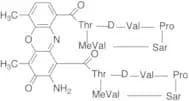
CAS:Prodotto controllatoApplications Antibiotic substance belonging to the actinomycin complex, produced by several Streptomyces spp. Antineoplastic.
Not a dangerous good if item is equal to or less than 1g/ml and there is less than 100g/ml in the package
References Manaker, et al.: Antibiot. Ann., 55, 853 (1954), Jain, S., et al.: J. Mol. Biol., 114, 317 (1977), Nakajima, K., et al.: Pept. Chem., 19, 143 (1981), Shereda, R., et al.: J. Biol. Chem., 282, 19247 (2007),Formula:C62H86N12O16Colore e forma:RedPeso molecolare:1255.42Poly(ethylene Glycol) ~4000
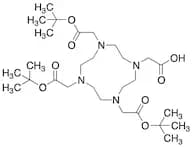
CAS:Prodotto controllatoFormula:H2O(C2H4O)nColore e forma:White To Off-WhitePeso molecolare:62.07DOTA-tris (t-Bu ester) (~90%)
CAS:Prodotto controllatoApplications DOTA-tris (t-Bu ester), is a Bifunctional chelator, that can be used in the preparation of gadolinium complexes as MRI blood contrast agents.
Formula:C28H52N4O8Purezza:~90%Colore e forma:NeatPeso molecolare:572.73Lixisenatide Acetate
CAS:Prodotto controllatoFormula:C215H347N61O65S·C2H4O2Colore e forma:NeatPeso molecolare:4858.48 + x(60.05)Ilomastat
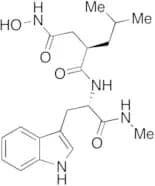
CAS:Prodotto controllatoApplications Ilomastat is a metalloprotease inhibitor.
References Dietrich, C., et. al.: J. Immunol., 192, 5382 (2014)Formula:C20H28N4O4Colore e forma:NeatPeso molecolare:388.46E-64d
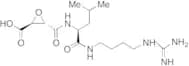
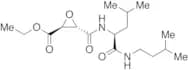
CAS:Prodotto controllatoApplications E-64d is an inhibitor of cathepsins B and L as well as a potential inhibitor of calpain. E-64d has been shown to inhibit lysosomal proteases. E-64d has been used in combination with Prepstatin A to interfere with autolysosomal digestion. E-64d displays neurovascular and neuronal protective effects after focal cerebral ischemia in rats.
References Wilcox, D. et al.: Biochem. J., 285, 495 (1992); McGowan, E.B. et al.: Biochem. Biophys. Res. Comm., 158, 432 (1989); Tsubokawa, T. et al.: J. Neurosci. Res., 84, 832 (2006);Formula:C17H30N2O5Colore e forma:NeatPeso molecolare:342.43




![[Leu5]-Enkephalin Acetate](/_next/image/?url=https%3A%2Fstatic.cymitquimica.com%2Fproducts%2FTR%2Fthumb-webp%2FL330340.webp&w=3840&q=75)