3D-FB178028 - butyric-acid-natural
Sorry, no product with reference 3D-FB178028 been found, but please check out the following similar products:
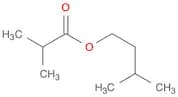
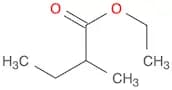
Propanoic acid, 2-methyl-, 3-methylbutyl ester
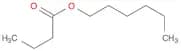
CAS:Formula:C9H18O2Purity:97%Color and Shape:LiquidMolecular weight:158.2380Butanoic acid, hexyl ester
CAS:Formula:C10H20O2Purity:98%Color and Shape:LiquidMolecular weight:172.2646Butanoic acid, 3-hydroxy-, ethyl ester
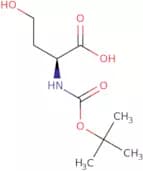
CAS:Formula:C6H12O3Purity:98%Color and Shape:LiquidMolecular weight:132.1577N-Boc-L-homoserine
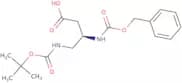
CAS:N-Boc-L-homoserine is a lactam with an alkyl group, which makes it a useful synthetic intermediate for the synthesis of various products. It has been used in the synthesis of β-unsaturated ketones and conjugates. N-Boc-L-homoserine is also found naturally in nature and can be found as its two isomers, L-homoserine and D-homoserine. This compound has been shown to have histone deacetylase inhibition activity, which may be due to its ability to inhibit histone acetyl transferase. N-Boc-L-homoserine is synthesized from butyric acid, which is a tetrapeptide that contains four amino acids: valine, leucine, proline, and hydroxyproline.Formula:C9H17NO5Purity:Min. 95%Color and Shape:PowderMolecular weight:219.24 g/mol(R)-4-(Boc-amino)-3-(Z-amino)butyric acid
CAS:(R)-4-(Boc-amino)-3-(Z-amino)butyric acid is a synthetic ligand that binds to dna. The binding of this ligand can be monitored by the thermodynamic interaction between the ligand and dna. (R)-4-(Boc-amino)-3-(Z-amino)butyric acid has been shown to bind to the phosphate groups on dna, which are apolar in nature. This ligand also interacts with the vector group of dna, and it has a multivalency of two. It is water soluble and neutral, making it suitable for use in supramolecular chemistry. (R)-4-(Boc-amino)-3-(Z-amino)butyric acid is not very polar and does not have any charges or functional groups that would make it an ionizable species. It can form complexes with carbohydrates because it is neutral, and its interactions with them areFormula:C17H24N2O6Purity:Min. 98 Area-%Color and Shape:PowderMolecular weight:352.38 g/molMethyl 4-acetylbenzoate
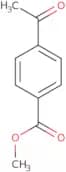
CAS:Methyl 4-acetylbenzoate is a synthetic compound that can be used for the synthesis of imatinib and other pharmaceuticals. It is an effective method for the synthesis of butyric acid with high enantiomeric purity. The cross-coupling reaction was first reported by Suzuki in 1979, which has been widely applied to organic synthesis because it is efficient and produces simple byproducts. This reaction has also been used in the synthesis of model compounds and natural products, as well as in environmental pollution studies.Formula:C10H10O3Purity:Min. 95%Color and Shape:PowderMolecular weight:178.18 g/mol4,5,6-Trimethoxyindole
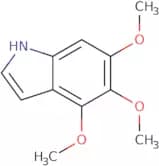
CAS:4,5,6-Trimethoxyindole is a chemical compound that is found in the plant Chinensis. This compound has been shown to have potent anticancer properties and can be used as a treatment for inflammatory diseases. 4,5,6-Trimethoxyindole has been shown to modulate the activity of some bacteria and it has been hypothesized that this may be due to its interaction with formylation. The acidic nature of 4,5,6-Trimethoxyindole makes it soluble in ethanol. It can also be synthesised from butyric acid and other chemicals.
Formula:C11H13NO3Purity:Min. 95%Color and Shape:SolidMolecular weight:207.23 g/mol2-Methyl-2-phenylbutanoic acid
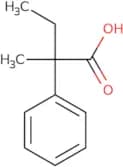
CAS:2-Methyl-2-phenylbutanoic acid is a molecule with a formula of C8H14O2. It has one hydroxyl group and one acceptor, which are the two functional groups that have an effect on the molecular electrostatic potential. The molecule also has a butyric acid group, which is a short-chain fatty acid. 2-Methyl-2-phenylbutanoic acid is an anticomplement agent and is used in research to study the complement system's role in inflammation and tissue damage. The molecule's structure can be described by its functional groups, which are antiinflammatory in nature.Formula:C11H14O2Purity:Min. 95%Molecular weight:178.23 g/molN-Benzyl-1-phenylethylamine
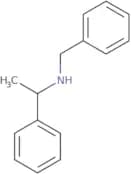
CAS:N-Benzyl-1-phenylethylamine is a synthetic chemical. It is used as a ligand for the hydrogenation reduction of beta-cyclodextrin to form 1,4-dideoxygalactose from glucose. In order to desorb the N-benzylphenethylamine from the beta-cyclodextrin, it must be dehydrated with methanol and cyclopropylamine. N-Benzylphenethylamine can also be synthesized by reacting butyric acid with beta-cyclodextrin in an amide bond. The synthesis of N-benzylphenethylamine is facilitated by the mesoporous nature of the beta-cyclodextrin, which is capable of stabilizing this molecule.Formula:C15H17NPurity:Min. 95%Molecular weight:211.3 g/molFmoc-trans-4-(aminomethyl)cyclohexane-1-carboxylic acid
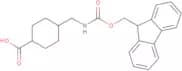
CAS:Fmoc-trans-4-(aminomethyl)cyclohexane-1-carboxylic acid is a synthetic amino acid that has been shown in vitro to inhibit the growth of prostate cancer cells. It is an analog of butyric acid, a naturally occurring fatty acid. Fmoc-trans-4-(aminomethyl)cyclohexane-1-carboxylic acid has been synthesized by solid phase methods and labeled with radiotracers such as indium 111 or technetium 99m. The use of Fmoc-trans-4-(aminomethyl)cyclohexane-1-carboxylic acid in vivo is limited by its short circulating half life, rapid metabolism, and high toxicity.Formula:C23H25NO4Purity:Min. 95%Color and Shape:White SolidMolecular weight:379.45 g/molEthyl 2-chloro-2-(methylsulfanyl)acetate
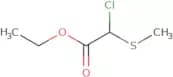
CAS:Ethyl 2-chloro-2-(methylsulfanyl)acetate is a synthetic antiinflammatory agent that has been shown to be effective in the treatment of inflammation. Ethyl 2-chloro-2-(methylsulfanyl)acetate is chemically related to butyric acid and ibuprofen, which are both natural antiinflammatory agents. It inhibits the production of prostaglandins, which may be responsible for the antiinflammatory effects. The synthesis of ethyl 2-chloro-2-(methylsulfanyl)acetate begins with an acid chloride and a benzene ring. The condensation reaction forms an ester, which is then subjected to Friedel-Crafts reactions. This process produces phthalic anhydride and nitrated products.Formula:C5H9ClO2SPurity:Min. 95%Molecular weight:168.64 g/mol3-Hydroxy-3-phenylpentanamide
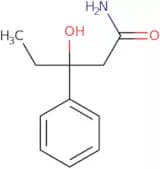
CAS:3-Hydroxy-3-phenylpentanamide is a chiral molecule that has been found to produce neurotoxic effects in rats. 3-Hydroxy-3-phenylpentanamide binds to the benzodiazepine binding site on the GABA receptor and produces a neurotoxic effect. The neurotoxicity of this drug was studied using x-ray crystallography and it was found that 3-hydroxy-3-phenylpentanamide binds with high affinity to the gamma amino butyric acid (GABA) receptor, which causes an increase in chloride ion flow into the neuron and can lead to death of the neuron. This compound also has a halogen substituent at C3, which may be responsible for its toxicity. 3-Hydroxy-3-phenylpentanamide is an enantiomer that is not present in nature and is produced synthetically by reacting phenylacetonitrile with hydroxylamine followed by chlorination. It hasFormula:C11H15NO2Purity:Min. 95%Molecular weight:193.24 g/mol