3D-FP01987 - 34-pyridine-dicarboxylic-acid
3,3 DIMETHYL CIS 1,2 CYCLOPROPANE DICARBOXYLIC ACID
CAS:Formula:C7H10O4Purity:98%Color and Shape:SolidMolecular weight:158.1519cis-1,2-Cyclopropane dicarboxylic acid
CAS:Formula:C5H6O4Purity:98%Color and Shape:SolidMolecular weight:130.09874,5-Dibromonaphthalene-1,8- dicarboxylic acid anhydride
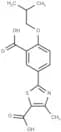
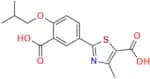
CAS:Formula:C12H4Br2O3Molecular weight:355.97Febuxostat dicarboxylic acid impurity
CAS:Febuxostat dicarboxylic acid impurityPurity:≥95%Molecular weight:335.38g/molFebuxostat dicarboxylic acid impurity
CAS:Febuxostat dicarboxylic acid impurity is an impurity of Febuxostat. Febuxostat is selective xanthine oxidase inhibitor with a K i of 0.6 nM [1] .Formula:C16H17NO5SColor and Shape:SolidMolecular weight:335.38Perfluoropolyether dicarboxylic acid
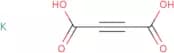
Perfluoropolyether dicarboxylic acidPurity:≥95%Color and Shape:LiquidAcetylene dicarboxylic acid potassium salt
CAS:Acetylene dicarboxylic acid potassium salt (ADAC) is a drug that belongs to the class of 2-fluorobenzoic acid derivatives. Acetylene dicarboxylic acid potassium salt inhibits the enzyme 2,3-dihydroxybenzoate-4-hydroxylase and reduces the production of propiolic acid, which leads to a decrease in the synthesis of tetracene. Acetylene dicarboxylic acid potassium salt has been shown to be an effective anesthetic, with good visual and motor activity. The high toxicity of this compound is due to its high affinity for protein binding sites and its ability to form hydrogen bonds.Formula:C4H2KO4Purity:Min. 95%Molecular weight:153.15 g/mol2,3-Pyrazine dicarboxylic acid
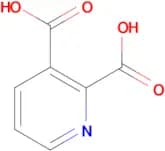
CAS:Formula:C6H4N2O4Purity:98%Color and Shape:SolidMolecular weight:168.1082,3-Pyridine dicarboxylic acid
CAS:Formula:C7H5NO4Purity:98%Color and Shape:Solid, Light yellow powderMolecular weight:167.12Bicyclo[2.2.2] octane-1,4 dicarboxylic acid
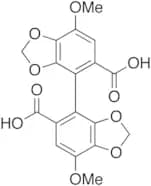
CAS:Formula:C10H14O4Purity:97%Color and Shape:SolidMolecular weight:198.218Bifendate Dicarboxylic Acid
CAS:Controlled ProductApplications Carboxylic acid derivative of Bifendate (B382890), a synthetic intermediate of Schisandrin C and also a anti-HBV drug used in the treatment of chronic hepatitis B.
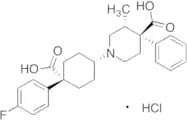
References Pan, S.Y., et al.: Euro. J. Pharmacol. 522, 170 (2006); Zeng, Y., et al.: Acta. Pharmacol. Sinica., 30, 478 (2009);Formula:C18H14O10Color and Shape:NeatMolecular weight:390.3Cabastine Hydrochloride Dicarboxylic Acid
Controlled ProductFormula:C26H31ClFNO4•(HCl)Color and Shape:NeatMolecular weight:511.169244,5-Disulfo Rhodamine-123 Dicarboxylic Acid Lithium Salt(Mixture of isomers, Technical Grade)
CAS:Controlled ProductStability Light Sensitive
Applications 4,5-Disulfo Rhodamine-123 dicarboxylic acid is a xanthene dye substituted two times by a sulfonic acid used as fluorescent probes, particularly in biological samples. It is more photostable than fluorescein.
References Stenman, U., et al.: Cancer Res., 51, 222 (1991), Mitrunen, K., et al.: Clin. Chem., 41, 1115 (1995), Karvinen, J., et al.: Anal. Biochem., 325, 317 (2004), Hemmila, I., et al.: J. Fluoresc., 15, 529 (2005),Formula:C22H16Li2N2O11S2Color and Shape:NeatMolecular weight:562.37Montelukast dicarboxylic acid
CAS:Controlled ProductMontelukast is a drug product that belongs to the class of drugs called leukotriene receptor antagonists. Montelukast binds to cysteinyl leukotrienes (LTC4, LTD4, LTE4) and prevents their interaction with receptors on the cell surface. It can be used for the treatment of asthma, chronic obstructive pulmonary disease, and other allergic conditions. Montelukast is available in tablet form and is taken orally. Montelukast is not expected to be toxic because it has been shown to have a low incidence of side effects in clinical trials.Formula:C35H34ClNO5SPurity:Min. 95%Molecular weight:616.20 g/molDimethyl 1,2,3,4-tetrahydronaphthalene-2,6-dicarboxylate
CAS:Formula:Purity:≥95%Molecular weight:248.27Ref: BD-BD434832
1gTo inquire







![Bicyclo[2.2.2] octane-1,4 dicarboxylic acid](/_next/image/?url=https%3A%2Fstatic.cymitquimica.com%2Fproducts%2F10%2Fthumb-webp%2FF051075.webp&w=3840&q=75)