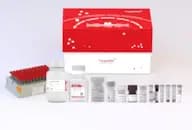
One of the most relevant brands among our more than 25 partners is TargetMol
We have reached an agreement with TargetMol: CymitQuimica clients will benefit for a 20% discount on all TargetMol products until the end of the year.On our website you can find the products offered by this partner, which has become one of the world's most recognised compound libraries and small molecule inhibitors supplier. TargetMol offers approximately 120 compound libraries and a wide range of chemical products and kits for life sciences.
Ends on Dec 31( 12 days left )
Mycoplasma Clearance Reagent
Application: Suitable for treating and eliminating mycoplasma contamination during cell culture.Color and Shape:Odour SolidN-2 Supplement (100X), Serum-free
Application: Additive for neuronal cell cultureColor and Shape:Odour SolidCell Freezing Medium
<p>Application: Suitable for long-term low-temperature storage of various mammalian cells, ensuring high survival rate and stability of cells after freezing and recovery.</p>Serum-Free Cell Freezing Medium
<p>Application: Suitable for long-term low-temperature storage of various mammalian cells, ensuring high survival rate and stability of cells after freezing and recovery. Suitable for cryopreservation of serum-free cells.</p>Alkaline Xylanase Assay Kit (Microanalysis)
<p>Alkaline Xylanase (BAX) (EC 3.2.1.8) is a xylanase with high enzymatic activity under alkaline conditions, and its active component is xylanase. It is mainly produced by microorganisms and can catalyze the hydrolysis of xylan. Also known as pentosanase or hemicellulase, it can decompose the cell walls of raw materials and β-glucan in the brewing or feed industry, reduce the viscosity of materials in brewing, promote the release of effective substances, reduce non-starch polysaccharides in feed, and enhance the absorption and utilization of nutrients. Therefore, it is widely used in the brewing and feed industries. BAX is generally isolated from microorganisms whose optimal growth pH is 9-11.</p>Color and Shape:Odour SolidAlkaline Xylanase Assay Kit (Spectrophotometry)
<p>Alkaline Xylanase (BAX) (EC 3.2.1.8) is a xylanase with high enzymatic activity under alkaline conditions, and its active component is xylanase. It is mainly produced by microorganisms and can catalyze the hydrolysis of xylan. Also known as pentosanase or hemicellulase, it can decompose the cell walls of raw materials and β-glucan in the brewing or feed industry, reduce the viscosity of materials in brewing, promote the release of effective substances, reduce non-starch polysaccharides in feed, and enhance the absorption and utilization of nutrients. Therefore, it is widely used in the brewing and feed industries. BAX is generally isolated from microorganisms whose optimal growth pH is 9-11.</p>Color and Shape:Odour Solid4CL Assay Kit (Microanalysis)
<p>4-coumarate: CoA ligase (4CL) is a key enzyme linking the phenylpropanoic acid pathway and the specific lignin synthesis pathway. It mainly catalyzes cinnamic acid to generate the corresponding cinnamic acid-CoA ester, and serves as a regulatory point for the metabolic flow in the synthesis of lignin and other phenylpropanoid compounds. This enzyme mainly exists in higher plants, yeasts, and fungi. Studying this enzyme can help explore the metabolic mechanism of lignin deposition during the development of various biological cells.</p>Color and Shape:Odour Solid4CL Assay Kit (UV Spectrophotometry)
<p>4-coumarate: CoA ligase (4CL) is a key enzyme linking the phenylpropanoic acid pathway and the specific lignin synthesis pathway. It mainly catalyzes cinnamic acid to generate the corresponding cinnamic acid-CoA ester, and serves as a regulatory point for the metabolic flow in the synthesis of lignin and other phenylpropanoid compounds. This enzyme mainly exists in higher plants, yeasts, and fungi. Studying this enzyme can help explore the metabolic mechanism of lignin deposition during the development of various biological cells.</p>Color and Shape:Odour Solid6PG Assay Kit (Microanalysis)
<p>Glucose-6-phosphate (6PG) is an intermediate product of glycolysis and the pentose phosphate pathway, widely existing in animals, plants, and microorganisms. In the first step of glycolysis, glucose is catalyzed by hexokinase to form glucose-6-phosphate, which is then catalyzed by phosphoglucose isomerase to form fructose-6-phosphate to proceed with other steps of glycolysis. In the pentose phosphate pathway, glucose-6-phosphate is its first substrate, and this process is also the main pathway for NADPH generation. In addition, glucose-6-phosphate can be converted into glycogen or starch for storage.</p>Color and Shape:Odour Solid6PG Assay Kit (Visible Spectrophotometry)
<p>Glucose-6-phosphate (6PG) is an intermediate product of glycolysis and the pentose phosphate pathway, widely existing in animals, plants, and microorganisms. In the first step of glycolysis, glucose is catalyzed by hexokinase to form glucose-6-phosphate, which is then catalyzed by phosphoglucose isomerase to form fructose-6-phosphate to proceed with other steps of glycolysis. In the pentose phosphate pathway, glucose-6-phosphate is its first substrate, and this process is also the main pathway for NADPH generation. In addition, glucose-6-phosphate can be converted into glycogen or starch for storage.</p>Color and Shape:Odour Solid6-PGDH Assay Kit (Microanalysis)
<p>In the pentose phosphate pathway, glucose-6-phosphate dehydrogenase (G6PDH) and 6PGDH sequentially catalyze the synthesis of NADPH, which is closely related to energy balance, growth rate, and cell viability. In addition, 6PGDH plays an important role in stress physiology.</p>Color and Shape:Odour Solid6-PGDH Assay Kit (UV Spectrophotometry)
<p>In the pentose phosphate pathway, glucose-6-phosphate dehydrogenase (G6PDH) and 6PGDH sequentially catalyze the synthesis of NADPH, which is closely related to energy balance, growth rate, and cell viability. In addition, 6PGDH plays an important role in stress physiology.</p>Color and Shape:Odour SolidACC Assay Kit (Microanalysis)
<p>Acetyl-CoA carboxylase (ACC) catalyzes the carboxylation of acetyl-CoA to malonyl-CoA in organisms, and it is a key enzyme in the synthesis of fatty acids and many secondary metabolites. To a certain extent, the activity of ACC determines the synthesis rate of fatty acids and the level of oil content.</p>Color and Shape:Odour SolidACC Assay Kit (Spectrophotometry)
<p>Acetyl-CoA carboxylase (ACC) catalyzes the carboxylation of acetyl-CoA to malonyl-CoA in organisms, and it is a key enzyme in the synthesis of fatty acids and many secondary metabolites. To a certain extent, the activity of ACC determines the synthesis rate of fatty acids and the level of oil content.</p>Color and Shape:Odour SolidAcetaldehyde Dehydrogenase Assay Kit (Microanalysis)
<p>Acetaldehyde Dehydrogenase (ALDH) (EC 1.2.1.10) is a type of aldehyde dehydrogenase, which widely exists in various animals, plants and microorganisms. Its main function is to oxidize acetaldehyde into acetic acid, playing a major role in alcohol metabolism. In humans and many animals, mitochondrial acetaldehyde dehydrogenase can convert alcohols that are harmful to organisms, so acetaldehyde dehydrogenase has received great attention in cell detoxification research. At the same time, acetaldehyde dehydrogenase has been widely studied and applied in molecular biology and the detection of related diseases.</p>Color and Shape:Odour SolidAcetaldehyde Dehydrogenase Assay Kit (UV Spectrophotometry)
<p>Acetaldehyde Dehydrogenase (ALDH) (EC 1.2.1.10) is a type of aldehyde dehydrogenase, which widely exists in various animals, plants and microorganisms. Its main function is to oxidize acetaldehyde into acetic acid, playing a major role in alcohol metabolism. In humans and many animals, mitochondrial acetaldehyde dehydrogenase can convert alcohols that are harmful to organisms, so acetaldehyde dehydrogenase has received great attention in cell detoxification research. At the same time, acetaldehyde dehydrogenase has been widely studied and applied in molecular biology and the detection of related diseases.</p>Color and Shape:Odour SolidAcetyl coenzyme A (Acetyl Co-A) Assay Kit (Microanalysis)
<p>Acetyl-CoA widely exists in animals, plants, microorganisms and cultured cells, and it is an important intermediate metabolite produced during the metabolism of energy substances in organisms. It is a pivotal substance in the metabolism of energy substances in the body. The three major nutrients, namely carbohydrates, fats and proteins, converge through acetyl-CoA into a common metabolic pathway - the tricarboxylic acid cycle and oxidative phosphorylation, through which they are completely oxidized to carbon dioxide and water, releasing energy for ATP synthesis. In addition, acetyl-CoA is a precursor substance for the synthesis of physiological active substances such as fatty acids, ketone bodies, cholesterol and their derivatives.</p>Color and Shape:Odour SolidAcetyl coenzyme A (Acetyl Co-A) Assay Kit (UV Spectrophotometry)
<p>Acetyl-CoA widely exists in animals, plants, microorganisms and cultured cells, and it is an important intermediate metabolite produced during the metabolism of energy substances in organisms. It is a pivotal substance in the metabolism of energy substances in the body. The three major nutrients, namely carbohydrates, fats and proteins, converge through acetyl-CoA into a common metabolic pathway - the tricarboxylic acid cycle and oxidative phosphorylation, through which they are completely oxidized to carbon dioxide and water, releasing energy for ATP synthesis. In addition, acetyl-CoA is a precursor substance for the synthesis of physiological active substances such as fatty acids, ketone bodies, cholesterol and their derivatives.</p>Color and Shape:Odour SolidAcetylcholinesterase Assay Kit (Microanalysis)
<p>Acetylcholinesterase (AchE) belongs to serine hydrolases, which widely exists in various animal tissues and serum. Ach catalyzes the hydrolysis of acetylcholine (Ach) and plays an important role in the regulation of nerve conduction.</p>Color and Shape:Odour SolidAcetylcholinesterase Assay Kit (Spectrophotometry)
<p>Acetylcholinesterase (AchE) belongs to serine hydrolases, which widely exists in various animal tissues and serum. Ach catalyzes the hydrolysis of acetylcholine (Ach) and plays an important role in the regulation of nerve conduction.</p>Color and Shape:Odour SolidAcid Phosphatase Assay Kit (Microanalysis)
<p>Acid Phosphatase (ACP) catalyzes the hydrolysis of phosphomonoesters into inorganic phosphate under acidic conditions. It is commonly found in the lysosomes of macrophages and is often used as an auxiliary diagnostic tool for prostate cancer.</p>Color and Shape:Odour SolidAcid Phosphatase Assay Kit (Spectrophotometry)
<p>Acid Phosphatase (ACP) catalyzes the hydrolysis of phosphomonoesters into inorganic phosphate under acidic conditions. It is commonly found in the lysosomes of macrophages and is often used as an auxiliary diagnostic tool for prostate cancer.</p>Color and Shape:Odour SolidAcidic Proteinase Assay Kit (Microanalysis)
<p>Acidic Proteinase (ACP) is an enzyme that catalyzes the hydrolysis of proteins in an acidic environment. This enzyme is mainly used in alcohol fermentation, beer brewing, fur softening, fruit wine clarification, soy sauce brewing, feed production, and other fields.</p>Color and Shape:Odour SolidAcidic Proteinase Assay Kit (Spectrophotometry)
<p>Acidic Proteinase (ACP) is an enzyme that catalyzes the hydrolysis of proteins in an acidic environment. This enzyme is mainly used in alcohol fermentation, beer brewing, fur softening, fruit wine clarification, soy sauce brewing, feed production, and other fields.</p>Color and Shape:Odour SolidAcidic Xylanase Assay Kit (Microanalysis)
<p>Acidic Xylanase (ACX) (EC 3.2.1.8) is mainly produced by microorganisms and can catalyze the hydrolysis of xylan. Also known as pentosanase or hemicellulase, it can decompose the cell walls of raw materials and β-glucan in the brewing or feed industry, reduce the viscosity of materials in brewing, promote the release of effective substances, lower non-starch polysaccharides in feed, and enhance the absorption and utilization of nutrients. Therefore, it is widely used in the brewing and feed industries. ACX is generally isolated from acid-tolerant fungi, bacteria, and some molds.</p>Color and Shape:Odour SolidAcidic Xylanase Assay Kit (Spectrophotometry)
<p>Acidic Xylanase (ACX) (EC 3.2.1.8) is mainly produced by microorganisms and can catalyze the hydrolysis of xylan. Also known as pentosanase or hemicellulase, it can decompose the cell walls of raw materials and β-glucan in the brewing or feed industry, reduce the viscosity of materials in brewing, promote the release of effective substances, lower non-starch polysaccharides in feed, and enhance the absorption and utilization of nutrients. Therefore, it is widely used in the brewing and feed industries. ACX is generally isolated from acid-tolerant fungi, bacteria, and some molds.</p>Color and Shape:Odour SolidACK Assay Kit (Microanalysis)
<p>Acetate kinase (ACK) mainly exists in microorganisms and catalyzes the conversion of acetate and ATP into acetyl phosphate and ADP. It is a key enzyme in bacterial carbon metabolism and energy metabolism, and plays a central role especially in the methanogenic metabolism of archaea.</p>Color and Shape:Odour SolidACK Assay Kit (UV Spectrophotometry)
<p>Acetate kinase (ACK) mainly exists in microorganisms and catalyzes the conversion of acetate and ATP into acetyl phosphate and ADP. It is a key enzyme in bacterial carbon metabolism and energy metabolism, and plays a central role especially in the methanogenic metabolism of archaea.</p>Color and Shape:Odour SolidACL Assay Kit (Microanalysis)
<p>ATP-citrate lyase (ACL; EC 4.1.3.8) is a key enzyme in fatty acid synthesis. The acetyl-CoA produced by its catalysis can be used for fatty acid synthesis, carbon chain elongation, flavonoid synthesis, amino acid synthesis, etc.</p>Color and Shape:Odour SolidACL Assay Kit (UV Spectrophotometry)
<p>ATP-citrate lyase (ACL; EC 4.1.3.8) is a key enzyme in fatty acid synthesis. The acetyl-CoA produced by its catalysis can be used for fatty acid synthesis, carbon chain elongation, flavonoid synthesis, amino acid synthesis, etc.</p>Color and Shape:Odour SolidACO Assay Kit (Microanalysis)
<p>Aconitase (ACO) is an enzyme in the tricarboxylic acid cycle that catalyzes the conversion of citric acid to isocitric acid. Citric acid itself is not easily oxidized. Under the action of aconitase, through dehydration and hydration reactions, the hydroxyl group is transferred from the β-carbon atom to the α-carbon atom, generating isocitric acid which is easy to be dehydrogenated and oxidized, preparing for further oxidative decarboxylation reactions.</p>Color and Shape:Odour SolidACO Assay Kit (UV Spectrophotometry)
<p>Aconitase (ACO) is an enzyme in the tricarboxylic acid cycle that catalyzes the conversion of citric acid to isocitric acid. Citric acid itself is not easily oxidized. Under the action of aconitase, through dehydration and hydration reactions, the hydroxyl group is transferred from the β-carbon atom to the α-carbon atom, generating isocitric acid which is easy to be dehydrogenated and oxidized, preparing for further oxidative decarboxylation reactions.</p>Color and Shape:Odour SolidADPG Pyrophosphorylase Assay Kit (Microanalysis)
<p>ADP-glucose pyrophosphorylase (ADPase, AGP) (EC 2.7.7.21) is a rate-limiting enzyme for starch synthesis in plants and glycogen synthesis in microorganisms. It catalyzes the reaction in which glucose-1-phosphate reacts with ATP to form ADP-glucose (ADPG) with the release of energy. Understanding AGPase is of great value for studying starch content.</p>Color and Shape:Odour SolidADPG Pyrophosphorylase Assay Kit (UV Spectrophotometry)
<p>ADP-glucose pyrophosphorylase (ADPase, AGP) (EC 2.7.7.21) is a rate-limiting enzyme for starch synthesis in plants and glycogen synthesis in microorganisms. It catalyzes the reaction in which glucose-1-phosphate reacts with ATP to form ADP-glucose (ADPG) with the release of energy. Understanding AGPase is of great value for studying starch content.</p>Color and Shape:Odour SolidADPG Pyrophosphorylase Assay Kit (Visible Spectrophotometry)
<p>ADP-glucose pyrophosphorylase (ADPase, AGP) (EC 2.7.7.21) is a rate-limiting enzyme for starch synthesis in plants and glycogen synthesis in microorganisms. It catalyzes the reaction in which glucose-1-phosphate reacts with ATP to form ADP-glucose (ADPG) with the release of energy. Understanding AGPase is of great value for studying starch content.</p>Color and Shape:Odour SolidAH Assay Kit (Microanalysis)
<p>Cytochrome P450 enzymes are a group of isozymes mainly present in the liver, which play an important role in the metabolism of exogenous substances, especially the metabolism of drugs and toxicants. Aniline-4-hydroxylase (AH) corresponds to the CYP2E1 subtype in the P450 enzyme system. CYP2E1 not only participates in drug metabolism but also catalyzes the activation process of various procarcinogens and protoxicants.</p>Color and Shape:Odour SolidAH Assay Kit (Spectrophotometry)
<p>Cytochrome P450 enzymes are a group of isozymes mainly present in the liver, which play an important role in the metabolism of exogenous substances, especially the metabolism of drugs and toxicants. Aniline-4-hydroxylase (AH) corresponds to the CYP2E1 subtype in the P450 enzyme system. CYP2E1 not only participates in drug metabolism but also catalyzes the activation process of various procarcinogens and protoxicants.</p>Color and Shape:Odour SolidAlcohol Dehydrogenase Assay Kit (Microanalysis)
<p>Alcohol dehydrogenase (ADH) is a class of enzymes that catalyze the conversion of alcohols to aldehydes, accompanied by the reduction of NAD+ to NADH. In humans, there are 9 types of ADH isozymes, with most of the ADH activity occurring in the liver. Members of the ADH family are the main enzymes involved in alcohol detoxification; genetic variations in ADH enzymes lead to differences in ADH activity and alcohol tolerance, and may regulate the susceptibility to alcoholism.</p>Color and Shape:Odour SolidAlcohol Dehydrogenase Assay Kit (UV Spectrophotometry)
<p>Alcohol dehydrogenase (ADH) is a class of enzymes that catalyze the conversion of alcohols to aldehydes, accompanied by the reduction of NAD+ to NADH. In humans, there are 9 types of ADH isozymes, with most of the ADH activity occurring in the liver. Members of the ADH family are the main enzymes involved in alcohol detoxification; genetic variations in ADH enzymes lead to differences in ADH activity and alcohol tolerance, and may regulate the susceptibility to alcoholism.</p>Color and Shape:Odour SolidAlkali Proteinase Assay Kit (Microanalysis)
<p>Alkali Proteinase (AKP) refers to a class of enzymes that catalyze the hydrolysis of peptide bonds in proteins under alkaline conditions, belonging to serine proteases. In addition, this enzyme can also hydrolyze ester bonds and amide bonds, and has the functions of transesterification and transpeptidation. It is one of the main industrial enzymes, widely used in pharmaceutical, silk, food, leather-making and other industries.</p>Color and Shape:Odour SolidAlkali Proteinase Assay Kit (Spectrophotometry)
<p>Alkali Proteinase (AKP) refers to a class of enzymes that catalyze the hydrolysis of peptide bonds in proteins under alkaline conditions, belonging to serine proteases. In addition, this enzyme can also hydrolyze ester bonds and amide bonds, and has the functions of transesterification and transpeptidation. It is one of the main industrial enzymes, widely used in pharmaceutical, silk, food, leather-making and other industries.</p>Color and Shape:Odour SolidAlkaline Phosphatase Assay Kit (Microanalysis)
<p>Alkaline phosphatase (AKP/ALP) is a zinc-containing glycoprotein enzyme that can hydrolyze various natural and synthetic phospholipid monoester compounds in an alkaline environment. AKP/ALP is widely distributed in various organs of the human body, with the liver being the main one.</p>Color and Shape:Odour SolidAlkaline Phosphatase Assay Kit (Spectrophotometry)
<p>Alkaline phosphatase (AKP/ALP) is a zinc-containing glycoprotein enzyme that can hydrolyze various natural and synthetic phospholipid monoester compounds in an alkaline environment. AKP/ALP is widely distributed in various organs of the human body, with the liver being the main one.</p>Color and Shape:Odour SolidAmino Acid Content Assay Kit (Microanalysis)
<p>Animal liver and kidney are the main organs for amino acid metabolism, so changes in urinary amino acids can best reflect the physiological status of the liver and kidney. In addition, amino acids can also reflect conditions such as burns and typhoid fever. The content of amino acids in plants is of great significance for studying changes in nitrogen metabolism of plants under different conditions and at different growth and development stages, as well as plants' absorption, transportation, assimilation of nitrogen and their nutritional status. This kit is used to determine the content of L-amino acids in biological samples.</p>Color and Shape:Odour SolidAmino Acid Content Assay Kit (Spectrophotometry)
<p>Animal liver and kidney are the main organs for amino acid metabolism, so changes in urinary amino acids can best reflect the physiological status of the liver and kidney. In addition, amino acids can also reflect conditions such as burns and typhoid fever. The content of amino acids in plants is of great significance for studying changes in nitrogen metabolism of plants under different conditions and at different growth and development stages, as well as plants' absorption, transportation, assimilation of nitrogen and their nutritional status. This kit is used to determine the content of L-amino acids in biological samples.</p>Color and Shape:Odour SolidAmmonium Nitrogen Assay Kit (Spectrophotometry)
<p>Ammonium nitrogen in soil can be adsorbed by soil colloids, existing as exchangeable ammonium nitrogen fertilizer, or dissolved in soil solution. It can be directly absorbed and utilized by plants, belonging to fast-acting nitrogen.</p>Color and Shape:Odour SolidAmylopectin Assay Kit (Microanalysis)
<p>Amylopectin is a highly branched polysaccharide. The ratio and content of amylose and amylopectin in starch have a direct impact on the processing, physicochemical properties, gelatinization temperature, etc. of starch products. Therefore, the research on starches with different ratios of amylose and amylopectin is of great significance.</p>Color and Shape:Odour SolidAmylopectin Assay Kit (Spectrophotometry)
<p>Amylopectin is a highly branched polysaccharide. The ratio and content of amylose and amylopectin in starch have a direct impact on the processing, physicochemical properties, gelatinization temperature, etc. of starch products. Therefore, the research on starches with different ratios of amylose and amylopectin is of great significance.</p>Color and Shape:Odour SolidAmylose Assay Kit (Microanalysis)
<p>Amylose is a polysaccharide chain in which D-glucosyl groups are linked by α-(1,4) glycosidic bonds. The determination of its content is of great significance for evaluating the nutritional value of food and investigating sugar metabolism in plants.</p>Color and Shape:Odour Solid