


Álcoois
Subcategorias de "Álcoois"
Foram encontrados 5818 produtos de "Álcoois"
6-(4,4,5,5-Tetramethyl-[1,3,2]dioxaborolan-2-yl)-isoquinoline
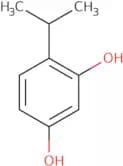
CAS:6-(4,4,5,5-Tetramethyl-[1,3,2]dioxaborolan-2-yl)-isoquinoline is a versatile building block for the synthesis of complex compounds. This product is a reagent that can be used in organic synthesis as a reaction component or as a reagent to form new compounds. 6-(4,4,5,5-Tetramethyl-[1,3,2]dioxaborolan-2-yl)-isoquinoline has shown high quality in research and is useful for the synthesis of fine chemicals and speciality chemicals.Fórmula:C15H18BNO2Pureza:Min. 95%Cor e Forma:White To Beige SolidPeso molecular:255.12 g/mol4-Isopropylresorcinol
CAS:4-Isopropylresorcinol or 4-Isopropylbenzene-1,3-diol belongs to the family of alkylresorcinol. It is a synthetic molecule that has been shown to reduce tumor size and inhibit cancer cell growth in vitro and in vivo. It also inhibits the expression of heat shock protein (Hsp90), which is highly expressed in most tumor cells. A study done on human lung cancer cell lines showed that 4-isopropylresorcinol inhibited the growth of xenograft tumors with no side effects, by enhancing the sensitivity of lung cancer cells to photodynamic therapy, and arrests non-small cell lung cancer cells in the G1 phase with an associated increase in apoptosis. It also induces efflux transporters in tumor cells, which leads to a time-dependent pharmacokinetics.
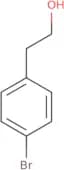
Fórmula:C9H12O2Pureza:Min. 98 Area-%Cor e Forma:White Off-White PowderPeso molecular:152.19 g/mol2-(4-Bromophenyl)ethanol
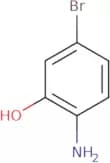
CAS:2-(4-Bromophenyl)ethanol is an analog of histone lysine and histone H3. It is a synthetic substrate for the acylation reaction on the carboxyl group of fatty acids. 2-(4-Bromophenyl)ethanol has been shown to have optical properties similar to those of natural fatty acids and has been used as a polymer film for cell line A549.Fórmula:C8H9BrOPureza:Min. 95%Cor e Forma:Slightly Yellow Clear LiquidPeso molecular:201.06 g/mol2-Amino-5-bromophenol
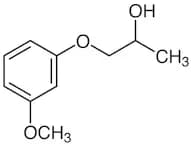
CAS:2-Amino-5-bromophenol is a chemical that is used as a substrate in the study of intracellular Ca2+ levels. 2-Amino-5-bromophenol can also be used to study the activity of microperoxidases, enzymes that are involved in the metabolism of hydrogen peroxide and organic hydroperoxides. 2-Amino-5-bromophenol has been shown to have anticancer activity against MCF7 cells, an estrogen receptor positive cell line. The anticancer activity may be due to the inhibition of protein synthesis by 2-amino-5-bromophenol binding to DNA. This binding prevents transcription and translation of genes that code for proteins involved in cancer cell proliferation and survival.Fórmula:C6H6BrNOPureza:Min. 95%Cor e Forma:Off-White To Brown SolidPeso molecular:188.02 g/mol1-(3-Methoxyphenoxy)-2-propanol
CAS:Fórmula:C10H14O3Pureza:>90.0%(GC)Cor e Forma:Colorless to Light yellow to Light orange clear liquidPeso molecular:182.22(1S,2R,3S,5R)-2-((Benzyloxy)methyl)-6-oxabicyclo[3.1.0]hexan-3-ol
CAS:(1S,2R,3S,5R)-2-((Benzyloxy)methyl)-6-oxabicyclo[3.1.0]hexan-3-ol is a fine chemical with a CAS No. of 117641-39-1. It has been used as a versatile building block in the synthesis of complex compounds, and has also been used as a useful intermediate in the production of specialty chemicals. This compound is useful for research purposes and can be used as a reaction component in the synthesis of new compounds.Fórmula:C13H16O3Pureza:Min. 95%Cor e Forma:Clear LiquidPeso molecular:220.26 g/mol(1S)-3,3'-Bis(1,1-dimethylethyl)-5,5',6,6'-tetramethyl-[1,1'-biphenyl]-2,2'-diol
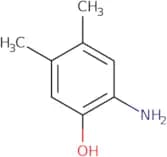
CAS:(1S)-3,3'-Bis(1,1-dimethylethyl)-5,5',6,6'-tetramethyl-[1,1'-biphenyl]-2,2'-diol is a reaction component that is used in the synthesis of complex compounds. It has been shown to be useful as a reagent and as a scaffold for high quality research chemicals. This compound is also used in the synthesis of versatile building blocks and fine chemicals.Fórmula:C24H34O2Pureza:Min. 95%Cor e Forma:White PowderPeso molecular:354.53 g/mol2-Amino-4,5-dimethylphenol
CAS:2-Amino-4,5-dimethylphenol is a compound that exhibits anticancer activity. It is an arylimine that has been shown to inhibit the proliferation of cancer cells in vitro and in vivo. The mechanism of action is not fully understood, but it is believed that 2-amino-4,5-dimethylphenol may act as a nucleophile in reverse Michael addition reactions with electrophiles. This compound also has been shown to be potent against some cancer cell lines and to induce apoptosis through caspase activation. 2-Amino-4,5-dimethylphenol interacts with aminophenols in vitro, forming supramolecular complexes that are cytotoxic to cancer cells.
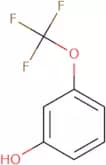
Fórmula:C8H11NOPureza:Min. 95%Cor e Forma:Brown SolidPeso molecular:137.18 g/mol3-(Trifluoromethoxy)phenol
CAS:3-(Trifluoromethoxy)phenol is a drug that has been shown to function as an amide and a biomolecular. It has also been used in the development of drugs for depression, but it is not known whether it is effective in humans. 3-(Trifluoromethoxy)phenol binds to the cation channel of the NMDA receptor, which may be related to its antidepressant properties. The compound has been shown to have a radiotracer effect on positron emission tomography (PET). 3-(Trifluoromethoxy)phenol yields positrons when it undergoes deamination. This reaction is catalyzed by enzymes such as acetylcholine esterase, choline oxidase, and monoamine oxidases.
Fórmula:C7H5F3O2Pureza:Min. 95%Cor e Forma:Clear LiquidPeso molecular:178.11 g/mol3-Methoxyphenylmethylcarbinol
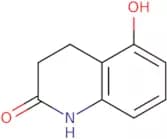
CAS:3-Methoxyphenylmethylcarbinol is a hydrogen tartrate that can be used as an intermediate in the Friedel-Crafts reaction. It is also an imine, which is formed when a nitrogen atom of an amine reacts with a carbon atom of formaldehyde. 3-Methoxyphenylmethylcarbinol has been shown to have stereoselective properties in the Friedel-Crafts reaction, which means that only one product is produced from two reactants. In this case, the hydrogen tartrate and phosphorus oxychloride are reacted to produce oxone and chloride compounds. The selectivity of 3-methoxyphenylmethylcarbinol can be increased by adding triphosgene or dimethylamine to the reaction mixture. This compound dissociates easily into its component parts and can be regenerated by adding ethyl formate or ferrocene.Fórmula:C9H12O2Pureza:Min. 95%Cor e Forma:PowderPeso molecular:152.19 g/mol5-Hydroxy-3,4-dihydro-2(1H)-quinolinone
CAS:5-Hydroxy-3,4-dihydro-2(1H)-quinolinone is a high quality reagent with a CAS number of 30389-33-4. It has been shown to be a useful intermediate in the synthesis of complex compounds. This compound can also be used as an important building block for the synthesis of speciality chemicals and research chemicals. 5-Hydroxy-3,4-dihydro-2(1H)-quinolinone is versatile and can be used as a reaction component in many reactions that require the introduction of oxygen into molecules.Fórmula:C9H9NO2Pureza:Min. 95%Cor e Forma:White PowderPeso molecular:163.17 g/mol2-(Hydroxymethyl)pyridin-4-ol
CAS:2-(Hydroxymethyl)pyridin-4-ol is a versatile building block that can be used in the synthesis of complex compounds and research chemicals. This fine chemical is a reagent, speciality chemical, and useful scaffold in organic synthesis. 2-(Hydroxymethyl)pyridin-4-ol is also an intermediate for the production of useful building blocks. It has high purity and can be used as a reaction component or a useful scaffold in organic synthesis.Fórmula:C6H7NO2Pureza:Min. 95%Cor e Forma:White PowderPeso molecular:125.13 g/mol4-Phenoxybenzyl alcohol
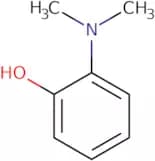
CAS:4-Phenoxybenzyl alcohol is an organic compound that is used as a reagent in the introduction of fatty acids. It has been used to study the fluidity, disulfides, and amide bonds of fatty acid chains. 4-Phenoxybenzyl alcohol also has been shown to inhibit lipase activity. In vitro assays have demonstrated that it can inhibit monoacylglycerol lipase, which is a key enzyme for the hydrolysis of endocannabinoids such as 2-arachidonoylglycerol. 4-Phenoxybenzyl alcohol has also been shown to be a potent inhibitor of potassium phosphate esterase and monoacylglycerol lipase in vitro.Fórmula:C13H12O2Pureza:Min. 95%Cor e Forma:PowderPeso molecular:200.23 g/mol2-(Dimethylamino)phenol
CAS:2-(Dimethylamino)phenol (DMP) is a neutral organic compound that is used as an analytical reagent. It reacts with hydrochloric acid to form phenols, which are then analyzed by fluorescence probe. DMP can also be used in the synthesis of aminophenols, which are used in the manufacture of dyes, pharmaceuticals, and other chemical products. It has been shown to inhibit mitochondrial functions and fatty acid synthesis. DMP binds to receptors on the surface of cells and can block the binding of drugs that target these receptors. DMP may also act as a hydrogen bond donor or acceptor depending on its environment.
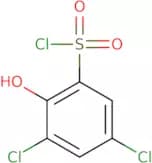
Fórmula:C8H11NOPureza:Min. 95 Area-%Cor e Forma:White PowderPeso molecular:137.18 g/mol2,4-Dichlorophenol-6-sulphonyl chloride
CAS:2,4-Dichlorophenol-6-sulphonyl chloride (2,4-DCP) is a molecule that has been shown to have antibacterial activity against Gram-positive and Gram-negative bacteria. It inhibits the growth of bacteria by binding to the cell wall and inhibiting enzyme activity. 2,4-DCP also has hemolytic activity in vitro. The mechanism of this effect is not well understood but may involve an interaction with membrane lipids or proteins in red blood cells. In addition, 2,4-DCP has been shown to inhibit the growth of staphylococcus and other bacterial strains in vitro. The inhibition of bacterial growth by 2,4-DCP is reversible with exposure to hydrated conditions.Fórmula:C6H3Cl3O3SPureza:Min. 95%Peso molecular:261.51 g/mol1,3-Dihydroxyacetone
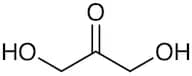
CAS:Fórmula:C3H6O3Pureza:>97.0%(GC)Cor e Forma:White to Almost white powder to crystalPeso molecular:90.082-Boc-6-hydroxy-1,2,3,4-tetrahydroisoquinoline-1-carboxylic acid
CAS:2-Boc-6-hydroxy-1,2,3,4-tetrahydroisoquinoline-1-carboxylic acid is a useful scaffold with a high quality. It can be used as a building block in the synthesis of complex compounds and fine chemicals. 2-Boc-6-hydroxy-1,2,3,4-tetrahydroisoquinoline-1-carboxylic acid is also a useful intermediate and reagent in organic synthesis. This compound has CAS number 362492-00-0.
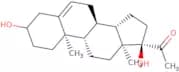
Fórmula:C15H19NO5Pureza:Min. 95%Cor e Forma:PowderPeso molecular:293.32 g/mol17alpha-Hydroxypregnenolone
CAS:Produto Controlado17alpha-Hydroxypregnenolone is a steroid hormone that has been shown to have effects on the metabolism of lipids, glucose and protein. This compound is synthesized from progesterone by the enzyme 17alpha-hydroxylase and is converted to 17beta-hydroxyprogesterone by the enzyme 17,20 lyase. It has been shown to have an effect on body mass index in humans and model organisms such as mice. The tissue culture studies showed that 17alpha-Hydroxypregnenolone led to an increase in serum bile acids. In adrenocortical carcinoma cell lines, this compound was found to inhibit the growth of cancer cells through inhibition of DNA synthesis and protein synthesis through inhibition of RNA polymerase II activity. It also inhibits infectious diseases by decreasing virus production and increasing the production of interferon alpha. When synthesized for use in experimental models, this compound can be used as a marker for metabolic disorders or cation
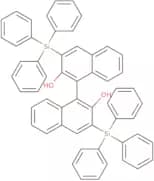
Fórmula:C21H32O3Pureza:Min. 95%Cor e Forma:White PowderPeso molecular:332.48 g/mol(R)-3,3'-Bis(triphenylsilyl)-1,1'-binaphthalene-2,2'-diol
CAS:(R)-3,3'-Bis(triphenylsilyl)-1,1'-binaphthalene-2,2'-diol is a high quality chemical and useful scaffold that can be used as a reagent for the synthesis of complex compounds. This compound has CAS No. 111822-69-6 and is an intermediate for the preparation of fine chemicals and speciality chemicals. It is also a versatile building block that can be used in research or as a reaction component to produce useful scaffolds.Fórmula:C56H42O2Si2Pureza:Min. 95%Cor e Forma:White PowderPeso molecular:803.1 g/mol[5-(4-Aminophenyl)-2-furyl]methanol
CAS:Please enquire for more information about [5-(4-Aminophenyl)-2-furyl]methanol including the price, delivery time and more detailed product information at the technical inquiry form on this page
Fórmula:C11H11NO2Pureza:Min. 95%Cor e Forma:Brown PowderPeso molecular:189.21 g/mol
![6-(4,4,5,5-Tetramethyl-[1,3,2]dioxaborolan-2-yl)-isoquinoline](/_next/image/?url=https%3A%2Fstatic.cymitquimica.com%2Fproducts%2F3D%2Fthumb-webp%2FFT76191.webp&w=3840&q=75)


![(1S,2R,3S,5R)-2-((Benzyloxy)methyl)-6-oxabicyclo[3.1.0]hexan-3-ol](/_next/image/?url=https%3A%2Fstatic.cymitquimica.com%2Fproducts%2F3D%2Fthumb-webp%2FFB167338.webp&w=3840&q=75)
![(1S)-3,3'-Bis(1,1-dimethylethyl)-5,5',6,6'-tetramethyl-[1,1'-biphenyl]-2,2'-diol](/_next/image/?url=https%3A%2Fstatic.cymitquimica.com%2Fproducts%2F3D%2Fthumb-webp%2FFB167175.webp&w=3840&q=75)




![[5-(4-Aminophenyl)-2-furyl]methanol](/_next/image/?url=https%3A%2Fstatic.cymitquimica.com%2Fproducts%2F3D%2Fthumb-webp%2FFA134137.webp&w=3840&q=75)