


Álcoois
Subcategorias de "Álcoois"
Foram encontrados 5818 produtos de "Álcoois"
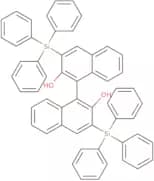
(R)-3,3'-Bis(triphenylsilyl)-1,1'-binaphthalene-2,2'-diol
CAS:(R)-3,3'-Bis(triphenylsilyl)-1,1'-binaphthalene-2,2'-diol is a high quality chemical and useful scaffold that can be used as a reagent for the synthesis of complex compounds. This compound has CAS No. 111822-69-6 and is an intermediate for the preparation of fine chemicals and speciality chemicals. It is also a versatile building block that can be used in research or as a reaction component to produce useful scaffolds.Fórmula:C56H42O2Si2Pureza:Min. 95%Cor e Forma:White PowderPeso molecular:803.1 g/mol(1S,2R,3S,5R)-2-((Benzyloxy)methyl)-6-oxabicyclo[3.1.0]hexan-3-ol
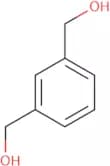
CAS:(1S,2R,3S,5R)-2-((Benzyloxy)methyl)-6-oxabicyclo[3.1.0]hexan-3-ol is a fine chemical with a CAS No. of 117641-39-1. It has been used as a versatile building block in the synthesis of complex compounds, and has also been used as a useful intermediate in the production of specialty chemicals. This compound is useful for research purposes and can be used as a reaction component in the synthesis of new compounds.Fórmula:C13H16O3Pureza:Min. 95%Cor e Forma:Clear LiquidPeso molecular:220.26 g/mol1,3-Benzenedimethanol
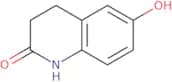
CAS:1,3-Benzenedimethanol is a diphenyl ether with the chemical formula C6H6O. It has been shown to be a good nucleophile and undergoes nucleophilic attack on a variety of substrates. The hydroxyl group in the molecule can be protonated to form the corresponding carboxylic acid or an alcohol. This compound has been shown to react with aluminium, magnesium oxide and trifluoroacetic acid in an acidic environment and undergo carbonyl reduction to form ethyl esters. 1,3-Benzenedimethanol is also soluble in water and can be extracted by gravimetric analysis.Fórmula:C8H10O2Pureza:Min. 95%Cor e Forma:PowderPeso molecular:138.16 g/mol6-Hydroxy-3,4-dihydro-1H-quinoline-2-one
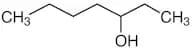
CAS:This is a quinoline derivative that has been shown to have inotropic and cardioprotective effects. It has been shown to increase the duration of action potentials and contractions in isolated heart muscle, as well as to improve the function of the heart by reducing the rate of myocardial oxygen consumption. 6-Hydroxy-3,4-dihydro-1H-quinoline-2-one has been shown to have anti-inflammatory properties and may be useful for treating respiratory diseases such as asthma. This compound is also used as a precursor for some pharmaceutical drugs, including chloroquine, mefloquine, amodiaquine, and primaquine. The compound is metabolized into conjugates that are recycled back into the body or excreted in human urine; this process is regulated by the balance between conjugation reactions and hydrolysis reactions.Fórmula:C9H9NO2Pureza:Min. 95%Peso molecular:163.17 g/mol3-Heptanol
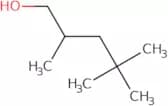
CAS:Fórmula:C7H16OPureza:>98.0%(GC)Cor e Forma:Colorless to Almost colorless clear liquidPeso molecular:116.202,4,4-Trimethylpentan-1-ol
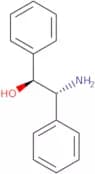
CAS:2,4,4-Trimethylpentan-1-ol (TMP) is a chemical compound with the molecular formula CH3(CH2)3COH. It is a colorless liquid that is soluble in most organic solvents, but insoluble in water. TMP has been shown to be carcinogenic to mice and rats when it was inhaled or injected. The carcinogenic effects of TMP are due to its ability to cause bond cleavage reactions on DNA molecules and activate oxygen radicals. TMP has also been shown to have therapeutic properties as an additive for magnetic resonance imaging (MRI). When used as an MRI contrast agent, TMP helps improve the visualization of cancerous tissue by changing the relaxation time of water protons in the tissue.Fórmula:C8H18OPureza:Min. 95%Cor e Forma:Colorless Clear LiquidPeso molecular:130.23 g/mol(1S,2R)-(+)-2-Amino-1,2-diphenylethanol
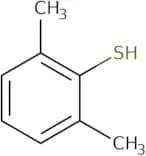
CAS:Produto Controlado(1S,2R)-(+)-2-Amino-1,2-diphenylethanol is an enantiopure amine that has been used as a ligand in supramolecular chemistry. It can be prepared by reacting 2-chloropropane with thionyl chloride and primary alcohols. The chloride group facilitates the reaction rate and can be replaced by nitro groups to immobilize the product on a solid substrate. (1S,2R)-(+)-2-Amino-1,2-diphenylethanol has optical properties that are dependent on its environment. It can be used to label cells for studies of cell differentiation or cell migration. This compound also reacts with cyclohexane rings to form cyclic products with different optical properties than those of the reactants. The reaction yield is high in this process.Fórmula:C14H15NOPureza:Min. 95%Cor e Forma:White To Beige SolidPeso molecular:213.28 g/mol2,6-Dimethylthiophenol
CAS:2,6-Dimethylthiophenol is a structural analog of the natural product sumatrana. It has been shown to be an effective catalyst for the cleavage of carbon-carbon bonds in organic molecules and fatty acids. 2,6-Dimethylthiophenol is unique because it contains two sulfur atoms that are part of a thiolate group, which can easily be oxidized to a sulfoxide or sulfone. This property makes 2,6-dimethylthiophenol an excellent reductant in reactions that require a metallacycle intermediate. The reactivity of this molecule is also influenced by its redox potential and the presence of nitrogen atoms. 2,6-Dimethylthiophenol was synthesized and studied using model compounds, yielding reaction yields as high as 98%.
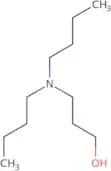
Fórmula:C8H10SPureza:Min. 95 Area-%Cor e Forma:Clear LiquidPeso molecular:138.23 g/mol3-(Dibutylamino)propan-1-ol
CAS:3-(Dibutylamino)propan-1-ol is an intermediate that is used in the synthesis of procainamide and procaine. It can be prepared by reaction of dibutylamine with propanol. 3-(Dibutylamino)propan-1-ol has a high stability in organic solvents, such as chloroform, as well as in bioreactors and automated synthesizers. This product is also an efficient catalyst for reactions involving esters. 3-(Dibutylamino)propan-1-ol has been shown to be effective at inhibiting the growth of Mycobacterium smegmatis and Mycobacterium tuberculosis.Fórmula:C11H25NOPureza:Min. 95%Cor e Forma:Clear LiquidPeso molecular:187.32 g/mol3,6-Dithia-1,8-octanediol
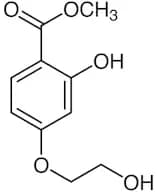
CAS:3,6-Dithia-1,8-octanediol is a coordination complex that contains four chloride ions and six water molecules. It is made up of two molecules of 3,6-dithia-1,8-octanediol coordinated with two diphenyl ethers. The molecule is planar with the two oxygen atoms of the hydroxyl group in one plane and the two carbon atoms in another plane. The hydrogen atom on the oxygen atom has an intramolecular bond to a hydrogen atom on the other oxygen atom. The molecule has a magnetic resonance spectrum that can be used for identification purposes because it is unique among other compounds. 3,6-Dithia-1,8-octanediol can react with sodium hydroxide solution to form a precipitate. This reaction can be used as an analytical chemistry technique to determine the concentration of chloride ions in plasma mass spectrometry samples.Fórmula:C6H14O2S2Pureza:Min. 95%Cor e Forma:White PowderPeso molecular:182.31 g/molMethyl 4-(2-Hydroxyethoxy)salicylate
Fórmula:C10H12O5Pureza:>98.0%(GC)Cor e Forma:White to Light yellow to Light orange powder to crystalPeso molecular:212.202-Bromo-3-pyridinol
CAS:2-Bromo-3-pyridinol is a nicotinic acetylcholine receptor antagonist that has anti-influenza activity. It was synthesized as an analogue of the natural product pyridostigmine, which inhibited influenza in mice. 2-Bromo-3-pyridinol binds to the nicotinic acetylcholine receptor at the same site as nicotine and prevents it from being activated by acetylcholine. This drug also inhibits tumor growth and proliferation in vitro and in vivo, showing potent cytotoxicity against carcinoma cells by inhibiting protein synthesis and cell division. 2-Bromo-3-pyridinol has been shown to inhibit Alzheimer's disease in a mouse model of this disorder. The drug inhibits amyloid plaque formation and toxicity in cultured cells, suggesting its potential for treating this disease.Fórmula:C5H4BrNOPureza:Min. 95%Cor e Forma:White To Off-White SolidPeso molecular:174 g/mol3-Chloroisoquinoline
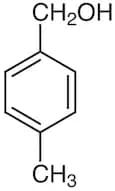
CAS:3-Chloroisoquinoline is a thiolate, which is a reactive chemical group. 3-Chloroisoquinoline has been shown to react with trifluoromethanesulfonic acid to form a compound with biological properties. The amide and palladium complexes of 3-chloroisoquinoline have been prepared in the past. Additionally, the two isomers of 3-chloroisoquinoline are known as the halides and magnetic resonance spectroscopy of this compound has been studied. Structural isomers and functional groups of 3-chloroisoquinoline have also been studied in detail. Tautomers and lactams are structural isomers of 3-chloroisoquinoline that have also been researched extensively. Finally, trifluoroacetic acid reacts with 3-chloroisoquinoline to form an ester product.Fórmula:C9H6ClNPureza:Min. 95%Peso molecular:163.6 g/mol4-Methylbenzyl Alcohol
CAS:Fórmula:C8H10OPureza:>99.0%(GC)Cor e Forma:White to Almost white powder to crystalPeso molecular:122.174-(Hydroxymethyl)cyclohexanol
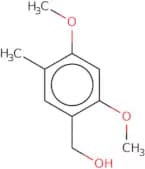
CAS:4-(Hydroxymethyl)cyclohexanol is a versatile building block that can be used in the synthesis of complex compounds. This chemical has been shown to have a high degree of purity and is a useful intermediate or reaction component for many different reactions. It is also an excellent scaffold for synthesizing other organic molecules.Fórmula:C7H14O2Pureza:Min. 95%Cor e Forma:Clear To White To Off-White SolidPeso molecular:130.18 g/mol2,4-Dimethoxy-5-methylbenzyl alcohol
CAS:2,4-Dimethoxy-5-methylbenzyl alcohol is a high quality chemical that is used as an intermediate for the synthesis of complex compounds. It has been used as a reagent and as a building block for the synthesis of other chemicals. This compound can be used to produce fine chemicals and research chemicals. 2,4-Dimethoxy-5-methylbenzyl alcohol has been shown to be useful in the production of versatile building blocks and reaction components.
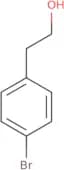
Fórmula:C10H14O3Pureza:Min. 95%Peso molecular:182.22 g/mol2-(4-Bromophenyl)ethanol
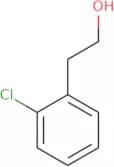
CAS:2-(4-Bromophenyl)ethanol is an analog of histone lysine and histone H3. It is a synthetic substrate for the acylation reaction on the carboxyl group of fatty acids. 2-(4-Bromophenyl)ethanol has been shown to have optical properties similar to those of natural fatty acids and has been used as a polymer film for cell line A549.Fórmula:C8H9BrOPureza:Min. 95%Cor e Forma:Slightly Yellow Clear LiquidPeso molecular:201.06 g/mol2-(2-Chlorophenyl)ethanol
CAS:2-(2-Chlorophenyl)ethanol is a chemical used to synthesize aldehydes and fatty acids. It is also used to validate the purity of products, such as bulk drugs. 2-(2-Chlorophenyl)ethanol can be found in solvents, impurities, and chlorobenzene. It is not recommended for use at temperatures above 50°C or below -10°C. This chemical should not be left in contact with plastic or rubber tubing for extended periods of time because it may cause discoloration or cracking. 2-(2-Chlorophenyl)ethanol is not radioactive, but it may become so after irradiation.
2-(2-Chlorophenyl)ethanol can be found in solvents, impurities, and chlorobenzene. It is not recommended for use at temperatures above 50°C or below -10°C. This chemical should not be left in contact with plastic orFórmula:C8H9ClOPureza:Min. 95%Peso molecular:156.61 g/mol2-Bromoquinoline
CAS:2-Bromoquinoline is an antimicrobial agent that binds to bacterial receptors. It is a bifunctional molecule with two reactive groups: a hydroxyl group and a nitrogen atom. 2-Bromoquinoline has been shown to inhibit the growth of various bacteria, including Mycobacterium tuberculosis, Staphylococcus epidermidis and Streptococcus pyogenes, by preventing the formation of a proton gradient across the bacterial membrane. 2-Bromoquinoline also inhibits hyperproliferative diseases such as amyloidosis in mice by binding to amyloid fibrils. This drug has been shown to cause DNA damage in mammalian cells, which may be due to its ability to form hydrogen bonds with methyl ethyl groups on DNA bases.Fórmula:C9H6BrNPureza:Min. 95%Cor e Forma:White To Yellow To Pink SolidPeso molecular:208.05 g/mol[3-Methyl-4-(2,2,2-trifluoro-ethoxy)-pyridin-2-yl]-methanol
CAS:[3-Methyl-4-(2,2,2-trifluoro-ethoxy)-pyridin-2-yl]-methanol is a synthetic organic compound that is used in the synthesis of other organic compounds. It can be purified by filtration or gasification and recrystallization.Pureza:Min. 95%Cor e Forma:Powder

![(1S,2R,3S,5R)-2-((Benzyloxy)methyl)-6-oxabicyclo[3.1.0]hexan-3-ol](/_next/image/?url=https%3A%2Fstatic.cymitquimica.com%2Fproducts%2F3D%2Fthumb-webp%2FFB167338.webp&w=3840&q=75)






![[3-Methyl-4-(2,2,2-trifluoro-ethoxy)-pyridin-2-yl]-methanol](/_next/image/?url=https%3A%2Fstatic.cymitquimica.com%2Fproducts%2F3D%2Fthumb-webp%2FFM38829.webp&w=3840&q=75)