Álcoois
Subcategorias de "Álcoois"
Foram encontrados 5818 produtos de "Álcoois"
[4-(Aminomethyl)cyclohexyl]methanol
CAS:4-(Aminomethyl)cyclohexyl]methanol is a dicarboxylic acid and ester with the chemical formula CH2=C(CH3)(CO2H). It is used to synthesize polycarbonates, which are polyesters that contain carbonate groups. 4-(Aminomethyl)cyclohexyl]methanol has two carboxyl groups and one hydroxyl group that can react with trimellitic anhydride to form polycarbonates. Polycarbonate is a polymer that contains bisphenol A, which is the building block of many plastics and resins. 4-(Aminomethyl)cyclohexyl]methanol can be used as a monomer in the synthesis of polyesters and copolymers.Fórmula:C8H17NOPureza:Min. 95%Cor e Forma:Beige PowderPeso molecular:143.23 g/mol2,3-Butanediol
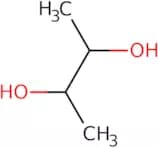
CAS:2,3-Butanediol is a glycol that is produced by the fermentation of sugars or carbohydrates. It is used in the synthesis of acetoin, which is an important flavor compound in various foods and beverages. The production of 2,3-butanediol from glucose was achieved through the use of a novel asymmetric synthesis reaction with inorganic acid as catalyst. 2,3-Butanediol can also be synthesized from adipic acid using aerobacter aerogenes as catalyst. This process has been shown to be efficient with wild-type strains and provides high yields under mild conditions. 2,3-Butanediol has been shown to have antibiotic activity against tetracycline resistant bacteria and may inhibit bacterial growth by binding to DNA gyrase and topoisomerase IV enzymes. The hydroxyl group on the molecule makes it more reactive than other glycols because it can form hydrogen bonds with water molecules.Fórmula:C4H10O2Pureza:Min. 95%Cor e Forma:Colorless Clear LiquidPeso molecular:90.12 g/mol8-Methoxycarbonyloctanol
CAS:8-Methoxycarbonyloctanol (8MCO) is a fatty acid molecule that has been shown to have significant inhibitory activities against Streptococcus pneumoniae in human serum. 8MCO is a synthetic molecule that can be synthesized from galactose and chloride. It has been found to have a molecular weight of 190.08 g/mol, melting point of -2°C, and boiling point of 217°C at 1 mmHg. 8MCO is soluble in water, methanol, and ethanol. This molecule can be used as an analytical tool for the detection of fatty acids by gas chromatography-mass spectrometry (GC-MS). It also exhibits enzymatic activity when incorporated into enzyme preparations such as esterases and lipases. 8MCO contains functional groups such as carbonyl (-CO), hydroxyl (-OH), carboxylic acid (-COOH), ether (-O-) and alcohol (-
Fórmula:C10H20O3Pureza:Min. 95%Cor e Forma:Clear LiquidPeso molecular:188.26 g/mol4-Fluoro-3-methylphenol
CAS:4-Fluoro-3-methylphenol is a low molecular weight compound that has been shown to have antibacterial activity. It inhibits the growth of Mycobacterium tuberculosis, and this inhibition may be due to a transfer mechanism. 4-Fluoro-3-methylphenol also inhibits the enzyme activities of esterases and glutathione reductase, which may contribute to its antitubercular activity. This molecule has been shown to have vibrational and optical properties. It has been used in microscopy experiments for the detection of mineralization in bone tissue.Fórmula:C7H7FOPureza:Min. 95%Peso molecular:126.13 g/mol1-Amino-2-methyl-propan-2-ol
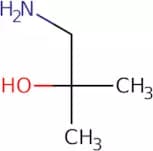
CAS:1-Amino-2-methyl-propan-2-ol is a cytotoxic molecule that has been shown to inhibit the growth of cancer cells. It is synthesized by converting 1,4-benzenediamine and cyclopentanol into the corresponding amines. The amines are then condensed with an alkanolamine in a kinetic reaction to form 1-amino-2-methylpropan-2-ol. This product's anticancer activity may be due to its ability to induce nucleophilic attack on DNA, leading to DNA strand breakage. 1AMPP has also been shown to have antiviral properties against HIV infection.Fórmula:C4H11NOPureza:Min. 95%Cor e Forma:Colorless Clear LiquidPeso molecular:89.14 g/molDeoxynivalenol
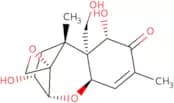
CAS:Deoxynivalenol is a mycotoxin that is produced by the fungi Fusarium graminearum and F. culmorum. It produces toxic effects in humans and animals, including human immunoglobulin E (IgE) production, acute toxicities, and cytotoxic effects on cultured human leukocytes. The analytical method for deoxynivalenol detection includes a variety of in vitro methods such as enzyme-linked immunosorbent assays (ELISA), competitive ELISA, fluorescent antibody staining assay, fluorescence polarization immunoassay (FPIA), competitive FPIA, and high performance liquid chromatography (HPLC). Deoxynivalenol binds to dna with high affinity and has been shown to have fusarial activity. The toxicity of deoxynivalenol can be confirmed by the mitochondrial membrane potential assay or by the assessment of vomitoxin levels. Colloidal gold can be used for identification of deox
Fórmula:C15H20O6Pureza:Min. 95%Cor e Forma:White PowderPeso molecular:296.32 g/molLinolenic acid, 98.5%
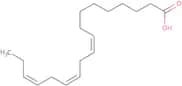
CAS:Linolenic acid is a polyunsaturated fatty acid that is an essential component of human nutrition. Linolenic acid has apoptosis-inducing properties and has been shown to induce the mitochondrial membrane potential in neuronal cells and induce neuronal death by decreasing the levels of pge2. Linolenic acid also participates in energy metabolism, as it can be converted into arachidonic acid, which is a precursor for prostaglandins. Linolenic acid has been shown to have physiological effects on humans, such as improving eye disorders and congestive heart failure. It does not seem to be linked with any toxicity or adverse effects.Fórmula:C18H30O2Pureza:Min. 95%Cor e Forma:Colorless Clear LiquidPeso molecular:278.43 g/mol2-Bromo-3-fluorophenol
CAS:2-Bromo-3-fluorophenol is a bifunctional chemical that reacts with glycols, such as ethylene glycol, to form epoxy ethers. It is also used as a stabilizer for polyurethane plastics and rubbers. 2-Bromo-3-fluorophenol is used in the production of dibenzoyl peroxide and phenolic resins. This compound has been shown to be stable when exposed to both heat and light.Fórmula:C6H4BrFOPureza:Min. 95%Cor e Forma:PowderPeso molecular:191 g/molPiperonyl alcohol
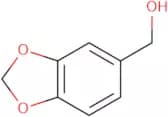
CAS:Produto ControladoPiperonyl alcohol is an enzyme inhibitor that blocks the oxidation of piperonal, a chemical found in many plants and fruits. It has been used as a pharmaceutical preparation to treat skin conditions such as acne and psoriasis. Piperonyl alcohol can be used in food composition as a preservative and antioxidant. This compound is also used in the production of polymers for paints, plastics, and rubber. Piperonyl alcohol inhibits melanogenesis by inhibiting tyrosinase activity and interrupting the synthesis of melanin. The use of this compound to inhibit melanin synthesis has been approved for cosmetic use in Europe. Piperonyl alcohol was first synthesized by Ludwig Knorr in 1885 from piperonal, an aromatic organic compound found in many plants and fruits. The reaction solution obtained from the hydrolysis of piperonyl acetate with hydrochloric acid is reacted with cationic polymerization using sodium carbonate (NaCO) as a catalyst to produceFórmula:C8H8O3Pureza:Min. 95%Cor e Forma:PowderPeso molecular:152.15 g/mol[5-(4-Aminophenyl)-2-furyl]methanol
CAS:Please enquire for more information about [5-(4-Aminophenyl)-2-furyl]methanol including the price, delivery time and more detailed product information at the technical inquiry form on this page
Fórmula:C11H11NO2Pureza:Min. 95%Cor e Forma:Brown PowderPeso molecular:189.21 g/molO-Aminophenol sulfate
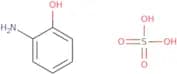
CAS:O-Aminophenol sulfate is a reagent that is used in research and synthesis of complex compounds. It has a variety of applications, such as use as a building block for speciality chemicals, as a reaction component in reactions, and to prepare fine chemicals. O-Aminophenol sulfate is soluble in water and can be used as an intermediate for other products.Fórmula:C12H16N2O6SPureza:Min. 95 Area-%Cor e Forma:PowderPeso molecular:316.33 g/mol(1S,2R,3S,5R)-2-((Benzyloxy)methyl)-6-oxabicyclo[3.1.0]hexan-3-ol
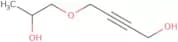
CAS:(1S,2R,3S,5R)-2-((Benzyloxy)methyl)-6-oxabicyclo[3.1.0]hexan-3-ol is a fine chemical with a CAS No. of 117641-39-1. It has been used as a versatile building block in the synthesis of complex compounds, and has also been used as a useful intermediate in the production of specialty chemicals. This compound is useful for research purposes and can be used as a reaction component in the synthesis of new compounds.Fórmula:C13H16O3Pureza:Min. 95%Cor e Forma:Clear LiquidPeso molecular:220.26 g/mol5-Oxa-2-octyne-1,7-diol
CAS:5-Oxa-2-octyne-1,7-diol is a monomer that belongs to the class of heterocyclic compounds. It has been used in research studies to coat metal surfaces with silicone. This compound is also a surfactant, which can be used for cleaning and degreasing dishes, pots and pans. 5-Oxa-2-octyne-1,7-diol is resistant to degradation by sulfate ester or carboxylate ester solvents. It has shown activity as a monomer with methyl esters and alkenyls for use in polymers.Fórmula:C7H12O3Pureza:Min. 95%Cor e Forma:PowderPeso molecular:144.17 g/mol3-(Trifluoromethoxy)phenol
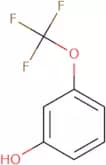
CAS:3-(Trifluoromethoxy)phenol is a drug that has been shown to function as an amide and a biomolecular. It has also been used in the development of drugs for depression, but it is not known whether it is effective in humans. 3-(Trifluoromethoxy)phenol binds to the cation channel of the NMDA receptor, which may be related to its antidepressant properties. The compound has been shown to have a radiotracer effect on positron emission tomography (PET). 3-(Trifluoromethoxy)phenol yields positrons when it undergoes deamination. This reaction is catalyzed by enzymes such as acetylcholine esterase, choline oxidase, and monoamine oxidases.
Fórmula:C7H5F3O2Pureza:Min. 95%Cor e Forma:Clear LiquidPeso molecular:178.11 g/molVanillyl alcohol
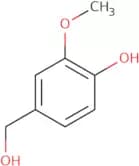
CAS:Vanillyl alcohol is a vanillin derivative that exhibits strong antibacterial activity. It can be used in the food industry as a natural preservative, and it has synergic effects with eugenol. Vanillyl alcohol shows antimicrobial properties against Gram-positive and Gram-negative bacteria, including Staphylococcus aureus, Pseudomonas aeruginosa, Escherichia coli, and Enterococcus faecalis. Vanillyl alcohol exhibits synergic effects with eugenol. In vivo models show that vanillyl alcohol is not toxic to humans, but it may be toxic to wild-type strains of bacteria.Fórmula:C8H10O3Pureza:Min. 98 Area-%Cor e Forma:White PowderPeso molecular:154.16 g/mol(5Z,8Z,11Z)-5,8,11-Eicosatrienoic acid
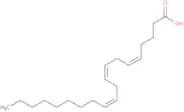
CAS:(5Z,8Z,11Z)-5,8,11-Icosatrienoic acid is a fatty acid that has anti-angiogenic effects. This compound is synthesized from arachidonic acid by the enzyme delta-5-desaturase and inhibits the formation of new blood vessels by promoting the death of endothelial cells. The synthesis of (5Z,8Z,11Z)-5,8,11-Icosatrienoic acid in liver cells is stimulated by an increase in body mass index and a decrease in fatty acids. This molecule has been shown to have physiological effects on brain function and to have anti-inflammatory properties. It also binds to the CB2 receptor.Fórmula:C20H34O2Pureza:Min. 95%Peso molecular:306.48 g/molQuinoline-2,8-diol
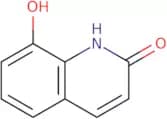
CAS:Quinoline-2,8-diol is a bacterial strain that can be used to remove fatty acids from wastewater. The recombinant cytochrome P450 in this strain can degrade fatty acids, which are carcinogenic and have been shown to cause hepatic steatosis. In addition, the quinoline-2,8-diol strain has shown an ability to inhibit xenograft tumor growth in mice by activating cytochrome P450 and inducing apoptosis. This bacterial strain also has the potential to produce xanthurenic acid from tyrosine. Xanthurenic acid is toxic and has been shown to inhibit polymerase chain reaction (PCR) amplification of DNA. Quinoline-2,8-diol may be used as a model for experimental studies of xanthurenic acid's effects on energy metabolism and DNA synthesis.
Fórmula:C9H7NO2Pureza:Min. 95 Area-%Cor e Forma:PowderPeso molecular:161.16 g/mol2-Bromo-3-pyridinol
CAS:2-Bromo-3-pyridinol is a nicotinic acetylcholine receptor antagonist that has anti-influenza activity. It was synthesized as an analogue of the natural product pyridostigmine, which inhibited influenza in mice. 2-Bromo-3-pyridinol binds to the nicotinic acetylcholine receptor at the same site as nicotine and prevents it from being activated by acetylcholine. This drug also inhibits tumor growth and proliferation in vitro and in vivo, showing potent cytotoxicity against carcinoma cells by inhibiting protein synthesis and cell division. 2-Bromo-3-pyridinol has been shown to inhibit Alzheimer's disease in a mouse model of this disorder. The drug inhibits amyloid plaque formation and toxicity in cultured cells, suggesting its potential for treating this disease.Fórmula:C5H4BrNOPureza:Min. 95%Cor e Forma:White To Off-White SolidPeso molecular:174 g/mol2,4-Dimethoxy-5-methylbenzyl alcohol
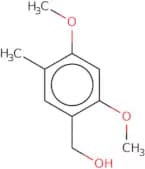
CAS:2,4-Dimethoxy-5-methylbenzyl alcohol is a high quality chemical that is used as an intermediate for the synthesis of complex compounds. It has been used as a reagent and as a building block for the synthesis of other chemicals. This compound can be used to produce fine chemicals and research chemicals. 2,4-Dimethoxy-5-methylbenzyl alcohol has been shown to be useful in the production of versatile building blocks and reaction components.
Fórmula:C10H14O3Pureza:Min. 95%Peso molecular:182.22 g/mol5-Bromo-2-nitrophenol
CAS:5-Bromo-2-nitrophenol is an organic compound that is used in the industrial production of drugs and dyes. It is soluble in ethanol, but insoluble in water. 5-Bromo-2-nitrophenol can be obtained by extracting it from the filtrate of a solution of potassium tert-butyl ether with aqueous ethanol. The extraction process involves adding morpholine to the solution, which is then heated and refluxed. This process yields high yields of 5-bromo-2-nitrophenol.Fórmula:C6H4BrNO3Pureza:Min. 95%Cor e Forma:Yellow solid.Peso molecular:218 g/mol
![[4-(Aminomethyl)cyclohexyl]methanol](/_next/image/?url=https%3A%2Fstatic.cymitquimica.com%2Fproducts%2F3D%2Fthumb-webp%2FFA123010.webp&w=3840&q=75)




![[5-(4-Aminophenyl)-2-furyl]methanol](/_next/image/?url=https%3A%2Fstatic.cymitquimica.com%2Fproducts%2F3D%2Fthumb-webp%2FFA134137.webp&w=3840&q=75)
![(1S,2R,3S,5R)-2-((Benzyloxy)methyl)-6-oxabicyclo[3.1.0]hexan-3-ol](/_next/image/?url=https%3A%2Fstatic.cymitquimica.com%2Fproducts%2F3D%2Fthumb-webp%2FFB167338.webp&w=3840&q=75)