Glicociência
A glicociência é o estudo dos carboidratos e seus derivados, bem como das interações e funções biológicas em que participam. Este campo de pesquisa é crucial para compreender uma ampla variedade de processos biológicos, incluindo o reconhecimento celular, a sinalização, a resposta imune e o desenvolvimento de doenças. A glicociência tem aplicações importantes na biotecnologia, na medicina e no desenvolvimento de novos medicamentos e terapias. Na CymitQuimica, oferecemos uma ampla seleção de produtos de alta qualidade e pureza para pesquisa em glicociência. Nosso catálogo inclui monossacarídeos, oligossacarídeos, polissacarídeos, glicoconjugados e reagentes específicos, projetados para apoiar os pesquisadores em seus estudos sobre a estrutura, função e aplicações dos carboidratos em sistemas biológicos. Esses recursos são destinados a facilitar descobertas científicas e aplicações práticas em diversas áreas das biociências e da medicina.
Subcategorias de "Glicociência"
- Amino açúcares(108 produtos)
- Anticorpos Glico-Relacionados(282 produtos)
- Glicolípidos(46 produtos)
- Glicosaminoglicanos (GAGs)(55 produtos)
- Glicosídeos(419 produtos)
- Monossacáridos(6.624 produtos)
- Oligossacarídeos(3.682 produtos)
- Polissacáridos(503 produtos)
Foram encontrados 11046 produtos de "Glicociência"
Ordenar por
Pureza (%)
0
100
|
0
|
50
|
90
|
95
|
100
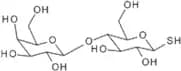
4-O-(b-D-Galactopyranosyl)-b-D-thioglucopyranose
4-O-(b-D-Galactopyranosyl)-b-D-thioglucopyranose is a custom synthesis carbohydrate. It is an oligosaccharide that consists of a monosaccharide with a b-D-galactopyranosyl group and a b-D-thioglucopyranose group. 4-O-(b-D-Galactopyranosyl)-b-D-thioglucopyranose is a polysaccharide and belongs to the class of carbohydrates, which are saccharides or sugars. Carbohydrates are important in cell walls and are modified by methylation, glycosylation, and click modification. Carbohydrates can be classified as simple or complex carbohydrates. Simple carbohydrates contain one molecule with one type of sugar unit bonded together, while complex carbohydrates have more than one type of sugar unit bonded together.Fórmula:C12H22O10SPureza:Min. 95%Cor e Forma:PowderPeso molecular:358.36 g/mol2- C- Methyl- 3, 4- O- isopropylidene -L- arabinonic acid d- lactone
2-C-Methyl-3,4-O-isopropylidene-L-arabinonic acid d-lactone is a synthetic chemical compound that has been shown to inhibit the growth of bacteria. This compound has been shown to inhibit the growth of bacteria by inhibiting ribulose bisphosphate carboxylase activity and causing cell death. It also inhibits glycosylation reactions in bacteria. 2-C-Methyl-3,4-O-isopropylidene -L-arabinonic acid d -lactone is an oligosaccharide with a complex carbohydrate structure. It contains saccharides and monosaccharides with a methylated C2’ position on the glucose moiety. 2CMOA has a molecular weight of 516.Pureza:Min. 95%Sucralose
CAS:Sucralose, an artificial sweetener, was discovered in a research programme supported by Tate & Lyle to halogenate sucrose. The majority of ingested sucralose is not broken down by the body, so it is noncaloric. In the European Union, it has been given the E number E955. Sucralose is about 320 to 1,000 times sweeter than sucrose, three times as sweet as both aspartame and acesulfame potassium, and twice as sweet as sodium saccharin. It is stable under heat and over a broad range of pH conditions. Therefore, it can be used in baking or in products that require a long shelf life. The commercial success of sucralose-based products stems from its favorable comparison to other low-calorie sweeteners in terms of taste profile, stability, and safety.Fórmula:C12H19Cl3O8Pureza:Min. 98 Area-%Cor e Forma:White PowderPeso molecular:397.63 g/molLactose SPRAY-DRIED
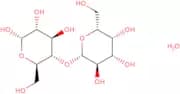
CAS:<p>Lactose is the principal sugar in human and most other mammalian milks, ( 4-O-(beta-d-galactopyranosyl)-d-glucopyranose). Lactose undergoes mutarotation; it is a reducing sugar and is significantly less soluble in water than sucrose. Lactose is much less sweet than sucrose (at ~1% about 0.15 (sucrose=1). The enzyme lactase (beta-galactosidase), which is present in the small intestine, catalyzes hydrolysis of lactose to form glucose and galactose. Anhydrous lactose is an excipient, filler, diluent, and bulking agent in a wide variety of pharmaceutical tablets, capsules, powders and other preparations. Lactose also has applications as a nutrient and multi-functional ingredient in infant formulae, geriatric, dietetic and health foods.</p>Fórmula:C12H22O11·H2OPureza:Min. 96 Area-%Cor e Forma:White Off-White PowderPeso molecular:360.31 g/molTrigalacturonic acid
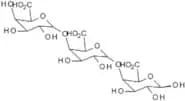
CAS:Trigalacturonic acid, (α-1,4 galacturonotriose) is derived from pectin or pectic acid by enzymatic or partial acid hydrolysis (Combo, 2012). It is used inâ¯galacturonic acidâ¯metabolism research as a substrate to identify, differentiate, and characterize endo- and exopolygalacturonase(s), and gluconase(s) (Jayani, 2005). The addition of very short fragments of homogalacturonan, tri-galacturonate, and tetra-galacturonate oligosaccharides, restores development in dark-grown, de-etiolated seedling mutants, suggesting that they are unable to generate de-methylesterified pectin fragments. A model of spatiotemporally separated photoreceptive and signal-responsive cell types has been proposed, that contains overlapping subsets of the regulatory network of light-dependent seedling development (Sinclair, 2017).Fórmula:C18H26O19Pureza:Min. 90 Area-%Cor e Forma:White Off-White PowderPeso molecular:546.39 g/molMethyl 2,3-O-isopropylidene-β-D-ribofuranoside
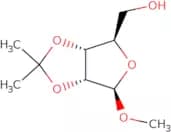
CAS:Methyl 2,3-O-isopropylidene-β-D-ribofuranoside is a heterocycle that is classified as a furanose. It reacts with reactive compounds such as nitro groups to form nitrofurans. This compound also has carcinogenic properties and has been shown to be an animal carcinogen. Methyl 2,3-O-isopropylidene-β-D-ribofuranoside is also capable of forming conformationally constrained derivatives in which the carbonyl group adopts an α,α'-diaxial orientation with the adjacent nitrogen atom and can be used for synthesis of phenalenes.Fórmula:C9H16O5Pureza:Min. 95%Cor e Forma:Colorless Clear LiquidPeso molecular:204.22 g/mol1,4-Anhydro-D-erythritol
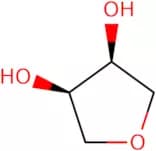
CAS:<p>1,4-Anhydro-D-erythritol is a sugar alcohol that can be found in various plants and fruits. It is a reaction product of D-erythrose and glycerol, with an average formation rate of 10%. The hydroxyl group on the 1,4-anhydro-D-erythritol molecule reacts with methyl glycosides to produce an ester. Trifluoromethanesulfonic acid is used as a catalyst in this process, which activates the hydroxyl group on the molecule. The reaction mechanism for this process involves three steps: elimination of water, dehydration of the hydroxyl group, and addition of methyl glycoside. This process results in a new molecule called 1,4-anhydro-D-erythritol methyl ester (AEME). AEME has been shown to have conformational properties that are different from those of its parent compound. The conformational</p>Fórmula:C4H8O3Pureza:Min. 95%Cor e Forma:Clear LiquidPeso molecular:104.1 g/molUDP-α-D-galacturonic acid
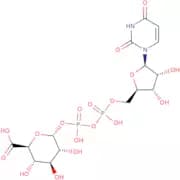
CAS:<p>UDP-α-D-galacturonic acid is a biochemical precursor for the synthesis of UDP-glucuronic acid. It is an intermediate in the biosynthesis of glycosaminoglycans, proteoglycans and lipopolysaccharides. This compound has been shown to inhibit the growth of cancer cells by inducing apoptosis in vitro. The presence of this compound may be detected by its ability to act as a substrate for glucuronidation reactions.</p>Fórmula:C15H22N2O18P2Pureza:Min. 95%Cor e Forma:White Off-White PowderPeso molecular:580.29 g/molLS-tetrasaccharide b
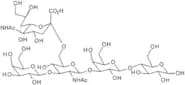
CAS:Sialylated tetrasaccharide found in human milk, possible health benefits for the neonate by supporting resistance to pathogens, gut maturation, immune function, and cognitive development.Fórmula:C37H61N2O29•NH4Pureza:Min. 95 Area-%Cor e Forma:White PowderPeso molecular:1,015.92 g/molL-Rhamnose monohydrate
CAS:<p>L-rhamnose (Rha, 6-deoxy-L-mannose) (Collins, 2006) is normally bound to other sugars as a glycoside in many plant oligosaccharides and in polysaccharides. Rhamnose is also a component of the cell wall of Mycobacterium. In plants, rhamnose is found in the polysaccharide rhamnogalacturonan I, a branched pectic polysaccharide that accounts for 7â14% of the primary wall (Oomen, 2002). Rhamnose is also found in rhamnogalacturonan II, a complex polysaccharide that accounts for âŒ4% of the wall in dicots (Vidal, 2000). Rhamnose is also found in chacotriose and solatriose, the glycan components of solamargine and solasonine, two glycoalkaloids with anticancer properties (Al Sinani, 2017). An understanding of the rhamnose-containing polysaccharides of the gram positive cell wall has identified the biosynthetic pathway as an attractive therapeutic target for antimicrobial drug development (Mistou, 2016).</p>Fórmula:C6H12O5•H2OPureza:Min. 98 Area-%Cor e Forma:Off-White PowderPeso molecular:182.17 g/molAllosamizoline
CAS:<p>Allosamizoline is a potent inhibitor of bacterial enzyme that is produced by the bacteria. It inhibits viral replication and has been shown to inhibit the biosynthesis of other bioactive molecules, such as cyclohexane ring, nitrogen atoms, and growth regulators. Allosamizoline is a bicyclic compound with an acetylation at the carbon atom and a cyclohexane ring. This compound also has two nitrogen atoms in its structure that are important for inhibiting bacterial enzymes. In addition, allosamizoline can be conjugated to fluorescein via an ester linkage. The fluorescein-allosamizoline conjugate can be used as a fluorescent probe for the detection of bacterial enzymes in live cells and tissues.</p>Fórmula:C9H16N2O4Pureza:Min. 95%Peso molecular:216.23 g/molD-Glucuronamide
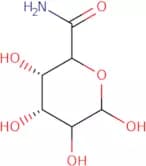
CAS:D-Glucuronamide is a kinetic model system for the glycosylation reaction, which is an important step in the biosynthesis of complex oligosaccharides and polysaccharides. It has been shown to be an amide analog that can be acetylated with acetic anhydride in a reaction mechanism that involves nucleophilic attack by the amino group of D-glucuronamide on the electrophilic carbonyl carbon of acetic anhydride. The second-order rate constants for this reaction were determined to be 2.3×10 M-1s-1 at pH 7 and 25°C. NMR spectra showed that the product was not a simple amide but rather a glycopolymer with a distribution of different sugar residues, including D-glucose, D-galactose, and D-mannose.Fórmula:C6H11NO6Pureza:Min. 95%Cor e Forma:PowderPeso molecular:193.15 g/molMono-(2,3-di-O-benzyl)-(2,3,6-tri-O-benzyl)-γ-cyclodextrin
This gamma-cyclodextrin (γ-CD) derivative is a modified cyclic oligosaccharide composed of eight glucose units, featuring a larger cavity size than α- and β-cyclodextrins. This structural characteristic allows γ-CDs to form inclusion complexes with a wider range of guest molecules, making it particularly versatile in various industries. In the food sector, it is used as a carrier and stabilizer for flavors, fat-soluble vitamins, and polyunsaturated fatty acids, protecting volatile compounds from evaporation. In pharmaceuticals, it enhances the solubility and bioavailability of poorly water-soluble drugs and, thanks to its larger ring size, allows for the encapsulation of larger molecules or even entire drug molecules. γ-CDs and derivatives are also used for environmental remediation and, in analytical chemistry, for the extraction and concentration of target substances.Fórmula:C209H218O40Pureza:Min. 95%Peso molecular:3,369.94 g/mol6-Phospho-D-glucono-1,5-lactone
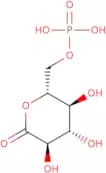
CAS:6-Phospho-D-glucono-1,5-lactone is a metabolite of D-gluconic acid that is formed by the action of a phosphoglucoisomerase. 6PGL has been shown to inhibit the growth of colorectal adenocarcinoma cells and to be effective against infectious diseases such as malaria. It is also involved in energy metabolism and cell division in plants. 6PGL may also have anticancer effects, as it inhibits prostate cancer cells and induces apoptosis through activation of epidermal growth factor receptor (EGFR) and inhibition of EGFR tyrosine kinase activity. It has been shown to act on redox potential, enzyme activities, and oxidative injury in liver cells.Fórmula:C6H11O9PPureza:Min. 95%Peso molecular:258.12 g/molIsopropyl 2,5-anhydro-6-O-methanesulfonyl-D-gulonate
Isopropyl 2,5-anhydro-6-O-methanesulfonyl-D-gulonate is a compound that can be used as a monosaccharide and is also a synthetic sugar. It is an Oligosaccharide, which is a type of sugar that consists of more than two saccharide units. This compound has been synthesized by the process of glycosylation and has been modified to include fluorination. Click modification, methylation, and monosaccharide are all modifications that have been done to this sugar. Isopropyl 2,5-anhydro-6-O-methanesulfonyl-D-gulonate is also known by its CAS number: 106585-36-1.Pureza:Min. 95%(1S) -1- [(2S, 3R,4S) -4-(Acetoxy)methyl-3-benzyloxy- N-benzyl-1- azetidinyl] -di-O-acetyl-1, 2- ethanediol
1,2-Ethanediol is a polyhydroxy alcohol that is used in the synthesis of complex carbohydrates. It can be found as an Oligosaccharide in plants, which are composed of three or more sugar molecules. 1,2-Ethanediol is also found in the glycosylation reaction for the modification of saccharides and carbohydrates. This process adds glucose to a protein or peptide molecule through a condensation reaction with the amino acid N-acetylglucosamine. Glycosylation usually occurs in animal cells, but can also occur in plants and microorganisms. The addition of methyl groups by Methylation to 1,2-ethanediol is used to create Methylated derivatives of this compound. A click modification to this compound can be done using a Copper(I) azide complex and an alkyne reagent to add a terminal alkene group to 1,2-ethanediol. Fluorination atPureza:Min. 95%(5R, 8R, 9S) -8- [(4R) - 2, 2-Dimethyl- 1, 3- dioxolan- 4- yl] - 9- hydroxy- 2, 2- dimethyl- 1, 3, 7- trioxaspiro[4.4] nonan- 6- one
5,8-Dihydroxy-6-fluoro-2,2-dimethyl-1,3,7-trioxaspiro[4.4]nonane - 8-[(4R)-2,2-dimethyl-1,3-dioxolan-4-yl]-9-(hydroxymethyl) - 2,2-dimethyl - 1,3,7 - trioxaspiro[4.4]nonane is a synthetic glycosylated fluorinated octahydropyrrole (5R)-8-(hydroxymethyl)-9-(hydroxymethyl)-6-[(methyloxy)methyl]-2,2,- dimethylpiperidine that is used as an intermediate in the synthesis of oligosaccharides and polysaccharides. It is also used to modify complex carbohydrates for click chemistry applications. This product has a CAS number of 9248411–67–0 and a purity of >Pureza:Min. 95%D-[UL-13C6]Galacturonic acid potassium salt
CAS:D-[UL-13C6]Galacturonic acid potassium salt is a fatty acid that is used as a feedstock in the production of monoclonal antibodies. The 13C isotope provides information on the structure and function of proteins, such as enzyme activities and covalent linkages. D-[UL-13C6]Galacturonic acid potassium salt has been shown to inhibit the growth of bacteria and can be used for the treatment of infectious diseases. D-[UL-13C6]Galacturonic acid potassium salt binds to bacterial cell surfaces by interacting with hydroxyl groups on lipopolysaccharides, which are found on the outer membrane of Gram-negative bacteria, preventing their replication and inhibiting their ability to form biofilms. D-[UL-13C6]Galacturonic acid potassium salt has also been shown to be effective against hyperproliferative disease cells, such as prostate cancer cells.Fórmula:C6H9O7·KPureza:Min. 95%Cor e Forma:PowderPeso molecular:238.19 g/mol3'-Sialyl-N-acetyllactosamine-β-ethylamine
<p>Please enquire for more information about 3'-Sialyl-N-acetyllactosamine-β-ethylamine including the price, delivery time and more detailed product information at the technical inquiry form on this page</p>Fórmula:C27H47N3O19Pureza:Min. 95%Peso molecular:717.67 g/mol6-Azido-6-deoxy-L-galactose
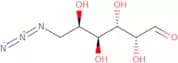
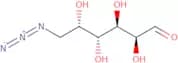
CAS:<p>6-Azido-6-deoxy-L-galactose is an analog of the natural L-galactose. It has been shown to inhibit the growth and survival of a number of human pathogens, including those that cause tuberculosis, staphylococcal infections, and meningitis. 6-Azido-6-deoxygalactose is reactive with cellular structures and glycoconjugates, which may have contributed to its antimicrobial activity in tissue culture. 6A6DG blocks fatty acid synthesis by inhibiting enzymes called acyltransferases. It also inhibits glycolysis by interfering with the conversion of glucose into glycogen through inhibition of glycogen synthase kinase 3β (GSK3β), which leads to decreased levels of ATP in cells. This compound also inhibits glutaminase activity in the brain, leading to impaired neurotransmitter release and subsequent neuronal cell death.</p>Fórmula:C6H11N3O5Pureza:Min. 95%Cor e Forma:White PowderPeso molecular:205.17 g/mol2-Azidomethyl-2-deoxy-3,4-O-isopropylidene-D-altrono-1.5-lactone
2-Azidomethyl-2-deoxy-3,4-O-isopropylidene-D-altrono-1.5-lactone is a synthetic carbohydrate with the molecular formula C14H22N2O7. It is used in research as a building block for glycosylation and methylation of saccharides.Pureza:Min. 95%6-Deoxy-3,5-O-[(R)-benzylidene]-L-gluconic acid g-lactone
CAS:6-Deoxy-3,5-O-[(R)-benzylidene]-L-gluconic acid g-lactone is a synthetic sugar that is used in the synthesis of complex carbohydrates. It can be modified with fluorination, glycosylation, and methylation reactions to produce other derivatives. 6-Deoxy-3,5-O-[(R)-benzylidene]-L-gluconic acid g-lactone has CAS No. 322726-64-7 and a molecular weight of 247.Pureza:Min. 95%Methyl 3,4-di-O-benzyl-2-deoxy-a-D-glucopyranoside
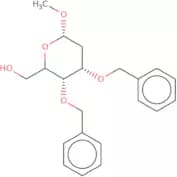
<p>Methyl 3,4-di-O-benzyl-2-deoxy-a-D-glucopyranoside (MBG) is a synthetic compound that is modified at the C3 position with a benzyl group. MBG is an oligosaccharide and polysaccharide that has been shown to have potential as a drug for the treatment of cancer. It has been shown to inhibit tumor growth in animals and human cells by inhibiting DNA synthesis and protein synthesis. Additionally, it can be used for the prevention of postoperative adhesions by inhibiting collagen formation.</p>Fórmula:C21H26O5Pureza:Min. 95%Peso molecular:358.43 g/mol2,3,4,6-Tetra-O-benzyl-D-glucopyranose
CAS:<p>2,3,4,6-Tetra-O-benzyl-D-glucopyranose is a selectively protected intermediate, where the anomeric 1-O-hydroxyl group is free. This hemiacetal has been used successfully as an intermediate for glucosylation couplings, where it was converted into 2,3,4,6-tetra-O-benzyl-D-glucopyranose trichloroacetimidate using trichloroacetonitrile in the presence of a base such as potassium carbonate and DBU. Importantly, this imidate donor with no neighbouring participating groups is commonly used for the selective formation of α-glucosides. 2,3,4,6-tetra-O-benzyl-D-glucopyranose can also be oxidized to the lactone, or reduced to give the open chain form. Additionally, 2,3,4,6-tetra-O-benzyl-D-glucopyranose can be used for the preparation of glucono-1,5-lactone hydrazine, which was used, in-turn, to form a glucosylidene-spirocyclopropane.</p>Fórmula:C34H36O6Pureza:Min. 98.0 Area-%Peso molecular:540.66 g/molRef: 3D-T-1900
1kgA consultar50gA consultar250gA consultar500gA consultar2500gA consultar-Unit-ggA consultar5'-O-(2-Amino-2-deoxy-D-glucopyranosyl) cytidine
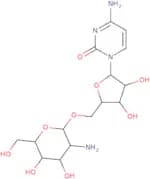
CAS:5'-O-(2-Amino-2-deoxy-D-glucopyranosyl) cytidine is a synthetic carbohydrate, which can be modified in a variety of ways to create custom glycoproteins. This product can be used for glycosylation and polysaccharide synthesis. It has been fluorinated with trifluoromethanesulfonic acid to allow for click modifications, methylated, or sugar modified. The purity of this product is high and the CAS number is 631842-23-4.Fórmula:C15H24N4O9Pureza:Min. 95%Peso molecular:404.37 g/mol6-Azido-6-deoxy-D-galactose
CAS:6-Azido-6-deoxy-D-galactose is a mutagenic compound that is used as a carbon source in the synthesis of other compounds. It has been shown to have mutagenicity in TA100 cells and to be active against Staudinger's naphthol. The compound is synthesised by chemoenzymatic methods, which involve the use of alcohols and an acetyl group. 6-Azido-6-deoxy-D-galactose can be used as a mutagenic agent for the production of mutants with desired properties.Fórmula:C6H11N3O5Pureza:Min. 95%Cor e Forma:White PowderPeso molecular:205.17 g/molUDP-2-deoxy-2-fluoro-D-galactose
CAS:UDP-2-deoxy-2-fluoro-D-galactose is a methylated and fluorinated saccharide that is used in click chemistry. It is a synthetic compound that can be custom synthesized to create polysaccharides or oligosaccharides. This product has high purity and can be modified with glycosylation, methylation, and other modifications.Fórmula:C15H23FN2O16P2Pureza:Min. 98 Area-%Cor e Forma:PowderPeso molecular:568.29 g/molMaltotriose - Ultrapure
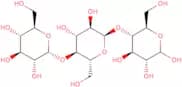
CAS:<p>linear a-(1,4) trisaccharide produced from starch by acid or enzyme hydrolysis</p>Fórmula:C18H32O16Pureza:Min. 95.0 Area-%Cor e Forma:PowderPeso molecular:504.44 g/mol1,6-Anhydro-2-O-acetyl-3,4-dideoxy-b-D-erythro-hex-3-enopyranose
CAS:<p>The 1,6-anhydro-2-O-acetyl-3,4-dideoxy-b-D-erythrohexopyranose is a modified monosaccharide that has been fluorinated and methylated at the C1 position. This modification has shown to affect the susceptibility of bacteria to antibiotics. Fluorination and methylation at the C1 position of the sugar molecule can alter antibiotic binding affinity, which may be used as an alternative strategy for treating drug resistant bacterial infections.</p>Fórmula:C8H10O4Pureza:Min. 95%Peso molecular:170.16 g/molMurNAc-6-phosphate-GlcNAc
MurNAc-6-phosphate-GlcNAc is a complex carbohydrate that is composed of a glycosylation, methylation, and fluorination. It is an important component in polysaccharides and oligosaccharides. This compound has been modified with Click chemistry to form a reactive site for incorporation of a variety of molecules such as fluorophores, biotin, or other small molecules. This compound can be synthesized using custom synthesis methods and has CAS number 106579-01-4. MurNAc-6-phosphate-GlcNAc is available in high purity and can be custom synthesized to specific needs.Pureza:Min. 95%D-Tagatose
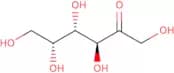
CAS:<p>Low-calorie sweetener; additive in detergents, cosmetics, and pharmaceuticals</p>Fórmula:C6H12O6Pureza:Min. 99 Area-%Cor e Forma:PowderPeso molecular:180.16 g/mol5-Azido-2-C-(hydroxymethyl)-5-deoxy-2,3-O-isopropylidene-D-ribono-1.4-lactone
<p>5-Azido-2-C-(hydroxymethyl)-5-deoxy-2,3-O-isopropylidene-D-ribono-1.4-lactone is used as a modification agent in oligosaccharides and polysaccharides. It is used to modify the carbohydrate structure of these compounds through glycosylation and methylation. 5-Azido-2-C-(hydroxymethyl)-5-deoxy-2,3-O-isopropylidene--D--ribono--1.4--lactone has been shown to be highly pure with a CAS number of 82577–09–8. This compound can be synthesized by reacting the acid with 2,3,5,6,-tetraacetic acid in chloroform solution or by reacting the acid with sodium azide in methanol solution at 0°C for 12 hours.</p>Pureza:Min. 95%4-C-Methyl- 2, 3- O-isopropylidene -D- lyxono-1,5- lactone
4-C-Methyl- 2, 3- O-isopropylidene -D- lyxono-1,5- lactone is a custom synthesis. It is a complex carbohydrate with the CAS number of 67903-96-6. It has a molecular weight of 287.39 g/mol and a purity of >99%. 4CMMDL has been modified with methylation at the C4 position and glycosylation at the C2 position. The modification on this molecule is called Click chemistry. This molecule contains a sugar group that is an oligosaccharide with 11 saccharides, which are all glucose molecules. This sugar group has been fluorinated at the C2 position to form 4CMMDLF (also known as Fluorogalactofuranose). The chemical formula for 4CMMDLF is C12H8O11F2, and it has a molar mass of 5Pureza:Min. 95%1-Deoxy-2-fluoronojirimycin
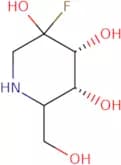
CAS:<p>1-Deoxy-2-fluoronojirimycin is a glycosylation inhibitor that was synthesized to inhibit the formation of complex carbohydrates. It has been shown to inhibit methyltransferases and glycosylation enzymes in vitro with IC50 values of 0.1 μM, 2 μM, and 4 μM, respectively. This compound has also been shown to inhibit the synthesis of saccharides by targeting sugar moieties. 1-Deoxy-2-fluoronojirimycin inhibits the addition of various sugars at their C1 position with IC50 values ranging from 0.3 μM to 6 μM. The modification of sugars at the C2 position is also inhibited with IC50 values ranging from 3 μM to 10 μM. 1-Deoxy-2-fluoronojirimycin is a custom synthesis that can be ordered in high purity as well as in bulk quantities for research purposes .</p>Fórmula:C6H12FNO4Pureza:Min. 95%Cor e Forma:PowderPeso molecular:181.16 g/molD-Xylose-5-phosphate disodium
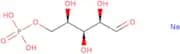
CAS:D-Xylose-5-phosphate disodium salt is a Custom synthesis that has been fluorinated, methylated, and modified with a click reaction. D-Xylose-5-phosphate disodium salt is also an oligosaccharide and polysaccharide. The CAS No. for this compound is 1083083-57-1.Fórmula:C5H11O8P•Na2Pureza:(%) Min. 80%Cor e Forma:White/Off-White SolidPeso molecular:276.09 g/mol2-Chloro-4-nitrophenyl 2-azido-2-deoxy-b-D-galactopyranoside
CAS:<p>2-Chloro-4-nitrophenyl 2-azido-2-deoxy-b-D-galactopyranoside is a synthetic compound. It has been shown to be an inhibitor of glycosylation by blocking the terminal step of glycosylation, which is the formation of a covalent bond between a sugar and an amino acid. The compound has been used in click chemistry to methylate saccharides.</p>Fórmula:C12H13ClN4O7Pureza:Min. 95%Peso molecular:360.71 g/mol3-(N-(3R, 4R) -3, 4-Dihydroxy- L- prolinyl)-propanoic acid
<p>3-(N-(3R, 4R) -3, 4-Dihydroxy- L- prolinyl)-propanoic acid is a synthetic compound. It is a sugar that can be modified with fluorination and methylation to produce 3-(N-(3R,4S)-3,4-dihydroxy-L-prolinyl)-propanoic acid. This product can be used for glycosylation of oligosaccharides or sugars. It has high purity and is available in bulk quantities.</p>Pureza:Min. 95%4-Methylphenyl 2,3,4-tri-O-benzyl-β-L-thiofucopyranoside
4-Methylphenyl 2,3,4-tri-O-benzyl-b-L-thiofucopyranoside is a custom synthesis of an oligosaccharide. It is a complex carbohydrate with CAS No. that belongs to the class of saccharide and sugar. Polysaccharides are made up of several monosaccharides linked together by glycosidic bonds, which are formed by the action of enzymes called glycosyltransferases or glycosidases. Glycosylation is the process in which a sugar molecule (usually glucose) is added to another molecule by means of a glycosidic bond. Carbohydrates are one type of macromolecule and they are important sources of energy in living things. They also play important roles in cell walls and as structural components in plants and animals. The chemical modification carried out on this compound is methylation, which refers to the addition of one or more methylFórmula:C34H36O4SPureza:Min. 95%Peso molecular:540.71 g/molGlycyl-chitobiose
Glycyl-chitobiose is an oligosaccharide that can be synthesized from glycerol and chitobiose. This product is often used as a building block for the synthesis of complex carbohydrate molecules. The purity of Glycyl-chitobiose is greater than 98% and it has been modified with fluorine, methyl, and click chemistry. The CAS number for this product is 627-14-1.Fórmula:C18H32N4O11Pureza:Min. 95%Peso molecular:480.47 g/molD-Mannose - F (from birch)
CAS:Abundant and critical component of natural glycans and glycoproteinsFórmula:C6H12O6Pureza:Min. 98 Area-%Cor e Forma:White PowderPeso molecular:180.16 g/mol3-O-Acetyl-1,2:5,6-di-O-isopropylidene-α-D-glucofuranose
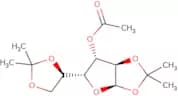
CAS:3-O-Acetyl-1,2:5,6-di-O-isopropylidene-a-D-glucofuranose is a synthetic sugar that contains an acetyl group at the C3 position and an isopropylidene group at the C6 position. It can be fluorinated at either the C3 or C6 position to produce 3-fluoro-, 3,5-, or 3,6-diacetyl derivatives. This molecule has a molecular weight of 514.2 g/mol and a melting point of 158 °C. It has been used in glycosylation reactions to prepare oligosaccharides for use as nonfouling materials and as biomaterials for drug delivery.Fórmula:C14H22O7Pureza:Min. 95%Cor e Forma:PowderPeso molecular:302.32 g/molL-Ribose
CAS:<p>Constituent of RNA; important resource for RNA- and DNA-related syntheses</p>Fórmula:C5H10O5Pureza:Min. 98 Area-%Cor e Forma:White PowderPeso molecular:150.13 g/mola-Cyclodextrin
CAS:α-Cyclodextrin is a cyclic oligosaccharide with 6 D-glucose residues which are α-1,4-linked. α-cyclodextrin is used in the food industry to encapsulate flavors and fragrances (Kfoury, 2016). α-cyclodextrin is also an effective inhibitor of the upstream inflammatory response induced by cholesterol crystals. Cholesterol crystal-induced complement activation is a critical step in the development of atherosclerosis, thus inhibition of complement with α-cyclodextrin has the potential to be used in the treatment of atherosclerosis (Pilely, 2019).Fórmula:C36H60O30Pureza:Min. 90.0 Area-%Peso molecular:972.84 g/molRef: 3D-C-9100
10gA consultar1kgA consultar5kgA consultar500gA consultar2500gA consultar-Unit-kgkgA consultar1,6-b-Galactotriose
CAS:<p>1,6-b-Galactotriose is a glycosylation product of 1,6-galactose. It is a complex carbohydrate that is found in nature and can be used for modification of saccharides, sugar, oligosaccharides, or other monosaccharides. The product is also used as a building block for the synthesis of custom polysaccharides. It can be fluorinated or methylated and click modified to produce a desired saccharide structure.</p>Fórmula:C18H32O16Pureza:Min. 95%Peso molecular:504.44 g/molMethyl 2,3,4-tri-O-benzyl-6-O-tert-butyldiphenylsilyl-a-D-galactopyranoside
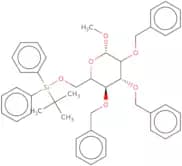
Methyl 2,3,4-tri-O-benzyl-6-O-tert-butyldiphenylsilyl-a-D-galactopyranoside is a synthetic sugar that is used in the synthesis of complex carbohydrates. It has been shown to be useful in glycosylation reactions by preparing glycosides of amino acids and peptides. This compound can also be modified with methyl groups to create a variety of derivatives. Methyl 2,3,4-tri-O-benzyl-6-O-tert-butyldiphenylsilyl--a--D--galactopyranoside has a CAS number and is sold as a high purity product.Fórmula:C44H50O6SiPureza:Min. 95%Peso molecular:702.95 g/molCarboxymethyl-dextran sodium 20-30% COOH, average molecular weight 150000
CAS:Drug carrier for cancer therapy & imaging, biocompatible, soluble, biodegradableCor e Forma:PowderN-Acetyl-D-lactosamine heptaacetate
CAS:<p>N-Acetyl-D-lactosamine heptaacetate is a synthetically produced, fluorinated monosaccharide that is used in the production of glycosylations and polysaccharides. N-Acetyl-D-lactosamine heptaacetate can be custom synthesized to meet your needs. This compound is a high purity product.</p>Fórmula:C28H39NO18Pureza:Min. 95%Cor e Forma:PowderPeso molecular:677.61 g/molMethyl (methyl-4-deoxy-α-L-threo-hex-4-enopyranosid)uronate
CAS:Methyl (methyl-4-deoxy-alpha-L-threo-hex-4-enopyranosid)uronate is an intermediate in the synthesis of saccharides. It is a custom synthesis product that has been fluorinated and is available with a high purity. Methyl (methyl-4-deoxy-alpha-L-threo-hex-4-enopyranosid)uronate can be used for modification of oligosaccharides, glycosylation, click chemistry, and polysaccharide synthesis.Fórmula:C8H12O6Pureza:Min. 95%Peso molecular:204.18 g/mol2, 3:5,6-Bis-O-(1-ethylpropylidene)-D-glycero-L-talo-heptonic acid γ-lactone
<p>2,3:5,6-Bis-O-(1-ethylpropylidene)-D-glycero-L-taloheptonic acid gamma-lactone (TAL) is a glycosylated saccharide that is synthesized by the click reaction of a terminal alkyne group with an azide group. TAL has been shown to have anti-inflammatory effects on mice. This compound also exhibits potent inhibition of bacterial growth and can be used as an alternative to penicillin.</p>Pureza:Min. 95%6-O-(b-D-Mannopyranosyl)-D-mannose
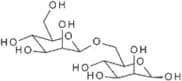
CAS:Isolated from the products of the acid reversion of D-mannoseFórmula:C12H22O11Pureza:Min. 98 Area-%Cor e Forma:PowderPeso molecular:342.3 g/mol




![(1S) -1- [(2S, 3R,4S) -4-(Acetoxy)methyl-3-benzyloxy- N-benzyl-1- azetidinyl] -di-O-acetyl-1, 2- e…](/_next/image/?url=https%3A%2Fstatic.cymitquimica.com%2Fproducts%2F3D%2Fthumb-webp%2FMA163358.webp&w=3840&q=75)
![(5R, 8R, 9S) -8- [(4R) - 2, 2-Dimethyl- 1, 3- dioxolan- 4- yl] - 9- hydroxy- 2, 2- dimethyl- 1, 3,…](/_next/image/?url=https%3A%2Fstatic.cymitquimica.com%2Fproducts%2F3D%2Fthumb-webp%2FMD170665.webp&w=3840&q=75)
![D-[UL-13C6]Galacturonic acid potassium salt](/_next/image/?url=https%3A%2Fstatic.cymitquimica.com%2Fproducts%2F3D%2Fthumb-webp%2FMG106395.webp&w=3840&q=75)
![6-Deoxy-3,5-O-[(R)-benzylidene]-L-gluconic acid g-lactone](/_next/image/?url=https%3A%2Fstatic.cymitquimica.com%2Fproducts%2F3D%2Fthumb-webp%2FMD163973.webp&w=3840&q=75)