Glicociência
Subcategorias de "Glicociência"
- Amino açúcares(108 produtos)
- Anticorpos Glico-Relacionados(282 produtos)
- Glicolípidos(46 produtos)
- Glicosaminoglicanos (GAGs)(55 produtos)
- Glicosídeos(419 produtos)
- Monossacáridos(6.616 produtos)
- Oligossacarídeos(3.718 produtos)
- Polissacáridos(502 produtos)
Foram encontrados 11011 produtos de "Glicociência"
1,2,3,4-Tetra-O-acetyl-6-aminobenzoyl-6-deoxy-a-D-glucopyranoside
1,2,3,4-Tetra-O-acetyl-6-aminobenzoyl-6-deoxy-a-D-glucopyranoside is a fluorinated monosaccharide that is synthesized from 6-deoxyglucose through the glycosylation of 1,2,3,4,-tetraaminobenzoyl chloride. It is a white solid with a molecular weight of 242.1 g/mol and a CAS Number of 368737-85-0. This product has been modified with methylation and click chemistry to give it desired properties for use as an intermediate in the synthesis of complex carbohydrates.
Fórmula:C21H25NO10Pureza:Min. 95%Peso molecular:451.42 g/molAllyl α-D-Glucopyranoside
CAS:Allyl alpha-D-glucopyranoside is an optical isomer of D-glucose that is used in the synthesis of a number of synthetic trisaccharides, including maltotriose. Allyl alpha-D-glucopyranoside is also a potent antibacterial agent and has been shown to be active against Escherichia coli, Staphylococcus aureus, and Pseudomonas aeruginosa. Allyl alpha-D-glucopyranoside has hydrophilic and hydrophobic properties, which makes it soluble in both water and organic solvents. This compound can also form stable complexes with metal cations such as sodium and potassium, making it useful for tissue culture experiments.
Fórmula:C9H16O6Peso molecular:220.22 g/molRef: 3D-W-203706
10gA consultar25gA consultar50gA consultar100gA consultar250gA consultar-Unit-ggA consultarFucoidan - Pelvetia canaliculata
CAS:A fucan sulphate found in brown marine algae (Phaeophyta-typically Fucus serratus, Ascophyllum nodosum, Pelvitiata canaliculata (illustrated) and Macrocystis pyrifyra) and has been shown to have anticoagulant activity. The main constituents are α-1,4 and α-1,2 linked L-fucose sulphates although galactose also occurs and there are many variations of the basic structure found in different species of Phaeophyta. The image was kindly provided by Prof Mike Guiry from Cork who runs ‘The Seaweed Site’.Pureza:Min. 95%Ethyl 2,3-di-O-benzoyl-4,6-O-benzylidene-β-D-thiogalactopyranoside
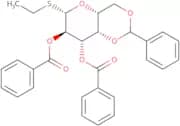
CAS:Ethyl 2,3-di-O-benzoyl-4,6-O-benzylidene-b-D-thiogalactopyranoside is a high purity custom synthesis sugar. This product contains the Click modification, fluorination and glycosylation modifications. It can be used in the synthesis of oligosaccharides, monosaccharides and saccharides. Ethyl 2,3-di-O-benzoyl-4,6-O-benzylidenebDthiogalactopyranoside is used to synthesize complex carbohydrates.Fórmula:C29H28O7SPureza:Min. 98 Area-%Cor e Forma:PowderPeso molecular:520.59 g/mol1,2,3,4-Tetra-O-acetyl-α-L-fucopyranose
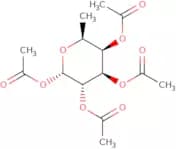
CAS:1,2,3,4-Tetra-O-acetyl-α-L-fucopyranose is a chiral compound and it has been used as a biocatalyst in the industrial production of L-amino acids. The enantiomers are obtained by enzymatic hydrolysis of the racemic mixture with lipases. It has been shown that 1,2,3,4-Tetra-O-acetyl-α-L-fucopyranose is an enantioselective substrate for lipolytic enzymes. Lipolytic enzymes are also screened for lipase activity using this compound as a surrogate.Fórmula:C14H20O9Pureza:Min. 95%Cor e Forma:White Off-White PowderPeso molecular:332.3 g/mol(2R, 3R, 4R) -3, 4- Dihydroxy- 2- (hydroxymethyl) - 1- pyrrolidinepropanoic acid
CAS:(2R, 3R, 4R) -3, 4-Dihydroxy-2-(hydroxymethyl)-1-pyrrolidinepropanoic acid is a sugar derivative of Glycosylation. The compound is a custom synthesis that can be modified to meet your requirements. The CAS number is 1207674-35-8. This product has purity of >99% and can be used in the laboratory or as an intermediate in chemical synthesis.Pureza:Min. 95%Chitosan - Non-animal origin
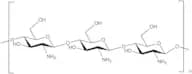
CAS:Chitosan from fungal cell walls. It is made by treating cell walls of fungi (agaricus bisporus) with sodium hydroxide.Viscosity typically 20-100 mPa.sMushroom OriginMolecular Weight: 13000DaCor e Forma:PowderLacto-N-difucohexaose II
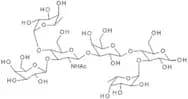
CAS:Neutral difuco hexasasaccharide naturally present in human breast milkFórmula:C38H65NO29Pureza:Min. 90%Cor e Forma:PowderPeso molecular:999.91 g/molSucrose octaacetate
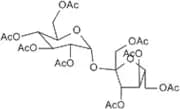
CAS:Sucrose octaacetate is used commercially and industrially in a variety of applications including as an inert ingredient in pesticides and herbicides and has been approved by the EPA as an inert ingredient in pesticides due to its low toxicity. It has also been approved by the FDA as a food additive. It has a bitter taste and is used as a bitterant to deter accidental ingestion.Fórmula:C28H38O19Pureza:Min. 95%Cor e Forma:PowderPeso molecular:678.59 g/mol1,2-O-Isopropylidene-a-L-xylofuranose
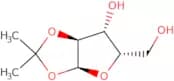
CAS:1,2-O-Isopropylidene-a-L-xylofuranose is a sulfate transport molecule that is present in the blood plasma. It binds to sulfate anions which are then transported by the sodium/sulfate co-transporter from the blood and into cells. This process is called equilibrative or facilitated transport. 1,2-O-Isopropylidene-a-L-xylofuranose also binds to adenosine and transports it across membranes. This process is regulated by surface receptors and uptake transporters that regulate the rate of adenosine uptake at different parts of the body.Fórmula:C8H14O5Pureza:Min. 98 Area-%Cor e Forma:White PowderPeso molecular:190.2 g/molSodium alginate, high viscosity
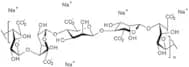
CAS:Sodium salt of a polysaccharide obtained from the brown seaweeds (e.g. Laminaria hyperborea, Fucus vesiculosus, Ascophyllum nodosum). The chemical structure consists of blocks of (1,4) linked-β-D-polymannuronic acid (poly M), (1,4) linked-α-L-polyguluronic acid (poly G) and alternating blocks of the two uronic acids (poly MG). Alginates form strong gels with divalent metal cations and the egg box model has been used to describe this form of gelation. The main use for alginate is in textile printing as a thickener in the printing of cottons with reactive dyes. In the food industry it is used as a thickener and gelling agent. Recently, it has been shown that ternary mixtures of Konjac glucomannan, Xanthan gum and Sodium alginate can form a non-covalently linked complex which exhibits enhanced rheological properties of value in, for example, functional foods. The image was kindly provided by Prof Mike Guiry from Cork who runs ‘The Seaweed Site’.High viscosity (500-500mPa.s).Pureza:Min. 95%Cor e Forma:White Powder3,4:5,6-Di-O-Isopropylidene-2-O-tert.butyldimethylsilyl-L-idose
3,4:5,6-Di-O-isopropylidene-2-O-tert.butyldimethylsilyl-L-idose is a custom synthesis that is used in the synthesis of oligosaccharides and polysaccharides. It is also used for glycosylation reactions and click chemistry modifications. 3,4:5,6-Di-O-isopropylidene-2-O-tert.butyldimethylsilyl L -idose has CAS No. 53762–04–2 and a sugar type of carbohydrate. This product is a high purity with 98% or greater purity.Pureza:Min. 95%Decyl β-D-maltopyranoside
CAS:Non-ionic detergent; solubilises proteins for SDS-PAGE analysisFórmula:C22H42O11Pureza:Min. 97 Area-%Cor e Forma:White PowderPeso molecular:482.56 g/mol6-[tert-Butoxycarbonyl-(2,3,4,5,6-pentahydroxy-hexyl)-amino]-2-(9H-fluoren-9-ylmethoxycarbonylamino)-hexanoic acid
CAS:6-[tert-Butoxycarbonyl-(2,3,4,5,6-pentahydroxy-hexyl)-amino]-2-(9H-fluoren-9-ylmethoxycarbonylamino)-hexanoic acid is a synthetic sugar that is modified by Click chemistry. It has a CAS number of 1078721-99-9. This product is often used as a glycosylation or oligosaccharide building block in the synthesis of complex carbohydrates. It has been shown to have high purity and can be modified using methylation and monosaccharides.Fórmula:C32H44N2O11Pureza:Min. 95%Peso molecular:632.7 g/mol1,5-Anhydro-D-fructose
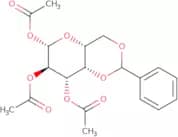
CAS:Antioxidant; antibacterial; suppresses LPS-induced inflammatory responseFórmula:C6H10O5Pureza:Min. 95%Cor e Forma:PowderPeso molecular:162.14 g/mol1,2,3-Tri-O-acetyl-4,6-O-benzylidene-b-D-galactopyranose
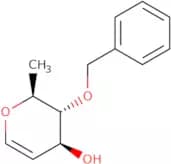
CAS:1,2,3-Tri-O-acetyl-4,6-O-benzylidene-b-D-galactopyranose is a high purity and custom synthesis sugar. This product has been modified with fluorination, glycosylation, methylation, and modifications. It is also known by the CAS number 78962-43-3. 1,2,3-Tri-O-acetyl-4,6-O-benzylidene b -D -galactopyranose is an oligosaccharide that can be used as a monosaccharide or saccharide. It is a complex carbohydrate that has many uses in the food industry.Fórmula:C19H22O9Pureza:Min. 95%Cor e Forma:White PowderPeso molecular:394.37 g/mol4-O-Benzyl-L-rhamnal
CAS:4-O-Benzyl-L-rhamnal is a functionalized, asymmetric, glycosylating agent that is used in the synthesis of glycoconjugates. 4-O-Benzyl-L-rhamnal is synthesized by the reaction of benzaldehyde with an aldehyde group on the sugar molecule. The product is then reacted with an alcohol to form a glycosidic bond. This process can be repeated until the desired number of sugar molecules are added. It can also be used to synthesize disaccharides and polysaccharides by convergent or nucleophile reactivity. 4-O-Benzyl-L-rhamnal utilizes a chiral auxiliary to produce its product, which can be used for synthesis purposes or as a starting material for other reactions.Fórmula:C13H16O3Pureza:Min. 95%Cor e Forma:PowderPeso molecular:220.27 g/molD-Allono-1,5-lactone
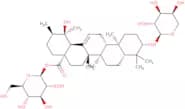
CAS:D-Allono-1,5-lactone is a glycoside that has been custom synthesized. It is a high purity product with a variety of modification options. This compound can be used for the synthesis of sugars, Click modification, fluorination, and glycosylation. D-allono-1,5-lactone has CAS No. 894408-50-5 and is classified as an oligosaccharide or sugar. It can also be methylated or modified to create saccharides or complex carbohydrates.Fórmula:C6H10O6Pureza:Min. 95%Peso molecular:178.14 g/molZiyuglycoside I
CAS:Ziyuglycoside I is a naturally occurring compound that has been shown to have physiological effects on skin cells. It has been found to bind to collagen and the matrix of skin cells, which may be its mechanism of action. Ziyuglycoside I also has an anti-inflammatory effect, which may be due to its ability to inhibit transcription-polymerase chain reactions (PCR). It has been shown to have antimicrobial activity against some strains of bacteria that are resistant to antibiotics such as erythromycin and tetracycline. Ziyuglycoside I has potential applications in the treatment of infectious diseases and inflammatory skin diseases.
Fórmula:C41H66O13Pureza:Min. 95%Cor e Forma:White PowderPeso molecular:766.95 g/mol1,2:3,4-Di-O-isopropylidene-a-D-galactopyranose
CAS:1,2:3,4-Di-O-isopropylidene-a-D-galactopyranose, also known as diacetone-D-galactose and galactose diacetonide, is a partially protected monosaccharide building block with isopropylidene groups on the 1,2 and 3,4 hydroxyls. The 6-hydroxyl is unprotected and able to undergo a variety of chemical transformations, such as glycosylation acting as a glycosyl acceptor to form 1,6-linked disaccharides.Fórmula:C12H20O6Pureza:Min. 96.5 Area-%Cor e Forma:Clear Viscous LiquidPeso molecular:260.28 g/molD-Arabinose
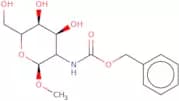
CAS:The aldopentose D-arabinose also known as aloinose, Aloe sugar, pectinose (Collins, 2006), is not as common in nature as its enantiomer L-arabinose. D-arabinose is a component of the polysaccharide in Aloe (Haynes, 1963) and is present in the unripe (green) tomato (Lycopersicon esculentum) (Chandra, 2009). The major cell wall carbohydrate of Corynebacterineae (a bacterial group that includes tuberculosis, leprosy and diphtheriae) is an arabinogalactan, a branched polysaccharide that is essential for the physiology of these bacteria. The arabinogalactan complex is often referred to as mycolyl-arabinogalactan-peptidoglycan complex. As arabinogalactan is made up of D-arabinofuranosyl and D-galactofuranosyl residues, a complete understanding of their biosynthethic pathways could provide suitable targets for new chemotherapeutics (Meniche, 2008).Fórmula:C5H10O5Pureza:Min. 99 Area-%Cor e Forma:PowderPeso molecular:150.13 g/molMethyl 2-benzyloxycarbonylamino-2-deoxy-a-D-glucopyranoside
CAS:Methyl 2-benzyloxycarbonylamino-2-deoxy-a-D-glucopyranoside is a monosaccharide that is modified with fluorine. The modification of the sugar molecule can be done by either a click or an oxidative process. In the case of this product, the modification was done by addition of fluorine to the methyl group on the second carbon atom of the benzyloxycarbonyl group. This product belongs to CAS No. 4704-15-8 and has a high purity. It is also a complex carbohydrate and consists of saccharides and sugars. Methyl 2-benzyloxycarbonylamino-2-deoxy-a-D-glucopyranoside can be used in polysaccharides and saccharides, as well as other applications related to carbohydrates such as modifying glycoproteins and glycolipids, as well as being used in pharmaceuticals suchFórmula:C15H21NO7Pureza:Min. 95%Peso molecular:327.33 g/molMethyl 2,3,4-tri-O-benzoyl-6-O-triisopropylsilyl-a-D-mannopyranoside
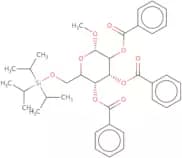
Methyl 2,3,4-tri-O-benzoyl-6-O-triisopropylsilyl-a-D-mannopyranoside is a synthetic glycosylation agent with high purity and custom synthesis. The product is used to modify saccharides and oligosaccharides with the addition of the methyl group at C2 of the sugar. It can be used for modification of complex carbohydrates, fluorination, and saccharide. Methyl 2,3,4-tri-O-benzoyl-6-O-triisopropylsilyl-a -D -mannopyranoside has CAS No. 617069–91–8. The product can be synthesized in various configurations to meet customer needs.Fórmula:C37H46O9SiPureza:Min. 95%Peso molecular:662.86 g/molN- [(3R, 4R, 5R) - 4- Hydroxy- 5- (hydroxymethyl) - 3- pyrrolidinyl] -acetamide
CAS:N- [(3R, 4R, 5R) - 4- Hydroxy- 5- (hydroxymethyl) - 3- pyrrolidinyl] -acetamide is a synthetic compound that is composed of two molecules of acetamide linked to each other by an ester linkage. The acetamide group is attached to the nitrogen atom of the heterocycle. The N-COOH carbonyl group is attached to the oxygen atom of the heterocycle. N-[(3R,4R,5R)-4-hydroxy-5-(hydroxymethyl)-3-(pyrrolidin-1-yl)pyrrolidinium]acetamide has not been studied in humans or animals.Pureza:Min. 95%4,6-O-Benzylidene-1,2,3-tri-O-pivaloyl-b-D-glucopyranose
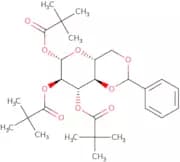
CAS:4,6-O-Benzylidene-1,2,3-tri-O-pivaloyl-b-D-glucopyranose is a carbohydrate that belongs to the group of saccharides. It is a simple sugar that has been modified with fluorination. This compound has been synthesized by custom synthesis and has high purity and can be used in research. 4,6-O-Benzylidene-1,2,3-tri-O-pivaloyl-b-D-glucopyranose is not currently available on the market.Fórmula:C28H40O9Pureza:Min. 95%Peso molecular:520.63 g/mol1,5-Diepi-adenophorine
1,5-Diepi-adenophorine is a fluorinated monosaccharide. It is synthesized by an asymmetric glycosylation with 1,5-dideoxyadenosine and α-D-mannose as the donors. The synthesis of this compound requires custom synthesis and high purity. 1,5-Diepi-adenophorine can be modified with methyl groups or click chemistry to make it more suitable for use in biochemistry research.Pureza:Min. 95%LS-tetrasaccharide a
CAS:Sialylated tetrasaccharide found in human milk. Possible health benefits for the neonate, by supporting resistance to pathogens, gut maturation, immune function, and cognitive development.Fórmula:C37H62N2O29Pureza:Min. 95%Cor e Forma:PowderPeso molecular:998.88 g/mol(1S) -1- [(2S, 3R,4S) - 3- Hydroxy-4-hydroxymethyl- 1- benzyl - 2- azetidinyl] -1, 2- ethanediol
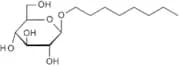
(1S) -1- [(2S, 3R,4S) - 3- Hydroxy-4-hydroxymethyl- 1- benzyl - 2- azetidinyl] -1, 2- ethanediol is a sugar that is made synthetically. It has a CAS number of 76577-11-7 and is available for custom synthesis. The chemical name for this product is (1S)-1-[(2S,3R,4S)-3-[(2E)-3-(hydroxymethyl)oxirane]-4-(hydroxymethyl)-2-(benzyloxy)methyl]-1,2-ethanediol. This product has high purity and can be used for glycosylation or methylation reactions.Pureza:Min. 95%Octyl b-D-glucopyranoside
CAS:Octyl beta-D-glucopyranoside (OG), also known as octyl glucoside or caprylyl glucoside, is an alkylglycoside non-ionic detergent that is one of the most commonly used reagents in membrane protein isolation. As it is uncharged, OG is unlikely to cause protein denaturation or refolding issues, allowing for the isolation of intact macromolecular complexes without affecting protein-protein interactions. It forms small, uniformed micelles and has an aggregation number of between 27-100. It is readily dialyzable from membrane protein preparations due to its high Critical Micelle Concentration (CMC) of 18-20 mM. Octyl beta-D-glucopyranoside has similar uses and properties to that of another frequently used surfactant, Octyl beta-D-thioglucopyranoside.Fórmula:C14H28O6Pureza:Min. 98 Area-%Cor e Forma:White PowderPeso molecular:292.37 g/mol1,3,4,6-Tetra-O-acetyl-N-azidoacetylmannosamine
CAS:1,3,4,6-Tetra-O-acetyl-N-azidoacetylmannosamine, also called ManNAz tetraacetate, 1,3,4,6-tetra-O-acetyl-N-azidoacetyl-D-mannosamine and Ac4ManNAz, is an azide-containing metabolic glycoprotein labelling reagent that can be incorporated into the sialic acid biosynthesis pathway. The azide is able to react with an alkyne in a 1,3-dipolar cycloaddition reaction (click chemistry) to enable linking to a fluorescent probe or a biotin.Fórmula:C16H22N4O10Pureza:Min. 95%Cor e Forma:PowderPeso molecular:430.37 g/mol(2S, 3S, 4S) -2- (Hydroxymethyl) - 2- methyl- 3, 4- pyrrolidinediol
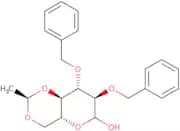
CAS:The product is a Carbohydrate, Modification, saccharide, Oligosaccharide. It is an artificial sugar that has been synthesized and modified for use in the food industry. The material is a complex carbohydrate with a high purity level and custom synthesis. It can be used in the production of sweeteners or as a flavor enhancer. The product is fluorinated to slow down its rate of degradation, which allows it to be used as an ingredient in processed foods. The product also has glycosylation sites that can be methylated or click-modified.Fórmula:C6H13NO3Pureza:Min. 95%Peso molecular:147.17 g/mol2,3-Di-O-benzyl-4,6-O-ethylidene-D-glucopyranose
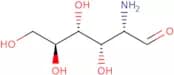
CAS:2,3-Di-O-benzyl-4,6-O-ethylidene-D-glucopyranose is a synthetic oligosaccharide that can be used as a starting material for the synthesis of glycosylated polysaccharides. It is custom synthesized to your specifications and is available in high purity.Fórmula:C22H26O6Pureza:Min. 95%Cor e Forma:PowderPeso molecular:386.44 g/molL-Glucosamine hydrochloride
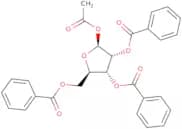
CAS:L-Glucosamine hydrochloride is a fluorescent derivative of L-glucosamine, which is an amino sugar that occurs naturally in the human body. L-glucosamine hydrochloride can be used to measure the uptake of glucose by cells and tissues. The hydroxyl group on the glucosamine molecule is responsible for this activity. L-glucosamine hydrochloride has been shown to have anticancer activity against leukemia cells in tissue cultures and it may be useful as a cancer treatment. It is also capable of inducing cytokine responses when it binds to antigen sites on T cells, which may lead to its use as an immunotherapy agent.Fórmula:C6H13NO5•HClPureza:Min. 95%Cor e Forma:PowderPeso molecular:215.63 g/mol1-O-Acetyl-2,3,5-tri-O-benzoyl-b-D-ribofuranose
CAS:1-O-Acetyl-2,3,5-tri-O-benzoyl-b-D-ribofuranose is an intermediate used to access a variety of ribonucleoside analogues. The ribosylation of substituted purines and pyrimidines with 1-O-Acetyl-2,3,5-tri-O-benzoyl-b-D-ribofuranose affords ribonucleoside analogues with the potential for biological and medicinal activity. Ribosylation requires the use of a catalyst such as trimethylsilyl trifluoromethane sulfonate and N,O-Bis(trimethylsilyl)trifluoroacetamide.Fórmula:C28H24O9Pureza:Min. 98 Area-%Cor e Forma:White PowderPeso molecular:504.48 g/molMethyl protodioscin
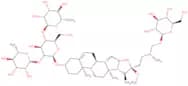
CAS:Methyl protodioscin is a natural compound that has been shown to have a promising therapeutic effect on autoimmune diseases. Methyl protodioscin is derived from soybean extract and it is known to inhibit the translocation of bacteria across the gut wall, which could be due to its ability to regulate mucin gene expression. In vitro assays show that methyl protodioscin has an effect on mitochondrial membrane potential, which may be related to its anti-inflammatory properties. The effects of methyl protodioscin on mitochondrial functions were studied in C. glabrata, and it was shown that this compound can be used as a therapeutic agent for balloon injury. Methyl protodioscin also inhibits the growth of Candida albicans and other fungi in vivo, suggesting that this compound might have antifungal activity.Fórmula:C52H86O22Pureza:Min. 95%Peso molecular:1,063.23 g/molFucosyl GM1 oligosaccharide
Oligosaccharide domain of monosialylated glycosphingolipid GM1 with an α1,2-fucosylated galactose at the nonreducing end. The moluecule is minimally expressed in healthy tissues but has high prevalence in some tumours such as small cell lung cancer (SCLC). Fucosyl-GM1 ganglioside is a potential tumour marker for SCLC and a potential antigen target for immunotherapy.Fórmula:C43H71N2O33NaPureza:Min. 90%Cor e Forma:White PowderPeso molecular:1,167.01 g/molAcarviosin
CAS:Acarviosin is a chemical compound that is structurally related to the antimicrobial peptide Ac-LLL-Nal-OH. It is an antidiabetic agent that has been shown to be effective for the treatment of type 2 diabetes and associated cardiovascular risk factors. Acarviosin was originally isolated from a bacterial strain and has been chemically synthesized for use in the treatment of diabetes. Acarviosin inhibits both glycan synthesis and enzyme activities, leading to reduced levels of glucose in blood plasma. This drug also exhibits pharmacokinetic properties with a half-life of approximately 15 hours, which allows it to be taken once daily. Acarviosin can also be used as an analytical method for identifying disaccharides by cleaving them at the glycosidic bond, releasing monosaccharides as products.
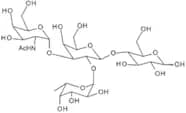
Fórmula:C14H25NO8Pureza:Min. 95%Cor e Forma:PowderPeso molecular:335.35 g/molBlood Group A tetrasaccharide type V
CAS:Core antigen fragment in ABO blood group systemFórmula:C26H45NO20Pureza:Min. 90%Cor e Forma:White PowderPeso molecular:691.63 g/molBenzyl 2-acetamido-2-deoxy-3,4,6-tri-O-acetyl-β-D-glucopyranoside
CAS:Benzyl 2-acetamido-2-deoxy-3,4,6-tri-O-acetyl-b-D-glucopyranoside is a synthetic sugar that is used as a glycosylation reagent for the synthesis of oligosaccharides and polysaccharides. It reacts with saccharides in the presence of 1,3-dicyclohexylcarbodiimide (DCC) and 4-(dimethylamino)pyridine (DMAP). The benzyl group can be modified to include fluorine atoms or methyl groups. This compound is an important building block for the synthesis of complex carbohydrates.Fórmula:C21H27NO9Pureza:Min. 95%Cor e Forma:White To Off-White SolidPeso molecular:437.44 g/molEthyl 2,3,4,6-tetra-O-benzyl-β-D-thioglucopyranoside
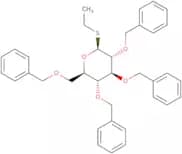
CAS:Ethyl 2,3,4,6-tetra-O-benzyl-b-D-thioglucopyranoside is a sugar alcohol that is selective for the formation of disaccharides. It has a constant yield and can be synthesized from phenyl glycosides or acetonitrile.Fórmula:C36H40O5SPureza:Min. 95%Cor e Forma:PowderPeso molecular:584.77 g/molBlood group B hexasaccharide type II
Core antigen fragment in ABO blood group systemFórmula:C38H65NO30Pureza:Min. 90%Cor e Forma:PowderPeso molecular:1,015.93 g/mol1,4-b-D-Mannohexaose
CAS:Isolated from ivory-nut mannan hydrolysatesFórmula:C36H62O31Pureza:Min. 90 Area-%Cor e Forma:White PowderPeso molecular:990.86 g/mol4-(4-(2-Pyridinyl)-3-(E)-buten-2-one-1-yl)piperidine-2,6-dione
4-(4-(2-Pyridinyl)-3-(E)-buten-2-one-1-yl)piperidine-2,6-dione is a synthetic compound that has been modified with fluorination, methylation, and click modification. It is an oligosaccharide molecule that was synthesized in the laboratory. The molecular weight of this compound is 718.Pureza:Min. 95%2-Acetamido-4-O-[2-acetamido-4-O-(β-D-glucopyranosyl)-3,6-di-O-(α-D-mannopyranosyl)-2-deoxy-β-D-glucopyranosyl]-2-deoxy-β-D-thiogluc opyranoside
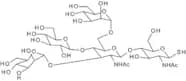
2-Acetamido-4-O-[2-acetamido-4-O-(b-D-glucopyranosyl)-3,6-di-O-(a-D-mannopyranosyl)-2,6-di-O-(a,b,c,d)-D mannopyranosyl]-2,6-di-O-(a,b,c,d)-D mannopyranosyl]-2 deoxy -b D thioglucopyranose is a carbohydrate that belongs to the class of saccharides. This compound is modified with fluorination and methylation and can be custom synthesized. It has high purity and can be glycosylated or click modified.Fórmula:C34H58N2O25SPureza:Min. 95%Cor e Forma:SolidPeso molecular:926.89 g/molLaminaritetraose
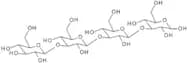
CAS:Ex algal/bacterial polysaccharides-value in b1-3 glucanase assays & diagnosticsFórmula:C24H42O21Pureza:Min. 95 Area-%Cor e Forma:White PowderPeso molecular:666.6 g/mol1,3,4,6-Tetra-O-acetyl-2-azido-2-deoxy-a-D-galactopyranose
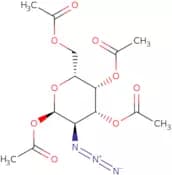
CAS:1,3,4,6-Tetra-O-acetyl-2-azido-2-deoxy-a-D-galactopyranose is an azide sugar that is resistant to the activity of sulfide and can be used as a probe for sulfide in the distal colon. It has been shown that this sugar binds to recombinant human erythrocyte enzymes and inhibits their activities. The hydrolysis of this sugar by pancreatic enzymes has been shown to be dependent on the conformational state of the enzyme. This sugar also inhibits salivary amylase and intestinal sucrase activities.Fórmula:C14H19N3O9Pureza:Min. 95%Cor e Forma:White PowderPeso molecular:373.32 g/mol3-Deoxy-3-fluoro-D-glucose
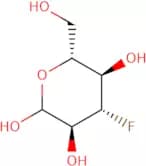
CAS:Fluorinated glucose analogFórmula:C6H11FO5Pureza:Min. 95%Cor e Forma:White PowderPeso molecular:182.15 g/mol1,5:2,3-Dianhydro-4,6-O-benzylidene-D-mannitol
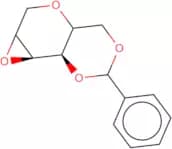
CAS:1,5:2,3-Dianhydro-4,6-O-benzylidene-D-mannitol is a modification of an oligosaccharide that has been synthesized by the glycosylation of D-mannitol. The methylation and fluorination reactions have also been performed on this sugar. This product is high purity and is in the form of a white powder.Fórmula:C13H14O4Pureza:Min. 95%Cor e Forma:PowderPeso molecular:234.25 g/molHeparin disaccharide II-S trisodium salt
CAS:Heparin breakdown productFórmula:C12H16NNa3O16S2Pureza:Min. 95 Area-%Cor e Forma:White Off-White PowderPeso molecular:563.35 g/molChondroitin sulfate sodium salt
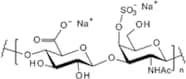
CAS:Chondroitin sulphate is the most abundant glycosaminoglycan in mammalian tissues and occurs both in skeletal and soft connective tissue. The disaccharide repeat unit consists of N-acetyl galactosamine sulphate linked β1,4 to glucuronic acid.Pureza:Min. 95%Cor e Forma:White Off-White Powder




![6-[tert-Butoxycarbonyl-(2,3,4,5,6-pentahydroxy-hexyl)-amino]-2-(9H-fluoren-9-ylmethoxycarbonylamin…](/_next/image/?url=https%3A%2Fstatic.cymitquimica.com%2Fproducts%2F3D%2Fthumb-webp%2FMB11580.webp&w=3840&q=75)




![N- [(3R, 4R, 5R) - 4- Hydroxy- 5- (hydroxymethyl) - 3- pyrrolidinyl] -acetamide](/_next/image/?url=https%3A%2Fstatic.cymitquimica.com%2Fproducts%2F3D%2Fthumb-webp%2FMH163543.webp&w=3840&q=75)
![(1S) -1- [(2S, 3R,4S) - 3- Hydroxy-4-hydroxymethyl- 1- benzyl - 2- azetidinyl] -1, 2- ethanediol](/_next/image/?url=https%3A%2Fstatic.cymitquimica.com%2Fproducts%2F3D%2Fthumb-webp%2FMH163532.webp&w=3840&q=75)