Glicociência
Subcategorias de "Glicociência"
- Amino açúcares(108 produtos)
- Anticorpos Glico-Relacionados(283 produtos)
- Glicolípidos(46 produtos)
- Glicosaminoglicanos (GAGs)(55 produtos)
- Glicosídeos(419 produtos)
- Monossacáridos(6.619 produtos)
- Oligossacarídeos(3.712 produtos)
- Polissacáridos(505 produtos)
Foram encontrados 11026 produtos de "Glicociência"
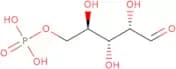
D-Arabinose-5-phosphate
CAS:D-Arabinose-5-phosphate is an intermediate in the pentose phosphate pathway. It is synthesized from D-xylulose-5-phosphate by xylitol dehydrogenase. D-Arabinose-5-phosphate inhibits the enzyme xylitol dehydrogenase, which converts xylulose to d-xylulose, and thus prevents the formation of 5-hydroxyisoxazole phosphate, a precursor to the synthesis of NADPH. In this way, it blocks the synthesis of NADPH, which is essential for aerobic metabolism. This inhibition leads to a decrease in ATP production and consequently cell death.Fórmula:C5H11O8PPureza:Min. 95%Peso molecular:230.11 g/molFucoidan, Lessonia nigrescens
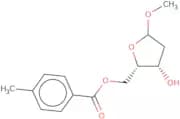
CAS:A fucan sulphate found in brown marine algae (Phaeophyta-typically Fucus vesiculotus, Ascophyllum nodosum, Alaria and Lessonia nigrescens (illustrated) and has been shown to have anticoagulant activity. The main constituents are α-1,4 and α-1,2 linked L-fucose sulphates although galactose also occurs and there are many variations of the basic structure found in different species of Phaeophyta. The image was kindly provided by Prof Mike Guiry from Cork who runs ‘The Seaweed Site’.Pureza:Min. 95%Cor e Forma:White PowderMethyl 2-deoxy-5-O-toluoyl-L-ribofuranoside
CAS:Methyl 2-deoxy-5-O-toluoyl-L-ribofuranoside is a high purity, custom synthesis, methylated, Glycosylation and Oligosaccharide. It has CAS No. 676598-19-9 and is Glycosylated and Methylated. This complex carbohydrate is a synthetic, monosaccharide or saccharide that can be modified with fluorination, Click modification or glycosylation.
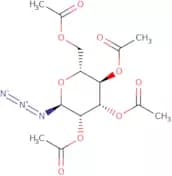
Fórmula:C14H18O5Pureza:Min. 95%Cor e Forma:Brown oil.Peso molecular:266.3 g/mol2,3,4,6-Tetra-O-acetyl-a-D-mannopyranosyl azide
CAS:2,3,4,6-Tetra-O-acetyl-a-D-mannopyranosyl azide is a crystalline solid that can be obtained by heating 2,3,4,6-tetra-O-acetyl-a-D-mannopyranose with sodium azide. This compound has been used in the x-ray crystallographic technique for obtaining electron density maps. The x ray data collected from this compound showed the distinct difference between the electron density of the atoms and their surroundings.Fórmula:C14H19N3O9Cor e Forma:PowderPeso molecular:373.32 g/mol2-Deoxy-D-glucono-1,5-lactone
CAS:2-Deoxy-D-glucono-1,5-lactone is a crystalline compound that is isolated from the hydrolysis of D-gluconic acid. This compound has been found to be a diastereoisomeric product with a lactone ring and an epimerization process. It can also be synthesized by reacting epichlorohydrin with potassium hydroxide in the presence of a hydroxy group. 2DG is an elimination product of 2-deoxyglucose and has been shown to have antihyperglycemic effects due to its ability to inhibit glucose synthesis in the liver and muscle cells. This compound also inhibits protein synthesis in bacteria, which may lead to cell death.
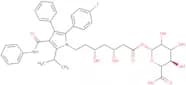
Fórmula:C6H10O5Pureza:Min. 95%Peso molecular:162.14 g/molAtorvastatin acyl-b-D-glucuronide
CAS:Atorvastatin acyl-b-D-glucuronide is a synthetic compound that has been modified with fluorine and methyl groups. It is a glycosylated molecule with a carbohydrate moiety. It has been shown to be active against Saccharide-producing bacteria, such as the genus Clostridium, which are responsible for the production of polysaccharides and glycans.Fórmula:C39H45FN2O11Pureza:90%MinPeso molecular:736.8 g/molPseudaminic acid
Pseudaminic acid is a sugar molecule that is found in the cell walls of bacteria, where it provides structural support. It is synthesized enzymatically by transferring the terminal hydroxyl group from glucose-1-phosphate to glycerol-3-phosphate. Pseudaminic acid can be chemoenzymatically synthesized in a scalable manner and has been shown to inhibit the growth of infectious bacteria in biological studies. Structural studies have revealed that pseudaminic acid contains an hydroxyl group and two glycosidic bonds, which are formed between the carbon atom at position C2 and C6 of glucose. This molecule also has an ester linkage between C1 and C2 of mannose. Pseudaminic acid is biosynthesized through a series of reactions that involve phosphorylation, dephosphorylation, and oxidation. This molecule also participates in protein glycosylation as well as water molecules that hydrogen bondFórmula:C13H22N2O8Pureza:Min. 95%Cor e Forma:PowderPeso molecular:334.32 g/mol2,5-Anhydro-D-glucitol-1,6-diphosphate
CAS:2,5-Anhydro-D-glucitol-1,6-diphosphate is a cell signaling molecule that is involved in the regulation of glycolysis and the phosphofructokinase enzyme. It binds to platelets and regulates platelet aggregation. This enzyme has been shown to be a potential drug target for cancer. Cancer cells have been found to contain higher concentrations of 2,5-Anhydro-D-glucitol-1,6-diphosphate than their normal counterparts. The increased concentration of this enzyme in cancer cells is due to an allosteric change in the enzyme’s activity. The increased activity leads to a more rapid metabolism of glucose, which provides energy for tumor growth and metastasis. This enzyme can be used as a marker for malignancy in human diseases such as breast cancer or prostate cancer.
Fórmula:C6H14O11P2Pureza:Min. 98%Cor e Forma:Clear LiquidPeso molecular:324.12 g/molD-Maltose monohydrate
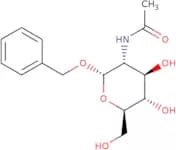
CAS:Please enquire for more information about D-Maltose monohydrate including the price, delivery time and more detailed product information at the technical inquiry form on this pageFórmula:C12H24O12Pureza:Min. 98 Area-%Cor e Forma:White PowderPeso molecular:360.31 g/molBenzyl 2-acetamido-2-deoxy-α-D-glucopyranoside
CAS:Benzyl 2-acetamido-2-deoxy-α-D-glucopyranoside is a synthetic compound with a molecular weight of 342.45 g/mol. It is a white to pale yellow crystalline solid that is soluble in water and methanol. The chemical formula for this compound is C12H14N2O6 and its structural formula is represented as CH2(COOCH3)COOC8H11O6. The CAS number for this compound is 13343-62-9, and the IUPAC name for it is benzyl 2-(2-acetamido)-2,3,4,5,6-pentaacetoxy αDglucopyranoside. This compound has been used in methylation reactions and click chemistry applications due to its ability to form stable carbonyl bonds with other molecules. Benzyl 2-(2-acetamido)-2,3,4,5,6Fórmula:C15H21NO6Pureza:Min. 98 Area-%Cor e Forma:White PowderPeso molecular:311.33 g/molβ-1,3-Glucan
CAS:β-1,3-Glucan is a bioactive polysaccharide, which is located predominantly in the cell walls of yeast, fungi, and certain cereals. This compound is characterized by its unique branched structure, which is crucial for its biological function. The mode of action of β-1,3-Glucan involves the binding to specific receptors on immune cells, such as dectin-1, which triggers a cascade of immune responses. This interaction enhances the activity of macrophages, neutrophils, and natural killer cells, thus bolstering the body's innate immune defenses.The uses and applications of β-1,3-Glucan are broad, primarily focused on immunological research and potential therapeutic strategies. It is extensively utilized in studies examining its effects as an immunomodulator, leveraging its ability to potentiate immune system function and examining its role in adjunctive cancer therapies, where it may enhance the efficacy of certain treatments. Additionally, β-1,3-Glucan is investigated for its potential benefits in reducing infection rates and improving recovery times in clinical settings. Moreover, its applications in dietary supplements and functional foods continue to be a subject of scientific inquiry, aiming to harness its health-promoting properties within nutrition science.Pureza:Min. 95%Cor e Forma:Powderβ-Rutinose
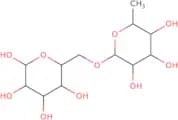
CAS:Beta-rutinose is a potent kinase inhibitor that has shown anti-tumor activity in Chinese hamster ovary (CHO) cells. It inhibits the activity of cyclin-dependent kinases, which are essential for cell division and proliferation. Beta-rutinose has been shown to induce apoptosis in human cancer cells, making it a promising candidate for anticancer therapy. This compound is an analog of rutin, a flavonoid found in many plants, and has been shown to have potent anticancer effects in vitro and in vivo. Beta-rutinose inhibits the growth of cancer cells by blocking the activity of specific kinases involved in tumor progression, making it an attractive target for developing new cancer therapies. Additionally, this compound has been found to be effective at reducing protein levels associated with cancer cell growth and proliferation.Fórmula:C12H22O10Pureza:Min. 95%Peso molecular:326.3 g/molTween 65
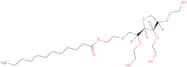
CAS:Tween 65 is a polyoxyethylene sorbitan monooleate (polysorbate) surfactant that is used as a film-forming polymer and dispersing agent in solid preparations. Tween 65 has been shown to inhibit the proliferation of prostate cancer cells, which may be due to its ability to bind to anti-prostate specific antigen (anti-pcsk9) antibody causing the antibody to aggregate and form a particle. This process inhibits the interaction between the antibody and its target, preventing it from binding with PCSK9 protein. The addition of propranolol hydrochloride has been shown to increase the effectiveness of Tween 65.Corchoionoside C
CAS:Corchoionoside C is a natural compound classified as an iridoid glycoside. This compound is isolated from various plant species, particularly those within the Boraginaceae family. The mode of action of Corchoionoside C involves modulation of biological pathways, likely through its interaction with cellular enzymes and receptors, contributing to its potential therapeutic effects.Pureza:Min. 98%N-Trimethylchitosan
CAS:Quaternization of the primary amine in N-Trimethylchitosan increases the water solubility of chitosan and keeps chitosan soluble over a wide pH range. N-Trimethylchitosan is soluble in water and ethanol, making it ideal for use in biotechnology applications.The degree of quaternization is 30-70%Pureza:Min. 90%Pachyman - from Poria cocos
CAS:Poria cocos is an edible medicinal fungus known as “Fuling” in Chinese that has been used as a Chinese traditional medicine for more than two thousand years. Polysaccharide material is the most abundant organic substance in the fungus, accounting for about 85% of the total and is a mixture of polysaccharides with the major component being Pachyman, a β-glucan with a 1,3 backbone and 1,6 side chains. It is reported that Pachyman has a wide range of biological activities including antitumour, immunomodulatory, anti-inflammatory and antioxidative properties. Pachyman is a beta-glucan with a 1,3 backbone and 1,6 side chains of fungal origin (Poria cocos). The image was kindly provided by Dr. Chris Lawson.Pureza:Min. 95%Cor e Forma:White Powder1,3,4,6-Tetra-O-galloyl glucose
CAS:Tetra-O-galloyl glucose is a pentagalloyl glucose that is found in the Chinese herb Paeonia lactiflora. It has been shown to inhibit the replication of hepatitis B virus, and can be used for the treatment of hepatitis B infection. Tetra-O-galloyl glucose also has anti-inflammatory activities, which may be due to its ability to inhibit prostaglandin synthesis.Fórmula:C34H28O22Pureza:Min. 95%Peso molecular:788.57 g/mol6'-Sialyllactose-BSA
Sialyllactose-BSA is a complex carbohydrate that is used in the synthesis of saccharides. It has been modified with fluorination to create a 6'-sialyllactose-BSA, which is a monosaccharide. This product can be custom synthesized and it's purity is high. The product can be methylated or glycosylated, and it has been click-modified for fluorescence labeling.Pureza:Min. 95%Cor e Forma:PowderPeso molecular:72,318 g/mol3-Acetamido-3,6-dideoxy-D-galactose
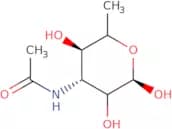
CAS:3-Acetamido-3,6-dideoxy-D-galactose is a monosaccharide with two functional groups. It has been shown to be bifunctional and can act as a glycosyl donor or acceptor. 3-Acetamido-3,6-dideoxy-D-galactose was isolated from the type strain of Streptomyces venezuelae. It is also found in fatty acids and some strains of bacteria, such as Bacillus megaterium. The biological properties of 3-acetamido--3,6-dideoxy--D--galactose have been studied using monoclonal antibodies, magnetic resonance spectroscopy (MRS), and 13C nuclear magnetic resonance spectroscopy (NMR).
Fórmula:C8H15NO5Pureza:Min. 95%Cor e Forma:PowderPeso molecular:205.21 g/molChondroitin disaccharide di-6S
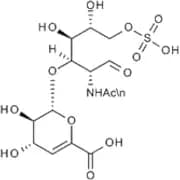
CAS:Chondroitin disaccharide di-6S (CDD6S) is a synthetic, fluorinated oligosaccharide that is used for glycosylation and modification of proteins, polysaccharides, and other biomolecules. It has been shown to be effective in inhibiting the growth of cancer cells by targeting the sugar moiety on cell surface receptors. CDD6S has been modified with methyl groups at various positions on the sugar chain to increase its activity against certain cancers.Fórmula:C14H21NO15SPureza:Min. 95%Peso molecular:475.38 g/mol