Carotenóides
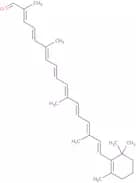
Os carotenoides são uma classe de tetraterpenos (C₄₀) que são pigmentos naturais encontrados em plantas, algas e bactérias fotossintéticas. Eles desempenham papéis cruciais na fotossíntese e fornecem cores vibrantes que variam do amarelo ao vermelho em várias frutas e vegetais. Os carotenoides são conhecidos por suas propriedades antioxidantes e potenciais benefícios à saúde, incluindo a promoção da saúde ocular e a redução do risco de certas doenças. Na CymitQuimica, você encontrará uma variedade de carotenoides para aplicações de pesquisa em nutrição, biologia vegetal e ciência farmacêutica.
Foram encontrados 59 produtos de "Carotenóides"
Ordenar por
Pureza (%)
0
100
|
0
|
50
|
90
|
95
|
100
Astaxanthin
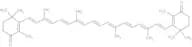
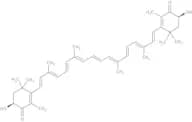
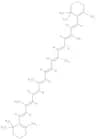
CAS:Fórmula:C40H52O4Pureza:≥ 98.0%Cor e Forma:Light to dark purple powderPeso molecular:596.84β-Carotene
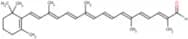
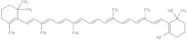
CAS:Fórmula:C40H56Pureza:≥ 98.0%Cor e Forma:Red to dark red, orange or brown-red powderPeso molecular:536.87β-Apo-8'-carotenal
CAS:<p>β-Apo-8'-carotenal (Apocarotenal) is a carotenoid found in spinach and citrus fruits. Apocarotenal is used in fat-based food, dairy products, and sweets.</p>Fórmula:C30H40OPureza:96.56% - ≥95%Cor e Forma:SolidPeso molecular:416.64Zeaxanthin
CAS:<p>Zeaxanthin is a dietary carotenoid that accumulates in the retina (particularly the macula) and has antioxidant activity.Cost-effective and quality-assured.</p>Fórmula:C40H56O2Pureza:98.15% - 99.44%Cor e Forma:SolidPeso molecular:568.87Rubixanthin
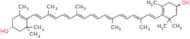
CAS:<p>Rubixanthin is a natural red carotenoid pigment, which is derived primarily from plant sources such as rose hips and certain types of flowers and fruits. It is a member of the xanthophyll family of carotenoids, compounds renowned for their vibrant colors and antioxidant properties.</p>Fórmula:C40H56OPureza:Min. 95%Cor e Forma:Yellow To Red SolidPeso molecular:552.87 g/molCrocin II
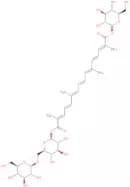
CAS:<p>Crocin II is a hydrophilic carotenoid that is a mono-glycosyl polyene ester of crocetin, in which D-gentiobiose occurs as the carbohydrate residue. A number of studies clearly highlight the role of crocin in preventing, treating or alleviating various health related conditions. Most in vivo studies were carried out on the effects of crocin against CNS and cardiovascular related diseases; however research projects on other organs including the liver and kidney have also been undertaken. These findings have not yet been verified by clinical trials on humans.</p>Fórmula:C38H54O19Pureza:Min. 95%Cor e Forma:Red PowderPeso molecular:814.42 g/moltrans-Crocetin - 70%
CAS:<p>trans-Crocetin - 70% is a highly purified carotenoid compound, which is derived from saffron (Crocus sativus) stigmas. Its molecular structure allows it to act as a potent antioxidant, disrupting oxidative stress pathways by scavenging free radicals and inhibiting lipid peroxidation. This mode of action is critical because it can potentially protect cellular components from damage and modulate various biochemical pathways.</p>Fórmula:C20H24O4Pureza:Min. 95%Cor e Forma:PowderPeso molecular:328.4 g/molCrocin I
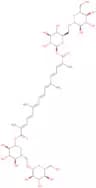
CAS:<p>Crocin is a pharmaceutical product which is an antipyretic and analgesic medication, primarily composed of paracetamol (acetaminophen). It is synthesized through chemical processes originally derived from coal tar, although modern production predominantly utilizes petrochemical sources. The mode of action of Crocin involves the inhibition of cyclooxygenase (COX) enzymes, particularly COX-2, in the central nervous system. This action leads to a decrease in the synthesis of prostaglandins, which are responsible for pain and fever.</p>Fórmula:C44H64O24Pureza:Min. 98.0 Area-%Cor e Forma:PowderPeso molecular:976.96 g/molFucoxanthine - 10%
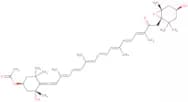
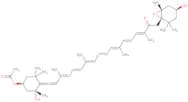
CAS:<p>Fucoxanthine - 10% is a carotenoid compound, which is extracted from brown seaweeds such as Undaria pinnatifida and Laminaria japonica. This compound is known for its unique structure and biochemistry, which allows it to influence metabolic processes within the body. Fucoxanthine primarily functions by increasing the expression of uncoupling protein 1 (UCP1) in white adipose tissue, which in turn enhances lipid metabolism and thermogenesis. This action leads to a potential increase in energy expenditure and fat oxidation.</p>Fórmula:C42H58O6Pureza:Min. 95%Cor e Forma:Yellow PowderPeso molecular:658.91 g/molAstaxanthin
CAS:<p>A xanthophyll pigment with characteristic reddish-orange colour. Often added to fish food since it is an essential nutrient for healthy fish growth and reproduction. A strong anti-oxidant with suggested preventative roles in cancer as well as cardiovascular and immunological disease.</p>Fórmula:C40H52O4Pureza:Min. 88.0 Area-%Cor e Forma:Purple PowderPeso molecular:596.84 g/molViolaxanthin - solution in ethanol
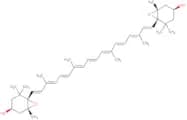
CAS:<p>Violaxanthin - solution in ethanol is a carotenoid compound, typically used in biochemical and physiological research. This product is derived from natural sources, such as plants and algae, where violaxanthin plays a crucial role in the xanthophyll cycle, contributing to thermal energy dissipation and photoprotection in photosynthetic organisms. The mode of action involves the reversible conversion of violaxanthin to other xanthophylls such as antheraxanthin and zeaxanthin, depending on light conditions, to regulate energy flux and protect against photooxidative damage.</p>Fórmula:C40H56O4Pureza:Min. 98 Area-%Cor e Forma:Clear LiquidPeso molecular:600.87 g/molZeaxanthin - 50%
CAS:<p>Zeaxanthin - 50% is a carotenoid compound, which is a type of naturally occurring pigment found in various fruits and vegetables, especially in corn, saffron, and leafy greens. It belongs to a class of phytochemicals known as xanthophylls, which are crucial for light absorption and protection against photooxidative damage in plants. This particular version is typically derived from natural sources like marigold petals or synthesized for high purity and concentration.</p>Fórmula:C40H56O2Pureza:Min. 50 Area-%Cor e Forma:PowderPeso molecular:568.87 g/molAstaxanthin - 95%
CAS:<p>A xanthophyll pigment with characteristic reddish-orange colour. Often added to fish food since it is an essential nutrient for healthy fish growth and reproduction. A strong anti-oxidant with suggested preventative roles in cancer as well as cardiovascular and immunological disease.</p>Fórmula:C40H52O4Pureza:(%) Min. 97%Cor e Forma:PowderPeso molecular:596.84 g/molLutein - 95%
CAS:<p>Lutein - 95% is a purified carotenoid compound, which is derived primarily from the petals of the marigold plant, Tagetes erecta. This high-purity extract contains a significant concentration of lutein, a naturally occurring pigment known for its role in the human body, particularly in the eyes. The primary mode of action of lutein involves its antioxidant properties; it functions by neutralizing free radicals, thus protecting cellular structures from oxidative damage. Within the human eye, lutein is concentrated in the macular region of the retina where it helps to filter harmful high-energy blue wavelengths of light and maintains healthy cells.</p>Fórmula:C40H56O2Pureza:Uv Wavelength 441 To 451 NmCor e Forma:Red PowderPeso molecular:568.87 g/molFucoxanthine
CAS:<p>Fucoxanthine is a marine carotenoid, which is predominantly found in various species of brown seaweed, such as Undaria pinnatifida and Laminaria japonica. Its molecular structure includes an allenic bond, which distinguishes it from other carotenoids and contributes to its unique mode of action. Fucoxanthine exerts its effects primarily through antioxidant activity, where it neutralizes free radicals, thus reducing oxidative stress. Additionally, it modulates metabolic processes by influencing genes involved in lipid metabolism and adipose tissue differentiation.</p>Fórmula:C42H58O6Pureza:Min. 95%Cor e Forma:Red PowderPeso molecular:658.91 g/molβ-Carotene - 90%
CAS:<p>Antioxidant; antineoplastic; inudces cell differentiation</p>Fórmula:C40H56Pureza:Min. 90 Area-%Cor e Forma:PowderPeso molecular:536.87 g/molLutein, 88%
CAS:<p>Natural yellow carotenoid; lipid-soluble antioxidant</p>Fórmula:C40H56O2Pureza:(%) Min. 88%Cor e Forma:Red PowderPeso molecular:568.87 g/molApocarotenal
CAS:<p>Apocarotenal is a carotenoid-derived pigment, which is a natural carotenoid with a bright orange-red hue. It is derived from beta-carotene, primarily found in fruits and vegetables. This compound is biosynthesized from plant sources, commonly extracted from carrots and citrus fruits. Apocarotenal functions through its conjugated double-bond system, which absorbs light in the visible range, imparting color to formulations.</p>Fórmula:C30H40OPureza:Min. 96 Area-%Cor e Forma:PowderPeso molecular:416.64 g/mol