Nucleotídeos
Subcategorias de "Nucleotídeos"
Foram encontrados 2637 produtos de "Nucleotídeos"
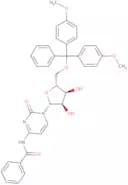
N4-Benzoyl-5'-O-DMT-cytidine
CAS:N4-Benzoyl-5'-O-DMT-cytidine is a novel modified nucleoside that can be phosphorylated by T4 kinase to form 5'-O-DMT-N4-benzoyl cytidine, which is an antiviral agent. This active compound is also an activator of DNA polymerases and has anticancer properties. N4-Benzoyl-5'-O-DMT cytidine has been shown to inhibit the replication of HIV in human cells and inhibit tumor growth in animal models. It has been synthesized with high quality and high purity, and has been assigned CAS No. 81246-76-6.Fórmula:C37H35N3O8Pureza:Min. 95 Area-%Cor e Forma:White PowderPeso molecular:649.69 g/molAlloxan hydrate
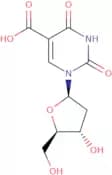
CAS:A pyrimidine derivative, widely used for the induction of diabetes in experimental animals. It preferentially accumulates in pancreatic β cells in Langerhans islets via glucose transporter GLUT2. In the presence of intracellular thiols such as glutathione, it gets involved in a cyclic redox reaction with its reduction product, dialuric acid. This triggers the production of toxic levels of reactive oxygen species (ROS) and directs the cells in necrosis. Alloxan also inhibits glucokinase, which regulates glucose-induced insulin secretion.Fórmula:C4H2N2O4•xH2OPureza:Min. 95%Peso molecular:142.07 g/mol5-Carboxy-2'-deoxyuridine
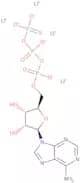
CAS:5-Carboxy-2'-deoxyuridine is a nucleoside analogue that inhibits herpes simplex virus type 1 (HSV-1) and 2 (HSV-2) replication. It is used to treat genital herpes infections caused by HSV-1 or HSV-2. 5-Carboxy-2'-deoxyuridine has been shown to inhibit the growth of human cancer cells in culture, and is currently being investigated as a potential anticancer drug. This drug binds with high affinity to the viral DNA polymerase, forming a covalent bond with the uracil base in the viral DNA chain. This prevents further elongation of the chain, inhibiting viral replication. 5-Carboxy-2'-deoxyuridine also inhibits cellular protein synthesis and cell division, which may be due to its ability to bind with aldehyde groups on surfactant proteins.END>Fórmula:C10H12N2O7Pureza:Min. 95%Cor e Forma:PowderPeso molecular:272.21 g/molAdenosine-5'-O-(1-thiotriphosphate) lithium salt - 100 mM aqueous solution
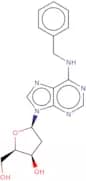
CAS:Adenosine-5'-O-(1-thiotriphosphate) lithium salt is an inhibitor of the guanine nucleotide-binding protein that is reversibly inhibited by adenosine triphosphate. It has been shown to inhibit HIV infection by binding to the Ryanodine receptor and blocking the release of calcium ions from intracellular stores. This prevents the activation of caspases, which are enzymes that cause cell lysis. Adenosine-5'-O-(1-thiotriphosphate) lithium salt also blocks transcription and polymerase chain reactions, and may inhibit the growth of cancer cells by inhibiting epidermal growth factor receptors on the cell surface.Fórmula:C10H12Li4N5O12P3SPureza:Min. 95%Cor e Forma:PowderPeso molecular:546.98 g/molN6-Benzyl-2-deoxyadenosine
N6-Benzyl-2-deoxyadenosine is a modified nucleotide that can be incorporated into DNA during replication. The compound has antiviral properties and can act as an activator for the transcription of genes involved in the immune response. It is synthesized by coupling two phosphate groups to adenosine monophosphate, which is then modified with a benzyl group. This modification prevents N6-benzyl-2-deoxyadenosine from being phosphorylated and degraded to adenosine monophosphate, resulting in a stable molecule that can be incorporated into DNA.Fórmula:C17H19N5O3Pureza:Min. 95%Cor e Forma:PowderPeso molecular:341.36 g/mol9-(2'-Deoxy-2'-fluoro-β-D-arabinofuranosyl)adenine
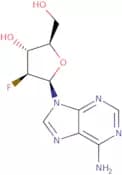
CAS:9-(2'-Deoxy-2'-fluoro-b-D-arabinofuranosyl)adenine (9dFdA) is a potent inhibitor of the enzyme s-adenosylhomocysteine hydrolase, which is involved in the synthesis of adenosine. 9dFdA inhibits the growth of Trichomonas vaginalis and has shown good activity against other pathogens, such as Staphylococcus aureus and Mycobacterium tuberculosis. It also has been shown to have potent inhibitory activity against adenosine deaminase, which prevents an immune response by preventing cells from producing the amino acid adenosine. This compound also inhibits uridine phosphorylase, which is involved in nucleotide biosynthesis.Fórmula:C10H12FN5O3Pureza:Min. 95%Cor e Forma:PowderPeso molecular:269.24 g/mol3'-Amino-2',3'-dideoxycytidine
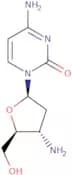
CAS:3'-Amino-2',3'-dideoxycytidine's lack of a 3'-hydroxyl group makes it a chain terminator for DNA polymerase, a key application in Sanger sequencing. Additionally, the 3'-amino group serves as a functional handle for modifying the 3' end of oligonucleotides with various labels or conjugates, expanding their utility in research and diagnostics.Fórmula:C9H14N4O3Pureza:Min. 95%Cor e Forma:Off-White PowderPeso molecular:226.23 g/mol2'-Deoxyadenosine-5'-diphosphate sodium salt
CAS:2'-Deoxyadenosine-5'-diphosphate sodium salt is a nucleotide that is involved in the synthesis of DNA. It is a structural analog of adenosine-5'-diphosphate and can be used as an experimental tool to study metabolic disorders. 2'-Deoxyadenosine-5'-diphosphate sodium salt binds to p2y receptors and blocks their activation, which inhibits cellular energy metabolism. This compound is structurally similar to adenosine-5'-triphosphate, but has been shown to inhibit the expansion of cells when heated, unlike adenosine-5'-triphosphate. 2'-Deoxyadenosine-5'-diphosphate sodium salt also inhibits cell proliferation in cancer cells and may have potential as a therapeutic agent for bowel disease.Fórmula:C10H12N5O9P2·xNaPureza:Min. 95 Area-%Cor e Forma:PowderPeso molecular:408.18 g/molN4-Acetyl-2'-O-methylcytidine
CAS:N4-Acetyl-2'-O-methylcytidine is a chemical compound that is an analog of cytidine. It has been shown to have the ability to stabilize RNA molecules at high temperatures and has been used in the study of epigenetics and thermophilic organisms. N4-Acetyl-2'-O-methylcytidine is also known as AEMC. This compound can be used for reversed phase high performance liquid chromatography, which separates compounds based on their size and shape. Furiosus is a strain of bacteria that contains this chemical compound in its genome. Furiosus was found to contain this compound in its DNA by using posttranscriptional modification techniques such as high performance liquid chromatography (HPLC) and proton nuclear magnetic resonance (NMR).
Fórmula:C12H17N3O6Pureza:Min. 95%Cor e Forma:White Off-White PowderPeso molecular:299.29 g/mol3'-Fluoro-3'-deoxyuridine
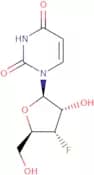
CAS:3'-Fluoro-3'-deoxyuridine is a nucleoside analog that inhibits DNA synthesis and has been used to treat hepatitis.Fórmula:C9H11FN2O5Pureza:Min. 95%Cor e Forma:PowderPeso molecular:246.19 g/molAdenosine 3',5'-diphosphate disodium salt
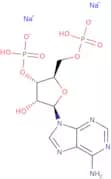
CAS:Adenosine 3',5'-diphosphate disodium salt is a nucleotide that is found in all cells and is involved in the regulation of many physiological processes, including energy metabolism and blood flow. It has inhibitory effects on platelets and calcium ion channels. Adenosine 3',5'-diphosphate disodium salt also inhibits the synthesis of prostaglandins by blocking the conversion of arachidonic acid to prostaglandin H2, which leads to an anti-inflammatory effect. Adenosine 3',5'-diphosphate disodium salt has been shown to be effective in treating primary pulmonary hypertension and bowel disease. The reaction solution can be used for polymerase chain reactions, multivariate logistic regression, or other applications.Fórmula:C10H15N5O10P2·2NaPureza:Min. 96 Area-%Cor e Forma:White Beige PowderPeso molecular:473.18 g/mol2'-Deoxy-2'-fluorocytidine
CAS:2'-Deoxy-2'-fluorocytidine is a nucleoside analog with the potential as an Crimean-Congo hemorrhagic fever virus antiviralFórmula:C9H12FN3O4Pureza:Min. 98 Area-%Cor e Forma:White Off-White PowderPeso molecular:245.21 g/mol5-Methoxyuridine
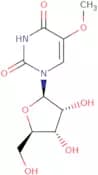
CAS:5-Methoxyuridine is a nucleoside that is structurally related to uridine. It is an intermediate in the biosynthesis of pyrimidines and is also used as a precursor for other compounds. 5-Methoxyuridine has been shown to inhibit protein synthesis by binding to purine receptors and inhibiting the function of protein kinases. The x-ray crystal structures of 5-methoxyuridine bound to two different p2y receptors have been determined. The analytical chemistry of 5-methoxyuridine is based on UV absorption measurements, which are able to identify hydrogen bonds between the base and the sugar moiety. This drug has been investigated for its potential use in cancer therapy due to its ability to inhibit RNA synthesis, which can lead to cell death by incomplete replication or transcription. 5-Methoxyuridine inhibits messenger RNA (mRNA) production in bacteria by interfering with sequence recognition and binding sites within the ribosome and preventingFórmula:C10H14N2O7Pureza:Min. 98 Area-%Cor e Forma:PowderPeso molecular:274.23 g/mol2'-Chloro-2'-deoxyuridine
CAS:2'-Chloro-2'-deoxyuridine is a thymidine analog for research applicationsFórmula:C9H11ClN2O5Pureza:Min. 95%Cor e Forma:PowderPeso molecular:262.65 g/mol2-Amino-2'-deoxy-2'-fluoroadenosine
CAS:2-Amino-2'-deoxy-2'-fluoroadenosine is a modified nucleoside. Fluorination modifications can make molecules have increased resistance to enzymatic degradation, which has useful applications in drug development. The extra amino group could also enhance binding properties or alter biological activity.Fórmula:C10H13FN6O3Pureza:Min. 95%Cor e Forma:PowderPeso molecular:284.25 g/mol3-N-Boc-5'-O-DMT-3'-O-nosylthymidine
CAS:3-N-Boc-5'-O-DMT-3'-O-nosylthymidine is an anticancer nucleoside that is used as a building block for the synthesis of other anticancer compounds. It can be synthesized by the reaction between 3,4,5′-trimethoxybenzoyl chloride and thymidine in the presence of DMAP and DIPEA. This compound has shown antiviral and anti-inflammatory activities. 3-N-Boc-5'-O-DMT-3'-O-nosylthymidine can also be used as a precursor to synthesize novel nucleosides with different properties. This product is soluble in water, ethanol, acetone, chloroform, benzene, ether or methanol.
Fórmula:C42H43N3O13SPureza:(¹H-Nmr) Min. 95 Area-%Cor e Forma:PowderPeso molecular:829.87 g/mol6-Dimethylamino-9-(b-D-ribofuranosyl)purine
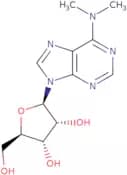
CAS:6-Dimethylamino-9-(b-D-ribofuranosyl)purine (6-DMAP) is an analog of adenine that has been shown to have anticancer activity in human serum and tissue culture. 6-DMAP can inhibit the synthesis of ATP, leading to cell death by significantly inhibiting cellular processes such as glycolysis and DNA replication. 6-DMAP also has a significant cytotoxicity on various types of cancer cells and plant tissues. The mechanism of action for the anticancer activity of 6-DMAP is not yet known, but it may be due to its ability to interfere with purine metabolism or its ability to form covalent bonds with DNA.
Fórmula:C12H17N5O4Pureza:Min. 98 Area-%Cor e Forma:White PowderPeso molecular:295.3 g/mol2'-Amino-2'-deoxyguanosine
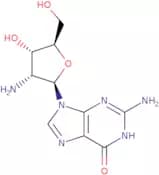
CAS:2'-Amino-2'-deoxyguanosine is a modified nucleoside, based on guanosine. The 2'-hydroxyl has been replaced by an amino group, which can form different hydrogen bonds compared to a hydroxyl or just a hydrogen, altering the way the sugar interacts in a DNA or RNA strand.Fórmula:C10H14N6O4Pureza:Min. 98 Area-%Cor e Forma:White PowderPeso molecular:282.26 g/molTenofovir
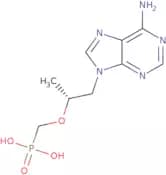
CAS:Tenofovir is an acyclic nucleoside phosphonate that exhibits anti-viral properties through its inhibition of reverse transcriptases. In particular, Tenofovir is a potent inhibitor of Human Immunodeficiency Virus (HIV) and chronic Hepatitis B Virus (HBV) reverse transcriptases, thus preventing the replication of genetic viral material. This property is beneficial in virus research areas and developing antiviral treatments. Once inside the body tenofovir is metabolized into its active form, tenofovir diphosphate, by the lysosomal protease cathepsin A, nucleotide kinases and adenylate kinases. An oral prodrug, used in the treatment of HIV, is tenofovir alafenamide (TAF) hemifumerate and this has improved stability, greater antiviral activity and reduces the risk of side effects such as loss of kidney function. Furthermore, TAF is easily metabolized into tenofovir in the lymphocytes allowing increased drug accumulation in HIV cells.Fórmula:C9H14N5O4PPureza:Min. 95%Cor e Forma:White Clear LiquidPeso molecular:287.21 g/mol7-Deaza-2'-deoxyinosine
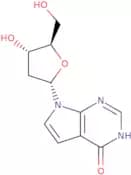
CAS:7-Deaza-2'-deoxyinosine is a purine nucleoside analog that has been shown to be a hydrogen bond donor and formamide acceptor. This drug destabilizes duplex DNA by interfering with the formation of the hydrogen bonds between the bases, which may result in strand breakage. 7-Deaza-2'-deoxyinosine has also been shown to inhibit RNA polymerase activity, thereby inhibiting protein synthesis. It has been used as a tool for studying enzyme mechanisms and in solid phase synthesis.
Fórmula:C11H13N3O4Pureza:Min. 95%Cor e Forma:PowderPeso molecular:251.24 g/mol