Nucleotídeos
Os nucleotídeos são compostos orgânicos que servem como building blocks dos ácidos nucleicos, essenciais para a formação de DNA e RNA. Cada nucleotídeo é composto por uma base nitrogenada, uma molécula de açúcar e um ou mais grupos fosfato. Esses nucleotídeos se unem para formar longas cadeias, criando o material genético que carrega e transmite informações genéticas em todos os organismos vivos. Nesta seção, você encontrará uma ampla variedade de nucleotídeos cruciais para pesquisas em genética, biologia molecular e bioquímica. Eles são fundamentais para estudar processos genéticos, sintetizar ácidos nucleicos e desenvolver ferramentas diagnósticas e terapêuticas. Na CymitQuimica, oferecemos nucleotídeos de alta qualidade para apoiar suas pesquisas científicas e aplicações, garantindo precisão e confiabilidade em seus experimentos.
Subcategorias de "Nucleotídeos"
Foram encontrados 2636 produtos de "Nucleotídeos"
Ordenar por
Pureza (%)
0
100
|
0
|
50
|
90
|
95
|
100
2'-Deoxyinosine-5'-monophosphate disodium salt
CAS:2'-Deoxyinosine-5'-monophosphate disodium salt is a synthetic nucleoside, phosphoramidite, and diphosphate that is used in the synthesis of DNA. It has been shown to have antiviral effects against HIV and herpes simplex virus type 2 (HSV-2). This drug also has anticancer activity and is an activator of novel nucleosides.Fórmula:C10H11N4Na2O7PPureza:Min. 98 Area-%Cor e Forma:White PowderPeso molecular:376.17 g/molAdenosine 5'-diphosphate bis(cyclohexylammonium) salt
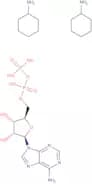
CAS:Adenosine 5'-diphosphate bis(cyclohexylammonium) salt is a novel antiviral agent that has been shown to be an activator of the adenylate cyclase enzyme. It also inhibits DNA and RNA synthesis in viruses, which prevents viral replication. Adenosine 5'-diphosphate bis(cyclohexylammonium) salt is active against cancer cells and has been shown to inhibit tumor growth and prolong survival in animal models. This compound can be synthesized by reacting the monophosphate with phosphoramidites or deoxyribonucleosides.Fórmula:C10H15N5O10P2·2C6H13NPureza:Min. 98 Area-%Cor e Forma:PowderPeso molecular:625.55 g/mol2'-O-(2-Methoxyethyl)cytidine
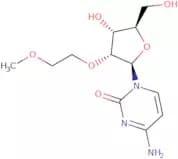
CAS:2'-O-(2-Methoxyethyl)cytidine is a nutrient that is used to maintain the dry weight of Lactobacillus acidophilus cultures. It is also used as a texturizing agent in food products. 2'-O-(2-Methoxyethyl)cytidine has been shown to increase the rate of lactose hydrolysis and reduce the viscosity of yogurt by activating L. acidophilus. 2'-O-(2-Methoxyethyl)cytidine is also used as a dietary supplement for people with intestinal disorders, such as irritable bowel syndrome. It can be found in sodium salts and n-methyl-d-glucamine.Fórmula:C12H19N3O6Pureza:Min. 95%Cor e Forma:PowderPeso molecular:301.3 g/mol2',3'-O-Isopropylidenecytidine
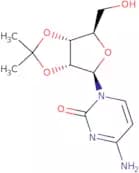
CAS:2',3'-O-Isopropylidenecytidine is a nucleoside for use in research applications
Fórmula:C12H17N3O5Pureza:Min. 95%Cor e Forma:PowderPeso molecular:283.28 g/mol5-Carboxymethylaminomethyluridine
CAS:5-Carboxymethylaminomethyluridine is a nucleoside analogue that is used in molecular modeling studies to investigate the role and interactions of uridine in the mitochondrial ribosome. It has been shown to bind to the mitochondrial ribosome, which may be due to hydrogen bonding interactions with adenine. 5-Carboxymethylaminomethyluridine also inhibits protein synthesis at the level of translation by inhibiting group P2 of eukaryotic cytosolic ribosomes. This inhibition results in decreased production of proteins necessary for mitochondrial biogenesis.Fórmula:C12H17N3O8Pureza:Min. 95 Area-%Cor e Forma:White Off-White PowderPeso molecular:331.28 g/molN6-Cyclopentyladenosine
CAS:N6-Cyclopentyladenosine is a nucleoside analog that binds to the kappa-opioid receptor. The physiological effects of this drug are mediated through its interaction with the kappa-opioid receptor, which is found in the central nervous system and mediates many of the effects of morphine. N6-Cyclopentyladenosine has been shown to increase blood flow and heart rate in humans. This drug also inhibits tetrazolium dye uptake by papillary muscle cells, suggesting that it may have cardiotonic effects. N6-Cyclopentyladenosine has been used as an analytical probe for adenosine, which is metabolized by cyclic AMP and cyclic GMP phosphodiesterases into adenosine 3',5'-cyclic monophosphate (cAMP).Fórmula:C15H21N5O4Pureza:Min. 95%Cor e Forma:PowderPeso molecular:335.36 g/molN4-Etheno 2'-deoxycytidine
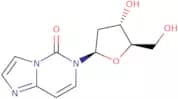
CAS:N4-Etheno 2'-deoxycytidine is an aromatic hydrocarbon that has been shown to be a potent inhibitor of DNA synthesis. It binds covalently with the N4 position of deoxycytidine in DNA, thereby inhibiting transcription and replication. This drug has been shown to be a potent inhibitor of DNA synthesis in human cells when it is added to the culture medium, but it does not inhibit protein synthesis. N4-Etheno 2'-deoxycytidine can also react with hydrogen bonds in cellular proteins and nucleosides that are involved in DNA repair mechanisms. This drug is reactive and may cause oxidative damage to cellular components, which may lead to carcinogenesis.Fórmula:C11H13N3O4Pureza:Min. 95%Cor e Forma:White PowderPeso molecular:251.24 g/molPolyguanylic acid potassium
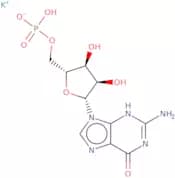
CAS:Polyguanylic acid potassium salt is a guanosine analog that is used as a probe for studying the interaction of cellular and target tissue. It has been found to be taken up by cells, with high affinity constants, and to be immobilized on cell surfaces. Polyguanylic acid potassium salt can also be used as an anticancer agent against epidermoid carcinoma cells with high affinity constants. The compound interacts with DNA and inhibits the growth of the tumor cells by interfering with the uptake of nucleic acids.Fórmula:(C10H14N5O8P)x•KxPureza:Min. 95%Cor e Forma:Powder(E)-2'-Deoxy-2'-(fluoromethylene)cytidine
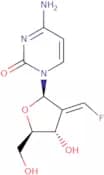
CAS:(E)-2'-Deoxy-2'-(fluoromethylene)cytidine is a cytostatic compound that inhibits DNA synthesis in tumor cells. It has been shown to be more potent than tezacitabine and hl-60 cells, as well as being less toxic than benzimidazole compounds. This analog of cytosine has been shown to have potent antitumor activity against carcinoma cell lines and myeloid leukemia cell lines. The oral prodrug form of this drug has been shown to be an effective treatment for myeloid leukemia in mice.Fórmula:C10H12FN3O4Pureza:Min. 95%Peso molecular:257.22 g/mol2'-Phosphoadenosine 5'-phosphosulfate tetralithium salt (mixture with 3'-isomer)
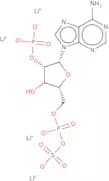
CAS:2'-Phosphoadenosine 5'-phosphosulfate tetralithium salt (mixture with 3'-isomer) is a novel, modified nucleoside. It has antiviral properties and can be used for the treatment of cancer. 2'-Phosphoadenosine 5'-phosphosulfate tetralithium salt (mixture with 3'-isomer) inhibits viral replication by inhibiting the synthesis of viral DNA and RNA. This compound also inhibits cancer cell proliferation by inhibiting deoxyribonucleic acid (DNA) and ribonucleic acid (RNA) synthesis.
Fórmula:C10H11N5O13P2S·4LiPureza:Min. 95%Cor e Forma:SolidPeso molecular:531 g/molNicotinic acid adenine dinucleotide sodium
CAS:Nicotinic acid adenine dinucleotide sodium (NAAD) is a novel anticancer and antiviral agent. NAAD is an analog of nicotinamide adenine dinucleotide (NAD) that has been modified to include a sodium ion. This modification inhibits the synthesis of DNA and RNA, which are required for cell division and replication. It has been shown to inhibit the growth of cancer cells in vitro and in vivo. In addition, NAAD suppresses viral replication by inhibiting protein synthesis in cells infected with HIV-1 or influenza virus. NAAD has also been shown to be a potent inhibitor of ribonucleoside reductase, which converts ribonucleosides into deoxyribonucleosides. This inhibition prevents the conversion of diphosphate nucleotides into monophosphate nucleotides, which are necessary for DNA synthesis.Fórmula:C21H26N6O15P2•NaPureza:Min. 95%Peso molecular:687.4 g/molN6-Hydroxymethyladenosine
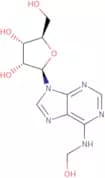
CAS:Please enquire for more information about N6-Hydroxymethyladenosine including the price, delivery time and more detailed product information at the technical inquiry form on this pageFórmula:C11H15N5O5Pureza:Min. 95%Cor e Forma:PowderPeso molecular:297.27 g/mol2-Methylthio-N6-methyladenosine
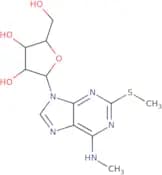
CAS:2-Methylthio-N6-methyladenosine is an adenosine nucleoside that is found in the DNA of eukaryotes. It is similar to 2-methylthio-n6-isopentenyladenosine, which is a modified form of n6-methyladenosine. The chemical structures of both molecules are related to the thermodynamic properties of the molecule and their ability to be postsynthetically modified. These modifications can lead to changes in their translation, which can have implications for the development and progression of disease. 2-Methylthio-N6-methyladenosine has a role in epigenetics, which is defined as changes in gene expression without any alterations in DNA sequence. In this case, it may modify the chloride ion concentration by changing its chemical structure, leading to epigenetic changes that can affect how genes are expressed or translated into proteins.Fórmula:C12H17N5O4SPureza:Min. 95%Cor e Forma:White PowderPeso molecular:327.36 g/mol2'-Deoxy-2'-fluoro-2'-C-methylcytidine
CAS:2'-Deoxy-2'-fluoro-2'-C-methylcytidine is a nucleoside analog with modifications on both the sugar and the nucleobase. It is a derivative of cytidine, with fluorine attached to the 2' carbon of the sugar (deoxyribose) and a methyl group at the 2' carbon of the sugar as well. These modifications provide the compound with unique properties, such as potnetial increased resistance to enzymatic degradation, which can make it useful in antiviral and anticancer applications.Fórmula:C10H14FN3O4Pureza:Min. 95%Cor e Forma:PowderPeso molecular:259.23 g/mol5-Methylcytidine
CAS:5-Methylcytidine is a methyltransferase enzyme that catalyzes the transfer of a methyl group from S-adenosylmethionine to 5-methylcytosine. This reaction is essential for DNA replication and repair. 5-Methylcytidine has been shown to be an important factor in the regulation of mitochondrial functions, as well as other cellular processes such as protein synthesis, nuclear DNA replication, and tumor suppression. It also has been shown to inhibit the replication of murine sarcoma virus and Toll-like receptor. 5-Methylcytidine can be used in chemotherapy treatment against mouse tumors and murine sarcoma virus by preventing viral RNA synthesis with monoclonal antibodies.Fórmula:C10H15N3O5Peso molecular:257.24 g/molRef: 3D-W-201877
25gA consultar50gA consultar100gA consultar250gA consultar500gA consultar-Unit-ggA consultarAdenosine 5′-diphosphoribose monosodium
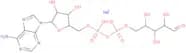
CAS:Adenosine 5′-diphosphoribose monosodium is a novel nucleotide that can be used in the synthesis of antiviral, anticancer, and anti-inflammatory drugs. Adenosine 5′-diphosphoribose monosodium is a modified form of adenosine 5′-triphosphate (ATP) with an added phosphate group at the 5′ position on the ribose sugar. It is synthesized from ATP by phosphoramidite chemistry. The CAS number for this product is 68414-18-6. Adenosine 5′-diphosphoribose monosodium has been shown to inhibit replication of human immunodeficiency virus type 1 (HIV-1) and herpes simplex virus type 1 (HSV-1).Fórmula:C15H23N5O14P2•NaPureza:Min. 95%Peso molecular:582.31 g/molAracytidylyl-(5′→5′)-cytidine
CAS:Please enquire for more information about Aracytidylyl-(5′→5′)-cytidine including the price, delivery time and more detailed product information at the technical inquiry form on this pageFórmula:C18H25N6O12PPureza:Min. 95%Peso molecular:548.4 g/mol2',3'-Dideoxycytidine-5'-triphosphate N,N-diethylethanamine
CAS:Please enquire for more information about 2',3'-Dideoxycytidine-5'-triphosphate N,N-diethylethanamine including the price, delivery time and more detailed product information at the technical inquiry form on this pageFórmula:C9H16N3O12P3•(C6H15N)xPureza:Min. 95%5,6-Dihydrothymidine
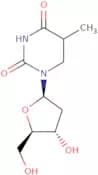
CAS:5,6-Dihydrothymidine is a hydroxylated thymidine analogue. It binds to the leukocyte antigen, which is found on many different types of cells. 5,6-Dihydrothymidine inhibits the replication of herpes simplex virus and can be used for diagnostic purposes. 5,6-Dihydrothymidine has been shown to have conformational properties that are similar to those of thymine, which allows it to bind to the template strand in DNA. This binding prevents the synthesis of messenger RNA from DNA. 5,6-Dihydrothymidine is also able to inhibit cell growth in culture and can be used as a cell culture medium supplement.Fórmula:C10H16N2O5Pureza:Min. 95%Cor e Forma:PowderPeso molecular:244.24 g/mol5-Carboxymethylaminomethyl- 2'-O-methyluridine
CAS:5-Carboxymethylaminomethyl- 2'-O-methyluridine (5CmAMU) is a modified nucleobase that is categorized as a modified base. It is an analog of uridine, which has been shown to be effective against tuberculosis in mice. 5CmAMU inhibits the methylation of rRNA and DNA by binding to the enzyme RNA methyltransferase, thereby inhibiting transcription and replication. This modification has also been shown to inhibit cellular proliferation and promote apoptosis. 5CmAMU binds to guanine with a stoichiometry of 1:1, which provides evidence for its role in DNA synthesis and repair. The structural modifications on this molecule may lead to diagnostic applications or treatments for diseases such as tuberculosis.Fórmula:C13H19N3O8Pureza:Min. 95%Cor e Forma:PowderPeso molecular:345.31 g/mol