Nucleotídeos
Subcategorias de "Nucleotídeos"
Foram encontrados 2635 produtos de "Nucleotídeos"
Uridine-3',5'-cyclic monophosphate sodium salt
CAS:Uridine-3',5'-cyclic monophosphate sodium salt is a phosphotriester that is an intermediate in the biosynthesis of nucleosides. It is also a phosphodiesterase inhibitor, which means it inhibits the breakdown of cyclic nucleotides and allows them to accumulate. This drug has been shown to increase platelet production and has anti-inflammatory effects. Uridine-3',5'-cyclic monophosphate sodium salt is a human metabolite that can be synthesized from uridine, which is present in DNA, RNA, and food sources such as meat, eggs, and milk. The synthesis of uridine-3',5'-cyclic monophosphate sodium salt requires phosphoramidite as a precursor.
Fórmula:C9H10N2O8P·NaPureza:Min. 98 Area-%Cor e Forma:White PowderPeso molecular:328.2 g/molUridine diphosphate choline (UDPC) sodium
CAS:Uridine diphosphate choline (UDPC) sodium is a nucleotide that is used as a phosphoramidite for DNA synthesis. The chemical formula for UDPC is C8H14N4O8P. The activation of the molecule occurs in acidic conditions, which may be due to the formation of an amide bond between the terminal phosphate and the amino group on the phosphorylcholine. This same reaction can also occur in alkaline conditions. UDPC has been shown to inhibit viral replication, including HIV-1, by blocking reverse transcription of viral RNA into DNA. It also has anticancer effects, as it inhibits cell proliferation and induces apoptosis in cancer cells. UDPC does not have any known side effects or toxicity.Fórmula:C14H25N3O12P2•NaPureza:Min. 95%Cor e Forma:PowderPeso molecular:512.3 g/molAdenosine 5'-monophosphate sodium
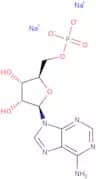
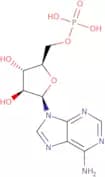
CAS:Adenosine 5'-monophosphate sodium is a nucleotide that is involved in the energy metabolism of cells. It has been shown to inhibit oxidative injury and to activate signal pathways in response to external stimuli, such as glucose deprivation. Adenosine 5'-monophosphate sodium can be synthesized from ATP by the enzyme adenosine kinase.
Fórmula:C10H13N5O7P·NaPureza:Min. 98 Area-%Cor e Forma:White PowderPeso molecular:369.2 g/molGuanylyl-3',5'-guanosine ammonium salt
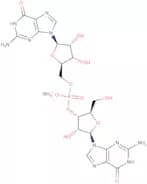
CAS:Guanylyl-3',5'-guanosine ammonium salt is a novel antiviral agent that has high antiviral activity against influenza A virus. It is a guanine derivative which has been modified to include an aminopropyl group and an ammonium cation. This compound also acts as an activator for deoxyribonucleosides, nucleotides, and ribonucleosides. Guanylyl-3',5'-guanosine ammonium salt may be used in the manufacture of DNA, RNA, and phosphoramidites. This compound also has anticancer effects by inhibiting the proliferation of tumor cells and inducing apoptosis.
Fórmula:C20H25N10O12P·H3NPureza:Min. 95%Peso molecular:645.48 g/molKinetin riboside-5'-monophosphate sodium salt
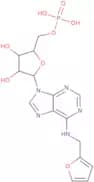
CAS:Kinetin riboside-5'-monophosphate sodium salt is a synthetic nucleotide that has been modified to include a phosphate group at the 5' position. Kinetin riboside-5'-monophosphate sodium salt is an activator of DNA synthesis and can be used for the treatment of viral infections. It also shows anticancer activity and is effective against cancer cells that are resistant to other cancer drugs.Fórmula:C15H16N5Na2O8P·H2OPureza:Min. 95%Cor e Forma:PowderPeso molecular:489.29 g/molN6-Benzyladenosine 5'-diphosphate sodium salt - 10 mM aqueous solution
CAS:N6-Benzyladenosine 5'-diphosphate sodium salt is a modified nucleoside that has a high purity, which is suitable for synthesis of DNA or RNA. It can be used in the modification of deoxyribonucleosides, ribonucleosides, and phosphoramidites. N6-Benzyladenosine 5'-diphosphate sodium salt has been shown to have anticancer effects and antiviral effects. This drug also has novel properties such as an ability to inhibit the proliferation of cancer cells.Fórmula:C17H21N5O10P2Pureza:Min. 95%Cor e Forma:Colorless PowderPeso molecular:517.32 g/mol3'-O-Methylinosine
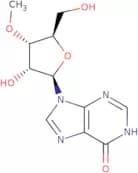
CAS:3'-O-Methylinosine is a synthetic nucleoside that inhibits the synthesis of viral DNA and RNA by interacting with the enzyme ribonucleotide reductase. This antiviral agent has been shown to be effective against a wide range of viruses, including human cytomegalovirus, herpes simplex virus type 1, varicella-zoster virus, and influenza A virus. 3'-O-Methylinosine has also been shown to inhibit the growth of cancer cells in vitro and in vivo.
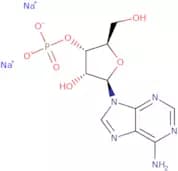
Fórmula:C11H14N4O5Pureza:Min. 95%Cor e Forma:White PowderPeso molecular:282.25 g/molAdenosine 3'-monophosphate sodium
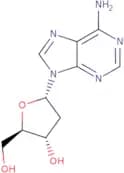
CAS:Adenosine 3'-monophosphate sodium is a nucleotide that is used as a substrate for enzymes. It has been shown to increase the enzymatic activity of papaverine, litoralis, subtilis, and histidine phosphatase. Adenosine 3'-monophosphate sodium also has protease activity, which can be activated by adding an enzyme preparation containing subtilisin and trypsin. This compound also has a pH optimum of 8.0-9.5 and is active at an alkaline pH of 9.5-10.5. The specific strain of bacteria will determine the optimal pH range for activity, with enterobacter bacterial strains having a maximum range of 6-7 and brevibacterium bacteria strains having a range of 4-6.Fórmula:C10H12N5O7PNa2Pureza:Min. 95%Cor e Forma:White To Off-White SolidPeso molecular:391.19 g/mol2'-Deoxy-a-adenosine
CAS:2'-Deoxy-a-adenosine is a nucleoside that contains an adenine base. It has been studied for its biological properties, including its reaction with solution and its use as an antimicrobial agent. 2'-Deoxy-a-adenosine has been shown to inhibit the growth of bowel disease in mice by binding to the adenosine A3 receptor on the surface of cells. This nucleoside also binds to nuclear DNA and may be used as a pharmacological agent, but more research is needed to determine whether it would be effective against cancer cells. 2'-Deoxy-a-adenosine may also be useful as a potential drug target for the treatment of cancer due to its ability to bind with dna duplexes, which are found in all cancer cells.
Fórmula:C10H13N5O3Pureza:Min. 95%Cor e Forma:White PowderPeso molecular:251.25 g/mol5′-O-DMT-LNA N-Bz 5-Me cytidine
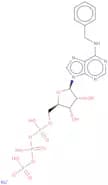
CAS:5′-O-DMT-LNA N-Bz 5-Me cytidine is a protected LNA cytidine nucleoside.Fórmula:C39H37N3O8Pureza:Min. 95%Peso molecular:675.73 g/molN6-Benzyladenosine 5'-triphosphate sodium salt - 10 mM aqueous solution
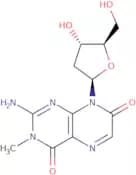
CAS:N6-Benzyladenosine 5'-triphosphate sodium salt - 10 mM aqueous solution is an analog of adenosine triphosphate (ATP). It is used in the study of protein kinase C. ATP and its analogs are able to phosphorylate proteins and regulate their activity. This study has shown that N6-benzyladenosine 5'-triphosphate sodium salt - 10 mM aqueous solution is an atp analog that activates protein kinase C, leading to the phosphorylation of proteins. This analog also inhibits tyrosine kinases, which may be due to its ability to inhibit the reuptake of serotonin and other transmitters.Fórmula:C17H22N5O13P3·xNaPureza:Min. 95%Cor e Forma:Colorless PowderPeso molecular:597.3 g/mol3-Methyl-8-(2-deoxy-b-D-ribofuranosyl)isoxanthopterin
CAS:3-Methyl-8-(2-deoxy-b-D-ribofuranosyl)isoxanthopterin is a nucleoside analog that is used as an activator of phosphoramidite. It can be used as a building block in the synthesis of modified phosphoramidites and it has antiviral, anticancer, and antiinflammatory properties. 3-Methyl-8-(2-deoxy-b-D-ribofuranosyl)isoxanthopterin is a novel nucleoside analog that can be used to synthesize DNA or RNA. It is also an inhibitor of deoxyribonucleoside kinase, preventing the conversion of deoxyribonucleosides into diphosphate monophosphates.
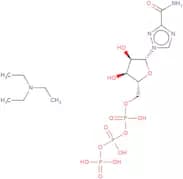
Fórmula:C12H15N5O5Pureza:Min. 95%Cor e Forma:PowderPeso molecular:309.28 g/molRibavirin 5'-triphosphate triethylammonium salt - 10 mM aqueous solution
CAS:Ribavirin triphosphate is the biologically active metabolite of antiviral nucleoside analog ribavirin. In cells, the prodrug ribavirin gets triphosphorylated and in it inhibits viral RNA polymerases, interfering with the synthesis of newly formed RNA.
Fórmula:C8H15N4O14P3•(C6H15N)xPureza:Min. 95 Area-%Cor e Forma:Clear LiquidPeso molecular:789.735-Bromo-2'-deoxycytidine
CAS:5-Bromo-2'-deoxycytidine is a synthetic nucleoside analogue that is used to treat diabetic neuropathy. It is structurally similar to cytidine, and inhibits the enzyme DNA polymerase by intramolecular catalysis. This causes deamination of the 5-bromo group, which prevents further synthesis of DNA. 5-Bromo-2'-deoxycytidine has been shown to be effective in vivo in a mouse model for inflammatory bowel diseases, including colitis and eosinophilic enteritis. The drug was also found to inhibit the production of Eosinophil peroxidase from HL-60 cells in vitro.Fórmula:C9H12BrN3O4Pureza:Min. 95%Cor e Forma:Off-White PowderPeso molecular:306.11 g/mol2'-Deoxy-N2-methylguanosine
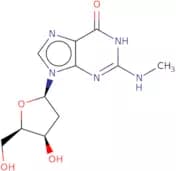
CAS:2'-Deoxy-N2-methylguanosine is a nucleoside with anticancer properties. It is a phosphoramidite, which is an analog of the natural nucleotide guanosine, where the 2'-hydroxyl group has been replaced by a methylene group. This compound is used in DNA synthesis and RNA synthesis. It can be used as a monophosphate or diphosphate. It also has antiviral and anti-inflammatory activities, as well as N2-methylamino moiety that can be used for the treatment of cancer and inflammatory diseases such as arthritis.
Fórmula:C11H15N5O4Pureza:Min. 95%Cor e Forma:White PowderPeso molecular:281.27 g/mol9-(β-D-Arabinofuranosyl)adenine 5'-monophosphate
CAS:9-(β-D-Arabinofuranosyl)adenine 5'-monophosphate (Ara-AMP) is a prodrug that is converted to adenine arabinoside in vivo. It is used as an antiviral agent for the prevention of hepatitis B and C. Ara-AMP inhibits viral DNA synthesis by acting as a competitive inhibitor of adenosine triphosphate, which is required for viral DNA polymerase activity. Ara-AMP also has antiviral properties against some RNA viruses, such as HIV and influenza virus. Ara-AMP can be administered orally or by injection, making it suitable for use in children who are unable to take oral medication.Fórmula:C10H14N5O7PPureza:Min. 95%Cor e Forma:White PowderPeso molecular:347.22 g/molAdenosine 2',3'-cyclic monophosphate
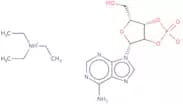
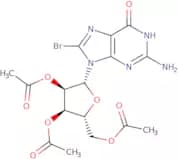
CAS:Adenosine 2',3'-cyclic monophosphate triethylammonium salt (AMP-TEA) is a structural analogue of adenosine. It is a potent inhibitor of protein synthesis by preventing the phosphodiesterase activity of cyclic nucleotide phosphodiesterases and cyclic nucleotide phosphodiesterase. AMP-TEA can be used as a tool to study translation in tissue culture, as well as to examine the effects on protein synthesis and other biochemical reactions that are regulated by cyclic nucleotides. It is also used for the preparation of tissue samples for enzymatic analysis or for radiolabeling experiments. AMP-TEA has an optimum pH of 4.5, but can be used at lower or higher pH values. The optimal temperature range for use is between 0°C and 50°C, with the maximum stability occurring at 37°C.Fórmula:C10H12N5O6PPureza:Min. 95%Cor e Forma:PowderPeso molecular:329.21 g/mol2',3',5'-Tri-O-acetyl-8-bromoguanosine
CAS:2',3',5'-Tri-O-acetyl-8-bromoguanosine is a synthetic nucleoside analog that inhibits the growth of tumor cells. It has been shown to inhibit the progression of prostate cancer and cervical cancer by binding to guanosine, preventing its conversion into ATP. This compound also prevents proliferation in hek293 and glioblastoma cells. The mechanism of action may be due to oxidative phosphite formation, which causes DNA damage and subsequent apoptosis.
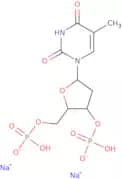
Fórmula:C16H18BrN5O8Pureza:Min. 95%Cor e Forma:Off-White To Light (Or Pale) Yellow SolidPeso molecular:488.25 g/molThymidine-3',5'-diphosphate disodium salt
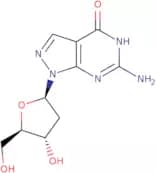
CAS:Thymidine-3',5'-diphosphate disodium salt is an antiviral and anticancer drug. It is a modified nucleoside which is synthesized from thymidine-3',5'-diphosphate and sodium bicarbonate (NaHCO3). This drug inhibits the synthesis of DNA and RNA, thereby inhibiting viral replication. Thymidine-3',5'-diphosphate disodium salt also has an antitumor effect by preventing the production of DNA in tumor cells.Fórmula:C10H14N2Na2O11P2Pureza:Min. 95%Cor e Forma:PowderPeso molecular:446.15 g/mol8-Aza-7-deaza-2'-deoxyguanosine
CAS:8-Aza-7-deaza-2'-deoxyguanosine is an alkynylated, cross-linked, single stranded nucleic acid. It has been shown to be effective at cross-linking and cross-linking nucleic acids. 8-Aza-7-deaza-2'-deoxyguanosine binds to the 7 deazapurine residues in DNA, forming a covalent bond between the two strands of the helix. This binding prevents the strand from unwinding and prevents the replication of DNA. The thermodynamic data for this compound shows that it is stable in both hot and cold water, which makes it a good candidate for use in research as well as in clinical settings.Fórmula:C10H13N5O4Pureza:Min. 95%Cor e Forma:PowderPeso molecular:267.24 g/mol