Nucleotídeos
Subcategorias de "Nucleotídeos"
Foram encontrados 2635 produtos de "Nucleotídeos"
2'-Deoxy-2'-fluoro-L-uridine
CAS:2'-Deoxy-2'-fluoro-L-uridine is a synthetic nucleoside analog of uridine where the sugar is both fluorinated at the 2' position and in the L-configuration, which is the mirror image of naturally occurring D-nucleosides. This modification makes it structurally distinct and biologically significant for certain applications in drug development and biochemical research.
Fórmula:C9H11FN2O5Pureza:Min. 95%Cor e Forma:White PowderPeso molecular:246.2 g/molRef: 3D-ND02886
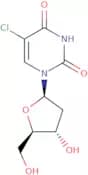
Produto descontinuado5-Chloro-2'-deoxyuridine
CAS:5-Chloro-2'-deoxyuridine is a nucleoside analog that inhibits DNA synthesis by inhibiting the enzyme thymidylate synthetase. It has been used for the treatment of bladder cancer and may also be beneficial in treating other cancers such as colon cancer. 5-Chloro-2'-deoxyuridine is taken up from the intestine by cells, where it is converted to thymidine monophosphate and then to thymidine diphosphate, which inhibits DNA synthesis by interfering with cell division. The mechanism of action is similar to that of cytosine arabinoside, but it does not require activation by intracellular enzymes. 5-Chloro-2'-deoxyuridine can cause cell lysis and can inhibit protease activity during cell culture, which makes it a useful tool for purifying proteins or peptides. The drug has been shown to be an analog of cytosine arabinos
Fórmula:C9H11ClN2O5Pureza:Min. 98 Area-%Cor e Forma:White PowderPeso molecular:262.65 g/mol5-Fluorouridine-5'-triphosphate triethylammonium salt - aqueous solution
5-Fluorouridine-5'-triphosphate triethylammonium salt - aqueous solution is an activated nucleoside that is synthesized from the triethylamine salt of 5-fluorouridine. This product has antiviral and anticancer activities, and can be used as a DNA-synthesizing agent in the synthesis of deoxyribonucleosides. It has been shown to inhibit replication of human immunodeficiency virus (HIV) by inhibiting viral reverse transcriptase, as well as cytomegalovirus (CMV) by inhibiting viral DNA polymerase.
Fórmula:C33H74N6O15P3FPureza:Min. 95%Cor e Forma:Colorless PowderPeso molecular:906.89 g/molRef: 3D-NF157285
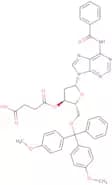
Produto descontinuadoN6-Benzoyl-2'-deoxy-5'-O-DMT-adenosine 3'-O-succinate triethylammonium salt
CAS:N6-Benzoyl-2'-deoxy-5'-O-DMT-adenosine 3'-O-succinate triethylammonium salt is a novel nucleoside analog that has antiviral and anticancer properties. It is a ribonucleotide with an N6-(benzoyl)-2'-deoxyadenosine base linked to the 3' position of the sugar through an acetyl group, with a succinic acid moiety at the 5' position. This drug inhibits DNA synthesis and has been shown to block HIV replication in vitro. It also has activity against human papillomavirus type 16 (HPV16) infections in vivo.
Fórmula:C42H39N5O9·C6H15NPureza:Min. 95%Cor e Forma:PowderPeso molecular:858.98 g/molRef: 3D-NB10413
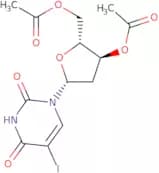
Produto descontinuado3',5'-Di-O-acetyl-2'-deoxy-5-iodouridine
CAS:3',5'-Di-O-acetyl-2'-deoxy-5-iodouridine is an inorganic, deoxyribonucleoside. It is the acetyl derivative of 2'-deoxy-5-iodouridine, which is an analog of uracil. 3',5'-Di-O-acetyl-2'-deoxy-5-iodouridine has been shown to have antiviral properties against herpes simplex virus type 1 (HSV1) and herpes simplex virus type 2 (HSV2) in animals. This drug also has antiangiogenic properties, inhibiting the growth of new blood vessels and tissues at the site of a tumour. Studies have shown that 3',5'-di-O acetyl 2'-deoxyuridine can be incorporated into exudates from human cancer patients and can inhibit tumor cell proliferation in vivo.
Fórmula:C13H15IN2O7Pureza:Min. 95%Peso molecular:438.18 g/mol8-Azido-ATP-γ-biotin sodium
8-Azido-ATP is a novel nucleoside that has been shown to be an activator of DNA and RNA synthesis in human cells. It is synthesized by the enzymatic transfer of a gamma-biotin moiety from ATP to dATP, resulting in 8-azido-ATP. This drug has antiviral and anticancer activity and has been shown to inhibit the replication of HIV. The 8-azido-ATP can be used as an activator for purine nucleotide incorporation into DNA or RNA, which may help with cancer treatment or prevention. 8-Azido-ATP also inhibits the growth of certain viruses, such as herpes simplex virus type 1 (HSV1) and cytomegalovirus (CMV).Fórmula:C25H41N12O14P3S•NaxPureza:Min. 95%Cor e Forma:White/Off-White SolidPeso molecular:858.65 g/mol2'-Deoxyinosine
CAS:2'-Deoxyinosine is an antimicrobial peptide that has been shown to have potent activity against Gram-positive bacteria, including Staphylococcus aureus. 2'-Deoxyinosine binds to the 3′-hydroxyl group of nucleic acid, preventing DNA replication and transcription. This binding also prevents ribosomal RNA from binding to the ribosome, inhibiting protein synthesis. 2'-Deoxyinosine has been detected using a highly sensitive optical sensor and can be used as a model system for studying the interaction between dsDNA duplexes and other biomolecules. The pharmacokinetic properties of this molecule have been determined in rats by measuring its concentration in serum over time after injection. These data were then used to determine the amount of 2'-deoxyinosine that was needed to inhibit bacterial growth in water samples.
Fórmula:C10H12N4O4Pureza:Min. 98 Area-%Cor e Forma:White PowderPeso molecular:252.23 g/molRef: 3D-ND05750
Produto descontinuadoStavudine 5'-triphosphate sodium salt - 100 mM aqueous solution
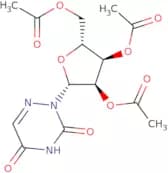
Stavudine 5'-triphosphate sodium salt is a modified nucleoside analog with antiviral and anticancer properties. It is a phosphoramidate of stavudine, which has been modified by the replacement of the L-cysteine moiety with a 2-thiophenecarboxamide group. The novel chemical structure of stavudine 5'-triphosphate sodium salt leads to higher solubility in water than other analogues and improved pharmacokinetics. Stavudine 5'-triphosphate sodium salt is an activator for the synthesis of DNA, RNA, and protein. It also inhibits viral replication by interfering with viral DNA polymerase and ribonucleotide reductase, which are essential enzymes for viral replication.Fórmula:C10H17N2O13P3·xNaPureza:Min. 95 Area-%Cor e Forma:Clear LiquidPeso molecular:466.17 g/mol2',3',5'-Tri-O-acetyl-6-azauridine
CAS:2',3',5'-Tri-O-acetyl-6-azauridine is a nucleoside analog for research purposes. The replacement of a carbon atom with a nitrogen atom on the uracil base affects how the molecule interacts with cellular processes. It has the potential to interfere with normal metabolic processes within cells, particularly those related to RNA synthesis. Due to its ability to disrupt cell growth, it could be studied for any potential antiviral or antitumor properties.
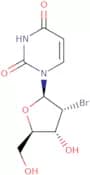
Fórmula:C14H17N3O9Pureza:Min. 95%Cor e Forma:PowderPeso molecular:371.3 g/mol2'-Bromo-2'-deoxyuridine
CAS:2'-Bromo-2'-deoxyuridine is a synthetic nucleoside analog of deoxyuridine, in which the 2'-hydroxyl group of the ribose sugar is replaced with a bromine atom (Br) at the 2' position. This modification allows it to be incorporated into DNA during DNA synthesis, where it can replace the normal thymidine. This molecule can potentially be used in molecular biology and cell biology as a thymidine analog to study DNA replication, cell proliferation, and DNA repair.
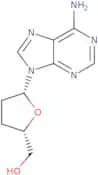
Fórmula:C9H11BrN2O5Pureza:Min. 95%Cor e Forma:PowderPeso molecular:307.1 g/mol2',3'-Dideoxyadenosine
CAS:2',3'-Dideoxyadenosine is a nucleoside analog that inhibits HIV replication and is a competitive inhibitor of adenylyl cyclase. This latter action reduces levels of cyclic adenosine monophosphate (cAMP)
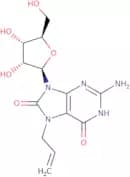
Fórmula:C10H13N5O2Pureza:Min. 95%Cor e Forma:PowderPeso molecular:235.25 g/mol7-Allyl-7,8-dihydro-8-oxoguanosine
CAS:Agonist of toll-like receptors TLR7
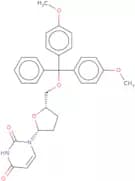
Fórmula:C13H17N5O6Pureza:Min. 95%Cor e Forma:White PowderPeso molecular:339.3 g/mol2',3'-Dideoxy-5'-O-DMT-uridine
CAS:2',3'-Dideoxy-5'-O-DMT-uridine is a nucleoside for use in research applications
Fórmula:C30H30N4O6Pureza:Min. 95%Cor e Forma:White To Off-White SolidPeso molecular:514.58 g/molRef: 3D-ND08411
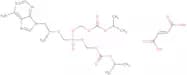
Produto descontinuadoTenofovir disoproxil fumarate
CAS:Anti-viral; reverse transcriptase inhibitor
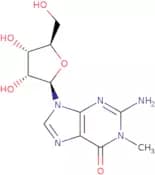
Fórmula:C23H34N5O14PPureza:Min. 97.5 Area-%Cor e Forma:White Off-White PowderPeso molecular:635.52 g/molN1-Methylguanosine
CAS:Produto ControladoN1-Methylguanosine is a methylated nucleotide that is incorporated into the growing DNA chain during protein synthesis. The incorporation of N1-methylguanosine into the growing DNA chain can cause frameshifting, which creates an unusual amino acid sequence. This effect has been shown in model organisms, such as Saccharomyces cerevisiae and Escherichia coli. In these organisms, N1-methylguanosine has been shown to induce cancer when added to the growth medium. It is also found in urine samples from people with bladder cancer and has been used to identify urinary tract cancers. Titration calorimetry studies have shown that N1-methylguanosine binds to a chelate ligand and forms a disulfide bond with cysteine residues on proteins or peptides, which may lead to mitochondrial dysfunction by interfering with hydrogen bonding interactions. Messenger RNA studies show that N1-methylguanosine inhibits translation of mRNA by binding to
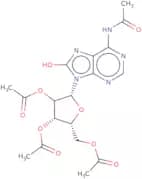
Fórmula:C11H15N5O5Pureza:Min. 95%Cor e Forma:White PowderPeso molecular:297.27 g/molN6-Acetyl-2',3',5'-tri-O-acetyl-8-hydroxyadenosine
N6-Acetyl-2',3',5'-tri-O-acetyl-8-hydroxyadenosine is a modified nucleoside that is used in the synthesis of oligonucleotides. It is an activator with antiviral and anticancer properties, as well as various other biological activities. The CAS number for this product is 91359-02-2. The purity of this product ranges from 99% to 100%. This chemical has not been previously synthesized and has not been modified by any substituents or moieties.
Fórmula:C18H21N5O9Pureza:Min. 95%Cor e Forma:PowderPeso molecular:451.39 g/molRef: 3D-NA08462
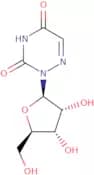
Produto descontinuado6-Azauridine
CAS:Inhibitor of uridine monophosphate synthase
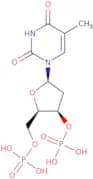
Fórmula:C8H11N3O6Pureza:Min. 95%Cor e Forma:White PowderPeso molecular:245.19 g/molThymidine-3',5'-diphosphate sodium salt
CAS:Thymidine-3',5'-diphosphate sodium salt is a nucleoside that is used in the synthesis of oligonucleotides. It is an antiviral and anticancer agent. Thymidine-3',5'-diphosphate sodium salt has been shown to inhibit DNA synthesis, leading to cell death. It also has been shown to be effective against Hepatitis B virus and HIV-1.
Fórmula:C10H16N2O11P2·xNaPureza:Min. 98 Area-%Cor e Forma:White PowderPeso molecular:402.19 g/molRef: 3D-NT09781
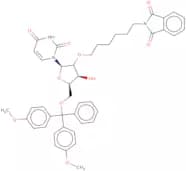
Produto descontinuado5'-O-DMT-2'-O-hexylphthalimidouridine
5'-O-DMT-2'-O-hexylphthalimidouridine is a novel nucleoside analog with anticancer activity. It is a modified nucleoside that has been synthesized and purified in high purity. 5'-O-DMT-2'-O-hexylphthalimidouridine is an activator of DNA and RNA synthesis and has antiviral properties. It also inhibits the production of tumor necrosis factor alpha (TNFα) by human synovial cells. This compound binds to the RNA polymerase II enzyme, which prevents transcription of genetic material from DNA templates into messenger RNA. This leads to inhibition of protein synthesis and cell death by apoptosis.
Fórmula:C44H45N3O10Pureza:Min. 95%Peso molecular:775.86 g/molRef: 3D-ND08415
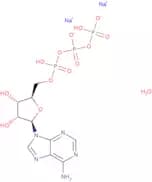
Produto descontinuadoAdenosine 5'-triphosphate disodium salt hydrate
CAS:Adenosine 5'-triphosphate disodium salt hydrate (ATP 2Na) is a nucleoside triphosphate acting as the essential part of energy storage and metabolism in vivo. It plays a crucial role in many biological processes including neurotransmission, signal transduction, muscle contraction and cardiac function, often described as the "molecular unit of currency" for intracellular energy transfer.
Fórmula:C10H14N5Na2O13P3·xH2OPureza:Min. 97 Area-%Cor e Forma:White PowderPeso molecular:551.14 g/mol