Fonte Botânica
Foram encontrados 502 produtos para "Fonte Botânica".
- Preços em ordem crescente
- Preços em ordem decrescente
- Menor grau de pureza
- Maior grau de pureza
- Estimativa de entrega mais rápida
20-(S)-Ginsenoside F2
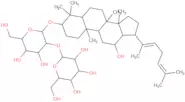
CAS:20-(S)-Ginsenoside F2 is a bioactive compound isolated from the roots of Panax ginseng, a plant renowned for its diverse pharmacological properties. As a saponin glycoside, it is derived through the enzymatic hydrolysis of major ginsenosides like Rb1. The compound functions primarily through modulating various cellular pathways, including apoptosis, autophagy, and inflammation via its interaction with membrane receptors and intracellular signaling molecules.Fórmula:C42H72O13Pureza:Min. 95%Cor e Forma:White PowderPeso molecular:785.01 g/molMogroside III A1
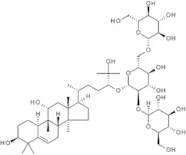
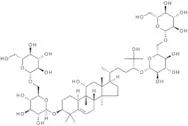
CAS:Mogroside III A1 is a triterpene glycoside, which is derived from the fruit of Siraitia grosvenorii, commonly known as monk fruit. This compound is a significant component of the sweet profile associated with the fruit and is extracted through carefully controlled processes to maintain its structural integrity.Fórmula:C48H82O19Pureza:Min. 95%Cor e Forma:White PowderPeso molecular:963.15 g/molEllagic acid
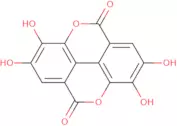
CAS:Derived from berries and grapes; antioxidant; antiproliferativeFórmula:C14H6O8Pureza:(Hplc) Min. 95.0%Cor e Forma:PowderPeso molecular:302.19 g/molRebaudioside G
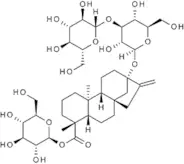
CAS:Rebaudioside G is a steviol glycoside, which is a natural sweetening compound derived from the leaves of the plant Stevia rebaudiana. This compound is one of several glycosides responsible for the sweet taste of stevia, which is native to South America and has been used for centuries for its sweetness.
Fórmula:C38H60O18Pureza:Min. 95 Area-%Cor e Forma:White PowderPeso molecular:804.87 g/molTroxerutin
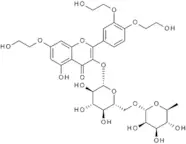
CAS:Troxerutin is a flavonoid compound, which is derived from the natural bioflavonoid rutin, typically sourced from plants such as Sophora japonica. Its mode of action is primarily through its vasoprotective, antioxidant, and anti-inflammatory properties. Troxerutin acts by stabilizing vascular endothelial cells, reducing capillary permeability, and enhancing microcirculation. It also scavenges free radicals and inhibits lipid peroxidation, which helps in mitigating oxidative stress.Fórmula:C33H42O19Pureza:Min. 95%Cor e Forma:Yellow PowderPeso molecular:742.68 g/molChonglou Saponin VII
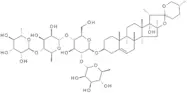
CAS:Chonglou Saponin VII is a bioactive glycoside, which is derived from the rhizomes of traditional Chinese medicinal plants, often sourced from the species Paris polyphylla. As a steroidal saponin, its mechanism of action involves altering cellular activities by interacting with cell membranes and signaling pathways, leading to a range of pharmacological effects.
Fórmula:C51H82O21Pureza:Min. 95%Cor e Forma:PowderPeso molecular:1,031.18 g/molKaempferol 3-O-gentiobioside
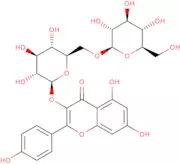
CAS:Kaempferol 3-O-gentiobioside is a flavonoid glycoside, which is a naturally occurring compound commonly found in a variety of plant sources, including fruits, vegetables, and herbs. It is specifically derived from plants such as the Ginkgo biloba and other botanical sources that synthesize kaempferol derivatives as secondary metabolites.
Fórmula:C27H30O16Pureza:Min. 95%Cor e Forma:SolidPeso molecular:610.52 g/molDulcoside A
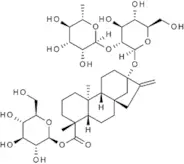
CAS:Dulcoside A is a natural sweetening agent, which is a type of steviol glycoside. It is derived from the leaves of the Stevia rebaudiana plant, a perennial shrub native to regions in Paraguay and Brazil. The mode of action of Dulcoside A involves its interaction with taste receptors on the human tongue, particularly the T1R2/T1R3 sweet taste receptor, to produce a sensation of sweetness.Fórmula:C38H60O17Pureza:Min. 93 Area-%Cor e Forma:PowderPeso molecular:788.87 g/molDiammonium glycyrrhizinate
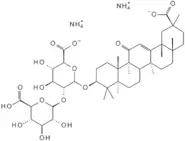
CAS:Diammonium glycyrrhizinate is a bioactive compound, which is derived from the licorice root, Glycyrrhiza glabra. This product functions primarily as an anti-inflammatory agent by modulating the body's immune response and inhibiting enzymes that promote inflammation, such as cyclooxygenase and lipoxygenase. Its mode of action involves the suppression of pro-inflammatory cytokines, which can lead to reduced inflammation and relief from related symptoms.Fórmula:C42H68N2O16Pureza:Min. 95%Cor e Forma:PowderPeso molecular:856.99 g/molRutin
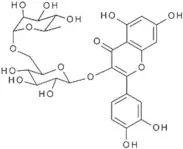
CAS:Capillary protectant; free radical scavenger; antioxidantFórmula:C27H30O16Pureza:Min. 95%Cor e Forma:Yellow PowderPeso molecular:610.52 g/molMogroside IVa
CAS:Mogroside IVa is a triterpene glycoside, which is a type of natural sweetening compound, derived primarily from the fruit of Siraitia grosvenorii, commonly known as monk fruit. The compound is extracted from the fruit through a meticulous process that ensures the preservation of its natural properties. The mode of action of Mogroside IVa involves its interaction with taste receptors on the tongue, where it delivers intense sweetness, often several hundred times sweeter than sucrose, without providing caloric value. Additionally, studies suggest that this mogroside exhibits antioxidant activities, potentially neutralizing free radicals and protecting against cellular damage.Fórmula:C54H92O24Pureza:Min. 95%Cor e Forma:White PowderPeso molecular:1,125.29 g/molCamelliaside A
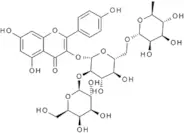
CAS:Camelliaside A is a saponin compound, which is a type of secondary metabolite predominantly occurring in certain plant species. It is derived from the seeds of Camellia sinensis, commonly known as the tea plant. The molecular structure of Camelliaside A features a glycosidic linkage, contributing to its bioactive properties.
Fórmula:C33H40O20Pureza:Min. 95%Cor e Forma:SolidPeso molecular:756.66 g/molGinsenoside Rg5
CAS:Ginsenoside Rg5 is a bioactive compound, which is a saponin extracted from Panax ginseng. This herbal source, particularly its root, has been used in traditional medicine for centuries. Ginsenoside Rg5 exhibits its mode of action primarily through modulating intracellular signaling pathways, enhancing antioxidant activity, and exerting anti-inflammatory effects. It has shown the ability to interact with cellular receptors and enzymes, impacting biological processes at the molecular level.Fórmula:C42H70O12Pureza:Min. 95%Cor e Forma:White PowderPeso molecular:767 g/molAescin monosodium salt
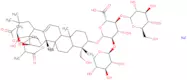
CAS:Aescin monosodium salt is a semisynthetic, anti-inflammatory product derived from escin, which is a mixture of saponins extracted from horse chestnut seeds (Aesculus hippocastanum). It functions primarily by enhancing the integrity of venous walls and decreasing vascular permeability. This is achieved through the stabilization of lysosomal membranes and the inhibition of enzymes that contribute to the breakdown of the vascular endothelium, as well as promoting the release of prostaglandins with vasoprotective properties.Fórmula:C55H86NaO24Pureza:Min. 95%Peso molecular:1,154.25 g/molPeonidin-3-O-rutinoside chloride
CAS:Peonidin-3-O-rutinoside chloride is an anthocyanin compound, which is a type of flavonoid pigment. This compound is naturally sourced from various plant species, prominently found in berries and flowers, contributing to their rich red and purple hues. The mode of action of Peonidin-3-O-rutinoside chloride involves its potent antioxidant capabilities, scavenging free radicals and reducing oxidative stress in biological systems. Additionally, it can modulate cell signaling pathways, influencing gene expression and enzyme activities related to inflammation and cancer progression.Fórmula:C28H33O15ClPureza:Min. 95%Cor e Forma:PowderPeso molecular:645.01 g/molIsoacteoside
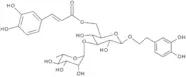
CAS:Isoacteoside is a phenylethanoid isolated from Monochasma savatieri Franch. ex Maxim., which is an anti-inflammatory herb widely used in traditional Chinese medicine. Isoacteoside is also reported as a potential therapeutic for Alzheimers disease. The memory-improving mechanism of isoacteoside involves reducing amyloid β peptide deposition and amyloid β cytotoxicity by inhibiting amyloid β oligomerization through the catechol moiety. This promotes amyloid β degradation and reversing cortical cholinergic dysfunction, which includes the inhibition of AChE activity (Young-Ji, 2017).
Fórmula:C29H36O15Pureza:Min. 93 Area-%Cor e Forma:PowderPeso molecular:624.59 g/molIsoliquiritin apioside
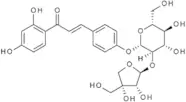
CAS:Isoliquiritin apioside is a flavonoid glycoside, which is a compound derived from licorice root (Glycyrrhiza species). It exhibits a range of biological activities by influencing various cellular and molecular pathways, often involving antioxidant and anti-inflammatory mechanisms. These effects are primarily mediated through its interaction with cellular signaling cascades, potentially modulating gene expression and enzyme activity.
Fórmula:C26H30O13Pureza:Min. 95%Cor e Forma:PowderPeso molecular:550.51 g/mol