Monossacáridos
Monossacarídeos são a forma mais simples de carboidratos e servem como building blocks fundamentais para açúcares mais complexos e polissacarídeos. Essas moléculas de açúcar único desempenham papéis críticos no metabolismo energético, na comunicação celular e nos componentes estruturais das células. Nesta seção, você encontrará uma ampla variedade de monossacarídeos essenciais para pesquisas em bioquímica, biologia molecular e glicociência. Esses compostos são cruciais para estudar vias metabólicas, processos de glicosilação e desenvolvimento de agentes terapêuticos. Na CymitQuimica, oferecemos monossacarídeos de alta qualidade para apoiar suas necessidades de pesquisa, garantindo precisão e confiabilidade em suas investigações científicas.
Subcategorias de "Monossacáridos"
- Aloses(11 produtos)
- Arabinoses(21 produtos)
- Eritroses(11 produtos)
- Frutoses(9 produtos)
- Fucoses(36 produtos)
- Galactosamina(41 produtos)
- Galactoses(260 produtos)
- Glucoses(365 produtos)
- Ácidos Glucurónicos(51 produtos)
- Glico-substratos para enzimas(77 produtos)
- Guloses(6 produtos)
- Idoses(4 produtos)
- Inositóis(15 produtos)
- Lixoses(4 produtos)
- Mannoses(65 produtos)
- O-Glicanos(48 produtos)
- Psicoses(3 produtos)
- Ramnoses(10 produtos)
- Riboses(61 produtos)
- Ácidos siálicos(100 produtos)
- Sorboses(4 produtos)
- Açúcares(173 produtos)
- Tagatoses(4 produtos)
- Taloses(8 produtos)
- Xiloses(20 produtos)
Exibir 17 mais subcategorias
Foram encontrados 6088 produtos de "Monossacáridos"
Ordenar por
Pureza (%)
0
100
|
0
|
50
|
90
|
95
|
100
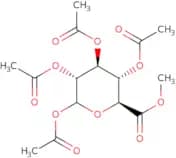
1,2,3,4-Tetra-O-acetyl-D-glucuronide methyl ester
CAS:<p>1,2,3,4-Tetra-O-acetyl-D-glucuronide methyl ester is a lactone that can be used as a precursor for the synthesis of various types of compounds. The chemical structure was determined by high-resolution x-ray diffraction to be a planar molecule with two conformations: one where the four acetyl groups are on different sides and another where they are all on the same side. The latter conformation is more stable due to the dihedral angle between the hydroxyl group and carbonyl group. This compound is an intermediate in synthesizing 2-(4'-hydroxybenzoyl)-1,2,3,4-tetra-O-acetyl-.alpha.-D-.beta.-D glucopyranoside methyl ester by reacting with 3-(3'-azido)benzaldehyde. The single crystal x-ray diffraction study revealed that this compound has a conformation</p>Fórmula:C15H20O11Pureza:Min. 97 Area-%Cor e Forma:White PowderPeso molecular:376.31 g/molD-Gluconic acid potassium salt
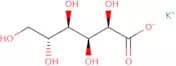
CAS:<p>D-Gluconic acid potassium salt is a glycol ether with biochemical properties that can be used to synthesize covalent linkages. It has been shown to have antimicrobial properties in wild-type strains of Escherichia coli and Salmonella typhimurium. D-Gluconic acid potassium salt has been shown to exhibit inhibitory effects on the synthesis of DNA, RNA, and protein, as well as enzyme activities. The matrix effect is an analytical method that measures the inhibition of bacterial growth in agar plates. Electrochemical impedance spectroscopy (EIS) is a technique that measures changes in electrical resistance when bacteria are placed on an electrode surface. This technique has been used to show that D-gluconic acid potassium salt exhibits inhibitory effects against group P2 enzymes, such as polymerase chain reaction (PCR), which is used for DNA replication and amplification.</p>Fórmula:C6H11KO7Pureza:Min. 95%Peso molecular:234.25 g/mol2,3,4,6-Tetra-O-acetyl-a-D-mannopyranosyl azide
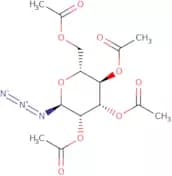
CAS:<p>2,3,4,6-Tetra-O-acetyl-a-D-mannopyranosyl azide is a crystalline solid that can be obtained by heating 2,3,4,6-tetra-O-acetyl-a-D-mannopyranose with sodium azide. This compound has been used in the x-ray crystallographic technique for obtaining electron density maps. The x ray data collected from this compound showed the distinct difference between the electron density of the atoms and their surroundings.</p>Fórmula:C14H19N3O9Cor e Forma:PowderPeso molecular:373.32 g/molNystatin A3
CAS:<p>8,9-Dideoxy-28,29-dihydro-7,10-dihydroxy-35-O-(2,6-dideoxy-L-ribo-hexopyranosyl)amphotericin B is an antifungal drug that belongs to the class of polyene macrolides. It is a potent inhibitor of Candida albicans and Candida glabrata. This compound has been shown to have synergistic effects when used in combination with nystatin against C. albicans. 8,9-Dideoxy-28,29-dihydro-7,10-dihydroxy-35O-(2,6 - dideoxy - L - ribo - hexopyranosyl)amphotericin B also inhibits toll like receptor 4 (TLR4), which is responsible for the induction of inflammatory cytokines such as IL1B and IL8</p>Fórmula:C53H85NO20Pureza:Min. 95%Peso molecular:1,056.24 g/molD-Mannose tablets
CAS:<p>Please enquire for more information about D-Mannose tablets including the price, delivery time and more detailed product information at the technical inquiry form on this page</p>Fórmula:C6H12O6Pureza:Min. 95%Cor e Forma:PowderPeso molecular:180.16 g/mol2-Benzamido-2-deoxy-D-glucopyranose
CAS:<p>2-Benzamido-2-deoxy-D-glucopyranose is a synthetic, inexpensive, and non-toxic compound that has antibiotic properties. It is used as a reagent for the sulfonylating of aromatic rings and as an intermediate in the synthesis of other compounds. 2-Benzamido-2-deoxy-D-glucopyranose can be radiolabeled with carbon or fluorine atoms to form a resonance labeled probe that can be used in magnetic resonance spectroscopy.</p>Fórmula:C13H17NO6Pureza:Min. 95%Cor e Forma:White PowderPeso molecular:283.28 g/molDipyridamole di-O-b-D-glucuronide
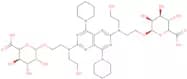
CAS:<p>Dipyridamole di-O-b-D-glucuronide is a fluorinated oligosaccharide that has been synthesized using the click chemistry reaction. It is a monosaccharide that has been glycosylated and modified with methyl groups to produce a high purity product. The carbohydrate consists of one or more sugar units linked by glycosidic bonds. Carbohydrates are classified by their number of sugar units and by the presence of other chemical groups such as phosphate, sulfate, or hydroxyl. This product is also used in the synthesis of complex carbohydrates and polysaccharides.</p>Fórmula:C36H56N8O16Pureza:Min. 95%Peso molecular:856.87 g/molN-Propionyl-D-glucosamine
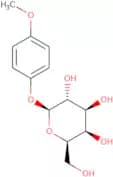
CAS:<p>N-Propionyl-D-glucosamine is a sugar used in the synthesis of peptidoglycan, a structural component of bacterial cell walls. N-Propionyl-D-glucosamine is synthesized from formaldehyde and propionic acid. It is used as an antibiotic to treat bacterial infections caused by Gram-positive bacteria such as streptococci and staphylococci. N-Propionyl-D-glucosamine has also been shown to have anti-fungal properties against Candida albicans and Saccharomyces cerevisiae. The biosynthesis of this compound takes place through phosphorylation of the amide group on the sugar residue, which is catalyzed by a number of enzymes including phosphotransacetylase, acetate kinase, and phosphoenolpyruvate synthase. This process requires ATP, phosphate ions, ammonium ion, and water molecules.</p>Fórmula:C9H17NO6Pureza:Min. 95%Cor e Forma:White PowderPeso molecular:235.23 g/mol4-Methoxyphenyl β-D-galactopyranoside
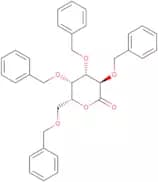
CAS:<p>4-Methoxyphenyl b-D-galactopyranoside is a custom synthesis of a sugar with an active methyl group. It is synthesized by the Click modification of 4-hydroxyphenyl b-D-galactopyranoside and has been fluorinated. The glycosylation process has been carried out using glycone as a precursor to modify the monosaccharide and oligosaccharide. This product has a CAS number of 3150-20-7 and is considered a synthetic compound.</p>Fórmula:C13H18O7Pureza:Min. 95%Cor e Forma:PowderPeso molecular:286.28 g/mol2,3,4,6-Tetra-O-benzyl-D-galactono-1,5-lactone
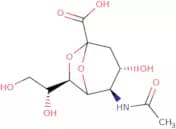
CAS:<p>2,3,4,6-Tetra-O-benzyl-D-galactono-1,5-lactone is an aldehyde that has been synthesized from tert-butyl bromoacetate and ethynyl acetate in the presence of cesium carbonate. It is an exocyclic aldehyde that forms a cyclic ester with glycine. The synthetic pathway was stereoselective because the exocyclic double bond was only formed on one face of the molecule. This product can be used as an intermediate for the synthesis of glycine analogues and glycines.</p>Fórmula:C34H34O6Pureza:Min. 95%Peso molecular:538.63 g/molN-Acetyl-2,7-anhydro-a-neuraminic acid
CAS:<p>N-Acetyl-2,7-anhydro-a-neuraminic acid is a synthetic derivative of a naturally occurring sugar that is found in the human brain and other tissues. It has been proposed as a potential drug for the treatment of inflammatory bowel disease due to its ability to inhibit the growth of cells in the colon and prevent inflammation. N-Acetyl-2,7-anhydro-a-neuraminic acid has been shown to have antiinflammatory properties by inhibiting the synthesis of proinflammatory cytokines. This compound binds to an enzyme called galactosamine kinase, which is involved in making certain proteins that are necessary for inflammation. The chemical structure of N-Acetyl-2,7-anhydro-a-neuraminic acid was determined through structural analysis and carbon source titration calorimetry. Magnetic resonance spectroscopy showed that this compound reacts with water molecules and chemical ionization revealed that it</p>Fórmula:C11H17NO8Pureza:Min. 95%Peso molecular:291.25 g/mol4-Nitrobenzyl β-D-thiogalactopyranoside
CAS:<p>4-Nitrobenzyl b-D-thiogalactopyranoside is a synthetic glycosylation agent that can be used for the modification of saccharides and oligosaccharides. The product is available in different purity grades, custom synthesis, and custom modifications.</p>Fórmula:C13H17NO7SPureza:Min. 95%Peso molecular:331.34 g/mol5-Thio-L-fucose
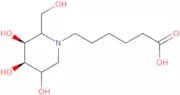
CAS:<p>5-Thio-L-fucose is a sugar that is found in a variety of tissues and organs. It has been shown to inhibit the antibody-dependent cellular cytotoxicity (ADCC) by binding to the Fc portion of IgG antibodies, which are used to target and destroy cancer cells. 5-Thio-L-fucose has also been shown to modulate the effector functions of natural killer cells and enhance the glycan profile of dendritic cells. It may be useful as a supplement for patients undergoing chemotherapy or radiation therapy, where it may help inhibit the growth of tumor cells. 5-Thio-L-fucose inhibits ADCC activity by binding to IgG antibodies, preventing them from attaching to immune cells, which would otherwise act as effectors in destroying tumor cells. This inhibition can be reversed with a competitive inhibitor such as D-arabinose.</p>Fórmula:C6H12O4SPureza:Min. 95%Peso molecular:180.22 g/molN-5-Carboxypentyl-1-deoxygalactonojirimycin
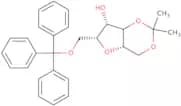
CAS:<p>N-5-Carboxypentyl-1-deoxygalactonojirimycin is an inhibitor of glycolipid hydrolase and a potential drug for the treatment of lysosomal storage disorders. N-5-Carboxypentyl-1-deoxygalactonojirimycin is derived from the natural product galactonojirimycin, which has been shown to inhibit glycolipid hydrolase in vitro. The compound was developed by modifying the peptide sequence to increase its affinity for the enzyme. N-5-Carboxypentyl-1-deoxygalactonojirimycin displays a higher affinity for glycolipid hydrolase than galactonojirimycin, and it also has a greater inhibitory effect on this enzyme.<br>N-5-Carboxypentyl-1-deoxygalactonojirimycin is</p>Fórmula:C12H23NO6Pureza:Min. 95%Cor e Forma:White PowderPeso molecular:277.31 g/mol2,5-Anhydro-1,3-O-isopropylidene-6-O-trityl-D-glucitol
CAS:<p>2,5-Anhydro-1,3-O-isopropylidene-6-O-trityl-D-glucitol is a complex carbohydrate that is synthesized by the modification of glucose. This product has been modified with methylation and glycosylation.<br>2,5-Anhydro-1,3-O-isopropylidene-6-O-trityl--D--glucitol is a white powder that is soluble in water and ethanol. <br>It can be used for fluoroquinolone resistance studies, which are important for developing new antibiotics to combat bacterial infections.</p>Fórmula:C28H30O5Pureza:Min. 95%Peso molecular:446.53 g/molD-Arabinose-5-phosphate
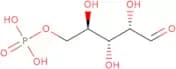
CAS:<p>D-Arabinose-5-phosphate is an intermediate in the pentose phosphate pathway. It is synthesized from D-xylulose-5-phosphate by xylitol dehydrogenase. D-Arabinose-5-phosphate inhibits the enzyme xylitol dehydrogenase, which converts xylulose to d-xylulose, and thus prevents the formation of 5-hydroxyisoxazole phosphate, a precursor to the synthesis of NADPH. In this way, it blocks the synthesis of NADPH, which is essential for aerobic metabolism. This inhibition leads to a decrease in ATP production and consequently cell death.</p>Fórmula:C5H11O8PPureza:Min. 95%Peso molecular:230.11 g/molOctanoyl b-D-glucosylamine
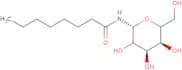
CAS:<p>Octanoyl b-D-glucosylamine is a synthetic compound that has been designed for use in the synthesis of complex carbohydrates. It is an octanoyl derivative of D-glucosamine, which is a sugar. This compound can be used for the modification of saccharides and polysaccharides, as well as sugars. It has been shown to be resistant to glycosylation and fluorination reactions.</p>Fórmula:C14H27NO6Pureza:Min. 95%Peso molecular:305.37 g/mol6-Chloro-6-deoxy-D-mannose
CAS:<p>6-Chloro-6-deoxy-D-mannose is a naturally occurring sugar that is found in the spermatozoa of many animals. It is a mannose derivative that has been shown to be an inhibitor of the enzyme glyceraldehyde 3-phosphate dehydrogenase, which plays an important role in energy metabolism and isomerization of 6-phosphate to glucose-1 phosphate. This property may be responsible for its contraceptive effects. The drug also inhibits phosphoglucomutase and enhances the transfer of glucose from the liver to other tissues, increasing blood glucose concentrations. 6-Chloro-6 deoxy mannose also has antifertility effects in rats by inhibiting transfer of spermatozoa through the female reproductive tract.</p>Fórmula:C6H11ClO5Pureza:Min. 95%Cor e Forma:White Off-White PowderPeso molecular:198.6 g/mol3-Azido-3-deoxy-1,2-O-isopropylidene-a-D-ribofuranose
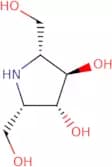
CAS:<p>3-Azido-3-deoxy-1,2-O-isopropylidene-a-D-ribofuranose is a synthetic carbohydrate that contains fluorine and is used as a glycosylation and methylation reagent. It has been shown to react with various saccharides, including glucose, maltose, lactose, sucrose, and cellobiose. In addition to its use in glycosylation reactions, 3-azido-3-deoxy-1,2-O-isopropylidene -a D ribofuranose can be used for click chemistry. This reagent is available in high purity and is synthesized from the natural sugar ribofuranose.</p>Pureza:Min. 95%2,5-Dideoxy-2,5-imino-D-glucitol
CAS:<p>2,5-Dideoxy-2,5-imino-D-glucitol is a potent inhibitor of glycosidases. It has been shown to have significant antifungal activity against Candida albicans in the caco-2 cell model system. 2,5-Dideoxy-2,5-imino-D-glucitol inhibits β-(1→3)-glycosidase activity by binding to the active site of the enzyme and preventing substrate hydrolysis. The compound is also an enantiopure and asymmetric synthesis. This drug has been shown to be a model system for studying glycosidase inhibition.</p>Fórmula:C6H13NO4Pureza:Min. 95%Peso molecular:163.17 g/mol