Monossacáridos
Monossacarídeos são a forma mais simples de carboidratos e servem como building blocks fundamentais para açúcares mais complexos e polissacarídeos. Essas moléculas de açúcar único desempenham papéis críticos no metabolismo energético, na comunicação celular e nos componentes estruturais das células. Nesta seção, você encontrará uma ampla variedade de monossacarídeos essenciais para pesquisas em bioquímica, biologia molecular e glicociência. Esses compostos são cruciais para estudar vias metabólicas, processos de glicosilação e desenvolvimento de agentes terapêuticos. Na CymitQuimica, oferecemos monossacarídeos de alta qualidade para apoiar suas necessidades de pesquisa, garantindo precisão e confiabilidade em suas investigações científicas.
Subcategorias de "Monossacáridos"
- Aloses(11 produtos)
- Arabinoses(21 produtos)
- Eritroses(11 produtos)
- Frutoses(9 produtos)
- Fucoses(36 produtos)
- Galactosamina(41 produtos)
- Galactoses(260 produtos)
- Glucoses(365 produtos)
- Ácidos Glucurónicos(51 produtos)
- Glico-substratos para enzimas(77 produtos)
- Guloses(6 produtos)
- Idoses(4 produtos)
- Inositóis(15 produtos)
- Lixoses(4 produtos)
- Mannoses(65 produtos)
- O-Glicanos(48 produtos)
- Psicoses(3 produtos)
- Ramnoses(10 produtos)
- Riboses(61 produtos)
- Ácidos siálicos(100 produtos)
- Sorboses(4 produtos)
- Açúcares(173 produtos)
- Tagatoses(4 produtos)
- Taloses(8 produtos)
- Xiloses(20 produtos)
Exibir 17 mais subcategorias
Foram encontrados 6088 produtos de "Monossacáridos"
Ordenar por
Pureza (%)
0
100
|
0
|
50
|
90
|
95
|
100
Bacillithiol trifluoroacetic acid salt
CAS:<p>Bacillithiol (BSH) is a low molecular weight thiol molecule produced in Bacilli, which is also found in Firmicutes bacteria. It plays an important role in maintaining the balance of reactive oxygen species within cells and detoxifying certain harmful compounds. It is the α-anomeric glycoside of L-cysteinyl-D-glucosamine with L-malic acid and it seems to have antioxidant properties. Bacillithiol plays an important role in bacterial redox homeostasis and plays an important role in the detoxification of electrophiles as it is a cofactor for FosB (thiol transferase). <br>This is the salt form (trifluoroacetic acid salt, TFA) of Bacillithiol.</p>Fórmula:C13H22N2O10S·CF3CO2HPureza:Min. 95 Area-%Cor e Forma:Colorless Clear LiquidPeso molecular:512.41 g/molMycophenolic acid acyl-b-D-glucoside
CAS:<p>Metabolite of Mycophenolic acid</p>Fórmula:C23H30O11Pureza:Min. 95%Peso molecular:482.48 g/molForodesine
CAS:<p>Forodesine is a purine nucleoside that inhibits the nucleoside phosphorylase enzyme and prevents the synthesis of purines. It has minimal toxicity and is effective against intracellular targets such as mitochondria, which are important for apoptosis induction. Forodesine also inhibits the mcl-1 protein, which is an inhibitor of t-cell lymphomas. This drug has been shown to be effective in animal models of human lymphoma and leukemia.</p>Fórmula:C11H14N4O4Pureza:Min. 95%Cor e Forma:PowderPeso molecular:266.25 g/mol3,6’-Disinapoyl sucrose
CAS:<p>3,6’-Disinapoyl sucrose is a saponin that has been shown to be neuroprotective and antidepressant. It is also able to increase the absorption of drugs in the gastrointestinal tract. 3,6’-Disinapoyl sucrose was found to have neurotrophic effects on neurons and inhibit glutamate-induced excitotoxicity. 3,6’-Disinapoyl sucrose has been shown to inhibit the mineralocorticoid receptor in vitro and may be useful as an antihypertensive agent. 3,6’-Disinapoyl sucrose can be used for clinical use in the treatment of depression and other neurological disorders such as Alzheimer's disease.</p>Fórmula:C34H42O19Pureza:Min. 95%Cor e Forma:PowderPeso molecular:754.69 g/mol2-Deoxy-2-fluoro-D-fucose
<p>2-Deoxy-2-fluoro-D-fucose is a custom synthesis, which is a complex carbohydrate. It has CAS No. and polysaccharide modification and can be methylated, glycosylated, or fluorinated. The molecular weight of this product is high purity and it can be used as a sugar or carbohydrate. Click modification is possible with 2-deoxy-2 fluoro-D-fucose.</p>Fórmula:C6H11FO4Pureza:Min. 95%Cor e Forma:PowderPeso molecular:166.15 g/mol2,4-Dinitrophenyl 3,4,6-tri-O-acetyl-2-deoxy-2-fluoro-b-D-galactoside
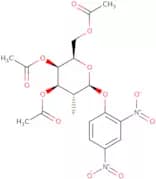
CAS:<p>2,4-Dinitrophenyl 3,4,6-tri-O-acetyl-2-deoxy-2-fluoro-b-D-galactoside is a glycosidase inhibitor that is used in the validation of β-glucosidases. It has been shown to inhibit the activity of a number of glycosidases, including α-, β-, and γ-. 2,4-Dinitrophenyl 3,4,6-tri-O-acetyl -2 -deoxy -2 -fluoro -b D galactoside inhibits the hydrolysis of oligosaccharides containing a terminal α-- or β--glucose moiety to produce smaller sugars. This compound can be used as an acceptor for spectrophotometric assays and as an analytical standard for measuring the degree of polymerization (DP) of oligosaccharides. The rate of its reaction with gly</p>Fórmula:C18H19FN2O12Pureza:Min. 95%Cor e Forma:PowderPeso molecular:474.35 g/molMefenamic acid-acyl-b-D-glucuronide
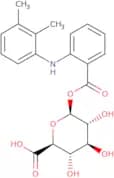
CAS:<p>Mefenamic acid-acyl-b-D-glucuronide is a synthetic drug that binds to albumin and human serum albumin. It has been shown to irreversibly inhibit human UDP-glucuronosyltransferase, an enzyme in the human liver that catalyzes the addition of glucuronic acid to drugs and other xenobiotics. Mefenamic acid-acyl-b-D-glucuronide has also been shown to inhibit the activity of a wide range of enzymes in humans, including isoenzyme UGT1A6, which is found in the liver and kidney. This drug has been studied as a potential treatment for pain and inflammation in humans.</p>Fórmula:C21H23NO8Pureza:Min. 95%Cor e Forma:White To Off-White SolidPeso molecular:417.41 g/mol5-azido-5-deoxy-D-arabinose
CAS:<p>5-azido-5-deoxy-D-arabinose is a compound derived from Aquilaria sinensis that has various biological activities. It has been shown to modulate transmembrane conductance by interacting with fatty acid-binding proteins and divalent metal ions. Additionally, it can regulate the activity of potassium channels, which play a crucial role in cellular function. 5-azido-5-deoxy-D-arabinose is known for its reactive properties and can form covalent adducts with nucleophilic residues in proteins, affecting their structure and function. This compound has also been studied for its potential therapeutic applications, such as enhancing the delivery of iron sucrose through electrode-based systems or improving the bioavailability of drugs like ketorolac or creatine. Furthermore, 5-azido-5-deoxy-D-arabinose exhibits interesting carbohydrate chemistry, making it a valuable tool for carbohydrate synthesis and modification. Its diverse characteristics and unique properties make it an intriguing compound for further</p>Fórmula:C5H9N3O4Pureza:Min. 95%11a-Hydroxy progesterone b-D-glucuronide
CAS:<p>11a-Hydroxy progesterone b-D-glucuronide is a fluorinated steroid that is synthesized with high purity. It has been modified with methylation and glycosylation. 11a-Hydroxy progesterone b-D-glucuronide is a complex carbohydrate, which consists of saccharides in the form of oligosaccharides. The sugar in 11a-hydroxy progesterone b-D-glucuronide is a monosaccharide, which can be modified with fluorination or click chemistry to create a new compound. This product has CAS No. 77710-64-6 and can be custom synthesized to meet your specifications.</p>Fórmula:C27H38O9Pureza:Min. 95%Cor e Forma:PowderPeso molecular:506.59 g/molUDP-b-L-arabinofuranose
CAS:<p>UDP-b-L-arabinofuranose is a custom synthesis product that is used to modify polysaccharides. It is a high purity sugar nucleotide. UDP-b-L-arabinofuranose has CAS number 331001-44-6.</p>Fórmula:C14H22N2O16P2Pureza:Min. 95%Cor e Forma:PowderPeso molecular:536.28 g/mola-D-Glucose
CAS:<p>Glucose is a monosaccharide that is an important source of energy for the human body. It is a simple sugar found in many carbohydrates and is the main form of fuel used by the brain. Glucose is also used as a chemical building block for polysaccharides such as glycogen, cellulose, and chitin. The hypoglycemic effect of glucose can be observed when blood glucose levels are below 70 mg/dL. This effect can be due to its ability to increase the production of insulin or decrease the rate of gluconeogenesis in liver cells. It also has been shown to have an inhibitory effect on some viruses and bacteria, which may be due to its ability to inhibit transcription activators or polymerase chain reactions.</p>Fórmula:C6H12O6Pureza:Min. 96 Area-%Cor e Forma:White PowderPeso molecular:180.16 g/molMethyl 2-deoxy-L-ribofuranoside
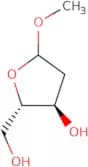
CAS:<p>Methyl 2-deoxy-L-ribofuranoside is an intermediate in the synthesis of l-arabinose. It can be obtained by the reaction of methyl 2,3-dideoxy-D-ribofuranoside with pivaloyl chloride. The antiviral activity of this compound has been shown by its ability to inhibit the replication of influenza A virus. Methyl 2-deoxy-L-ribofuranoside is a fluorinating agent that can be used for the synthesis of oligosaccharides and nucleosides. This intermediate also serves as a substrate for a number of organic reactions, including regioselective and stereoselective chlorination.</p>Fórmula:C6H12O4Pureza:Min. 95%Cor e Forma:PowderPeso molecular:148.16 g/molFerulic acid acyl-b-D-glucoside
CAS:<p>Ferulic acid acyl-b-D-glucoside is a flavonoid compound that has been shown to have antioxidant properties. It is found in plants and can be synthesized by the enzyme phenylalanine ammonia-lyase. Ferulic acid acyl-b-D-glucoside is insoluble in water, but soluble in organic solvents such as ethanol and acetone. The chemical composition of ferulic acid acyl-b-D-glucoside is not well understood, but it has been shown to contain chalcone, chlorogenic acids, aldehydes, celosianin, and betanidin.</p>Pureza:Min. 95%N-Benzoyl-D-glucosamine
CAS:<p>Lectins are carbohydrate-binding proteins that can be classified into different types based on their specificities for glycan structures. One of the most common types is the N-acetyl-D-glucosamine (NAG) lectin, which binds to oligomers of NAG and related sugars. Lectins are used to activate cells and induce cell death. The dodecyl NAG lectin has been shown to bind to glucocerebrosides in a reductively irreversible manner and has been used as a model for such interactions. This lectin is also inexpensively produced from a synthetic benzylidene acetal, which can be made from commercially available materials. It has been shown that this lectin binds to polyacrylamide gels in an SDS-polyacrylamide gel electrophoresis, with a pH optimum at 7.0 and an amino acid composition that includes glutamic acid, glutamine, asparagine, ser</p>Fórmula:C13H17NO6Pureza:Min. 95%Cor e Forma:White PowderPeso molecular:283.28 g/molb-D-Galactopyranosyl nitromethane
CAS:<p>b-D-Galactopyranosyl nitromethane is a high purity sugar with various modifications. It is custom synthesized to order and is available in various purity grades. This sugar can be modified by fluorination, glycosylation, methylation, or modification with oligosaccharides or monosaccharides. The CAS number for this sugar is 81846-64-2. b-D-Galactopyranosyl nitromethane High purity, Custom synthesis, sugar, Click modification, Fluorination, Glycosylation, Synthetic, Methylation, Modification, Oligosaccharide, Monosaccharide CAS No. 81846-64-2</p>Fórmula:C7H13NO7Pureza:Min. 95%Peso molecular:223.2 g/mol2,3,4,6-Tetra-O-benzoyl-a-D-mannopyranosyl trichloroacetimidate
CAS:<p>Glycosyl-donor for syntheses of mannosyl-glycoconjugates</p>Fórmula:C36H28Cl3NO10Pureza:Min. 95%Cor e Forma:White PowderPeso molecular:740.98 g/molMethyl 1-C-[4-chloro-3-[[4-[[(3S)-tetrahydro-3-furanyl]oxy]phenyl]methyl]phenyl]-a-D-glucopyranoside
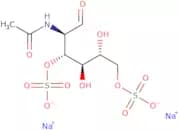
CAS:<p>Intermediate in the synthesis of empagliflozin</p>Fórmula:C24H29ClO8Pureza:Min. 95%Peso molecular:480.94 g/molN-Acetyl-D-glucosamine-3-6-di-O-sulfate sodium
CAS:<p>N-Acetyl-D-glucosamine-3-6-di-O-sulfate sodium salt is a synthetic oligosaccharide. It is a fluorinated glycosylic acid glycosidase, an enzyme that catalyzes the hydrolysis of beta-(1,2)-glycosidic linkages in polysaccharides. This product can be custom synthesized to meet your specifications and can be modified with methylation or click modification for your specific needs.</p>Fórmula:C8H15NO12S2•Na2Pureza:(13C-Nmr Spectrum) Min. 95%Cor e Forma:White PowderPeso molecular:427.32 g/molCornuside
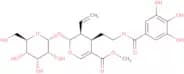
CAS:<p>Cornuside is a natural compound that is found in the fruits of Cornus. It is a dihydrochalcone, which has been shown to have hypoglycemic effects and inhibit the activity of 5-hmf. Cornuside also inhibits the enzyme activities involved in energy metabolism, such as glucose-6-phosphate dehydrogenase and hexokinase. It has also been shown to have genotoxic properties and induce DNA damage. Cornuside may be useful for treating diabetes or cancer, but further research needs to be done before this can be confirmed.</p>Fórmula:C24H30O14Pureza:Min. 95%Cor e Forma:PowderPeso molecular:542.49 g/mol2,3,4,6-Tetra-O-acetyl-D-mannopyranose
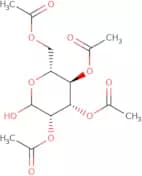
CAS:<p>2,3,4,6-Tetra-O-acetyl-D-mannopyranose is a stereoselective technique used for the production of trisaccharides. It is also an acetylated form of D-mannopyranose that is obtained by acetylation of D-mannopyranose with acetic anhydride in the presence of hydrochloric acid or pyridine. The compound can be obtained as either levorotatory or dextrorotatory isomers depending on whether the hydroxyl group or carbonyl group are in the axial position. 2,3,4,6-Tetra-O-acetyl-D-mannopyranose can be used as a substrate for enzyme preparations to produce aminoglycoside antibiotics such as hygromycin A. Acetylation increases the solubility and stability of this drug and reduces its toxicity to humans</p>Fórmula:C14H20O10Pureza:Min. 98 Area-%Cor e Forma:White PowderPeso molecular:348.3 g/mol






![Methyl 1-C-[4-chloro-3-[[4-[[(3S)-tetrahydro-3-furanyl]oxy]phenyl]methyl]phenyl]-a-D-glucopyranosi…](/_next/image/?url=https%3A%2Fstatic.cymitquimica.com%2Fproducts%2F3D%2Fthumb-webp%2FMM137435.webp&w=3840&q=75)