Monossacáridos
Monossacarídeos são a forma mais simples de carboidratos e servem como building blocks fundamentais para açúcares mais complexos e polissacarídeos. Essas moléculas de açúcar único desempenham papéis críticos no metabolismo energético, na comunicação celular e nos componentes estruturais das células. Nesta seção, você encontrará uma ampla variedade de monossacarídeos essenciais para pesquisas em bioquímica, biologia molecular e glicociência. Esses compostos são cruciais para estudar vias metabólicas, processos de glicosilação e desenvolvimento de agentes terapêuticos. Na CymitQuimica, oferecemos monossacarídeos de alta qualidade para apoiar suas necessidades de pesquisa, garantindo precisão e confiabilidade em suas investigações científicas.
Subcategorias de "Monossacáridos"
- Aloses(11 produtos)
- Arabinoses(21 produtos)
- Eritroses(11 produtos)
- Frutoses(9 produtos)
- Fucoses(36 produtos)
- Galactosamina(41 produtos)
- Galactoses(260 produtos)
- Glucoses(365 produtos)
- Ácidos Glucurónicos(51 produtos)
- Glico-substratos para enzimas(77 produtos)
- Guloses(6 produtos)
- Idoses(4 produtos)
- Inositóis(15 produtos)
- Lixoses(4 produtos)
- Mannoses(65 produtos)
- O-Glicanos(48 produtos)
- Psicoses(3 produtos)
- Ramnoses(10 produtos)
- Riboses(61 produtos)
- Ácidos siálicos(100 produtos)
- Sorboses(4 produtos)
- Açúcares(173 produtos)
- Tagatoses(4 produtos)
- Taloses(8 produtos)
- Xiloses(20 produtos)
Exibir 17 mais subcategorias
Foram encontrados 6088 produtos de "Monossacáridos"
Ordenar por
Pureza (%)
0
100
|
0
|
50
|
90
|
95
|
100
Ferulic acid acyl-b-D-glucoside
CAS:<p>Ferulic acid acyl-b-D-glucoside is a flavonoid compound that has been shown to have antioxidant properties. It is found in plants and can be synthesized by the enzyme phenylalanine ammonia-lyase. Ferulic acid acyl-b-D-glucoside is insoluble in water, but soluble in organic solvents such as ethanol and acetone. The chemical composition of ferulic acid acyl-b-D-glucoside is not well understood, but it has been shown to contain chalcone, chlorogenic acids, aldehydes, celosianin, and betanidin.</p>Pureza:Min. 95%Methyl 2-deoxy-L-ribofuranoside
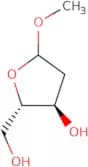
CAS:<p>Methyl 2-deoxy-L-ribofuranoside is an intermediate in the synthesis of l-arabinose. It can be obtained by the reaction of methyl 2,3-dideoxy-D-ribofuranoside with pivaloyl chloride. The antiviral activity of this compound has been shown by its ability to inhibit the replication of influenza A virus. Methyl 2-deoxy-L-ribofuranoside is a fluorinating agent that can be used for the synthesis of oligosaccharides and nucleosides. This intermediate also serves as a substrate for a number of organic reactions, including regioselective and stereoselective chlorination.</p>Fórmula:C6H12O4Pureza:Min. 95%Cor e Forma:PowderPeso molecular:148.16 g/molD-Arabinose-5-phosphate
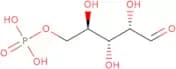
CAS:<p>D-Arabinose-5-phosphate is an intermediate in the pentose phosphate pathway. It is synthesized from D-xylulose-5-phosphate by xylitol dehydrogenase. D-Arabinose-5-phosphate inhibits the enzyme xylitol dehydrogenase, which converts xylulose to d-xylulose, and thus prevents the formation of 5-hydroxyisoxazole phosphate, a precursor to the synthesis of NADPH. In this way, it blocks the synthesis of NADPH, which is essential for aerobic metabolism. This inhibition leads to a decrease in ATP production and consequently cell death.</p>Fórmula:C5H11O8PPureza:Min. 95%Peso molecular:230.11 g/mol2,5-Anhydro-D-glucitol-1,6-diphosphate
CAS:<p>2,5-Anhydro-D-glucitol-1,6-diphosphate is a cell signaling molecule that is involved in the regulation of glycolysis and the phosphofructokinase enzyme. It binds to platelets and regulates platelet aggregation. This enzyme has been shown to be a potential drug target for cancer. Cancer cells have been found to contain higher concentrations of 2,5-Anhydro-D-glucitol-1,6-diphosphate than their normal counterparts. The increased concentration of this enzyme in cancer cells is due to an allosteric change in the enzyme’s activity. The increased activity leads to a more rapid metabolism of glucose, which provides energy for tumor growth and metastasis. This enzyme can be used as a marker for malignancy in human diseases such as breast cancer or prostate cancer.</p>Fórmula:C6H14O11P2Pureza:Min. 98%Cor e Forma:Clear LiquidPeso molecular:324.12 g/mol4-Methoxyphenyl 3-O-allyl-b-D-galactopyranoside
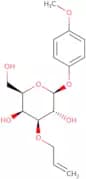
CAS:<p>4-Methoxyphenyl 3-O-allyl-b-D-galactopyranoside is an antigen that is found on the surface of chronic lymphocytic leukemia cells. It is a highly reactive antibody that has been shown to be able to induce monoclonal antibody production in animals and humans. The antigen was first discovered in tissues from patients with chronic lymphocytic leukemia, but it has also been identified in tissues from other animals, including rabbits, rats, guinea pigs, and mice. 4MP3AG binds to the CD20 surface antigen on B cells. This binding leads to a conformational change in the antigen and exposes a new epitope on the molecule for binding by antibodies. The resulting antibodies are then used as diagnostic tools for chronic lymphocytic leukemia.</p>Fórmula:C16H22O7Pureza:Min. 95%Cor e Forma:PowderPeso molecular:326.34 g/mol2,3,4,6-Tetra-O-benzyl-5-thio-D-glucono-1,5-lactone
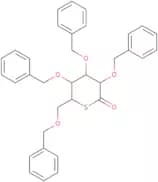
CAS:<p>2,3,4,6-Tetra-O-benzyl-5-thio-D-glucono-1,5-lactone is a complex carbohydrate that can be modified with methylation and glycosylation. It is a saccharide that can be modified by fluorination and click modification. This compound is synthesized by the polymerization of allose in the presence of an enzyme to produce 2,3,4,6-tetra-O-(benzyloxymethyl)-5-thio--D--glucono--1,5--lactone.</p>Fórmula:C34H34O5SPureza:Min. 95%Peso molecular:554.7 g/molD-Glucose-6-phosphate barium hepthydrate
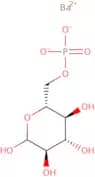
CAS:<p>D-Glucose-6-phosphate barium salt is a custom synthesis that is prepared by modification of D-glucose with phosphoric acid, fluorination, methylation, and monosaccharide. This compound is a synthetic carbohydrate that belongs to the category of oligosaccharides and polysaccharides. It has a molecular weight of 583.12 g/mol and an empirical formula of C7H8O10P2Ba. The CAS number for this compound is 150400-00-3.</p>Fórmula:C6H11BaO9P•(H2O)7Pureza:Min. 95%Cor e Forma:PowderPeso molecular:521.55 g/mol2-Acetamido-3,4,6-tri-O-acetyl-1-O-[(N-Cbz-aminoethoxy)ethoxy]-2-deoxy-β-D-galactopyranose
CAS:<p>2-Acetamido-3,4,6-tri-O-acetyl-1-O-[(N-Cbz-aminoethoxy)ethoxy]-2-deoxy-b-D-galactopyranose is a custom synthesis of a complex carbohydrate. It is a polysaccharide that contains fluorine and has been modified with methylation, glycosylation, click modification, and polysaccharide modifications. 2-Acetamido-3,4,6-tri-O -acetyl -1 -O-[(N -Cbz -aminoethoxy)ethoxy] -2 deoxy b D galactopyranose is also known as CAS No. 1261568 35 7 and it's molecular weight is 546.81 g/mol.</p>Fórmula:C26H36N2O12Pureza:Min. 95%Peso molecular:568.57 g/molD-Fructose 1-phosphate barium salt trihydrate
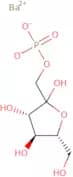
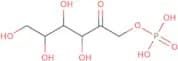
CAS:<p>D-Fructose 1-phosphate barium salt trihydrate is a custom synthesis, high purity sugar. It has been modified with fluorination, glycosylation, and methylation. D-Fructose 1-phosphate barium salt trihydrate is made from the modification of various sugars such as oligosaccharides and monosaccharides to form complex carbohydrates. It can be used for Click modification or in the synthesis of glycoconjugates. D-Fructose 1-phosphate barium salt trihydrate is also known as saccharide.</p>Fórmula:C6H11BaO9P·3H2OPureza:Min. 95%Cor e Forma:Yellow PowderPeso molecular:449.49 g/molBenzyl 2-acetamido-2-deoxy-α-D-glucopyranoside
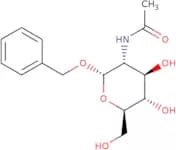
CAS:<p>Benzyl 2-acetamido-2-deoxy-α-D-glucopyranoside is a synthetic compound with a molecular weight of 342.45 g/mol. It is a white to pale yellow crystalline solid that is soluble in water and methanol. The chemical formula for this compound is C12H14N2O6 and its structural formula is represented as CH2(COOCH3)COOC8H11O6. The CAS number for this compound is 13343-62-9, and the IUPAC name for it is benzyl 2-(2-acetamido)-2,3,4,5,6-pentaacetoxy αDglucopyranoside. This compound has been used in methylation reactions and click chemistry applications due to its ability to form stable carbonyl bonds with other molecules. Benzyl 2-(2-acetamido)-2,3,4,5,6</p>Fórmula:C15H21NO6Pureza:Min. 98 Area-%Cor e Forma:White PowderPeso molecular:311.33 g/molD-Gluconic acid sodium salt
CAS:<p>D-Gluconic acid sodium salt is a glycol ether that is used as an injection solution. It has been shown to have antibacterial efficacy against wild-type strains of bacteria such as Escherichia coli, Pseudomonas aeruginosa, and Staphylococcus aureus. The in vitro antimicrobial action of D-gluconic acid sodium salt was found to be due to its ability to inhibit bacterial growth by interfering with the synthesis of DNA. D-Gluconic acid sodium salt also has been shown to have antihypertensive effects in rats through the inhibition of angiotensin II type 1 receptor (AT1) signaling pathway and erythrocyte proliferation. This drug also has been shown to bind benzalkonium chloride and x-ray diffraction data show that it is crystalline in nature. The analytical method for determining the concentration of D-gluconic acid sodium salt is by electrochemical impedance</p>Fórmula:C6H11NaO7Pureza:Min. 95%Cor e Forma:White PowderPeso molecular:218.14 g/molN-Oleoyl-N-methyltaurine sodium salt
CAS:<p>N-Oleoyl-N-Methyltaurine sodium salt is a glycol ether that has been shown to be an effective transport inhibitor for fatty acids. It inhibits the growth of bacteria and fungi by interfering with the cell membrane lipid synthesis. N-Oleoyl-N-Methyltaurine sodium salt also has anti-inflammatory properties, which may be due to its ability to inhibit prostaglandin synthesis.</p>Fórmula:C21H40NO4S·NaPureza:Min. 30.00%Peso molecular:425.6 g/molCornuside
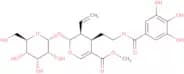
CAS:<p>Cornuside is a natural compound that is found in the fruits of Cornus. It is a dihydrochalcone, which has been shown to have hypoglycemic effects and inhibit the activity of 5-hmf. Cornuside also inhibits the enzyme activities involved in energy metabolism, such as glucose-6-phosphate dehydrogenase and hexokinase. It has also been shown to have genotoxic properties and induce DNA damage. Cornuside may be useful for treating diabetes or cancer, but further research needs to be done before this can be confirmed.</p>Fórmula:C24H30O14Pureza:Min. 95%Cor e Forma:PowderPeso molecular:542.49 g/mol5-Thio-L-fucose
CAS:<p>5-Thio-L-fucose is a sugar that is found in a variety of tissues and organs. It has been shown to inhibit the antibody-dependent cellular cytotoxicity (ADCC) by binding to the Fc portion of IgG antibodies, which are used to target and destroy cancer cells. 5-Thio-L-fucose has also been shown to modulate the effector functions of natural killer cells and enhance the glycan profile of dendritic cells. It may be useful as a supplement for patients undergoing chemotherapy or radiation therapy, where it may help inhibit the growth of tumor cells. 5-Thio-L-fucose inhibits ADCC activity by binding to IgG antibodies, preventing them from attaching to immune cells, which would otherwise act as effectors in destroying tumor cells. This inhibition can be reversed with a competitive inhibitor such as D-arabinose.</p>Fórmula:C6H12O4SPureza:Min. 95%Peso molecular:180.22 g/molEthyl 2-acetamido-3,4,6-tri-O-acetyl-2-deoxy-a-D-thioglucopyranoside
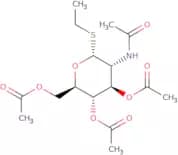
CAS:<p>Ethyl 2-acetamido-3,4,6-tri-O-acetyl-2-deoxy-a-D-thioglucopyranoside is a sugar derived from the condensation of two molecules of acetamide with three molecules of glucose. It is a synthetic compound that has been modified by fluorination, methylation, and monosaccharide synthesis. This product has been shown to be effective against bacteria and fungi in laboratory studies.</p>Fórmula:C16H25NO8SPureza:Min. 95%Cor e Forma:White To Off-White SolidPeso molecular:391.44 g/mol2,4-O-Benzylidene-L-xylose
CAS:<p>2,4-O-Benzylidene-L-xylose is a white crystalline powder with a melting point of about 125°C. It is an acetate salt that can be used in the synthesis of many natural products. It has been shown to inhibit HMG-CoA reductase and is used in the treatment of hypercholesterolemia. The reaction mechanism for this compound is not well understood, but it is believed to involve an acid catalyst and an organic solvent. The yield for this compound is low and it requires a long reaction time due to its high reactivity.</p>Fórmula:C12H14O5Pureza:Min. 95%Peso molecular:238.24 g/molCoumaric acid 4-O-glucoside
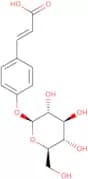
CAS:<p>Coumaric acid 4-O-glucoside is a compound that is found in plants and can be extracted from flaxseed. It has been shown to have antioxidative activity, especially in the prevention of oxidation of fatty acids. Coumaric acid 4-O-glucoside has also been shown to inhibit the synthesis of n-3 fatty acids and secoisolariciresinol, as well as to regulate the biosynthesis of these lipids. The efficient method for preparing this compound is by hydrolysis of coumaroyl ester linkages using hydrochloric acid in methanol. Coumaric acid 4-O-glucoside was synthesized by reacting methyl acetoacetate with sodium hydroxide and hydrochloric acid in methanol at a temperature range of 0°C to 25°C. This reaction was followed by purification using phase liquid chromatography.</p>Fórmula:C15H18O8Pureza:Min. 95%Peso molecular:326.3 g/molL-Sorbose-1-phosphate disodium
CAS:<p>A sugar phosphate. Typically supplied as the sodium salt.</p>Fórmula:C6H13O9P•Na2Pureza:Min. 95%Peso molecular:306.10 g/molGDP-L-[1-13C]fucose disodium salt
CAS:<p>Labelled substrate for fucosyltransferase</p>Pureza:Min. 95%Fulvestrant 17-b-D-glucuronide
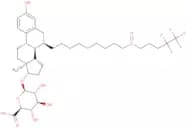
CAS:<p>Fulvestrant 17-b-D-glucuronide is a synthetic, high purity, custom synthesis of fulvestrant. It is modified with click chemistry and contains saccharides and oligosaccharides. Fulvestrant 17-b-D-glucuronide is used in the treatment of hormone receptor positive breast cancer in postmenopausal women who have been previously treated with an aromatase inhibitor.</p>Fórmula:C38H55F5O9SPureza:Min. 95%Peso molecular:782.9 g/mol



![2-Acetamido-3,4,6-tri-O-acetyl-1-O-[(N-Cbz-aminoethoxy)ethoxy]-2-deoxy-β-D-galactopyranose](/_next/image/?url=https%3A%2Fstatic.cymitquimica.com%2Fproducts%2F3D%2Fthumb-webp%2FMA137616.webp&w=3840&q=75)




![GDP-L-[1-13C]fucose disodium salt](/_next/image/?url=https%3A%2Fstatic.cymitquimica.com%2Fproducts%2F3D%2Fthumb-webp%2FMG170098.webp&w=3840&q=75)