APIs para pesquisa e impurezas
Subcategorias de "APIs para pesquisa e impurezas"
- Aminoácidos e Derivados(12.444 produtos)
- Antraquinonas e Derivados(407 produtos)
- Derivados de Benzimidazol e Imidazol(10.465 produtos)
- Derivados das Benzodiazepinas(335 produtos)
- Carboidratos e Glicoconjugados(5.390 produtos)
- Ésteres e Derivados(42.308 produtos)
- Ácidos Graxos e Derivados Lipídicos(32.489 produtos)
- Flavonoides e Polifenóis(17.102 produtos)
- Radicais Livres e Agentes Oxidantes/Redutores(215 produtos)
- Cetonas e Derivados(2.692 produtos)
- Antibióticos Naturais e Semissintéticos(6.414 produtos)
- Nitrilas e Derivados Ciano(3.070 produtos)
- Nitrosaminas e Derivados(55 produtos)
- Nucleosídeos e Nucleotídeos(3.494 produtos)
- Fosfatos e Fosfonatos Orgânicos(1.205 produtos)
- Sulfonatos e Sulfatos Orgânicos(10.452 produtos)
- Compostos Organometálicos(4.425 produtos)
- Outros(6.340 produtos)
- Peptídeos e Proteínas(3.162 produtos)
- Polímeros e Derivados(100 produtos)
- Derivados de Purinas e Pirimidinas(8.976 produtos)
- Derivados de Quinazolina e Quinolina(66.237 produtos)
- Quinonas e Derivados(24.381 produtos)
- Sais e Derivados de API(92.986 produtos)
- Esteroides e Derivados(4.987 produtos)
- Sulfonamidas e Derivados(2.607 produtos)
- Terpenoides e Derivados(3.871 produtos)
- Tiazolidinedionas e Tiopiranos(2.755 produtos)
- Compostos β-Adrenérgicos(232 produtos)
Foram encontrados 66910 produtos de "APIs para pesquisa e impurezas"
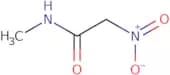
N-Methylnitroacetamide
CAS:N-Methylnitroacetamide is a pyridinium salt used as an additive in pharmaceutical preparations. It is also a drug substance that is used for oral dosage, and has been shown to be active in methylene chloride and organic solvents. This chemical has been found to have a number of impurities, including acidic compounds and organic solvents, which can cause it to degrade over time. The use of this compound requires validation and kinetic studies to ensure it meets the quality standards for its intended use.Fórmula:C3H6N2O3Pureza:Min. 95%Cor e Forma:PowderPeso molecular:118.09 g/mol4-[2'-(7''-Deazaguanine)ethyl]benzoic acid N-hydroxysuccinimide ester
CAS:4-[2'-(7''-Deazaguanine)ethyl]benzoic acid N-hydroxysuccinimide ester is a useful intermediate in the synthesis of 7''-deazaguanine, which is a key building block in the synthesis of DNA. 4-[2'-(7''-Deazaguanine)ethyl]benzoic acid N-hydroxysuccinimide ester is a versatile building block that can be used in the synthesis of complex compounds. It has been shown to react with amines, sulfonyl chlorides, and epoxides to form amides, sulfonamides, and epoxy amines respectively. The CAS number for this compound is 204257-65-8.Fórmula:C19H17N5O5Pureza:Min. 95%Peso molecular:395.37 g/molN-[1-(R)-(+)-(2-Naphthyl)ethyl]-3-[3-(trifluoromethyl)phenyl]-1-aminopropane hydrochloride
CAS:N-[1-(R)-(+)-(2-Naphthyl)ethyl]-3-[3-(trifluoromethyl)phenyl]-1-aminopropane hydrochloride is a metabolite that is produced by the metabolism of naphthalene. It is an impurity in the naphthalene standard, which is used as an API to assess the purity of other substances. N-[1-(R)-(+)-(2-Naphthyl)ethyl]-3-[3-(trifluoromethyl)phenyl]-1-aminopropane hydrochloride has been shown to be a substrate for CYP2D6. This metabolite is also found in pharmaceuticals and other drugs.Fórmula:C22H22F3N•HClPureza:Min. 95%Peso molecular:393.87 g/molBiotin impurity C
CAS:Biotin impurity C is a metabolite that is found in drugs that contain biotin. It is an impurity standard for HPLC analysis, which can be used to identify and quantify the amount of biotin in a drug product. Biotin impurity C is also used as an analytical standard. This compound has been shown to have pharmacological properties, such as anti-inflammatory effects and immunomodulatory effects.Fórmula:C9H14N2O2SPureza:Min. 95%Peso molecular:214.28 g/mol2-[4-(2-Methylpropanoyl)phenyl] propanoic acid
CAS:2-[4-(2-Methylpropanoyl)phenyl] propanoic acid is a pharmaceutical intermediate that is used for the production of carprofen. It has been found to be an analytical method for the determination of 4-hydroxybenzoic acid and 4-isobutylacetophenone. The compound is analyzed by chromatographic methods and electrophoresis methods. The optimization of the solvent composition, flow rate, and impurities during the synthesis process are also studied in this research. 2-[4-(2-Methylpropanoyl)phenyl] propanoic acid has been found to be a meaningful validation of analytical methods for medicines, with an impurity limit of 0.1%.Fórmula:C13H16O3Pureza:Min. 98 Area-%Cor e Forma:PowderPeso molecular:220.26 g/molEthyl 3-aminopyrazole-4-carboxylate
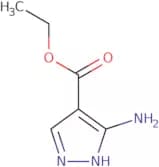
CAS:Ethyl 3-aminopyrazole-4-carboxylate is an anticancer drug that inhibits the growth of cancer cells by inhibiting protein synthesis. It has been shown to inhibit the activity of dpp-iv and pde5, which are enzymes involved in cellular proliferation. Ethyl 3-aminopyrazole-4-carboxylate has also been shown to have antiinflammatory properties, which may be due to inhibition of prostaglandin synthesis.
Ethyl 3-aminopyrazole-4-carboxylate is a multinuclear compound that reacts with nitrogen atoms from the pyrazoles to form a stable molecule. Dimethylformamide is used as a solvent for this reaction. The synthesis of ethyl 3-aminopyrazole-4-carboxylate starts with acetylation, which converts the carboxylic acid group into an acetic acid group. The acetic acid group reacts with ammonia and hydrogen cyanFórmula:C6H9N3O2Pureza:Min. 95%Cor e Forma:PowderPeso molecular:155.16 g/molAtorvastatin impurity F
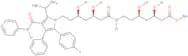
CAS:Atorvastatin impurity F is an impurity that can be found in atorvastatin. It is a white to off-white crystalline solid with a melting point of 142°C. It has a molecular weight of 273.5 and chemical formula of C14H13N3O2. This impurity can be found in atorvastatin as an API impurity, which may have an effect on the efficacy or toxicity of the drug product. Impurities are present in all pharmaceutical products and should be identified, characterized, and quantified for quality control purposes. Impurities are often unavoidable byproducts of the manufacturing process and can lead to potential safety concerns if they are not detected early on during drug development. The presence of impurities may also affect the pharmacological effects or therapeutic efficacy of the drug product.
Fórmula:C40H47FN3O8NaPureza:Min. 95%Cor e Forma:PowderPeso molecular:739.8 g/mol(-)-9-Hydroxyrisperidone
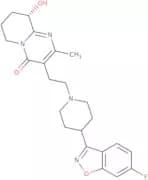
CAS:Produto Controlado(-)-9-Hydroxyrisperidone is a metabolite of risperidone that is structurally related to the neurotransmitter dopamine. This compound has been found to be a potent antagonist of serotonin and adrenergic receptors, which may contribute to its therapeutic effects in schizophrenia. (-)-9-Hydroxyrisperidone also has been shown to have a high affinity for human liver plasma proteins, which suggests it may be responsible for the long half-life seen with risperidone. The (+) form of the drug has been shown to be more potent than (-)-9-hydroxyrisperidone, while (-)-9-hydroxyrisperidone is more selective in terms of receptor binding.Fórmula:C23H27FN4O3Pureza:Min. 95%Cor e Forma:PowderPeso molecular:426.48 g/molBiotin impurity C 2HCl
CAS:Biotin impurity C 2HCl is an analytical standard impurity in drug product. It is a bivalent form of biotin, which is a natural amide with the chemical formula C 20 H 27 ClN 2 O 4 S. It has been synthesized and characterized as a custom synthesis. The purity of this compound meets the requirements of pharmacopoeia.Fórmula:C9H16N2O2SCl2Pureza:Min. 95%Peso molecular:287.21 g/molN4-Acetyl sulfadoxine
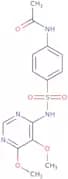
CAS:N4-Acetyl sulfadoxine is a drug that is used to treat urinary tract infections in women and children. It is also used to treat bacterial infections of the skin, lungs, and joints. N4-Acetyl sulfadoxine may be effective against prostatitis caused by E. coli or Mycoplasma pneumoniae by inhibiting the production of prostaglandins. This drug works by binding to dihydropteroate synthase, which prevents folic acid from being incorporated into the bacterial cell wall, thereby inhibiting bacterial growth.Fórmula:C14H16N4O5SPureza:Min. 95%Cor e Forma:PowderPeso molecular:352.37 g/mol(RS)-Methyl ethyl 1,4-dihydro-2,6-dimethyl-4-(3-nitrophenyl)pyridine-3,5-dicarboxylate
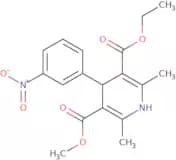
CAS:Methyl ethyl 1,4-dihydro-2,6-dimethyl-4-(3-nitrophenyl)pyridine-3,5-dicarboxylate is a propranolol hydrochloride derivative that has vasodilatory effects. It is used as a nitrovasodilator to treat angina pectoris and high blood pressure. Methyl ethyl 1,4-dihydro-2,6-dimethyl-4-(3-nitrophenyl)pyridine-3,5-dicarboxylate binds to the alpha1 adrenergic receptors in the heart and causes vasodilation by inhibiting the release of norepinephrine from sympathetic nerves. This drug also inhibits the binding of norepinephrine to cardiac beta receptors which decreases the heart rate and contractility of cardiac muscle. Methyl ethyl 1,4-dihydro-2,6Fórmula:C18H20N2O6Pureza:Min. 95%Cor e Forma:Yellow PowderPeso molecular:360.36 g/molS-Methyl-N-cyano-N'-[2-[(5-methyl-1H-imidazol-4-yl)methylthio]ethyl]isothiourea
CAS:Methylisothiourea is a label that can be used to identify cells in vivo. It is a fluorescent molecule that is activated by the presence of cytokines, such as IL-1β and TNF-α. Methylisothiourea has been used to evaluate corneal epithelial cells for their response to injury. The effect of Methylisothiourea on the tissue was assessed by histology and evaluated by the presence of cytokine concordance with the fluorescence intensity. Reconstitution experiments were conducted in vitro using human tissues. It was found that Methylisothiourea was not toxic at concentrations up to 500 μM and that it did not interfere with DNA synthesis or cell division at concentrations up to 10 mM.
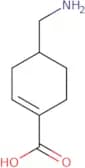
Fórmula:C10H15N5S2Pureza:Min. 95%Cor e Forma:White PowderPeso molecular:269.39 g/mol4-(Aminomethyl)-1-cyclohexene-1-carboxylic acid
CAS:4-(Aminomethyl)-1-cyclohexene-1-carboxylic acid is an antifibrinolytic agent that can be used to control bleeding. It is a carboxymethyl cellulose with a menthol flavour and it stabilizes the hemostatic effect of tranexamic acid. 4-(Aminomethyl)-1-cyclohexene-1-carboxylic acid has been shown to be effective in controlling bleeding in patients with disorders such as hemophilia and von Willebrand disease. The drug is stable in acidic compositions, making it useful for dental applications as well.Fórmula:C8H13NO2Pureza:Min. 95%Cor e Forma:White PowderPeso molecular:155.19 g/molDideiodo amiodarone
CAS:Produto ControladoDideiodo amiodarone is a noncompetitive inhibitor of the enzyme, which is expressed in the human heart. It has been shown to interact with the benzofuran derivatives that are responsible for the antiarrhythmic effects of amiodarone. The inhibitory potency of dideiodo amiodarone is dose-dependent and constant. This drug has shown no competitive inhibition against any other analogs, such as quinidine or digitoxin. Dideiodo amiodarone inhibits the enzyme by binding to an allosteric site on the enzyme molecule. This site does not bind any other analogs, such as quinidine or digitoxin, and therefore it does not compete for this site.Fórmula:C25H31NO3Pureza:Min. 95%Cor e Forma:Clear LiquidPeso molecular:393.52 g/mol2-(N-Methyl-propanamine)-3-(2-naphthyl) thiophene
CAS:2-(N-Methyl-propanamine)-3-(2-naphthyl) thiophene is a synthetic compound that has been used as an impurity standard for the drug product and API. It has also been used for the pharmacopoeia, research and development, and analytical purposes. This compound is a metabolite of erythromycin.Fórmula:C18H19NOSPureza:Min. 95%Cor e Forma:White To Pink Or Yellow SolidPeso molecular:297.42 g/molN-(2-Phenethyl)benzamide
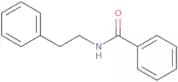
CAS:N-(2-Phenethyl)benzamide (NPEB) is a molecule that belongs to the group of reactive molecules. It has been shown to be toxic to gram-positive bacteria, such as Staphylococcus aureus and Bacillus subtilis, but not gram-negative bacteria such as Escherichia coli. NPEB also has been shown to have locomotor activity in animals, which may be due to its ability to inhibit the mitochondrial electron transport chain and inhibit ATP production. NPEB's biological properties are well characterized. FTIR spectroscopy showed that this molecule has an amide functional group and is a small molecule with a molecular weight of 176.4 g/mol. This molecule was also found to be able to bind to mitochondria in animals.Fórmula:C15H15NOPureza:Min. 97 Area-%Cor e Forma:PowderPeso molecular:225.29 g/molCefpodoxime proxetil impurity H
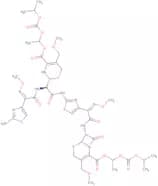
CAS:Cefpodoxime proxetil impurity H is an impurity of cefpodoxime proxetil, which is a prodrug that has been shown to be metabolized by esterases to the active form cefpodoxime. Cefpodoxime proxetil impurity H was found in the elution fraction when using liquid chromatography with reversed-phase as the separation method. It is thought that this impurity may arise from the use of methanol in the process of preparing cefpodoxime proxetil, although other mechanisms have not been ruled out. The mass spectrum for cefpodoxime proxetil impurity H shows peaks at m/z 812 and 682, which correspond to the parent drug and its hydrolysis product, respectively. The fragmentation pattern observed for cefpodoxime proxetil impurity H corresponds to that seen for cephalosporins.Fórmula:C42H54N10O18S4Pureza:Min. 95%Peso molecular:1,115.2 g/molDapagliflozin Impurity 30
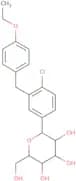
CAS:Dapagliflozin Impurity 30 is a natural impurity found in the drug Dapagliflozin. It is an analytical standard used for HPLC quantification of dapagliflozin, and it can be used as a pharmacopoeia reference material or research and development material. Dapagliflozin Impurity 30 is synthesized by using a custom synthesis protocol. The CAS number for this compound is 1373321-04-0.Fórmula:C21H25ClO6Pureza:Min. 95%Cor e Forma:PowderPeso molecular:408.9 g/molCimetidine impurity F
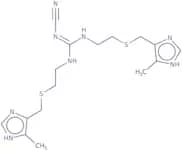
CAS:Cimetidine impurity F is a research and development, drug product, analytical, synthetic, natural, niche, HPLC standard and pharmacopoeia impurity.
CAS No. 55272-86-1Fórmula:C16H24N8S2Pureza:Min. 95%Cor e Forma:White PowderPeso molecular:392.55 g/mol

![4-[2'-(7''-Deazaguanine)ethyl]benzoic acid N-hydroxysuccinimide ester](/_next/image/?url=https%3A%2Fstatic.cymitquimica.com%2Fproducts%2F3D%2Fthumb-webp%2FFD20837.webp&w=3840&q=75)
![N-[1-(R)-(+)-(2-Naphthyl)ethyl]-3-[3-(trifluoromethyl)phenyl]-1-aminopropane hydrochloride](/_next/image/?url=https%3A%2Fstatic.cymitquimica.com%2Fproducts%2F3D%2Fthumb-webp%2FIN58182.webp&w=3840&q=75)


![2-[4-(2-Methylpropanoyl)phenyl] propanoic acid](/_next/image/?url=https%3A%2Fstatic.cymitquimica.com%2Fproducts%2F3D%2Fthumb-webp%2FIM15852.webp&w=3840&q=75)

![S-Methyl-N-cyano-N'-[2-[(5-methyl-1H-imidazol-4-yl)methylthio]ethyl]isothiourea](/_next/image/?url=https%3A%2Fstatic.cymitquimica.com%2Fproducts%2F3D%2Fthumb-webp%2FIM58264.webp&w=3840&q=75)