APIs para pesquisa e impurezas
Subcategorias de "APIs para pesquisa e impurezas"
- Aminoácidos e Derivados(12.444 produtos)
- Antraquinonas e Derivados(407 produtos)
- Derivados de Benzimidazol e Imidazol(10.465 produtos)
- Derivados das Benzodiazepinas(335 produtos)
- Carboidratos e Glicoconjugados(5.389 produtos)
- Ésteres e Derivados(42.308 produtos)
- Ácidos Graxos e Derivados Lipídicos(32.489 produtos)
- Flavonoides e Polifenóis(17.102 produtos)
- Radicais Livres e Agentes Oxidantes/Redutores(215 produtos)
- Cetonas e Derivados(2.692 produtos)
- Antibióticos Naturais e Semissintéticos(6.414 produtos)
- Nitrilas e Derivados Ciano(3.070 produtos)
- Nitrosaminas e Derivados(55 produtos)
- Nucleosídeos e Nucleotídeos(3.494 produtos)
- Fosfatos e Fosfonatos Orgânicos(1.205 produtos)
- Sulfonatos e Sulfatos Orgânicos(10.452 produtos)
- Compostos Organometálicos(4.425 produtos)
- Outros(6.340 produtos)
- Peptídeos e Proteínas(3.163 produtos)
- Polímeros e Derivados(100 produtos)
- Derivados de Purinas e Pirimidinas(8.976 produtos)
- Derivados de Quinazolina e Quinolina(66.237 produtos)
- Quinonas e Derivados(24.381 produtos)
- Sais e Derivados de API(92.986 produtos)
- Esteroides e Derivados(4.987 produtos)
- Sulfonamidas e Derivados(2.607 produtos)
- Terpenoides e Derivados(3.871 produtos)
- Tiazolidinedionas e Tiopiranos(2.755 produtos)
- Compostos β-Adrenérgicos(232 produtos)
Foram encontrados 66910 produtos de "APIs para pesquisa e impurezas"
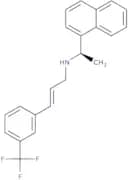
3-(3-(Trifluoromethl)phenyl-N-(R)-1-(naphthalen-1-yl)ethyl)prop-2-en-1-amine hydrochloride
CAS:3-(3-(Trifluoromethl)phenyl-N-(R)-1-(naphthalen-1-yl)ethyl)prop-2-en-1-amine is a synthetic compound, which is not found in nature. It is an API impurity and a metabolite of the drug product. It can be synthesized in high purity and with a custom synthesis. 3-(3-(Trifluoromethl)phenyl-N-(R)-1-(naphthalen-1-yl)ethyl)prop-2-en-1-amine has been found to be involved in metabolism studies and research and development, as well as analytical purposes. This compound can also serve as an impurity standard for HPLC analysis.Fórmula:C22H20F3N•HClPureza:Min. 95%Cor e Forma:White To Off-White SolidPeso molecular:391.86 g/mol(5α)-17-(3-Pyridinyl)androst-16-en-3-one
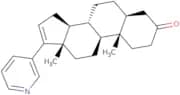
CAS:Produto Controlado(5α)-17-(3-Pyridinyl)androst-16-en-3-one is a natural metabolite of testosterone that is produced in the liver. It has been identified as an impurity in API, which can be found in drugs used for the treatment of high blood pressure and prostate cancer. (5α)-17-(3-Pyridinyl)androst-16-en-3-one is not active as a drug itself, but it can be used as a standard to study the metabolism of testosterone and other steroids.Fórmula:C24H31NOPureza:Min. 98 Area-%Cor e Forma:White PowderPeso molecular:349.51 g/mol4-Amino-2-chloro-6,7-dimethoxyquinazoline
CAS:4-Amino-2-chloro-6,7-dimethoxyquinazoline (4ACDMQ) is a synthetic compound that has been used as a chemical intermediate. The chemical structure of 4ACDMQ is similar to that of the natural amino acid tryptophan. It is synthesized by reacting phosphorus pentachloride with 2,6,7-trimethoxyquinazoline in the presence of hydroxide solution and hexamethylphosphoramide. 4ACDMQ has been shown to be an inhibitor of ubiquitin proteasome system and has been used in functional studies on this system. The reaction yield for 4ACDMQ can be increased by using sodium hydroxide solution or n-dimethyl formamide as a solvent. Functional assays have shown binding properties for 4ACDMQ to proteins such as ubiquitin and proteasome subunits.Fórmula:C10H10ClN3O2Pureza:Min. 95%Cor e Forma:PowderPeso molecular:239.66 g/molN-Nitroso-N-methyl-4-aminobutyric acid
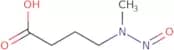
CAS:N-Nitroso-N-methyl-4-aminobutyric acid (NMBA) is a solid with a low melting point which has been identified as a potentially carcinogenic component of both tobacco and tobacco smoke. NMBA is also one of a number of nitrosamine impurities which have been found to be present in angiotensin II receptor blocker (ARB) drugs used to treat high blood pressure.
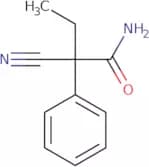
Fórmula:C5H10N2O3Pureza:Min. 98 Area-%Cor e Forma:Slightly Yellow PowderPeso molecular:146.14 g/molrac-2-Cyano-2-phenylbutanamide
CAS:Rac-2-cyano-2-phenylbutanamide is a synthetic molecule that is used as a growth regulator. It has been shown to be toxic to the arthropod Mollusca, with an LD50 of 1.6 µg/cm² (milligrams per square centimeter). Rac-2-cyano-2-phenylbutanamide also inhibits the growth of organisms such as Anisopliae and Metarhizium, and has been shown to have an asymmetric effect on tissue culture cells. Rac-2-cyano-2-phenylbutanamide is chemically related to the antibiotic subtilin, which belongs to the class of aminoglycoside antibiotics. Rac-2-cyano-2-phenylbutanamide may inhibit bacterial protein synthesis by binding to ribosomes and blocking the attachment of aminoacyl tRNA molecules during translation. This compound also inhibits DNA replication in bacteria by preventing DNAFórmula:C11H12N2OPureza:Min. 95 Area-%Cor e Forma:White PowderPeso molecular:188.23 g/molAll-trans-retinol-d5
CAS:Produto ControladoAll-trans-retinol-d5 is a supplement that is used to protect the brain from oxidative damage and to help maintain healthy skin. It is an antioxidant that prevents free radicals from damaging cells and helps maintain the structural integrity of cell membranes. All-trans-retinol-d5 can be found in high concentrations in animal tissues, such as liver, lung, kidney, heart, brain, and eye. It can also be found in human urine. The presence of all-trans-retinol-d5 in urine has been correlated with neuroprotective effects. Retinol levels have been shown to be higher in children who are less obese than those who are obese or overweight. All-trans retinol has been shown to inhibit cancer cell proliferation and induce apoptosis by inhibiting protein synthesis at the level of transcription.
Fórmula:C20H25D5OPureza:(%) Min. 80%Cor e Forma:Clear Viscous LiquidPeso molecular:291.48 g/mol6'-Methoxy-2'-acetonaphthone
CAS:6'-Methoxy-2'-acetonaphthone is a reactive chemical that can be used as a reagent in organic synthesis. It is an electron-rich aromatic compound and its reactivity is enhanced by electron-donating groups such as -OH, -NH2, or -SH. 6'-Methoxy-2'-acetonaphthone can be used to form new carbon-carbon bonds in the presence of metal catalysts. This reaction can be done in either the presence or absence of a solvent, although the yield is better when carried out in organic solvents. Oxime derivatives are formed as oxidation products during this reaction. Acetylation may also occur, which would produce acetophenones or phenylacetones.Fórmula:C13H12O2Pureza:Min. 95%Cor e Forma:Off-White PowderPeso molecular:200.23 g/molrac-Diacetolol
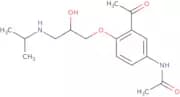
CAS:Rac-Diacetolol is a racemic mixture of two isomers, (+) and (-), of acebutolol. Rac-Diacetolol is used to treat bowel disease, chronic oral inflammation and cardiac arrhythmias. It is also used as an experimental solubility probe in the study of the interactions between drugs and biological membranes. Rac-Diacetolol has been shown to have a low affinity for cytochrome P450 enzymes, which are responsible for metabolizing many drugs in the body. Rac-Diacetolol has been found to reduce plasma concentrations of PCSK9 antibody in patients with inflammatory bowel disease. The drug also has anti-inflammatory properties that may be due to its inhibition of prostaglandin synthesis.
Fórmula:C16H24N2O4Pureza:Min. 95%Cor e Forma:PowderPeso molecular:308.37 g/mol(-)-9-Hydroxyrisperidone
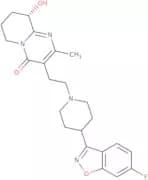
CAS:Produto Controlado(-)-9-Hydroxyrisperidone is a metabolite of risperidone that is structurally related to the neurotransmitter dopamine. This compound has been found to be a potent antagonist of serotonin and adrenergic receptors, which may contribute to its therapeutic effects in schizophrenia. (-)-9-Hydroxyrisperidone also has been shown to have a high affinity for human liver plasma proteins, which suggests it may be responsible for the long half-life seen with risperidone. The (+) form of the drug has been shown to be more potent than (-)-9-hydroxyrisperidone, while (-)-9-hydroxyrisperidone is more selective in terms of receptor binding.Fórmula:C23H27FN4O3Pureza:Min. 95%Cor e Forma:PowderPeso molecular:426.48 g/mol(1R,3S,5S)-8-Methyl-8-azabicyclo[3.2.1]oct-6-en-3-yl-2'-hydroxy-2',2'-di(thiophen-2''-yl)acetate
CAS:Tanshinone IIA is an enantioselective hydroxamic acid that inhibits matrix metalloproteinase. It is a structural analogue of the hydroxamic acid Tanshinone I and has been shown to inhibit aggrecanase, which is an enzyme that hydrolyzes the glycosaminoglycan aggrecan. It also has anti-cancer effects due to its inhibition of cell proliferation in cancer cells. Tanshinone IIA can be used as a chiral synthon for polymerase chain reactions (PCR) because it contains a stereogenic centre in its structure.Fórmula:C18H19NO3S2Pureza:Min. 95%Cor e Forma:PowderPeso molecular:361.48 g/molN-[5-Amino-6-(2,3-dichlorophenyl)-1,2,4-triazin-3-yl]-2,3-dichlorobenzamide
CAS:N-[5-Amino-6-(2,3-dichlorophenyl)-1,2,4-triazin-3-yl]-2,3-dichlorobenzamide is a pharmaceutical dosage form that is titrated to achieve the desired therapeutic effect. It is used to treat epilepsy and bipolar disorder. Lamotrigine binds to sodium channels in nerve cells and blocks their opening. This prevents the influx of sodium ions that are necessary for neuronal transmission. Lamotrigine has been shown to have an anticonvulsant effect by reducing the frequency of seizures in patients with epilepsy.Fórmula:C16H9Cl4N5OPureza:Min. 95%Cor e Forma:White Off-White PowderPeso molecular:429.09 g/mol1-[2-(4-Dibenzo[b,f][1,4]thiazepin-11-yl-1-piperazinyl)ethoxy]ethyl-2-(1-piperazinyl)ethoxyethanol
CAS:1-[2-(4-Dibenzo[b,f][1,4]thiazepin-11-yl-1-piperazinyl)ethoxy]ethyl-2-(1-piperazinyl)ethoxyethanol is a synthetic drug that is used as an analytical reference standard and as an impurity standard for drug development. It is a metabolite of the benzodiazepine diazepam, which has been shown to produce significant changes in the activity of GABA receptors. This product has not been evaluated by the FDA and should be used in laboratory research only.Fórmula:C29H41N5O3SPureza:Min. 95%Cor e Forma:PowderPeso molecular:539.73 g/molCimetidine impurity F
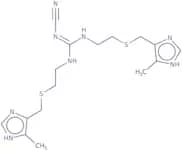
CAS:Cimetidine impurity F is a research and development, drug product, analytical, synthetic, natural, niche, HPLC standard and pharmacopoeia impurity.
CAS No. 55272-86-1Fórmula:C16H24N8S2Pureza:Min. 95%Cor e Forma:White PowderPeso molecular:392.55 g/molD-Ser-(12)-Semaglutide
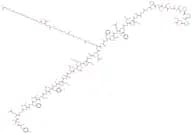
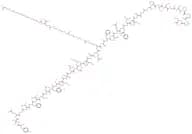
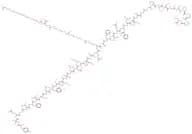
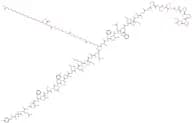
D-Ser(12)-Semaglutide is a semaglutide impurity. The amino acid at position 12 has been replaced by the D-form of the amino acid D-serine (D-Ser). Semaglutide impurities are structurally related compounds that arise during synthesis, purification, or storage of semaglutide, a long-acting GLP-1 receptor agonist for managing type 2 diabetes and obesity.Fórmula:C187H291N45O59Peso molecular:4,113.64 g/mol1,4-Dihydro-2,6-dimethyl-4-(3-nitrophenyl)-3.5-pyridinecarboxylic acid dimethyl ester
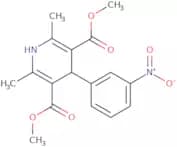
CAS:1,4-Dihydro-2,6-dimethyl-4-(3-nitrophenyl)-3.5-pyridinecarboxylic acid dimethyl ester is a creatine kinase inhibitor that blocks the synthesis of creatine phosphate, which is an important energy source for muscle contraction. Creatine kinase inhibitors are used in the treatment of congestive heart failure and myocardial infarct. They also have vasodilatory effects on blood vessels and can be used to treat hypertension. The elimination rate of 1,4-dihydro-2,6-dimethyl-4-(3-nitrophenyl)-3.5-pyridinecarboxylic acid dimethyl ester depends on its formulation: solid dispersions have a half life of about 3 hours whereas orally administered doses have a half life of about 8 hours.Fórmula:C17H18N2O6Pureza:Min. 95%Cor e Forma:Yellow PowderPeso molecular:346.33 g/molAtorvastatin lactone
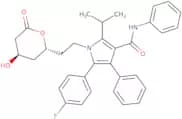
CAS:Atorvastatin lactone is a prodrug for atorvastatin. It is an inhibitor of the enzyme HMG-CoA reductase, which is involved in cholesterol synthesis and reduces LDL cholesterol levels. Atorvastatin lactone is absorbed from the gut into the bloodstream and then converted to atorvastatin, which has a higher potency than atorvastatin lactone. This conversion occurs in the liver by cytochrome P450 enzymes, including cytochrome CYP3A4. The pharmacokinetics of atorvastatin lactone are influenced by drugs that inhibit these enzymes. Atorvastatin and its metabolites are excreted in human serum as glucuronide or sulfate conjugates.Fórmula:C33H33FN2O4Pureza:Min. 98 Area-%Cor e Forma:PowderPeso molecular:540.62 g/mol



![(1R,3S,5S)-8-Methyl-8-azabicyclo[3.2.1]oct-6-en-3-yl-2'-hydroxy-2',2'-di(thiophen-2''-yl)acetate](/_next/image/?url=https%3A%2Fstatic.cymitquimica.com%2Fproducts%2F3D%2Fthumb-webp%2FIM42883.webp&w=3840&q=75)
![N-[5-Amino-6-(2,3-dichlorophenyl)-1,2,4-triazin-3-yl]-2,3-dichlorobenzamide](/_next/image/?url=https%3A%2Fstatic.cymitquimica.com%2Fproducts%2F3D%2Fthumb-webp%2FIA58055.webp&w=3840&q=75)
![1-[2-(4-Dibenzo[b,f][1,4]thiazepin-11-yl-1-piperazinyl)ethoxy]ethyl-2-(1-piperazinyl)ethoxyethanol](/_next/image/?url=https%3A%2Fstatic.cymitquimica.com%2Fproducts%2F3D%2Fthumb-webp%2FID57891.webp&w=3840&q=75)